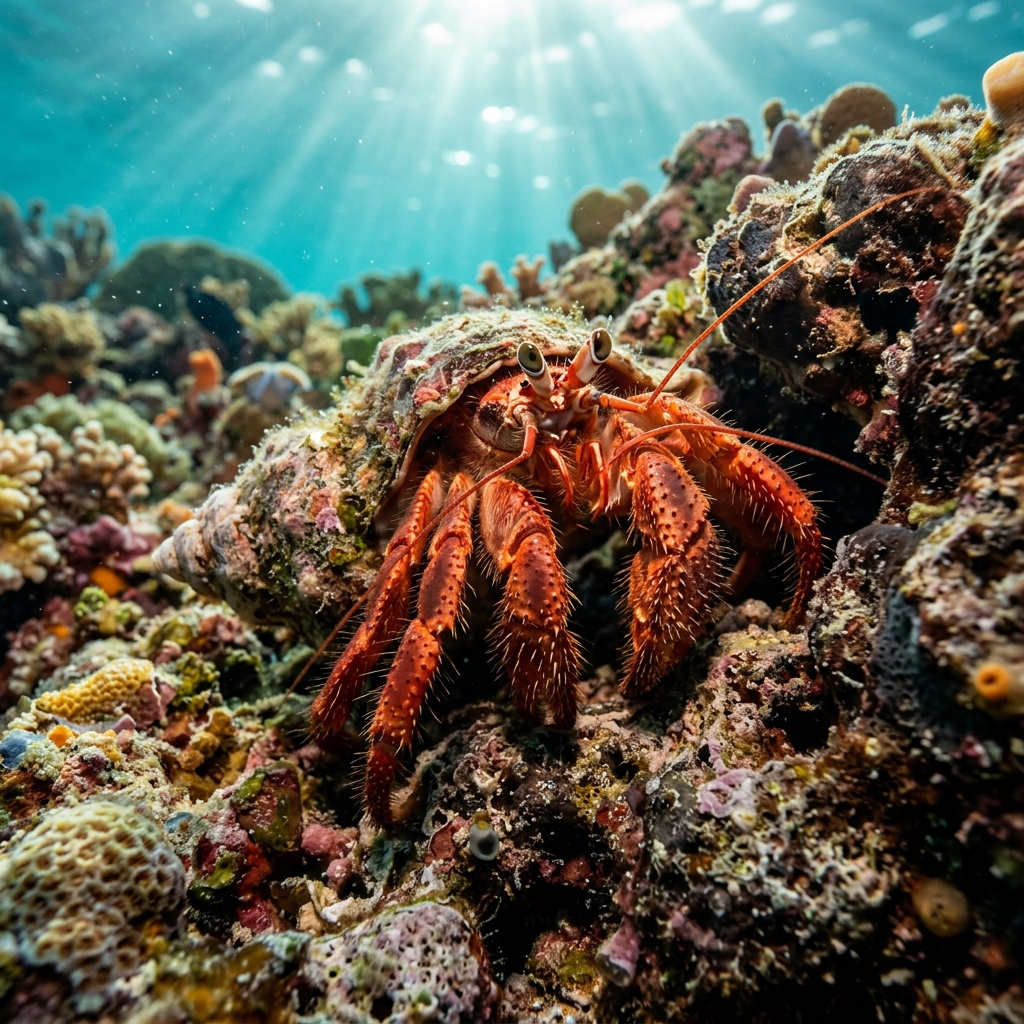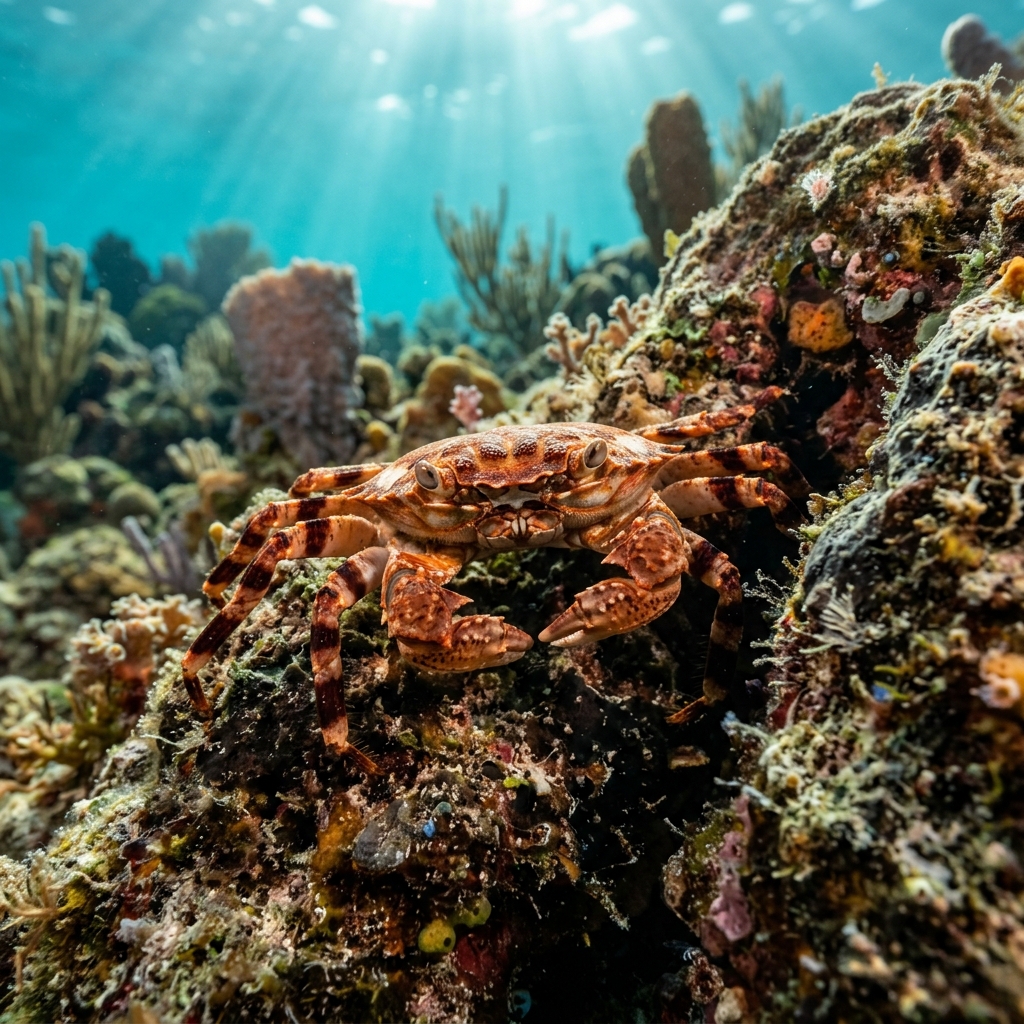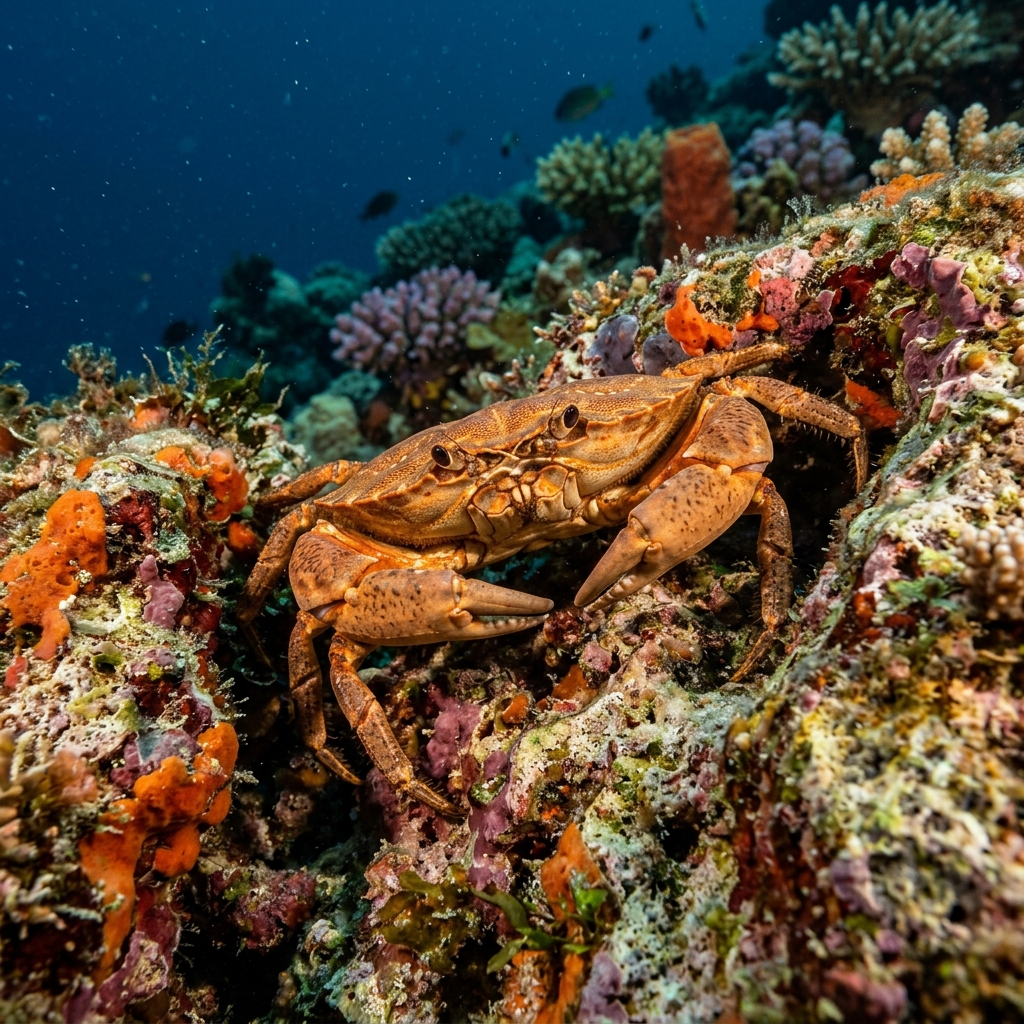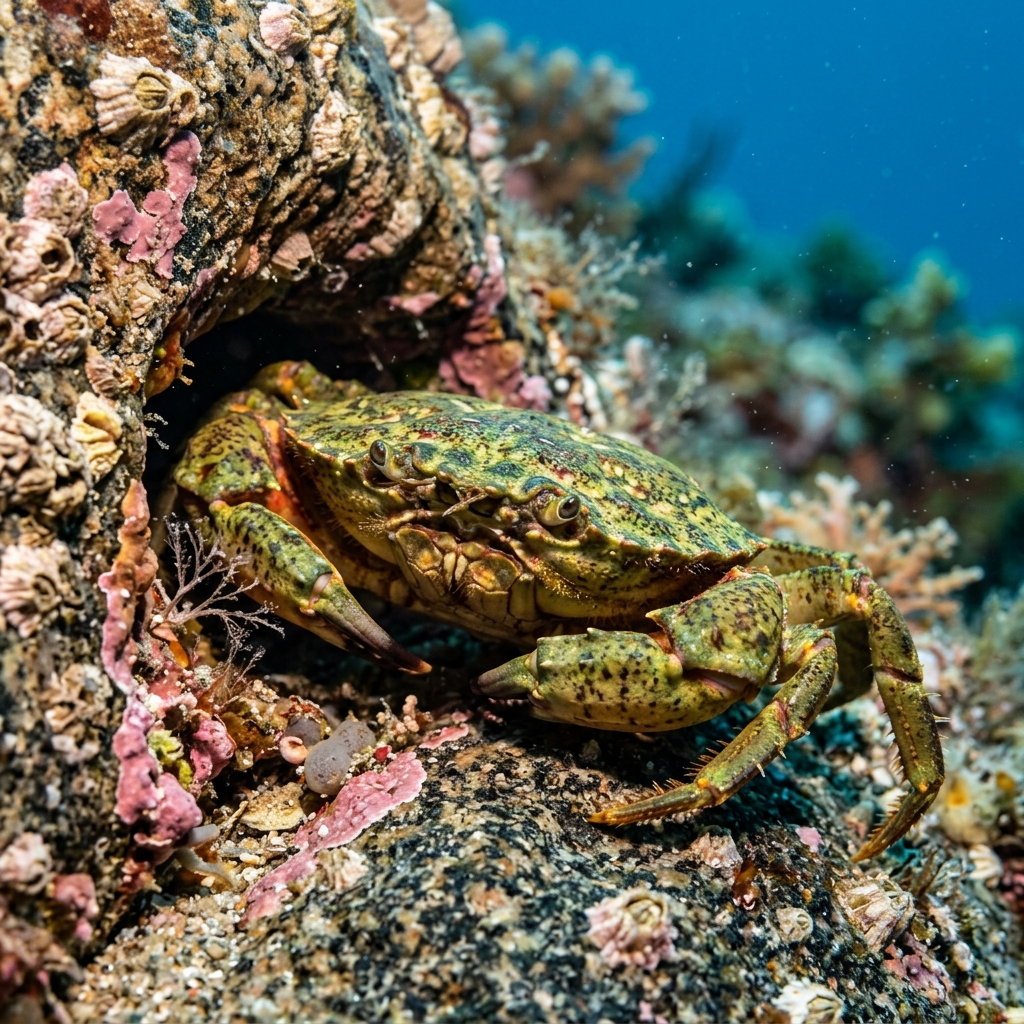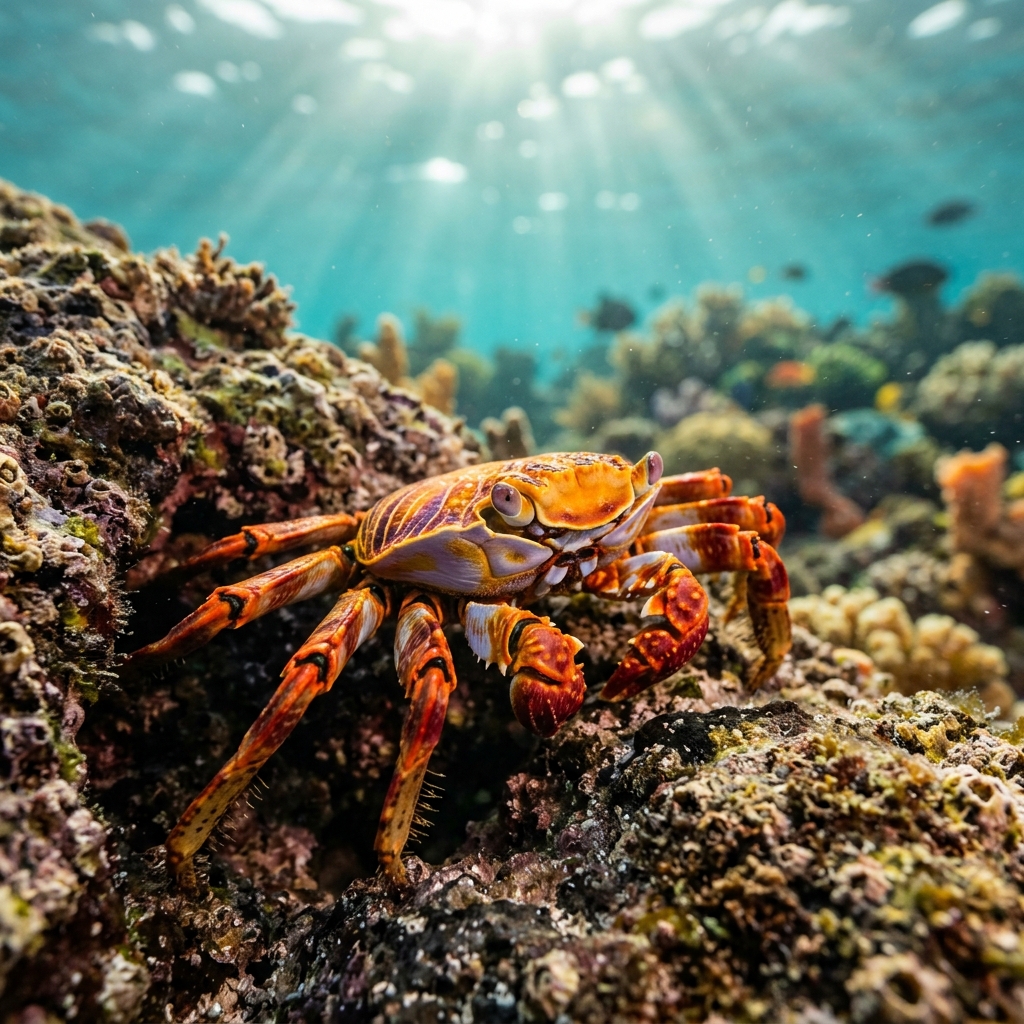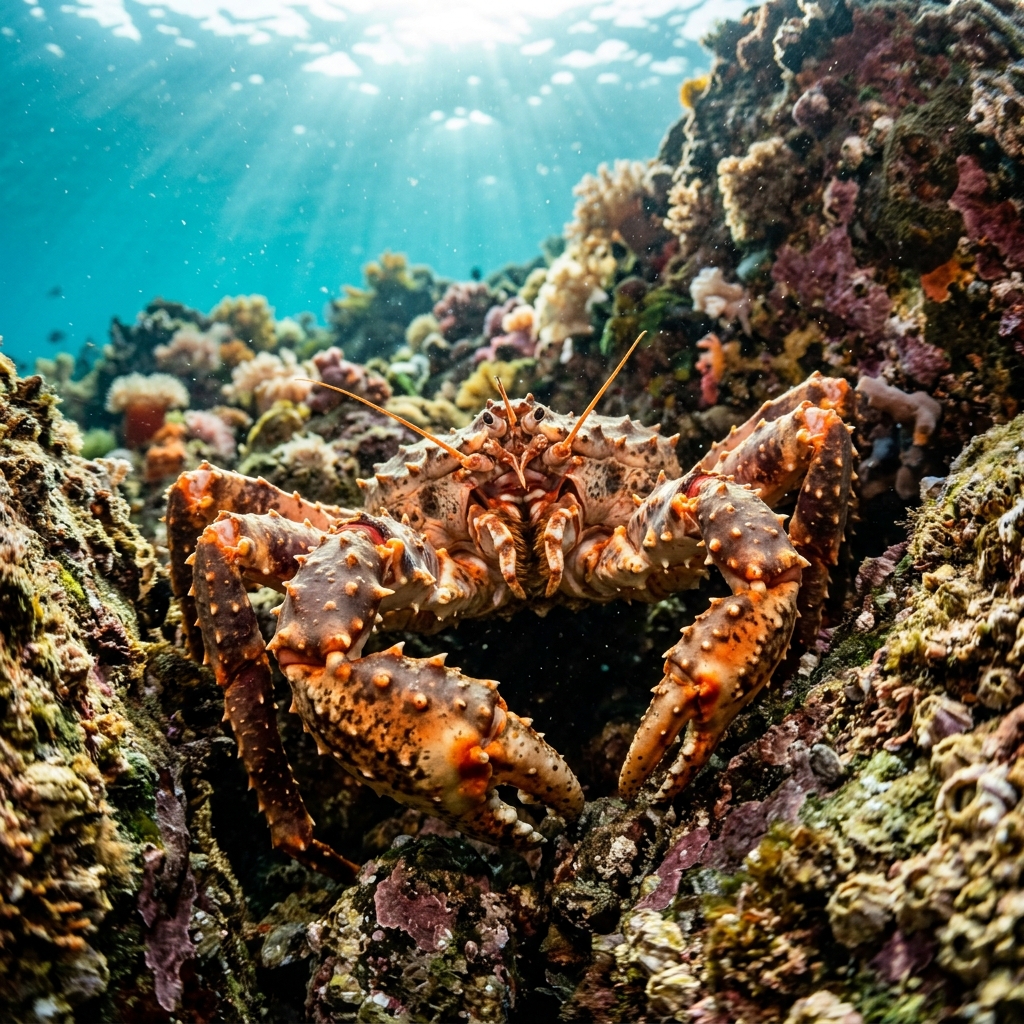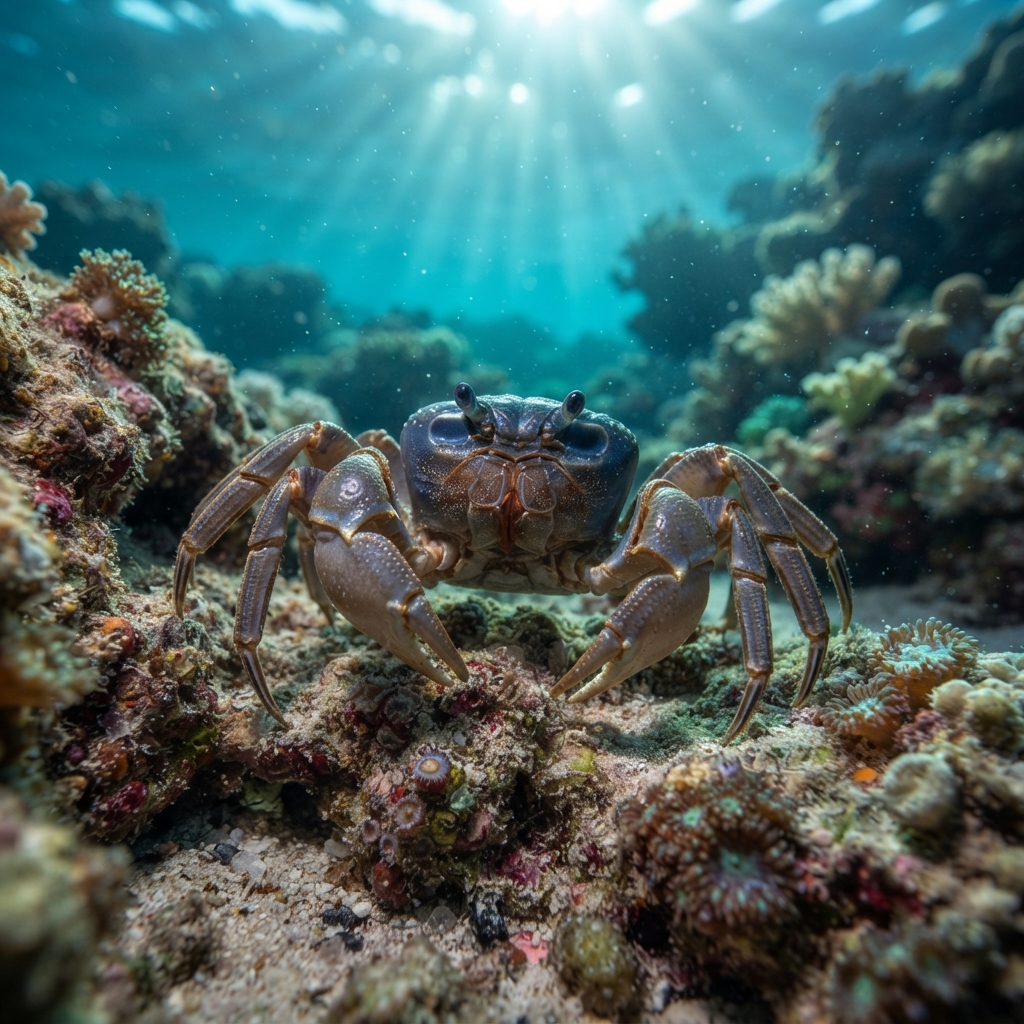
Mictyris platycheles
A small burrowing crab logged across Tasmania, Victoria and New South Wales, most often turned up on sandy tidal flats rather than reef.
A small, rounded crab with a domed, dark blue to slate-grey shell and pale legs, usually only a few centimetres across. It walks on tiptoe across sand in a distinctive forward-marching gait rather than the sideways scuttle most crabs use. Look for it on exposed sand flats at low tide, often in loose groups rather than alone.
Divers and waders most often spot it moving across bare sand in loose aggregations, marching forward in short bursts rather than the typical crab sidestep. It tends to bury itself quickly into the sand when disturbed, so a slow approach gives a better look before it vanishes. Most logs describe it as uncommon to rare at any given site, so a sighting usually means being in the right shallow, sandy spot at the right tide.
Its odd tiptoe, forward-walking gait is a real identification shortcut underwater or on the flats, since almost no other local crab moves the same way.
Observed water temperatures range from 13.8 to 21.7 C, and there isn't enough seasonal data to call out a specific window, so treat this as a year-round find in the right tidal habitat. Timing your visit to low tide matters more than the calendar.
Logged sites cluster in Australia, with Tasmania the strongest area, followed by Victoria and a couple of sites in New South Wales. This is a sand-flat species rather than a reef one, so sightings tend to come from shallow, sheltered coastal spots rather than classic dive sites.
Mapping where Dark Blue Soldier Crab is logged…
Sightings are concentrated in Australia, with Tasmania logging the most records, followed by Victoria and a couple of sites in New South Wales. It's found on shallow sand flats rather than deep reef, so shore dives and low-tide walks are your best bet.
There's no strong seasonal pattern in the data, and it's been recorded in water from 13.8 to 21.7 C, so it's a reasonable year-round find. Aim for low tide, since that's when it's active and visible on exposed sand.
Look for a small, rounded, dark blue to grey-shelled crab on bare sand, often in a loose group, moving with a forward marching walk rather than sideways. It will often dive straight down into the sand if you get too close.
Exact size data isn't confirmed here, but it's a small crab, typically only a few centimetres across the shell, easy to overlook against sand.
No, it poses no danger to divers or waders. It's a harmless, shy sand-dweller that retreats by burrowing rather than defending itself.
Unlike most crabs, it walks forward on the tips of its legs in a marching gait instead of scuttling sideways, often in loose groups across sand flats. This odd walk is one of the easiest ways to identify it on sight.
Site and sighting data is aggregated from diver logs, iNaturalist and GBIF. For taxonomy and conservation status:
European Green Crab
2,469 sites