Trapania euryeia
A rare little nudibranch found almost exclusively in Kwajalein Atoll, Marshall Islands, in warm 24-30C reef water.
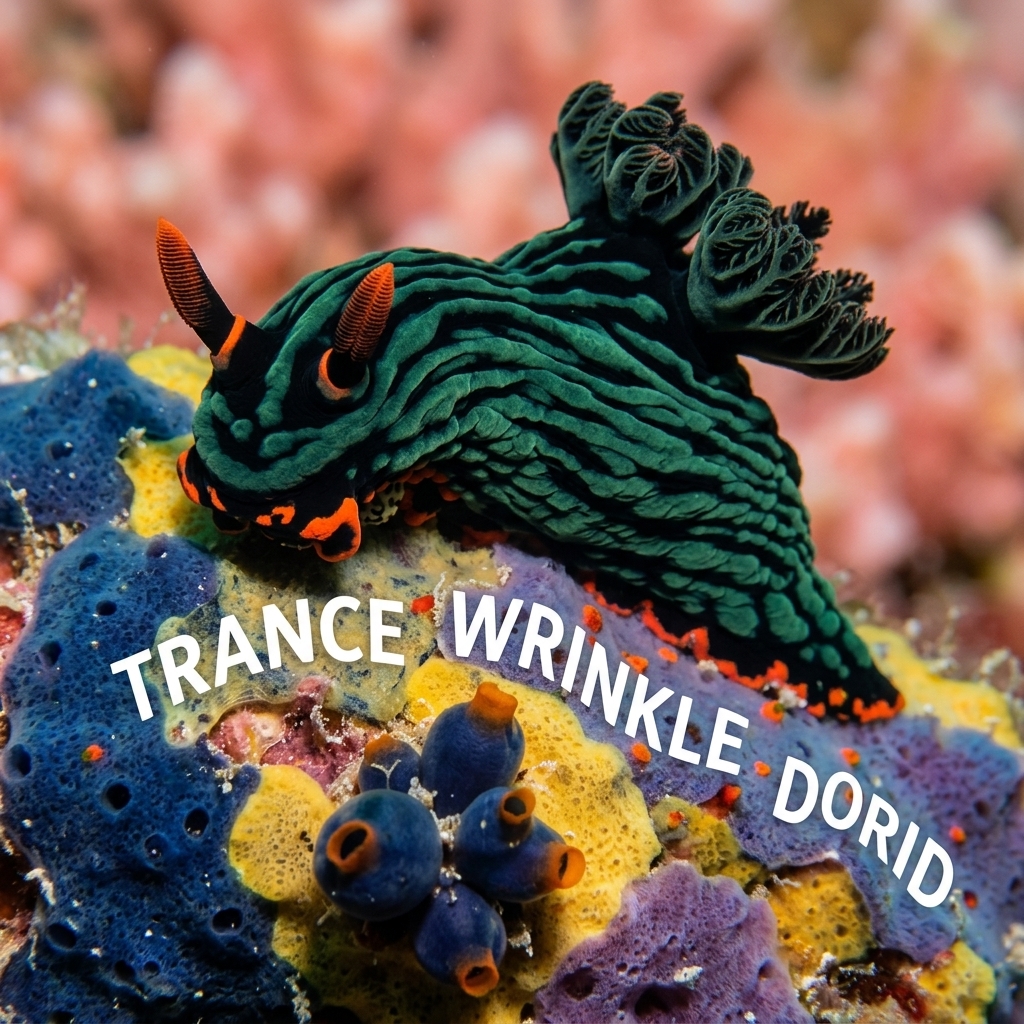
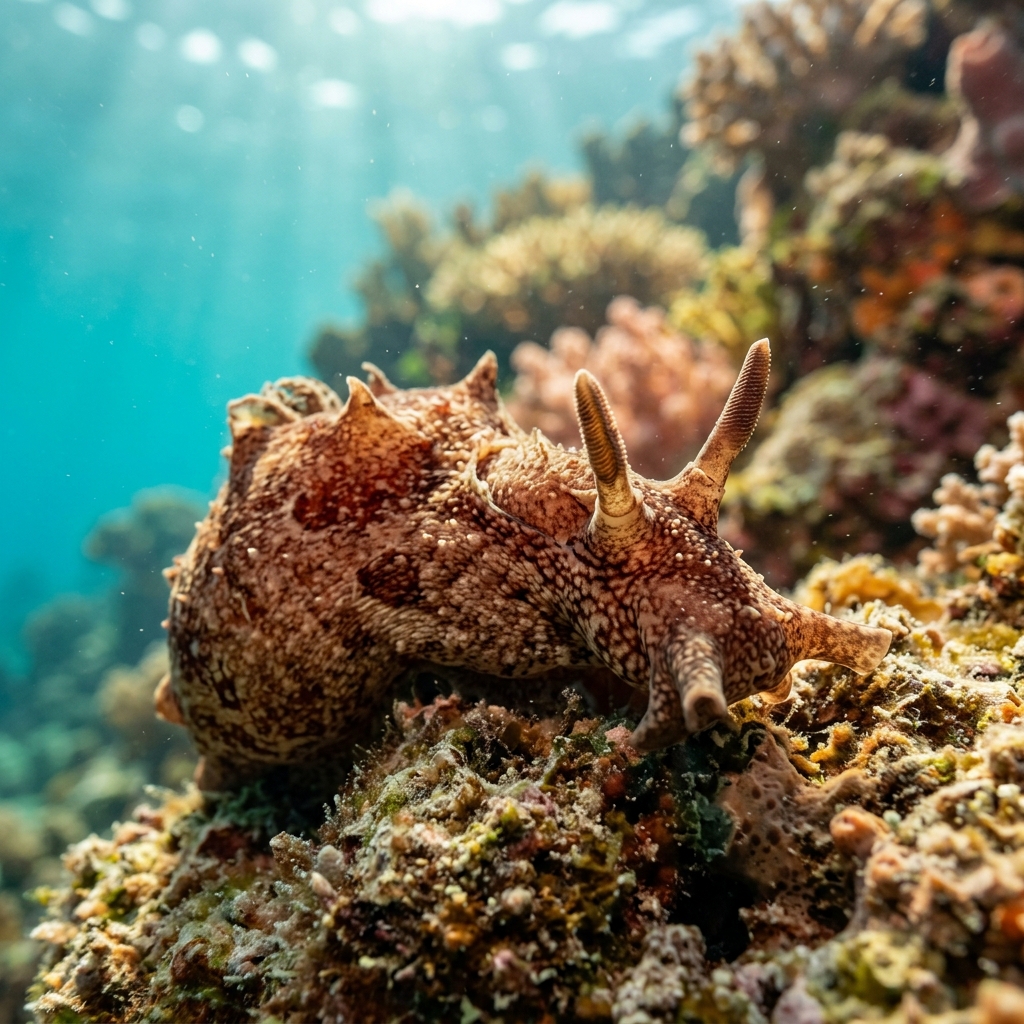
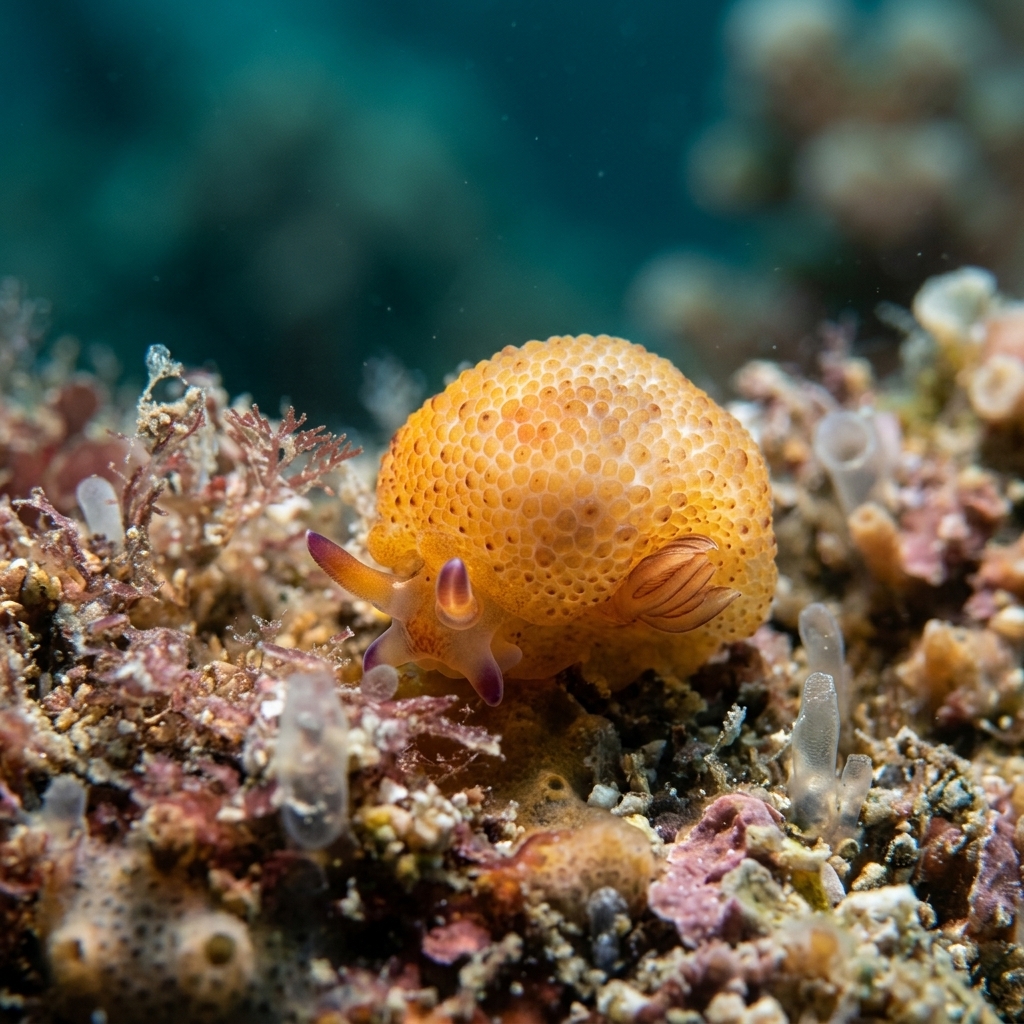
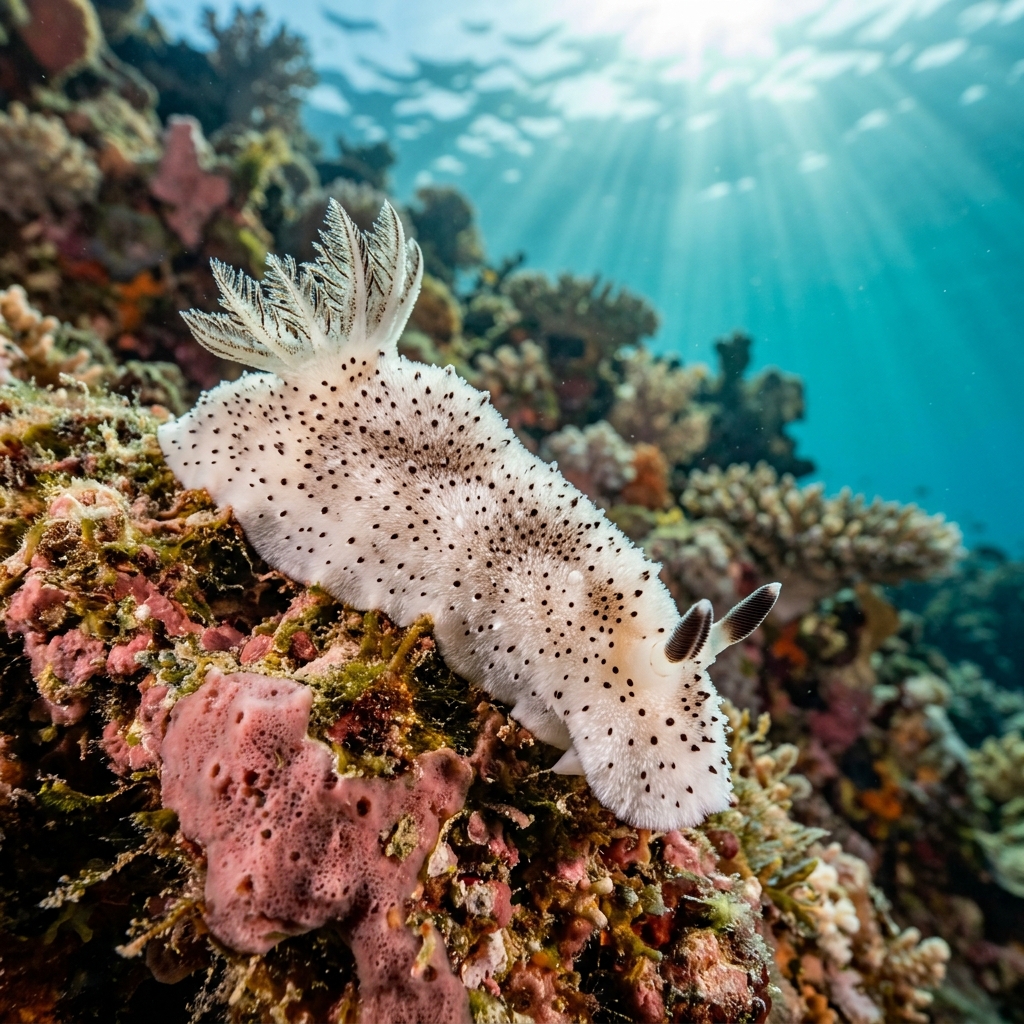
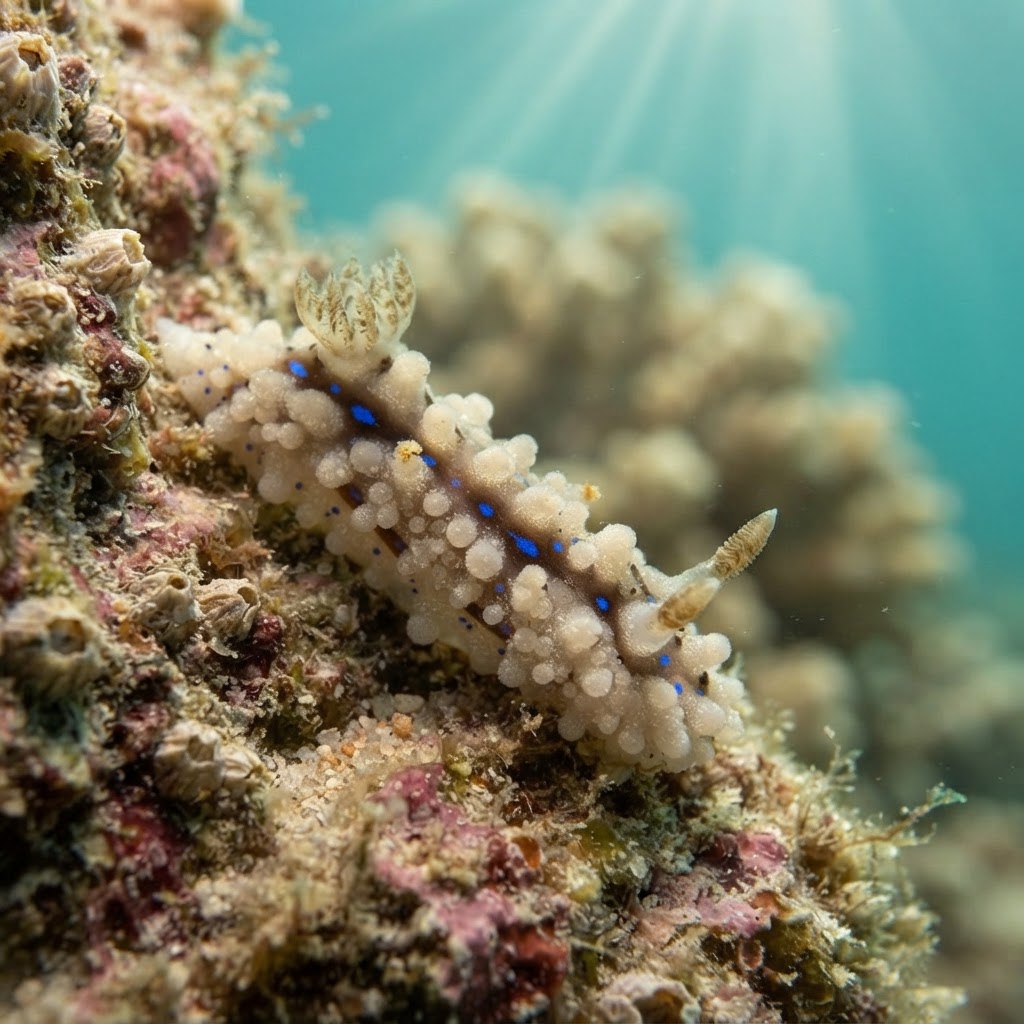
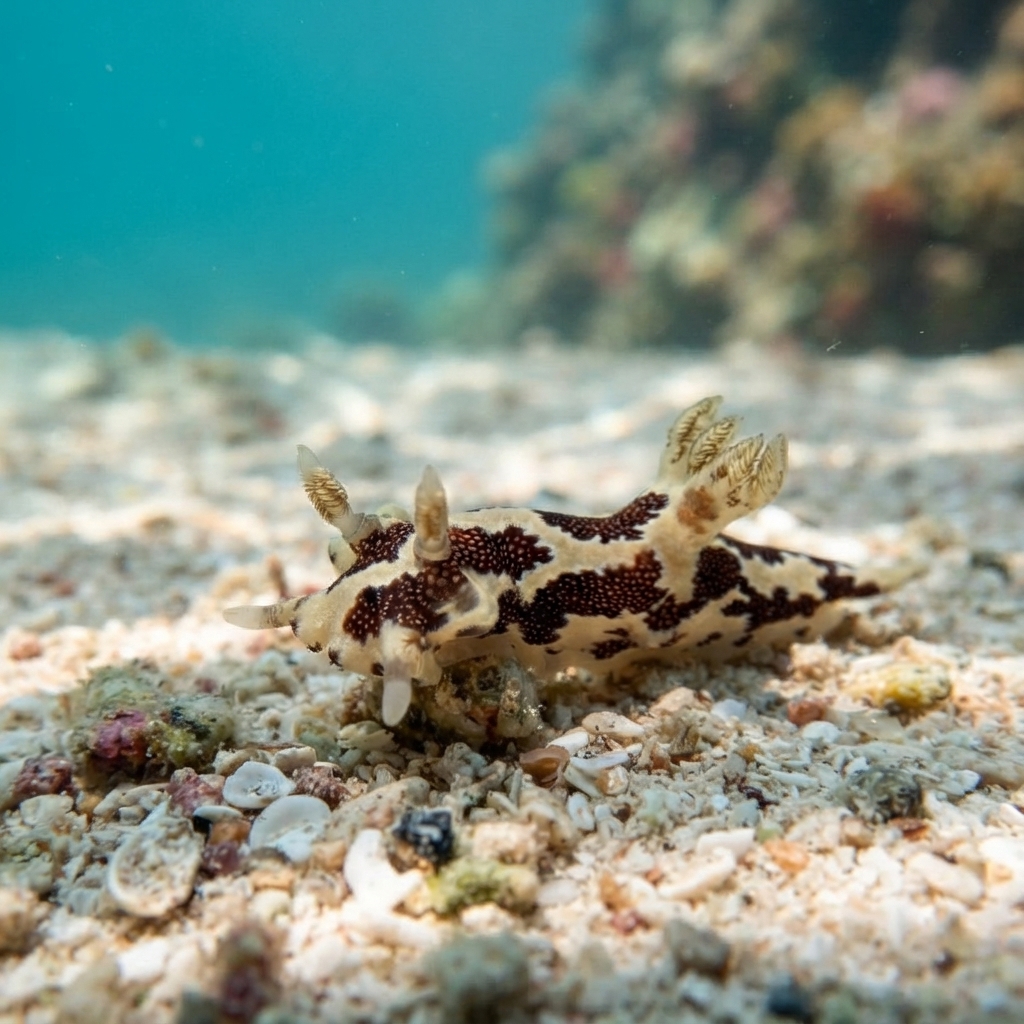
A small nudibranch (sea slug) with a pale, mottled or dappled body pattern that gives it its name, set against a soft-bodied, elongated form typical of the goniodorididae family. Look for the paired, whip-like extensions near the head and rear (extra sensory appendages), which set it apart from smoother-bodied dorids. Its size is easy to miss on a reef wall, so divers usually spot it while combing rubble and sponge-covered surfaces at close range.
Divers find this one tucked into rubble, sponge patches, and other low-profile reef structure rather than out on open coral, moving slowly as it grazes. It shows no reaction to divers beyond its usual unhurried pace, since like most nudibranchs it has no real means of fleeing. Most sightings come from divers deliberately searching micro-habitat at close range rather than spotting it in open water.
Nudibranchs in this family carry their gills and sensory organs externally rather than tucked inside a shell, which is why species like this one rely on camouflage and, in many relatives, chemical defences absorbed from their prey rather than speed or hiding to survive on the reef.
No clear seasonal pattern shows up in the sighting data, and with water temperatures logged between 23.6 and 29.6C, conditions stay suitable for it across the year. Treat it as a year-round possibility on Kwajalein Atoll dives rather than a species tied to a particular month.
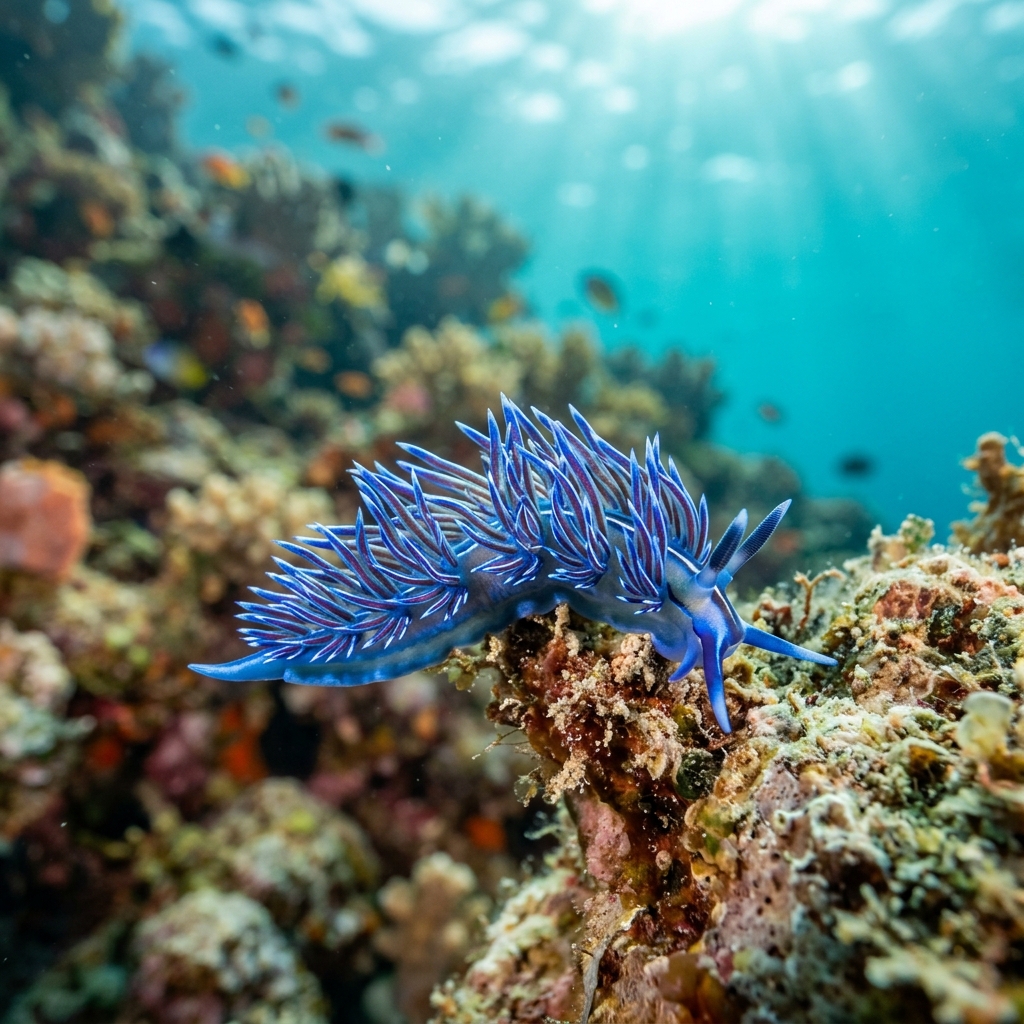
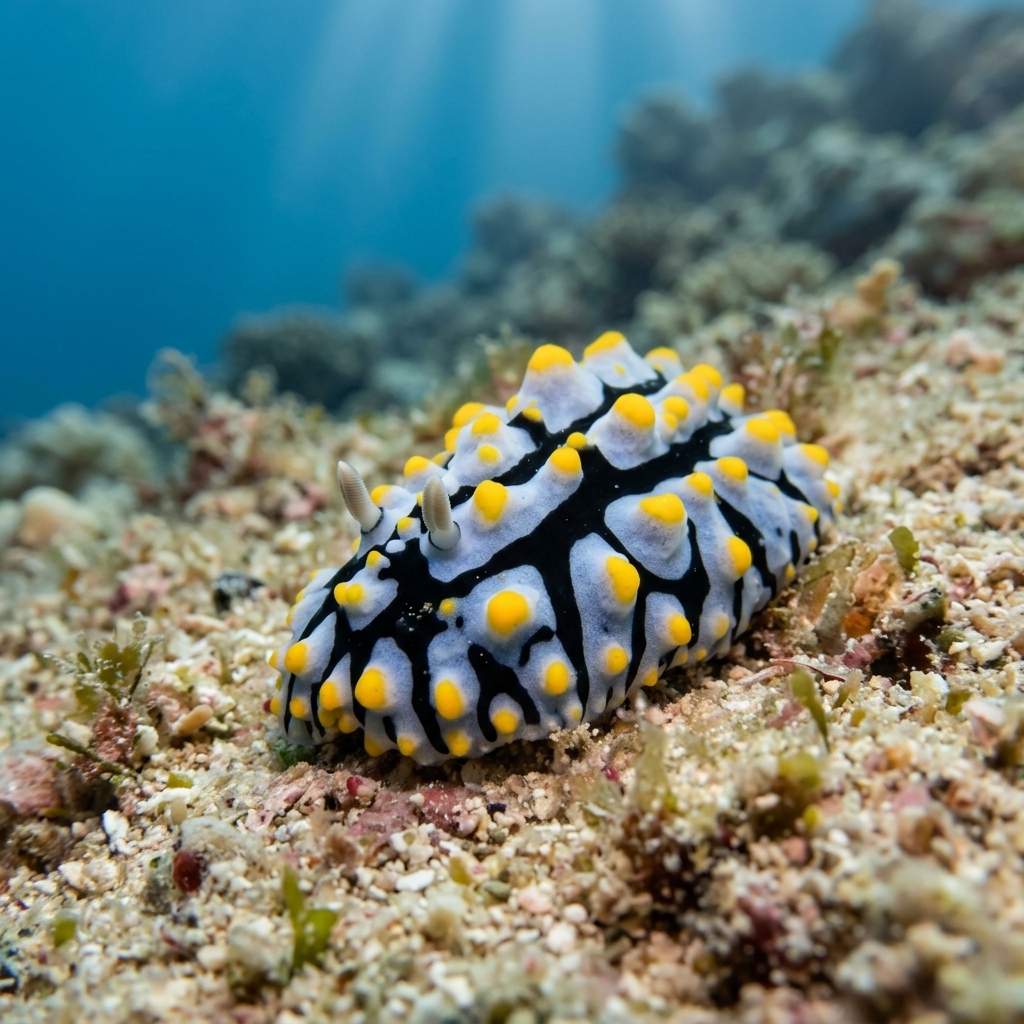
Reef neighbours a diver could mistake it for. Use the identification notes above to tell them apart.
Every logged sighting of this species comes from Kwajalein Atoll in the Marshall Islands, making it the only reliable place in the data to look for one. Within the atoll it turns up scattered across eight different sites, though it stays a rare find at nearly all of them.
Mapping where Dappled Pump Dorid is logged…
Every confirmed sighting comes from Kwajalein Atoll in the Marshall Islands, spread thinly across eight different dive sites there. It hasn't been logged anywhere else, so this atoll is currently the only known place to look for it.
There's no detected seasonal pattern, and it's been recorded in water from 23.6 to 29.6C, so it's considered a year-round possibility rather than a seasonal target on Kwajalein Atoll dives.
Look for a small, soft-bodied nudibranch with a pale, mottled or dappled colour pattern and slender paired appendages extending from the front and rear of its body. It's easiest to spot at close range on rubble or sponge-covered surfaces rather than open coral.
Exact size data isn't available for this species, but like most Trapania nudibranchs it's small, typically only a centimetre or two long, which is why divers need to search closely to find one.
Yes, sighting data marks it as rare at almost every site where it's been recorded, with only one site logging it as uncommon. Finding one is a matter of careful, close-up searching rather than a guaranteed spot on a dive.
Site and sighting data is aggregated from diver logs, iNaturalist and GBIF. For taxonomy and conservation status:
Light-spotted Aegires
3,168 sites