Coris variegata
Small mottled wrasse logged across South Sinai's Red Sea reefs, comfortable in warm 25-29°C water year-round.
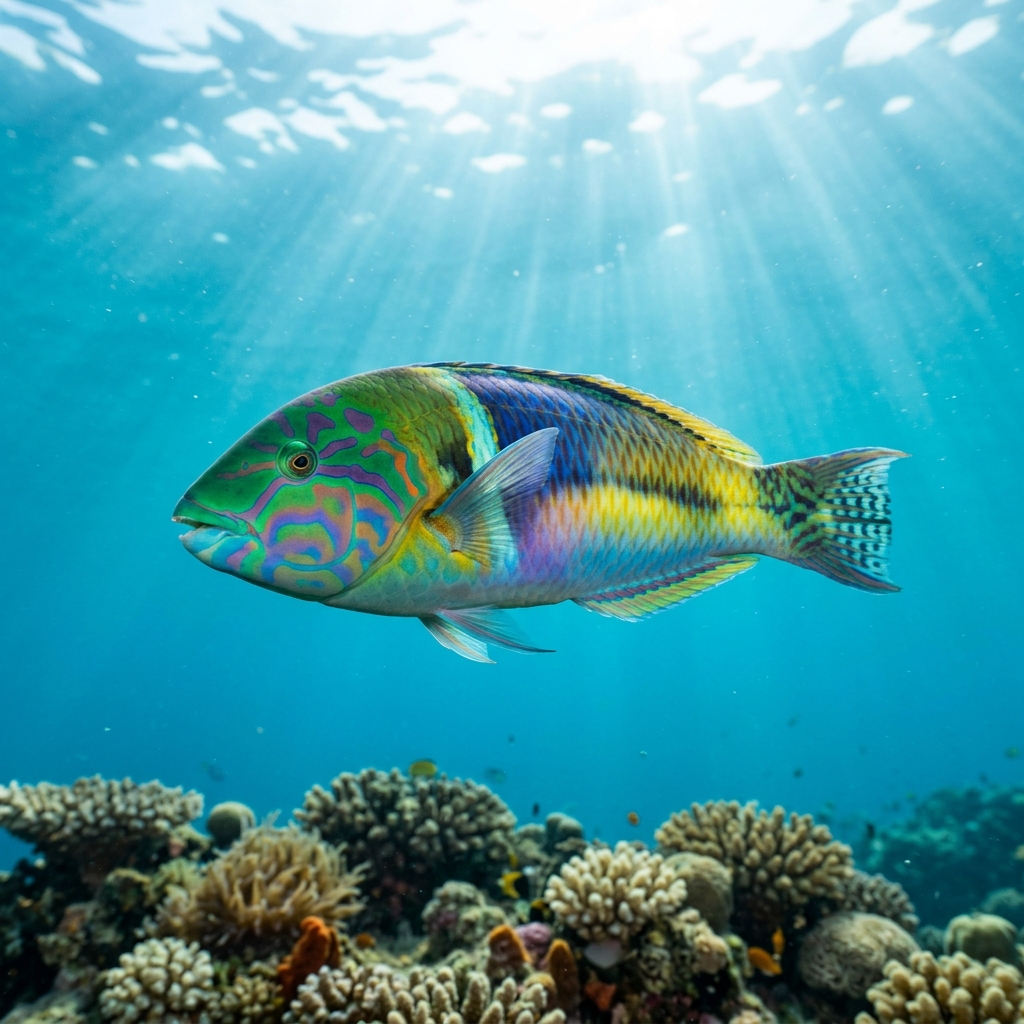
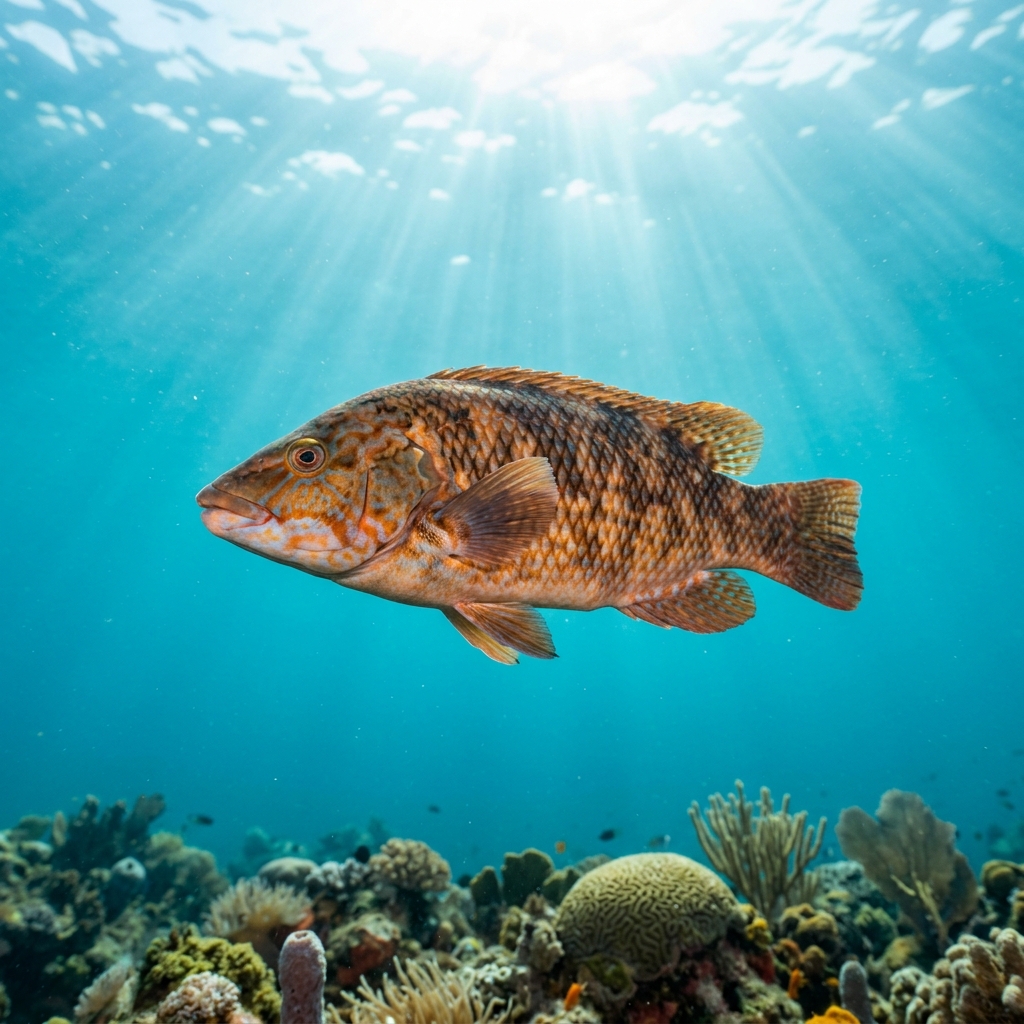
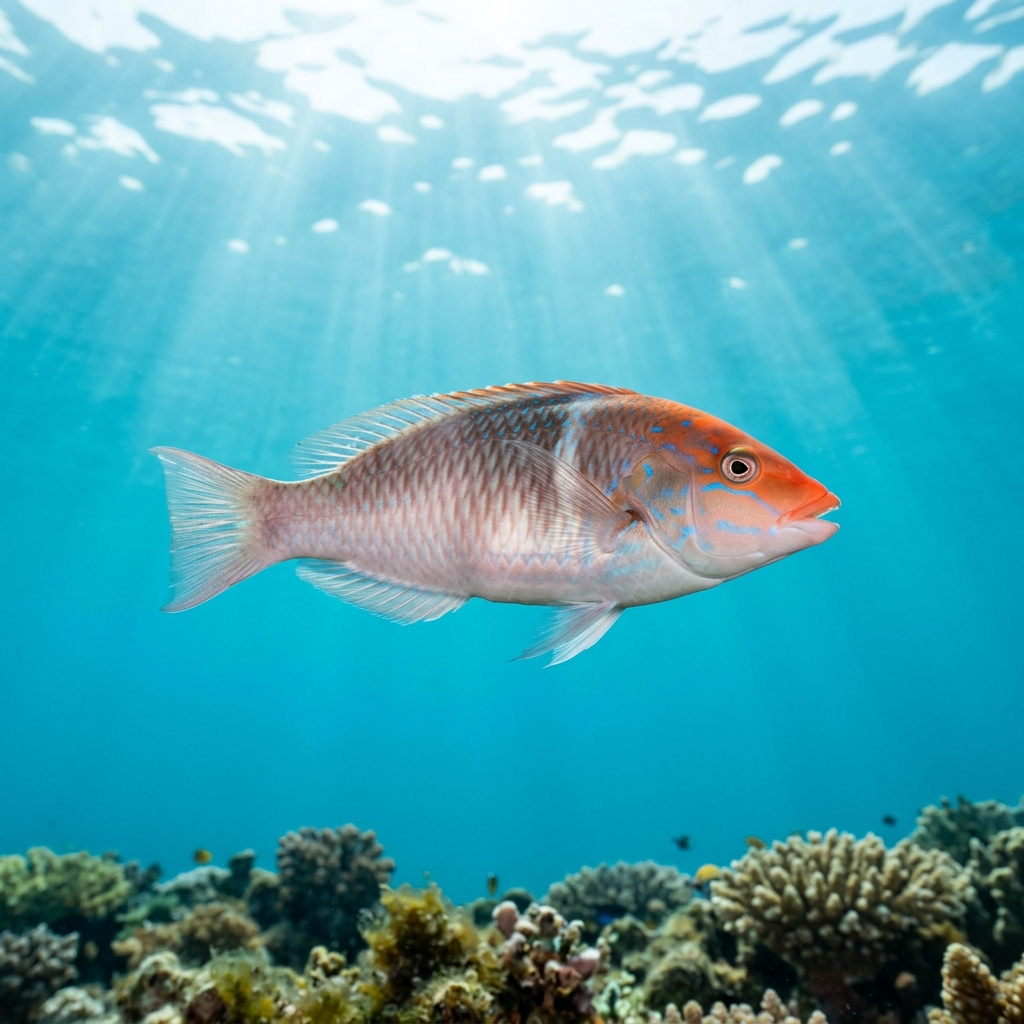
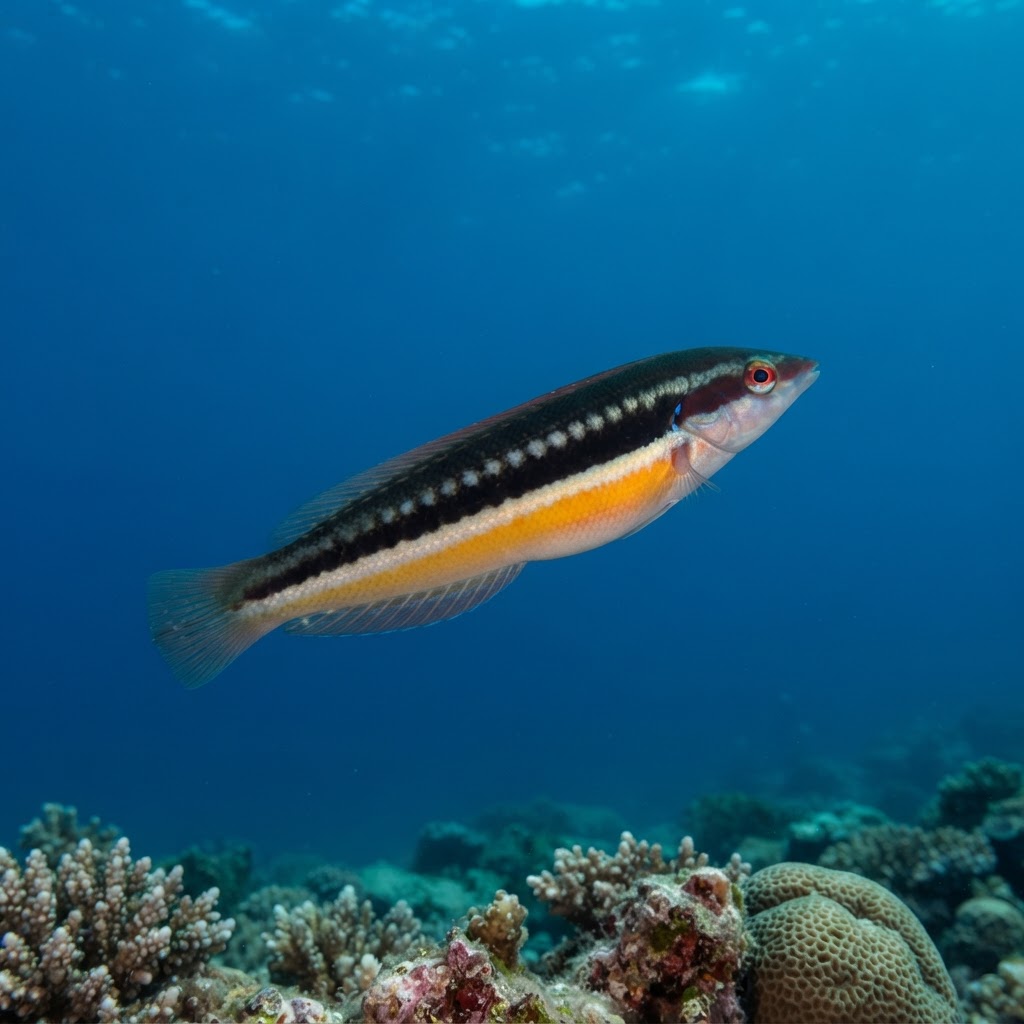
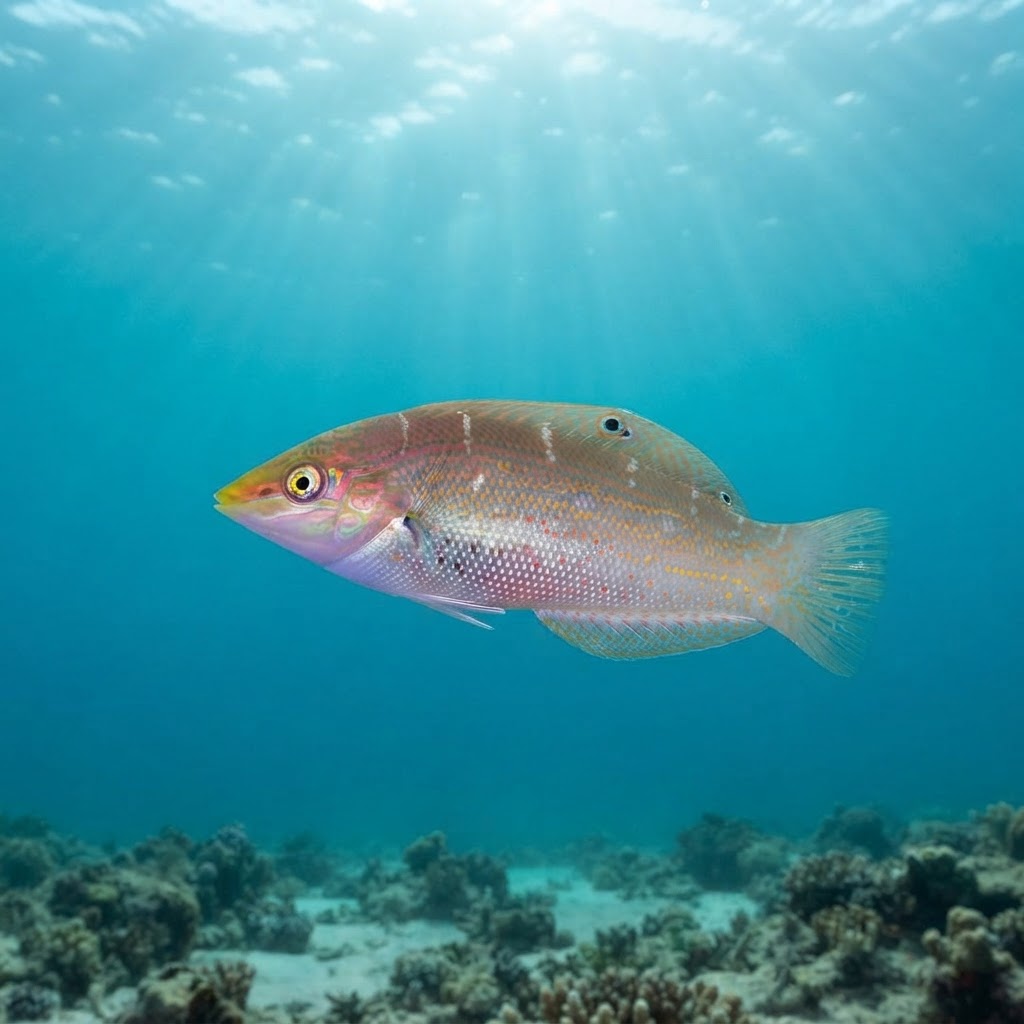
A small, slender wrasse reaching around 14 cm, with a mottled, dappled pattern of brown, cream and rust blotches running along its flanks that gives it a broken-up, camouflaged look against rubble and sand. It has the typical elongated wrasse body shape with a pointed snout, and swims with the darting, wriggling motion common to smaller Coris species. Look for it low on the reef rather than in open water.
Divers most often log this wrasse picking around low reef structure, rubble patches and sandy edges where its mottled pattern blends in, rather than out in clear water. It tends to be uncommon rather than showy at most sites, so it rewards a slower, closer look at the substrate instead of a scan across the reef. Like other small wrasses it is generally unbothered by divers who keep a steady, unhurried pace nearby.
Its dappled, broken-up colouring is a classic disruptive camouflage pattern, helping it disappear against mixed rubble and sand rather than stand out like many reef wrasses.
Sightings show no detected season, and with a comfortable range of 25.1 to 29.3°C, Red Sea reefs stay within that band most of the year, so it is best treated as a year-round find in South Sinai.
Reef neighbours a diver could mistake it for. Use the identification notes above to tell them apart.
This one is very much a Red Sea speciality among logged dives, with sightings concentrated in Egypt and nowhere else in the current data. South Sinai is by far the strongest region, with further records from the Red Sea Riviera and Marsa Alam and the Deep South, so Sinai dive sites are the safest bet for a targeted look.
Mapping where Dapple Coris is logged…
It is most reliably logged in South Sinai, Egypt, with further sightings in the Red Sea Riviera and around Marsa Alam and the Deep South. Current records place it firmly in the Egyptian Red Sea rather than other regions.
There is no clear seasonal pattern in sightings, and it favours warm water between roughly 25 and 29°C, conditions the Red Sea holds for most of the year, so it can turn up on any dive in South Sinai.
Look for a small wrasse, around 14 cm, with a mottled brown, cream and rust pattern that breaks up its outline against rubble and sand. It usually stays low on the reef rather than swimming in open water.
They are a small wrasse, typically reaching around 14 cm in length, making them easy to overlook against a busy reef floor.
No, they pose no danger to divers. They are small, non-aggressive fish that keep to themselves around reef rubble.
Site and sighting data is aggregated from diver logs, iNaturalist and GBIF. For taxonomy and conservation status:
Bird Wrasse
3,632 sites