Cyprinella spiloptera
Spotfin Shiner turns up in the Great Lakes region of Canada and the US in cold water down to nearly 2°C. Here's where divers log it and what to look for.
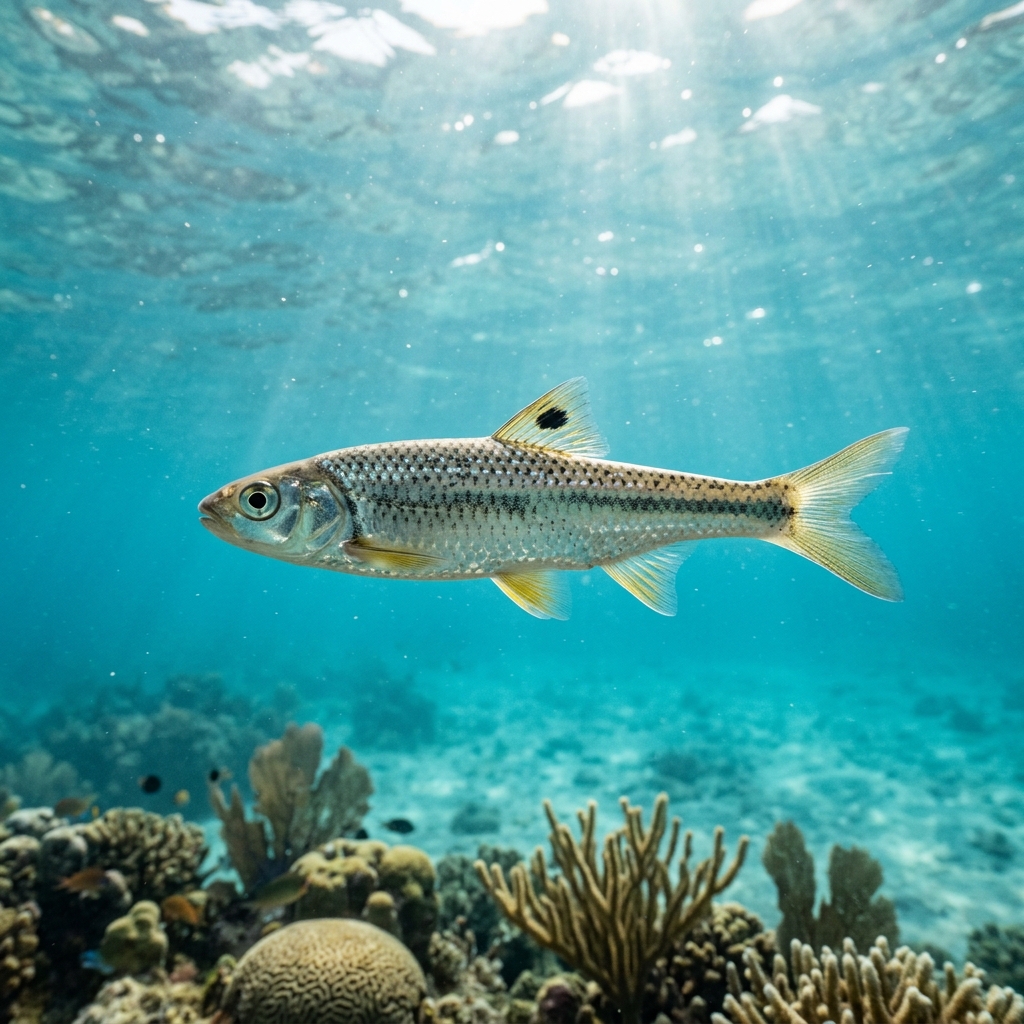
A small, torpedo-shaped minnow with bright silver flanks and a subtle blue-grey lateral band running from gill to tail. The key field mark is a dusky to dark blotch at the base of the dorsal fin, which gives the species its name and is visible even in murky freshwater. The fins are largely clear or faintly pigmented, contrasting with the bold dorsal spot. Body length is modest, so expect to be fairly close before you can confirm the marking.
Spotfin Shiners are active, schooling fish most often seen in open water or just above rocky or gravelly substrates in rivers, streams, and lake margins. They tend to be skittish and will scatter if a diver moves quickly, so a slow, patient approach gives the best view. Look for loose groups moving together in the mid-water column rather than hugging the bottom.
During the breeding season males develop bright blue iridescence on their flanks and intensified fin pigmentation, making spawning individuals noticeably more colourful than the plain silver fish seen at other times of year.
There is not enough monthly sighting data to point to a specific season, so it should be treated as potentially present year-round. Observed water temperatures range from near freezing to around 22°C, which is consistent with a cold-tolerant freshwater species active across multiple seasons in the Great Lakes region.
Almost all diver sightings come from the Great Lakes and Ontario region of Canada, making that the primary place to look for this species. A small number of records also come from the Great Lakes and Northeast region of the United States. Sightings are uncommon rather than routine at most sites, so treat any encounter as a bonus rather than a guaranteed find.
Mapping where Spotfin Shiner is logged…
Diver records are concentrated in the Great Lakes and Ontario region of Canada, with a smaller number of sightings from the Great Lakes and Northeast region of the United States. Freshwater dive sites in rivers, streams, and shallow lake margins within this range are your best starting point.
There is no clear seasonal peak in the available sighting data, so encounters can happen across different times of year. The species tolerates cold water well, having been observed at temperatures close to 2°C, so cold-water freshwater dives in the Great Lakes region are worth attempting even outside summer.
Look for a small, slender silver minnow with a dusky or dark blotch at the base of the dorsal fin. That dorsal spot is the defining mark and distinguishes it from many similar small minnows in the same waters. A faint blue-grey lateral stripe adds a secondary clue.
Spotfin Shiners are small minnows, typically reaching around 6 to 9 centimetres in total length in the wild. Their modest size means you need a reasonably close approach to confirm the key dorsal spot field mark.
No. Spotfin Shiners are completely harmless to divers. They are small, shy fish that will swim away long before you get close enough to be any concern.
Yes, during the breeding season males become noticeably more colourful, displaying blue iridescence on the flanks and intensified fin pigmentation. Outside the breeding season both sexes appear as plain silver fish, making the dorsal spot the more reliable year-round identification feature.
Site and sighting data is aggregated from diver logs, iNaturalist and GBIF. For taxonomy and conservation status:
Sun Perch
2,182 sites