Stethojulis interrupta
A small, dashing reef wrasse logged from Visayas to New South Wales, most often spotted as an uncommon find in 24-29C water.
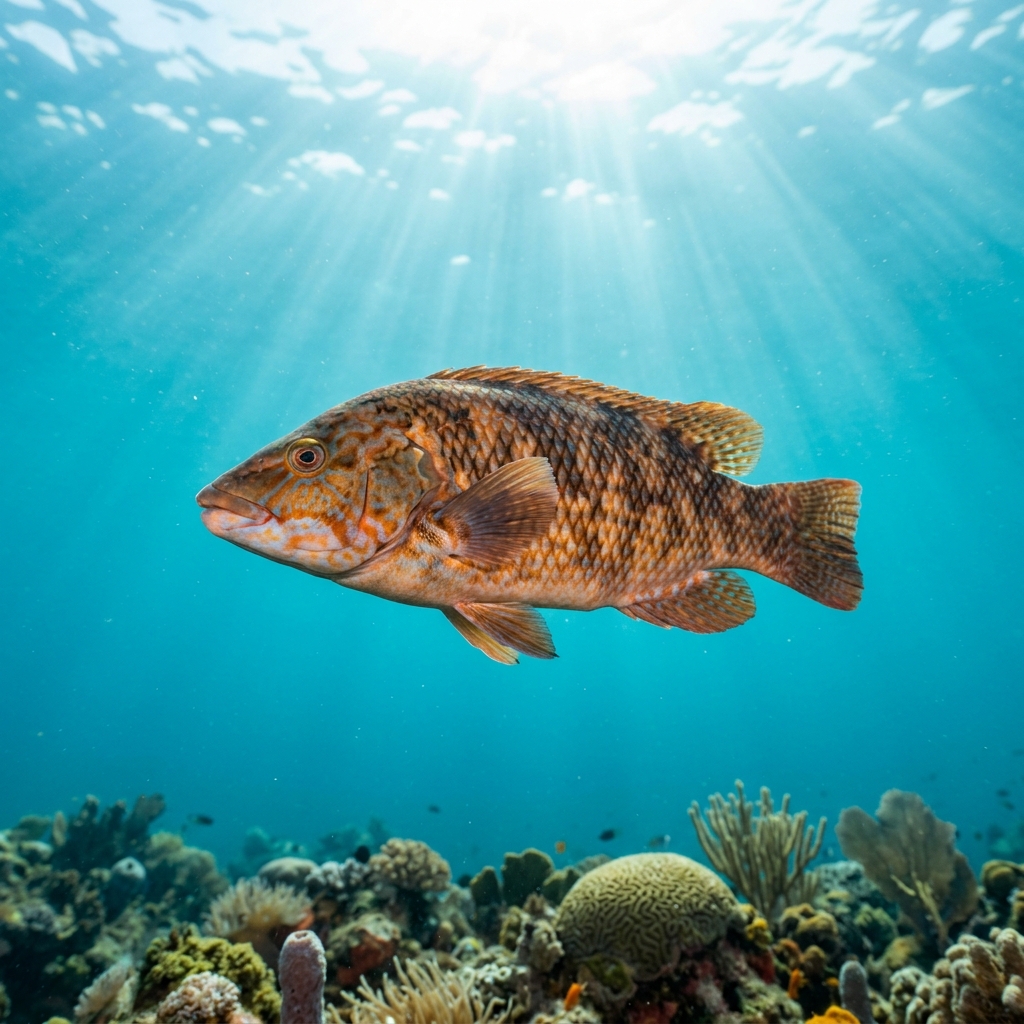
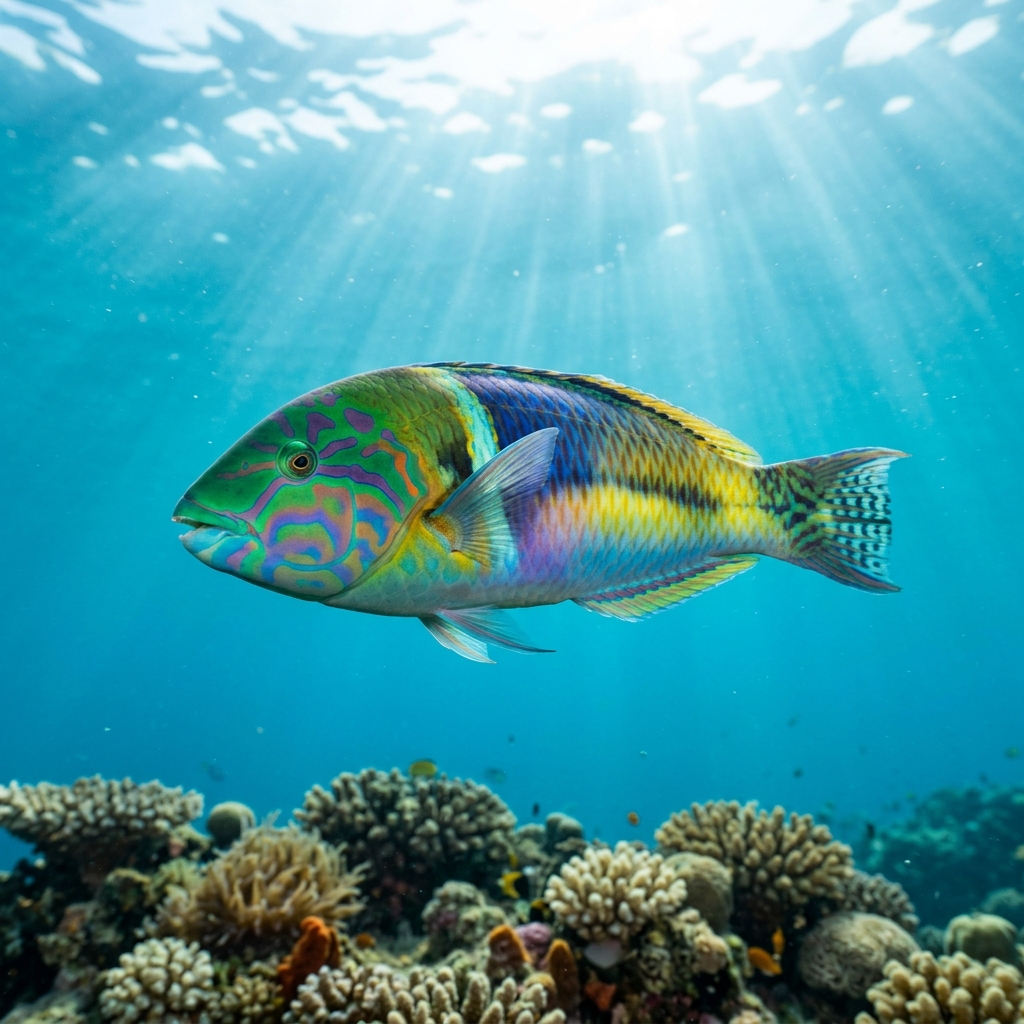
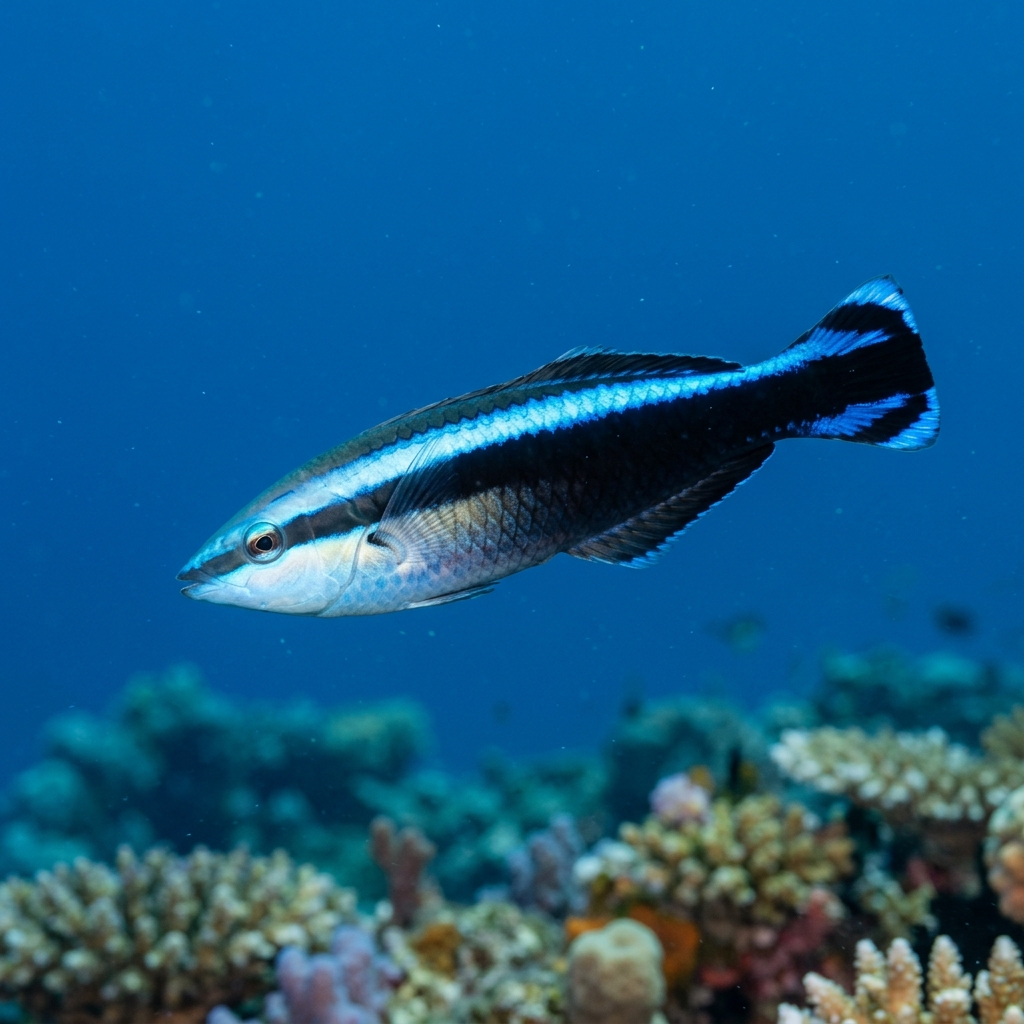
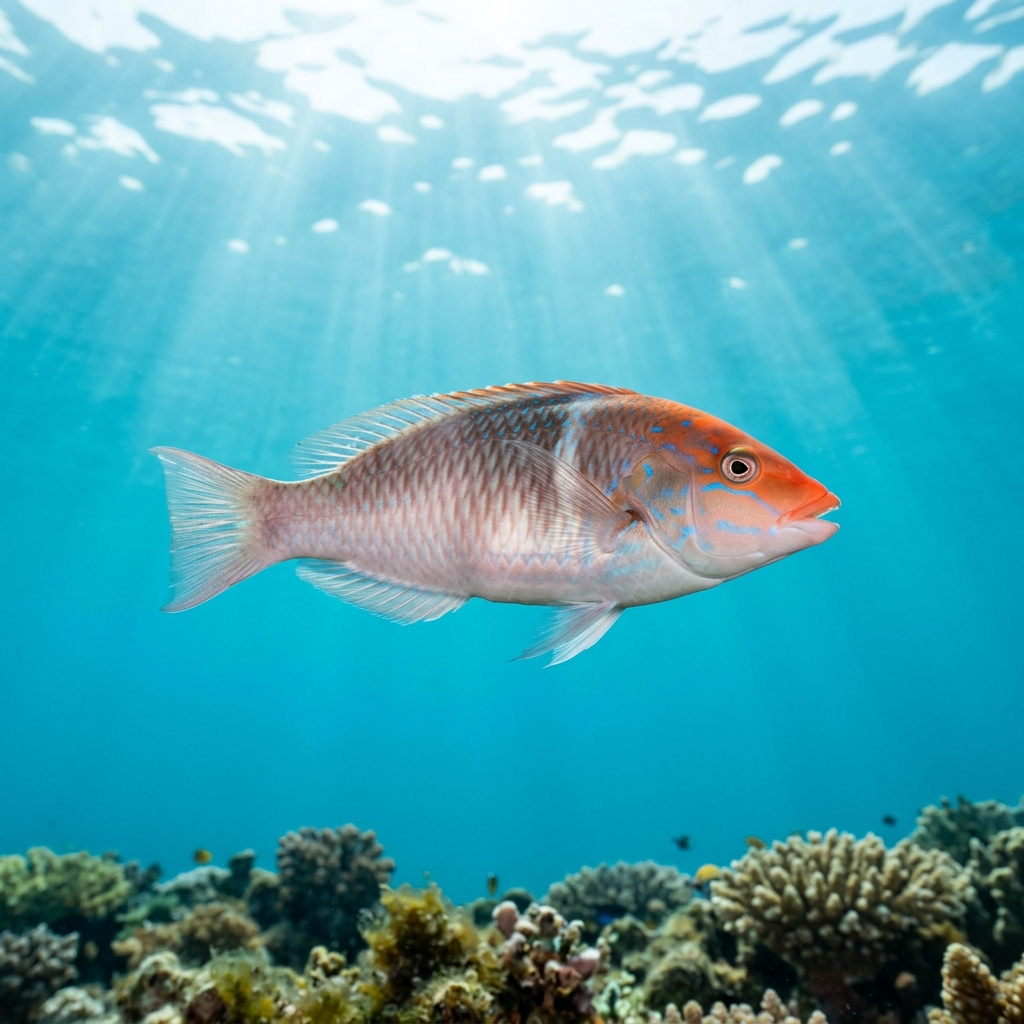
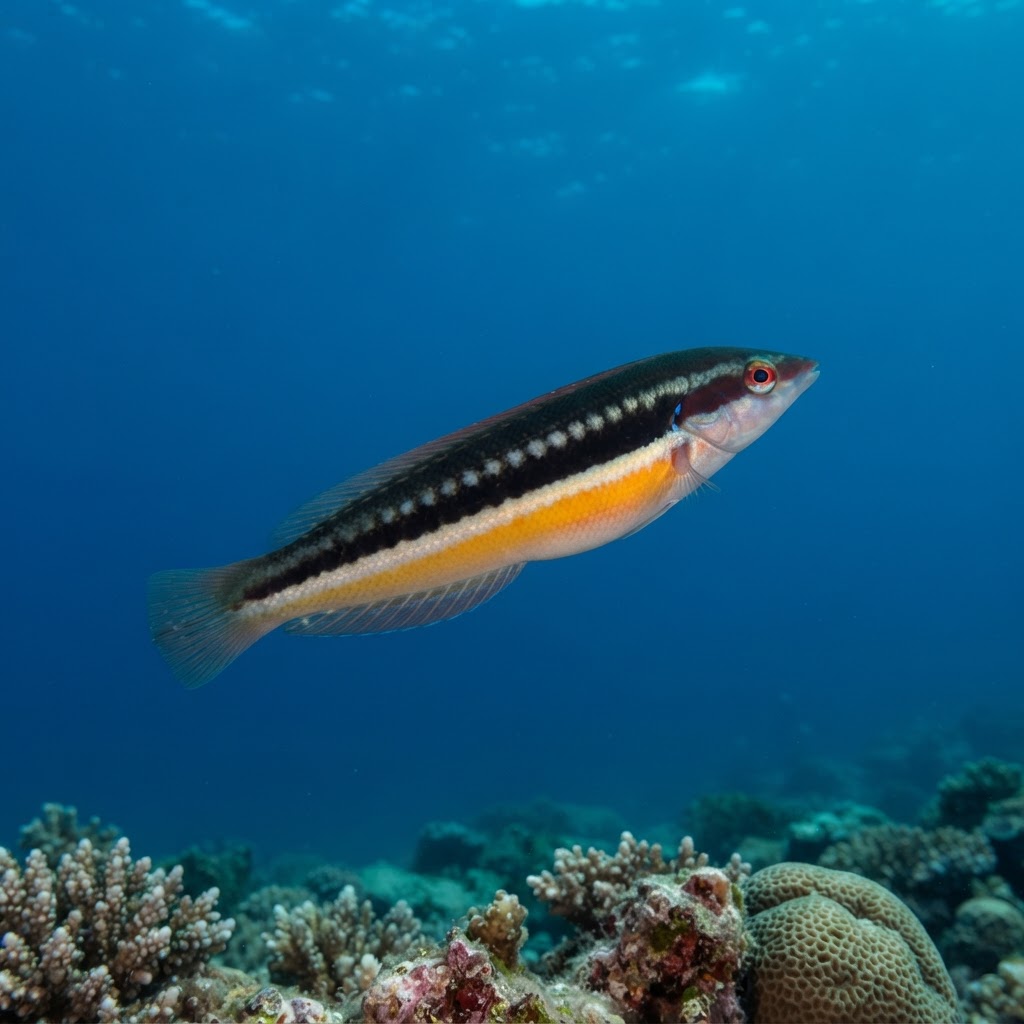
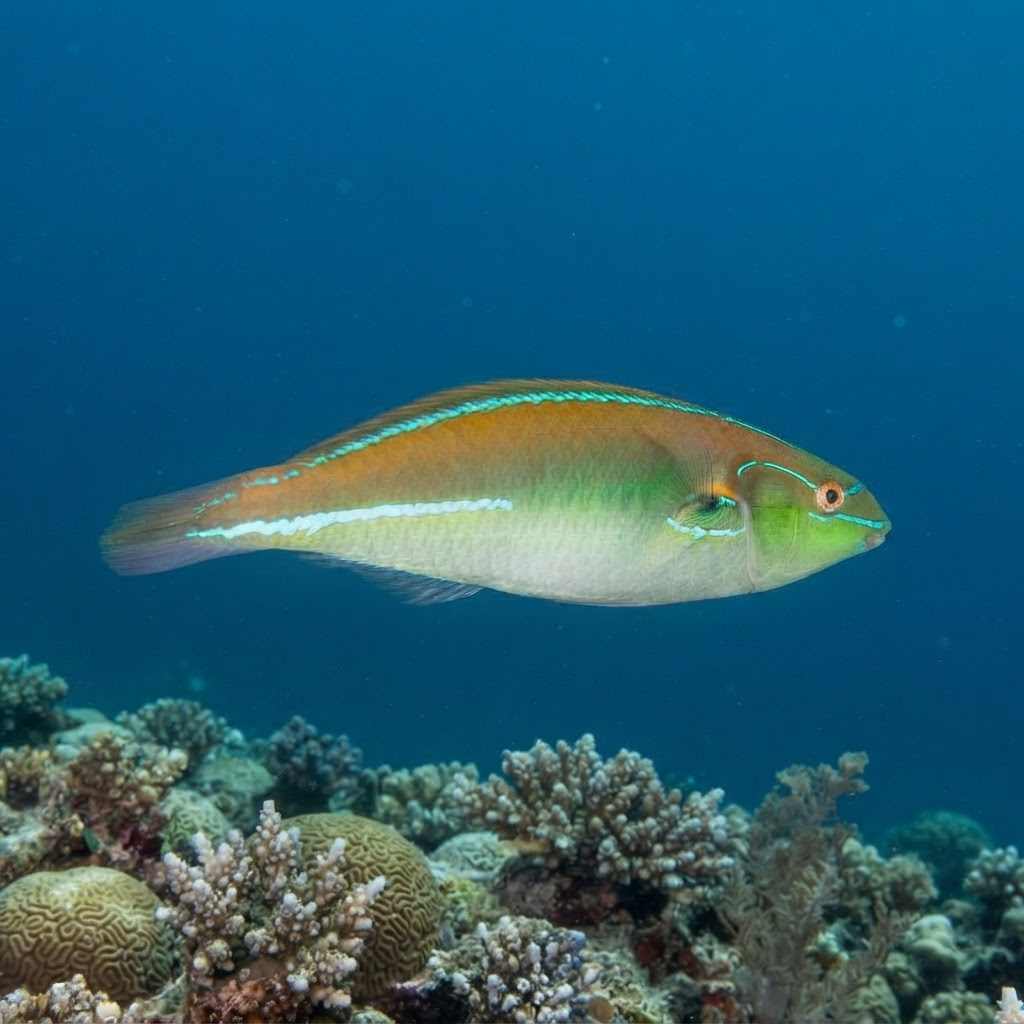
A slim, torpedo-shaped wrasse that tops out around 10 cm, so easy to miss unless you slow down and scan the reef flat. Look for the broken blue-and-orange stripe running along the flank, the feature that gives it the 'cutribbon' name, set against an olive to pale grey body. It swims in short darting bursts rather than a steady glide, which often gives it away before the colour does.
Divers mostly find it picking around low reef structure, rubble patches and weedy margins, foraging for small invertebrates rather than schooling in the open. It is not bold around divers, tending to dart for cover between rocks when approached rather than holding its ground, so a patient, slow pass usually gets you the better look. Most logs describe single fish or small loose groups rather than large gatherings.
Like many small wrasses it is a carnivore that picks tiny invertebrates off the reef surface and rubble, making it a small but steady part of the reef's clean-up crew rather than a grazer of algae.
Sightings show no clear seasonal pattern, and with a comfortable range of 24.3 to 29.2C it seems to be present on these reefs year-round. Plan around good visibility and calm conditions at your chosen site rather than chasing a particular month.
Most reliably logged in New South Wales, Australia, and across the Visayas in the Philippines, with smaller but real records from Dili in Timor-Leste, Koh Phi Phi in Thailand and Sai Kung in Hong Kong. Across its logged range it tends to turn up as an uncommon extra on the reef rather than a headline sighting, so it rewards divers who check the rubble and weedy edges rather than just the open reef face.
Mapping where Cutribbon Wrasse is logged…
It shows up most reliably on reefs in New South Wales, Australia, and through the Visayas region of the Philippines, with additional sightings logged around Dili in Timor-Leste, Koh Phi Phi in Thailand and Sai Kung in Hong Kong.
There is no strong seasonal pattern in the sightings, and its comfortable temperature range of roughly 24 to 29C means it is present on tropical and subtropical reefs throughout the year.
Watch for a small, slim wrasse around 10 cm long with a broken blue-and-orange stripe along its side and an olive-grey body, moving in quick darting bursts low over rubble and reef edges.
They are a small reef wrasse, typically reaching only about 10 cm in length, which is part of why they are easy to overlook against busier reef life.
No, they pose no threat to divers. They are small, shy carnivorous fish that dart away from divers rather than approach or defend territory aggressively.
Site and sighting data is aggregated from diver logs, iNaturalist and GBIF. For taxonomy and conservation status:
Bird Wrasse
3,632 sites