Tautogolabrus adspersus
Mottled brown and often overlooked, cunner turn up on nearly half the cold-water dive sites logged across Nova Scotia and the US Northeast.
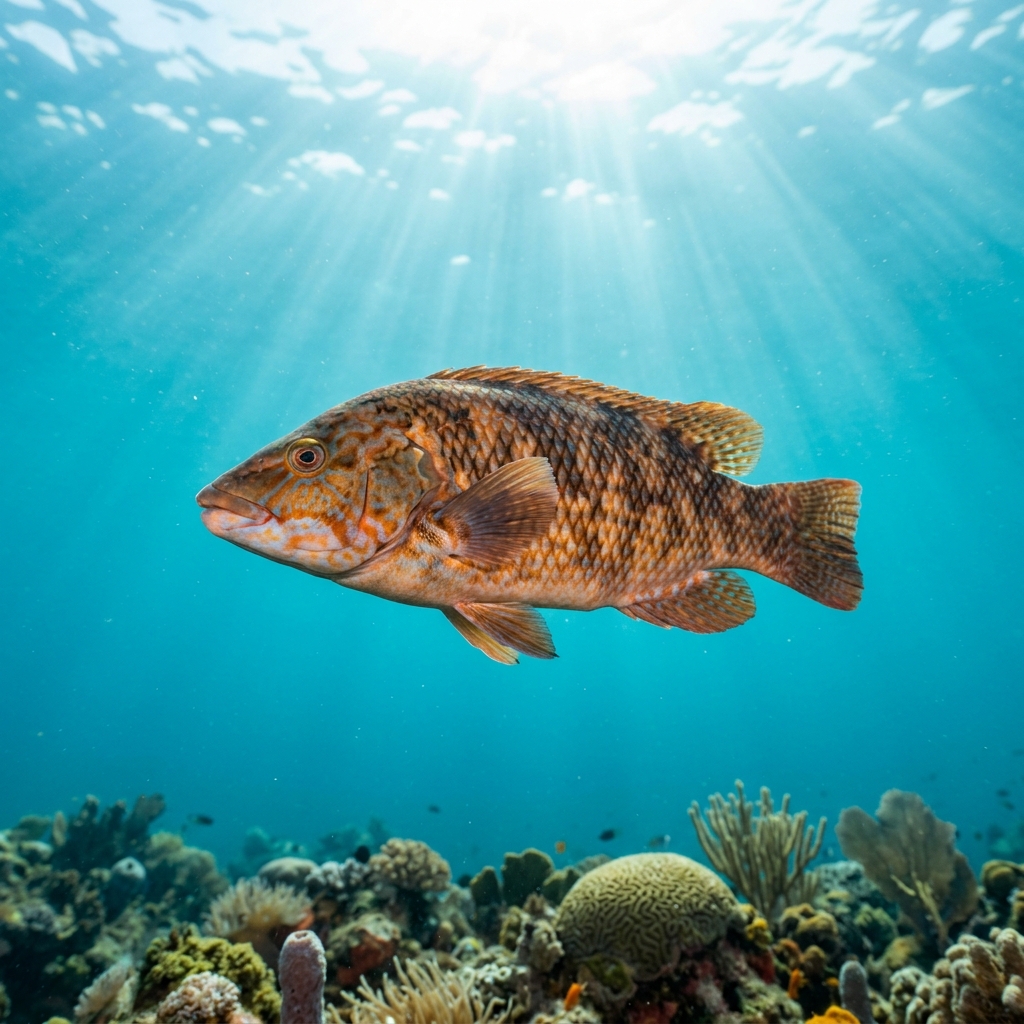
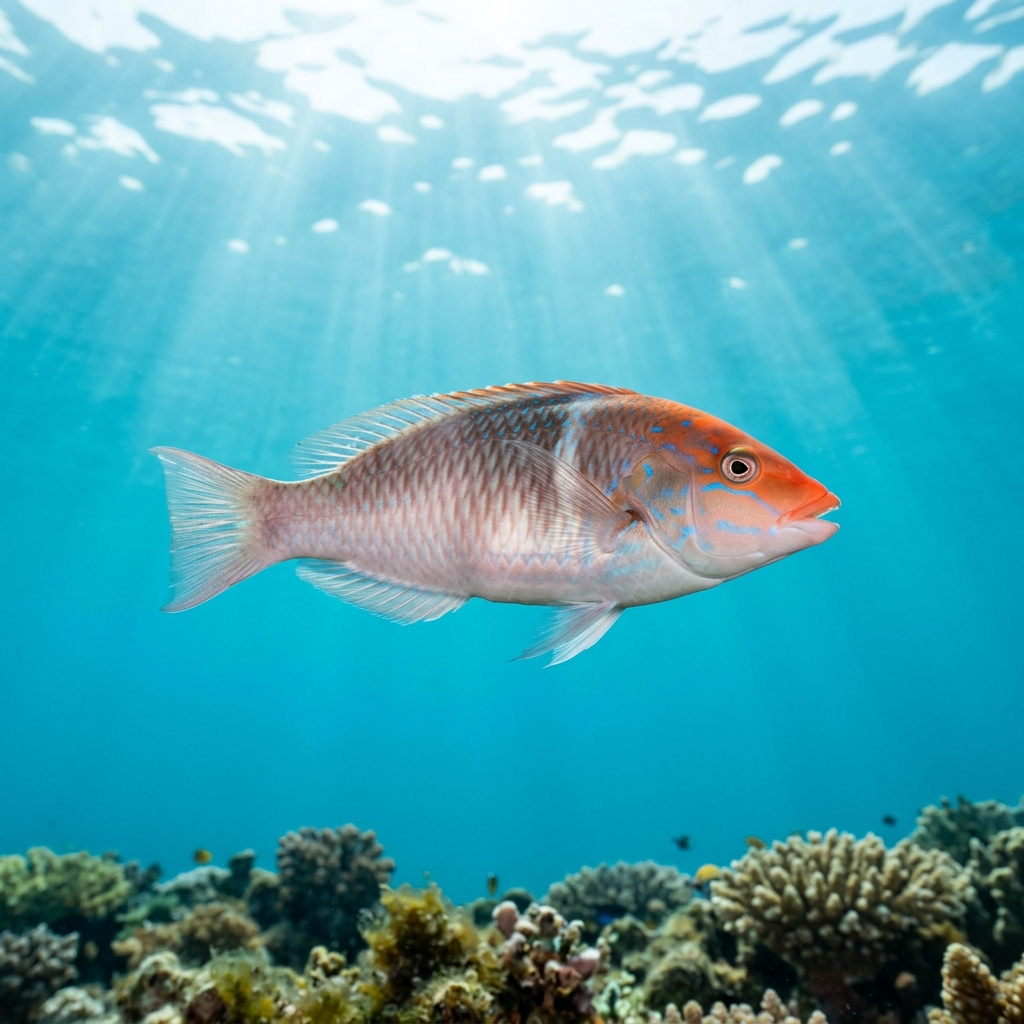
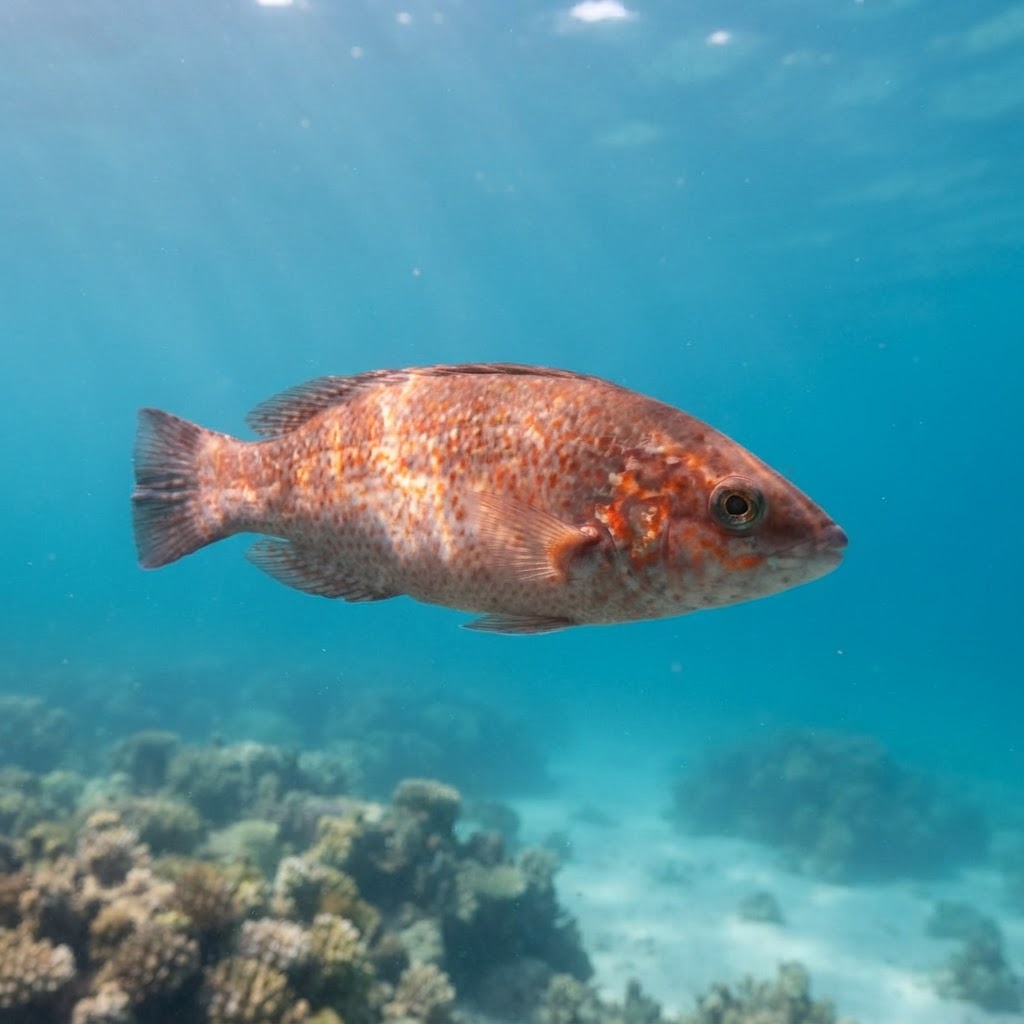
Expect a stocky, slightly hump-backed wrasse up to about 31cm, coloured in mottled shades of brown, olive and rust that blend into rocky, weedy bottoms. It has a single continuous dorsal fin running most of its back and thick lips, giving it a slightly grumpy, blunt-faced look compared to tropical wrasses. Colour varies a lot between individuals and habitat, from pale sandy tones to almost dark green, which is part of why it is easy to miss against kelp and rock.
Divers most often find cunner hovering close to rock crevices, wharf pilings or kelp holdfasts, picking at small invertebrates rather than swimming in open water. It is generally unbothered by divers and will often hold its position or duck just out of reach rather than bolting, making it an easy fish to watch closely if you slow down. Most logs describe it as uncommon to common at a site rather than schooling in numbers.
Cunner are known to go dormant on the bottom in the coldest winter water, becoming sluggish and easy to approach, a behaviour tied directly to the near-freezing end of their temperature range.
Sightings are logged year-round with no strong seasonal pattern, and the species tolerates water from near freezing up to about 10.6C, so cold months will not shut it out. Dive it whenever you are already diving the Northeast US or Atlantic Canada coast.
Cunner shows up most reliably in cold Atlantic water, with the strongest logging in Nova Scotia, Quebec and New Brunswick in Canada and across the Northeast United States. It is the classic wrasse of rocky reefs, wharves and kelp-strewn bottoms in this region rather than anything you will find on a tropical trip.
Mapping where Cunner is logged…
Cunner is most commonly logged in Atlantic Canada, especially Nova Scotia, Quebec and New Brunswick, along with the Northeast United States. It favours rocky reefs, wharves and kelp beds rather than open water.
There is no strong season in the data, so cunner can be found year-round wherever the water sits between roughly 0.5 and 10.6C. Cold-water divers in Atlantic Canada and the US Northeast can expect to see it on most dives to suitable rocky habitat.
Look for a stocky wrasse up to about 31cm with a single long dorsal fin, thick lips and mottled brown, olive or rust colouring that camouflages against rock and kelp. Its blunt-faced, slightly hump-backed shape sets it apart from more streamlined fish on the same reef.
Cunner typically reach around 31cm in length, making them a modest-sized wrasse rather than a large reef fish.
No, cunner pose no danger to divers. They are a small, non-aggressive wrasse that tends to hold still or retreat into cover rather than react defensively.
In the coldest winter water cunner can become dormant on the seabed, sitting still and sluggish until temperatures rise, which makes them unusually easy to approach at that time of year.
Site and sighting data is aggregated from diver logs, iNaturalist and GBIF. For taxonomy and conservation status:
Bird Wrasses
3,632 sites