Ctenochaetus strigosus
Spot the spotted surgeonfish in Hawaii year-round at 24-27 °C. Learn how to ID it on the reef and where divers log it most often.
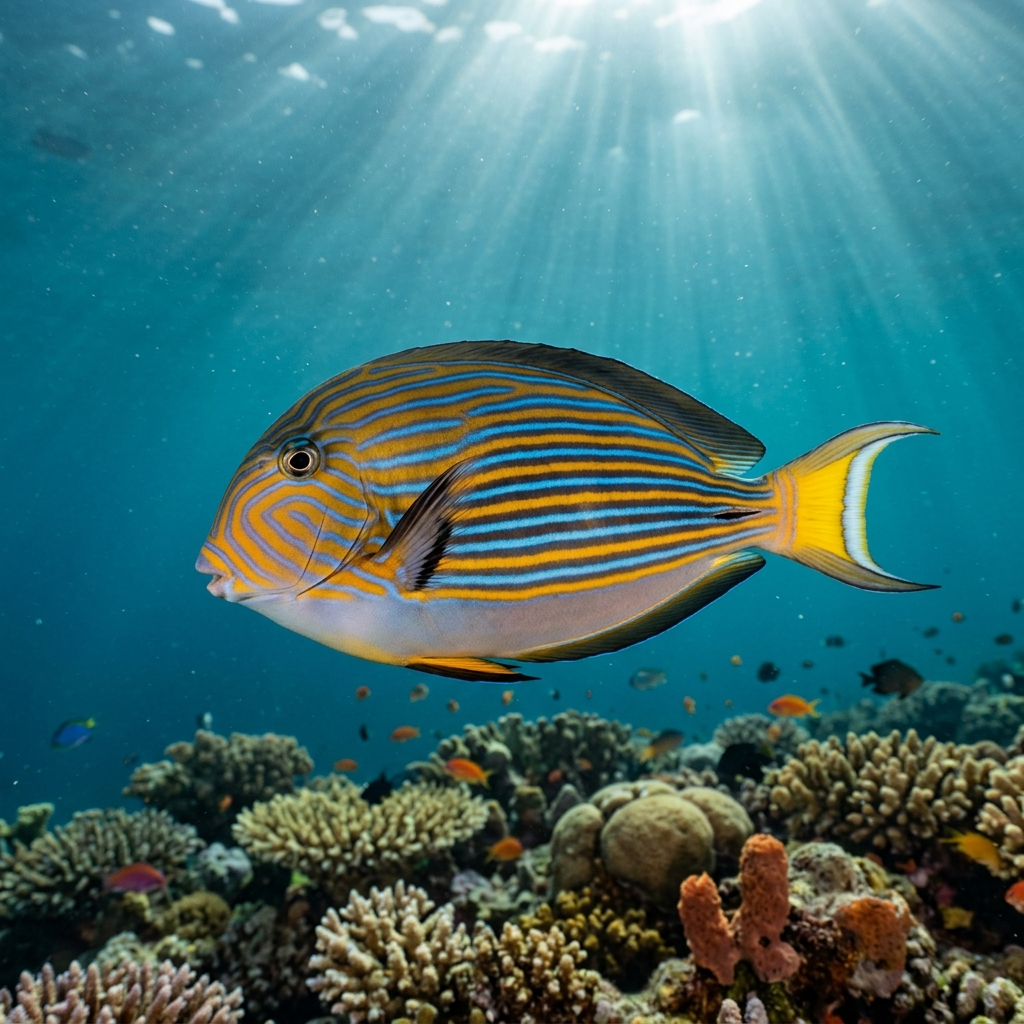
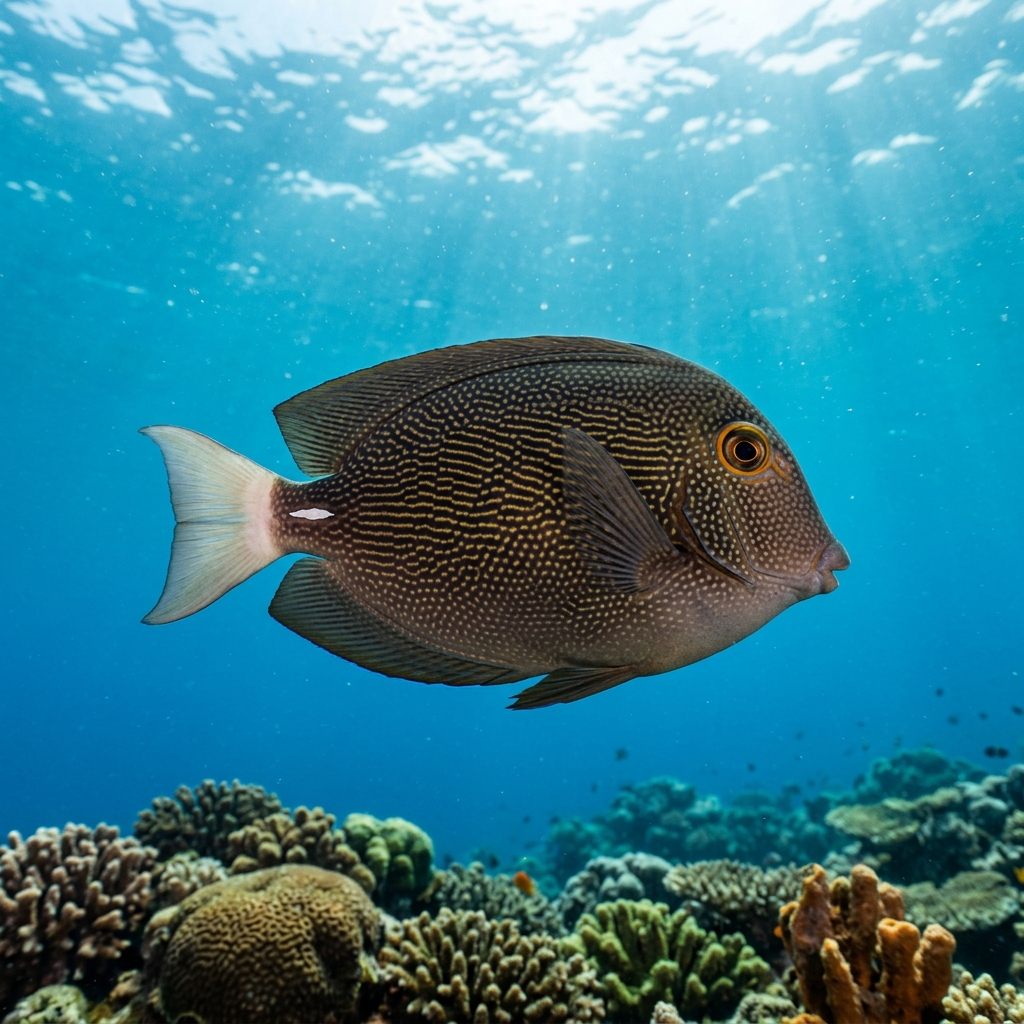
Dark olive-brown to blackish body covered in a dense pattern of small pale blue-white spots gives this fish its name and makes it easy to pick out once your eye is trained. It has the classic surgeonfish body shape: oval, laterally compressed, with a small mouth adapted for grazing. Near the base of the tail sits the scalpel-like spine (the caudal spine common to all surgeonfish), which is tucked flat but present. Adults are typically palm-sized, giving them a compact, rounded look compared to the larger tangs sharing the same reef.
You will typically find spotted surgeonfish grazing methodically over hard substrate, using their comb-like teeth to scrape detritus and algae off rock surfaces. They tend to stay fairly close to the reef and are not particularly skittish, a slow, patient approach usually lets you get a good look. Sightings are most often solitary or in loose groups rather than large schools.
Those comb-like teeth (giving the genus name Ctenochaetus, meaning 'comb spine') are specialised for detritivory, scraping up the fine layer of organic material and sediment on reef surfaces rather than cropping algae outright, which makes them an important part of reef cleaning dynamics.
Hawaii's reefs sit comfortably within this fish's observed temperature range of 24 to 27 °C year-round, and the data confirms no concentrated season, you can expect to encounter it on any dive, in any month.
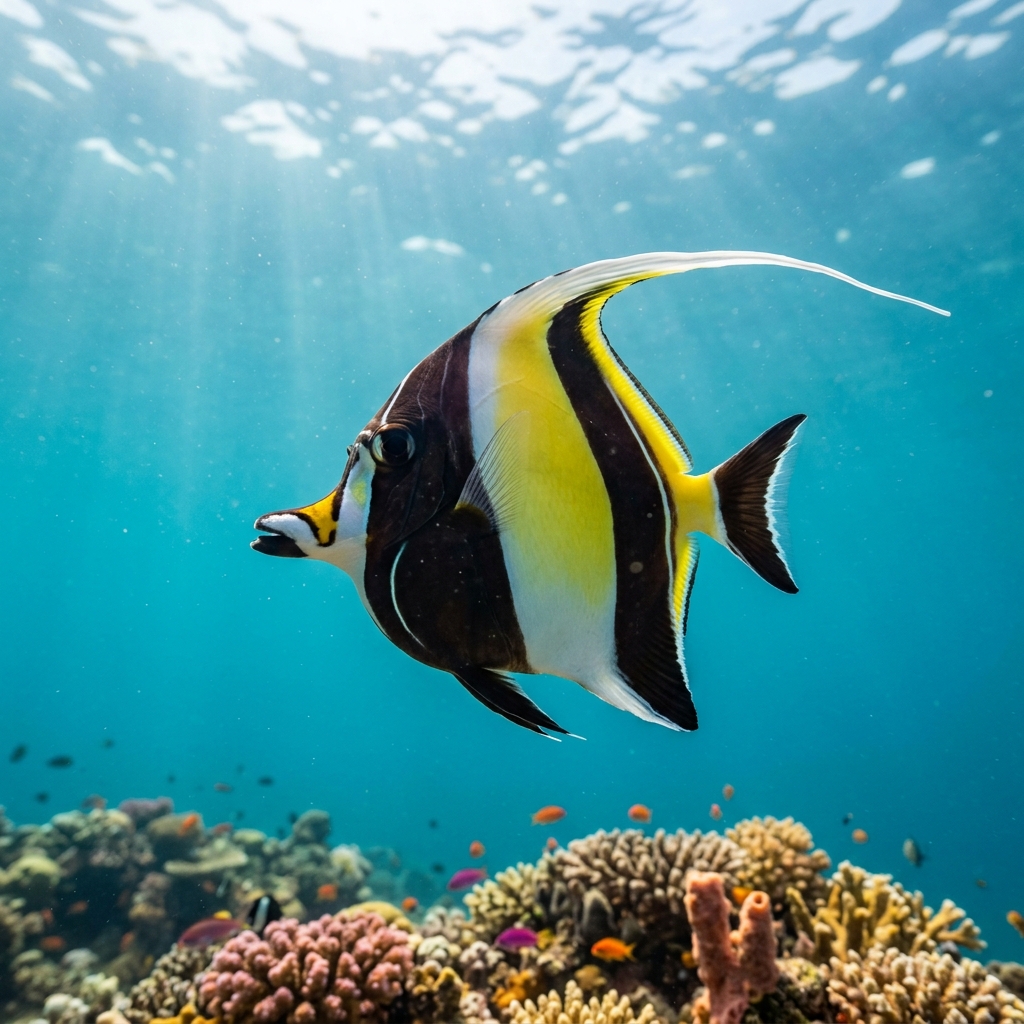
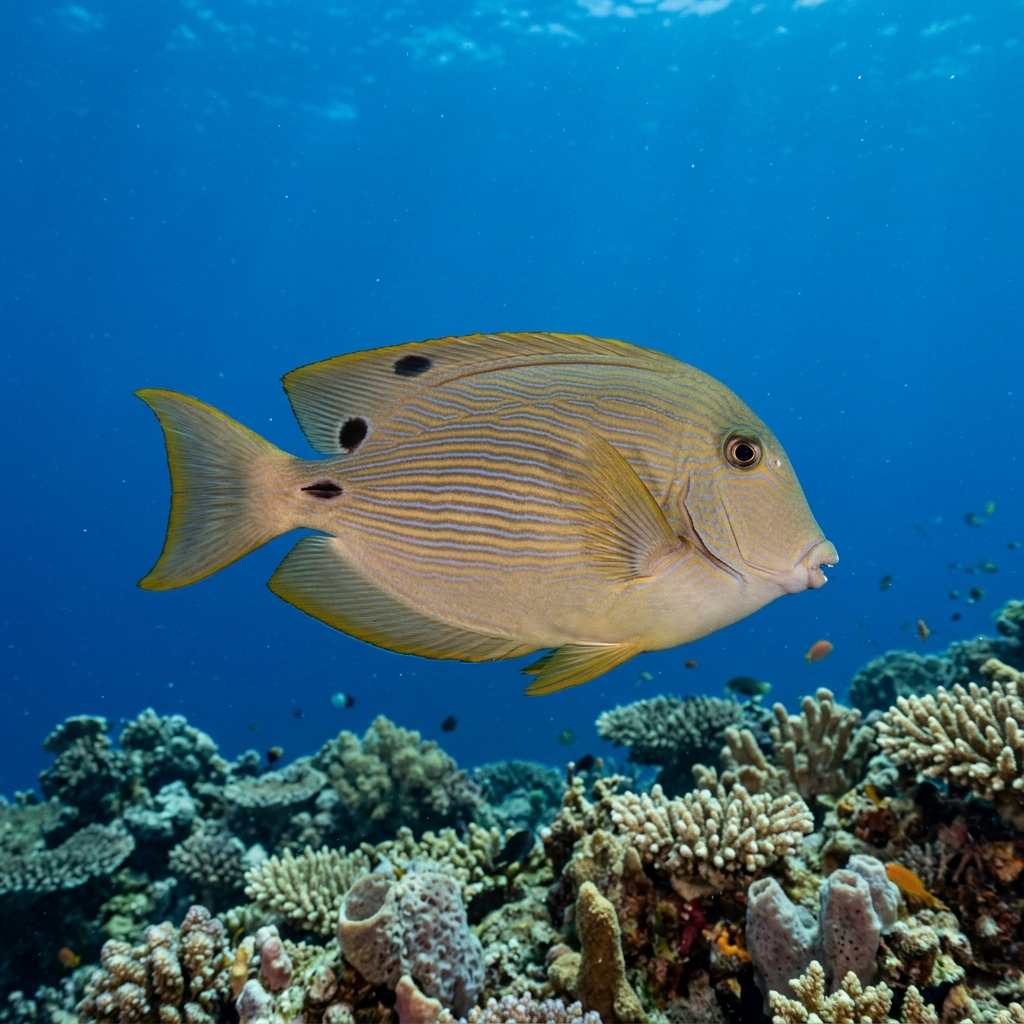
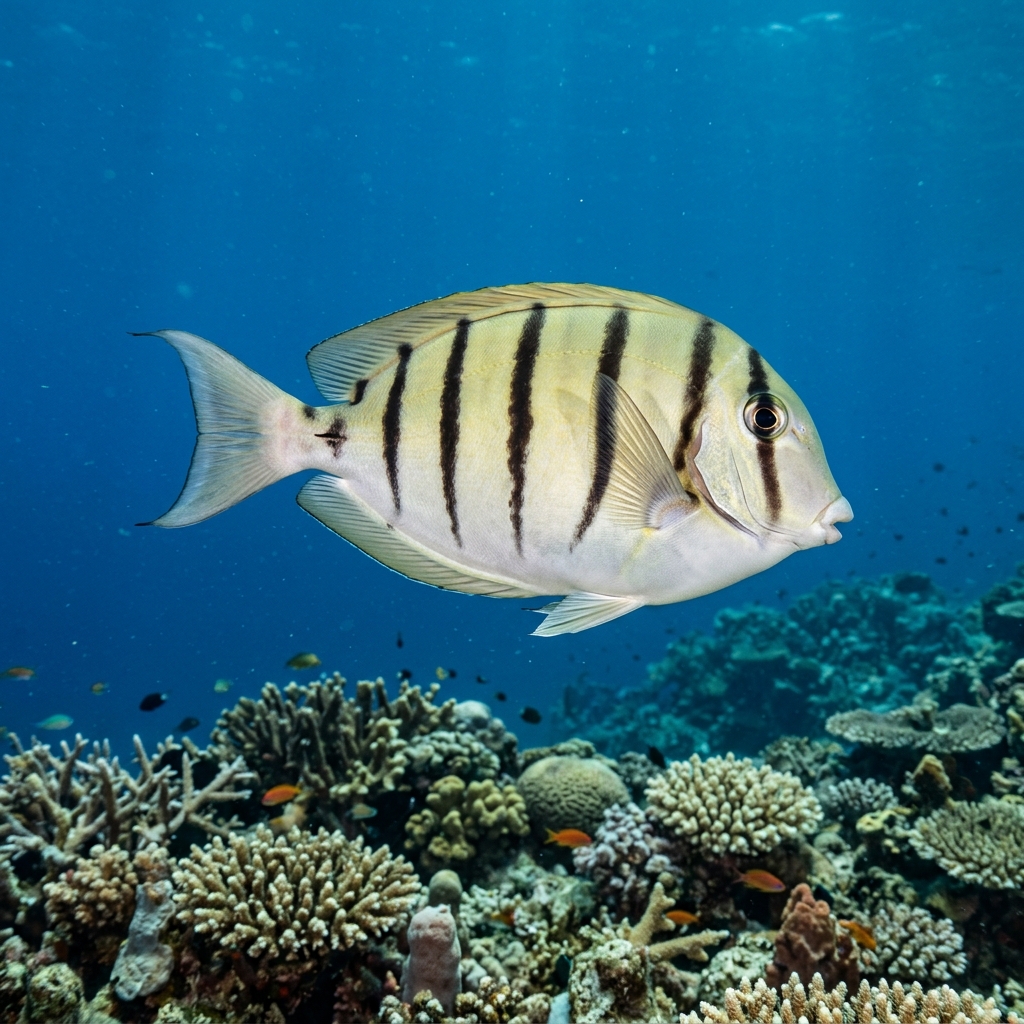
Reef neighbours a diver could mistake it for. Use the identification notes above to tell them apart.
Almost all diver sightings come from Hawaii, making it effectively a Hawaiian reef fish as far as logged encounters go. Within the Hawaiian Islands it turns up across a wide spread of dive sites, from shallow inshore reefs to more exposed rocky slopes. A single outlier record exists from Patagonia, but Hawaii is overwhelmingly where you will find it.
Mapping where Spotted Surgeonfish is logged…
Hawaii is by far the best place to see them, accounting for almost all logged diver sightings. They appear across a wide range of Hawaiian dive sites on rocky and coral reefs, from shallow snorkel depths to recreational diving depths.
They are present year-round. Hawaii's water temperatures stay within the 24 to 27 °C range this species favours throughout the year, so there is no single peak season, any trip has a reasonable chance of an encounter.
Look for a compact, oval, dark-bodied fish covered in small pale blue-white spots. The spotting is the key feature, no other common Hawaiian surgeonfish has this dense pale-spot pattern on a near-black body. Its small mouth and flattened profile are typical of the surgeonfish family.
Diver data rates them as uncommon at most sites, with a smaller number of sites where they are reliably common. You will not encounter them on every dive, but regular diving across Hawaiian reefs gives you a good cumulative chance of a sighting.
No. Like all surgeonfish they carry a sharp caudal spine on each side of the tail, but this is a passive defence used to deter predators, not directed at divers. Normal respectful distance means there is no risk.
Site and sighting data is aggregated from diver logs, iNaturalist and GBIF. For taxonomy and conservation status:
Striped Surgeonfish
3,289 sites