Sargocentron diadema
Uncommon but reliable in South Sinai and Zanzibar reefs, this red-striped squirrelfish hides in crevices at 24.7-29C year-round.
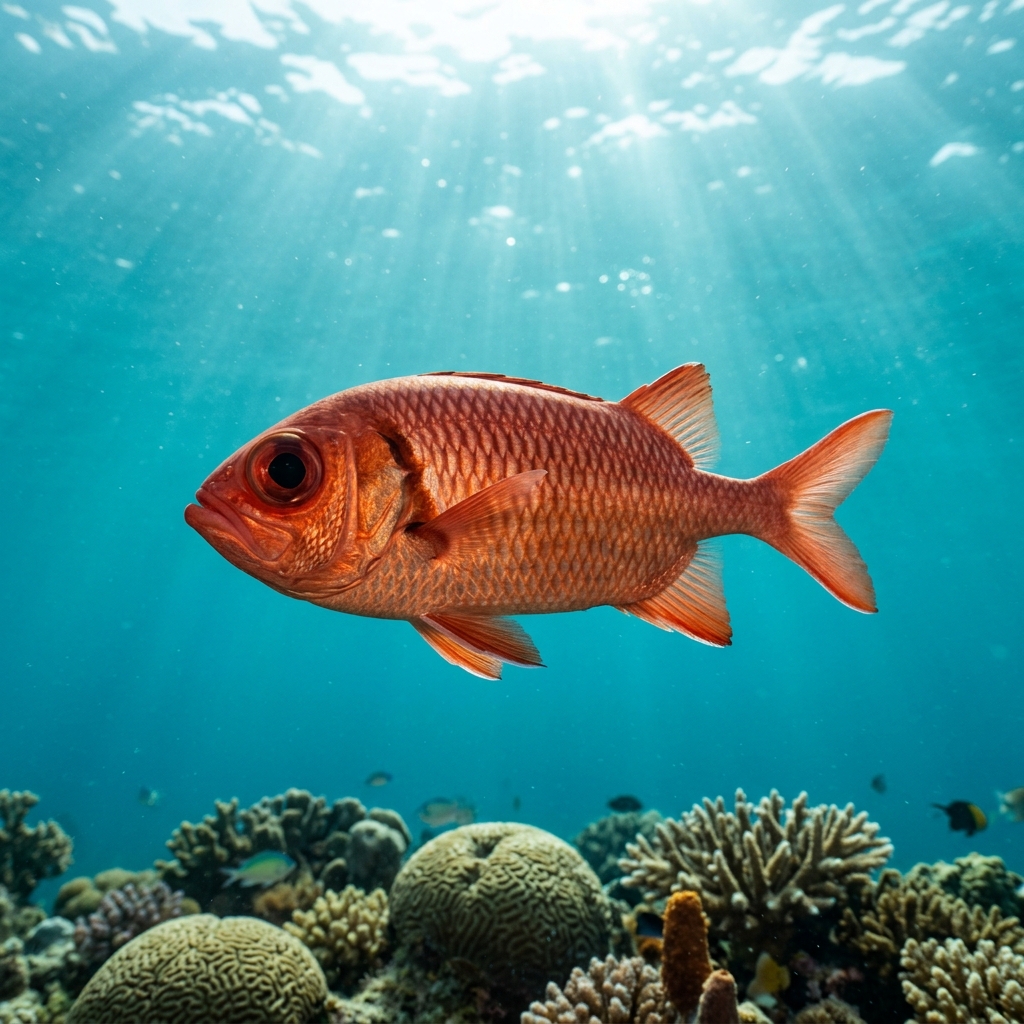
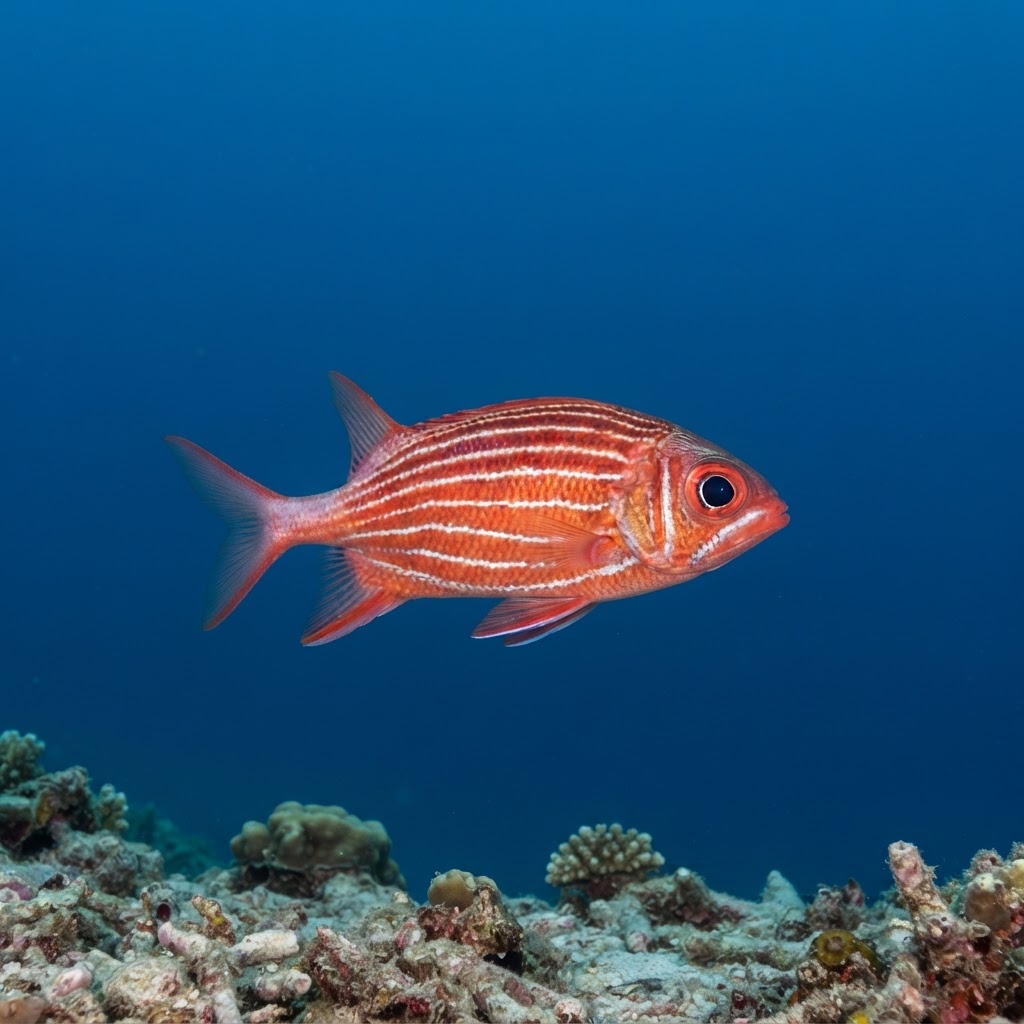
A small, deep-bodied fish under 12 cm with alternating red and white horizontal stripes running nose to tail. Big, dark, reflective eyes give it away in torch light or shadow, an adaptation for its dawn and dusk habits. Look for a dark spot at the front of the spiny dorsal fin and slightly forked tail as it hovers near a hole rather than swimming in open water.
Expect to find it wedged into a crevice, under a ledge, or pressed against the underside of a coral head during the day, staying mostly still and relying on camouflage rather than fleeing. It becomes more active around dusk and at night, when it moves out to feed on small invertebrates over the reef. Most divers spot it with a torch beam catching those big reflective eyes deep in a hole.
Like other squirrelfish, it has large eyes built for low-light foraging, so daytime sightings are almost always of a fish sitting still in shelter rather than one out feeding.
No clear seasonal pattern shows up in the data, and its comfort range of roughly 24.7 to 29C matches tropical reefs year-round, so any month works. Divers log it consistently across all its main countries rather than in a particular season.
Most reliably logged in Egypt, especially South Sinai and the Red Sea Riviera, where it turns up in reef crevices and under ledges. Strong secondary populations sit in Tanzania (Zanzibar and Pemba Island), Mauritius around Flic-en-Flac, and the Maldives' Central Atolls, with further sightings in the Philippines' Visayas, Kenya, Israel's Eilat, and Jordan.
Mapping where Crown Squirrelfish is logged…
South Sinai in Egypt is the strongest area for sightings, with further reliable reports from Zanzibar and Pemba Island in Tanzania, Flic-en-Flac in Mauritius, and the Central Atolls of the Maldives.
There is no strong season in the sighting data. It sits in reef crevices year-round across its range, comfortable in water from about 24.7 to 29C, so any month of diving gives a reasonable chance.
Look for a small, deep-bodied fish with red and white horizontal stripes, large dark eyes, and a dark mark at the front of the spiny dorsal fin. It is usually tucked into a crevice or under a ledge rather than out swimming.
They are a small reef fish, typically reaching around 11 cm in length, so they are easy to overlook unless you are peering into holes and under ledges.
No, they pose no danger to divers. They are shy, shelter-dwelling fish that retreat further into crevices rather than confront anything approaching.
Their oversized eyes are adapted for low-light foraging at dawn, dusk, and night, when they leave their daytime shelters to hunt small invertebrates over the reef.
Site and sighting data is aggregated from diver logs, iNaturalist and GBIF. For taxonomy and conservation status:
Soldierfish
3,612 sites