Brachysomophis henshawi
Buried in sand with just its bug-eyed head showing, this eel is uncommon but reliable across the Philippines' Visayas region.
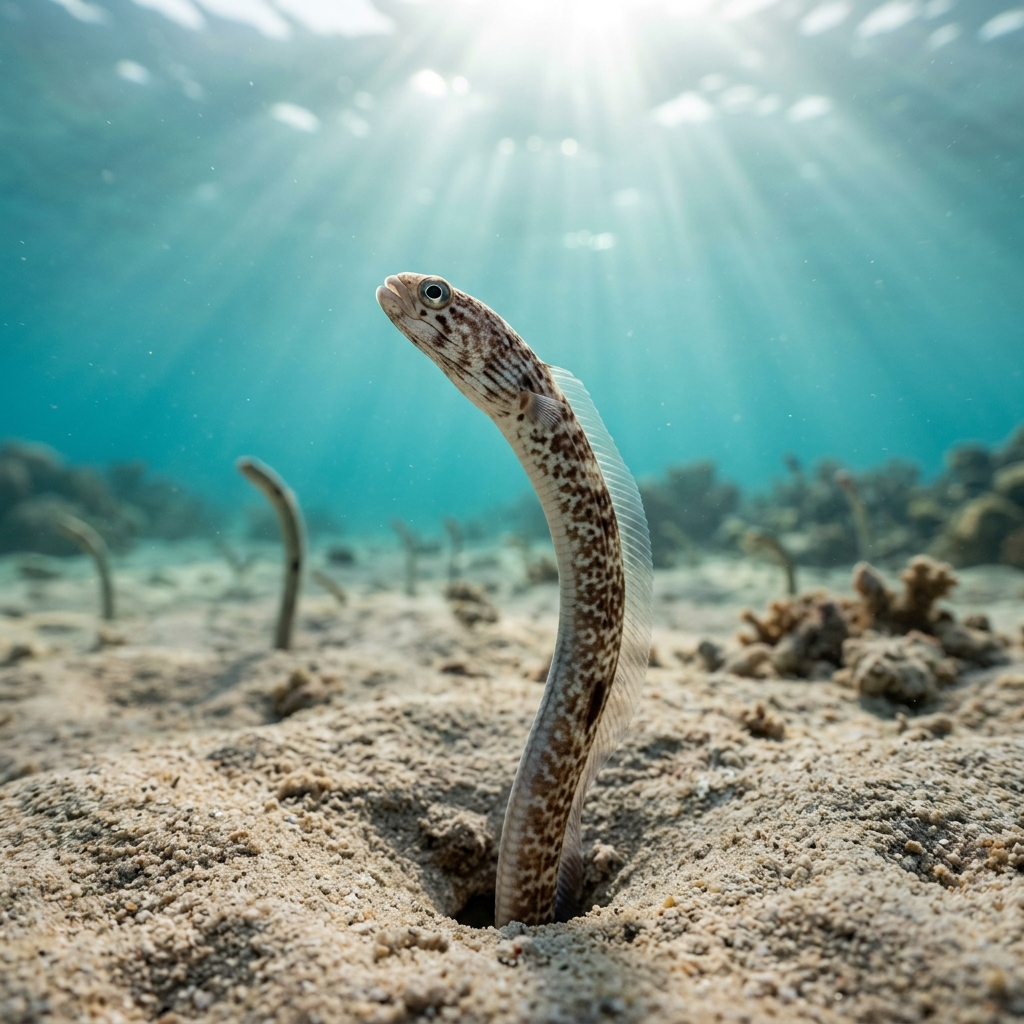
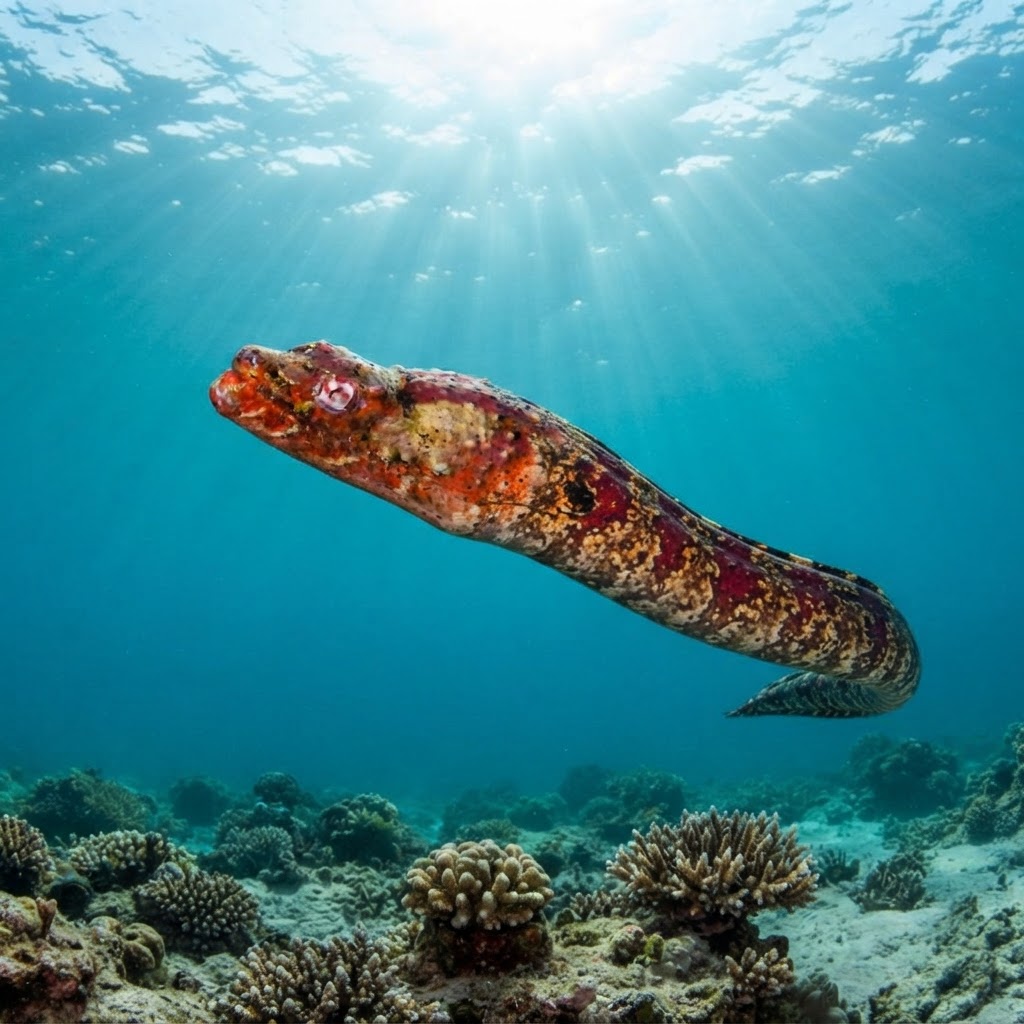
Look for just the head sticking up out of sand or rubble, the rest of the roughly 84 cm body stays buried. The head is blunt and reptilian with small eyes set high, thick lips, and a mottled brown-and-cream pattern that breaks up its outline against the seabed. There's no dorsal fin display or free-swimming body to key on, the giveaway is the ambush posture itself rather than colour.
Spends nearly all its time buried head-out in sand or rubble, waiting motionless for small fish and crustaceans to wander past. Divers who spot one usually do so by chance on a slow, close look at sandy patches rather than mid-water. It tends to hold still rather than bolt when approached, though it will retreat fully into the sand if divers crowd it.
That visible head is a permanent ambush post: this eel digs itself tail-first into soft substrate and can stay buried there for extended periods, only its eyes and snout exposed to watch for passing prey.
No clear seasonal pattern shows up in the sighting data, and its comfort range of roughly 24.6 to 29.3 C spans typical tropical reef conditions year-round, so any month is fair game in the Philippines or Indonesia.
Most reliably logged in the Visayas region of the Philippines, which accounts for the bulk of recorded sightings, with smaller numbers turning up in Sulawesi and Maluku in Indonesia. Sandy patches and rubble zones near reef edges are the places to slow down and scan for a lone head poking out of the substrate.
Mapping where Reptilian Snake Eel is logged…
The Visayas region of the Philippines is the most reliable area, with additional sightings from Sulawesi and Maluku in Indonesia. Look over sandy or rubble patches near reef structure rather than on the reef itself.
There's no strong seasonal signal in the data, and its temperature range of about 24.6 to 29.3 C covers typical conditions year-round on Philippine and Indonesian reefs, so it can turn up on any month's dive.
You'll almost never see the full body. Instead look for a blunt, mottled brown head poking out of sand or rubble, with small high-set eyes and thick lips giving it a reptilian look.
They typically reach around 84 cm in length, though since most of the body stays buried in sand, divers usually only ever see the head.
No, they're not considered dangerous to divers. They stay buried and retreat into the sand rather than approach, so there's no real interaction risk.
It buries itself tail-first in sand or rubble and stays put for long stretches, ambushing small fish and crustaceans that pass within striking range of its exposed head.
Site and sighting data is aggregated from diver logs, iNaturalist and GBIF. For taxonomy and conservation status:
Garden Eel
2,448 sites