Pholis laeta
Eel-like and easy to miss: find crescent gunnel tucked into rocky reefs across British Columbia's cold water, year-round, 4 to 13.5 C.
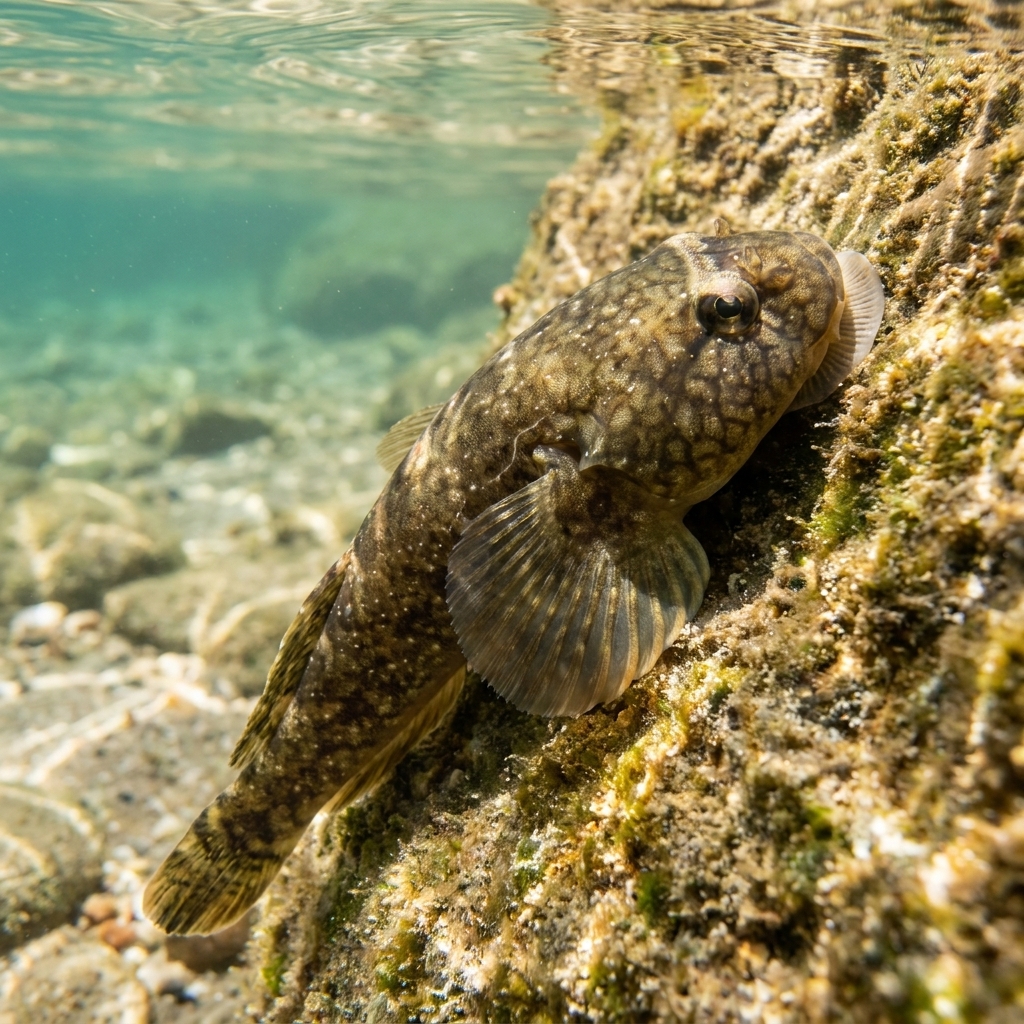
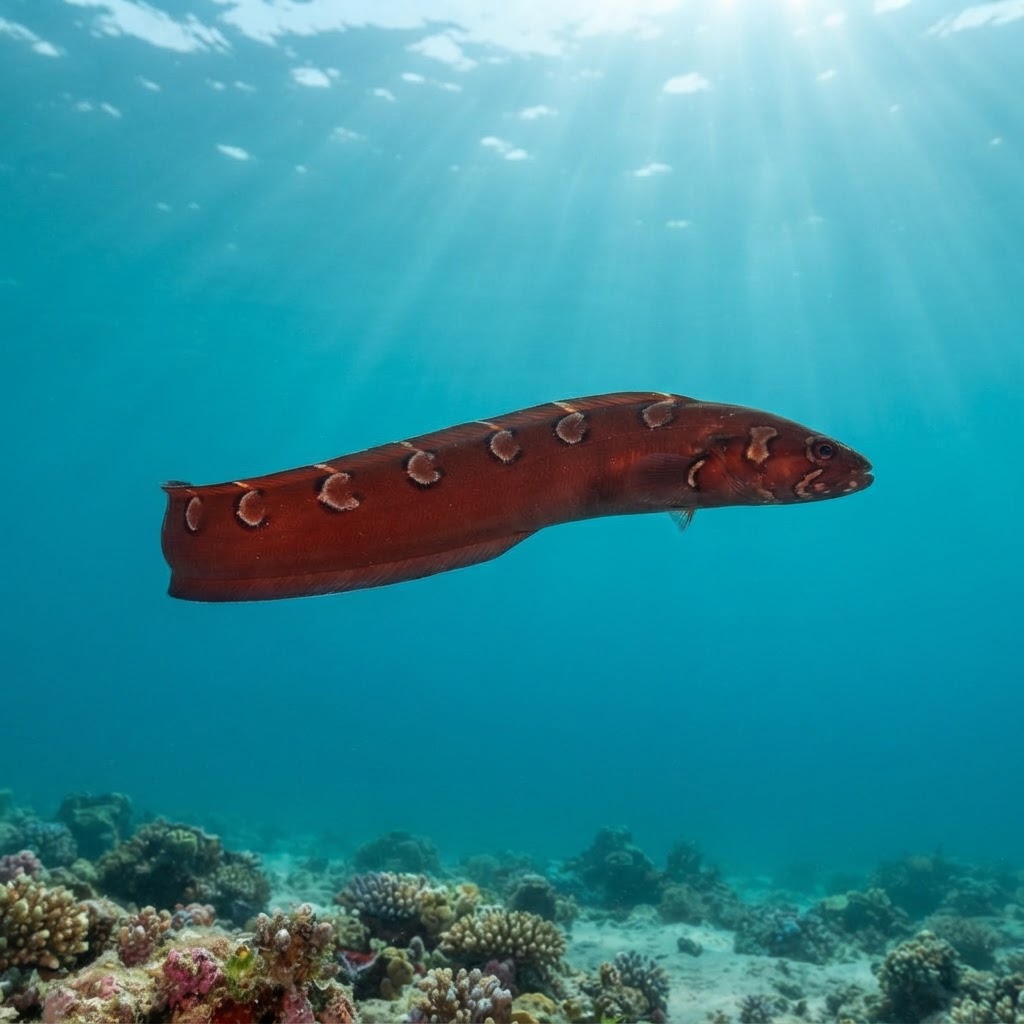
Long, slender, and eel-like, growing to about 18 cm, with a ribbon-thin body that flattens side to side rather than being round. Colouration runs olive to reddish-brown, often patterned with faint darker bars or blotches that help it disappear against rock and algae. It swims with a slow, undulating motion close to the substrate rather than out in open water, and it lacks the obvious fins and rounded profile of typical reef fish, so divers often notice it only once it moves.
Most divers find it tucked into crevices, under rocks, or hidden among algae and kelp holdfasts rather than swimming in the open, which fits its reputation as a shy bottom-dweller. It tends to stay still or move slowly when approached, relying on its camouflage and slender shape to blend into the rocky substrate. Logged sightings are mostly rare to uncommon, so spotting one usually rewards divers who slow down and check crevices closely rather than cruise past.
Its body shape and habit of hiding in tight rocky gaps let it behave almost like a small eel, squeezing into spaces that would be inaccessible to more conventionally shaped reef fish.
Sightings show no clear seasonal pattern, and with a water-temperature niche of 4.1 to 13.5 C it seems to tolerate the cold-water swings typical of the Pacific Northwest across the year, so diving for it is a year-round proposition rather than a seasonal one.
Almost all logged sightings come from Canada, especially British Columbia, which accounts for the large majority of recorded dive sites. Across the border, it also turns up in the Pacific Northwest and in Alaska, so this is very much a cold-water Pacific coast species rather than one you will find on a tropical trip.
Mapping where Crescent Gunnel is logged…
British Columbia in Canada is by far the most reliable region, with additional sightings logged in the Pacific Northwest and Alaska in the United States. It is a cold-water Pacific coast species, not one found on tropical dive trips.
There is no strong seasonal pattern in the sighting data, and its temperature niche of 4.1 to 13.5 C spans the cold water typical of the Pacific Northwest year-round, so it can be found on dives at any time of year.
Look for a slender, eel-like fish around 18 cm long, olive to reddish-brown with faint mottled bars, hidden in rocky crevices or algae rather than swimming openly. Its flattened, ribbon-like body and slow undulating movement near the bottom are the key giveaways.
They typically reach around 18 cm in length, making them one of the smaller, easily overlooked fish on a rocky reef dive.
No, crescent gunnel pose no danger to divers. They are small, shy, and spend most of their time hidden in crevices rather than interacting with divers at all.
At most dive sites where it has been logged, divers rate it as uncommon or rare, with only a handful of sites reporting it as common. Finding one usually takes a slower, close look at rocky crevices and algae.
Site and sighting data is aggregated from diver logs, iNaturalist and GBIF. For taxonomy and conservation status:
Soldierfish
3,612 sites