Paranthias furcifer
Golden-brown schools hover mid-water off Bonaire's Leeward Coast in 24-28C water year-round, no clear season to plan around.
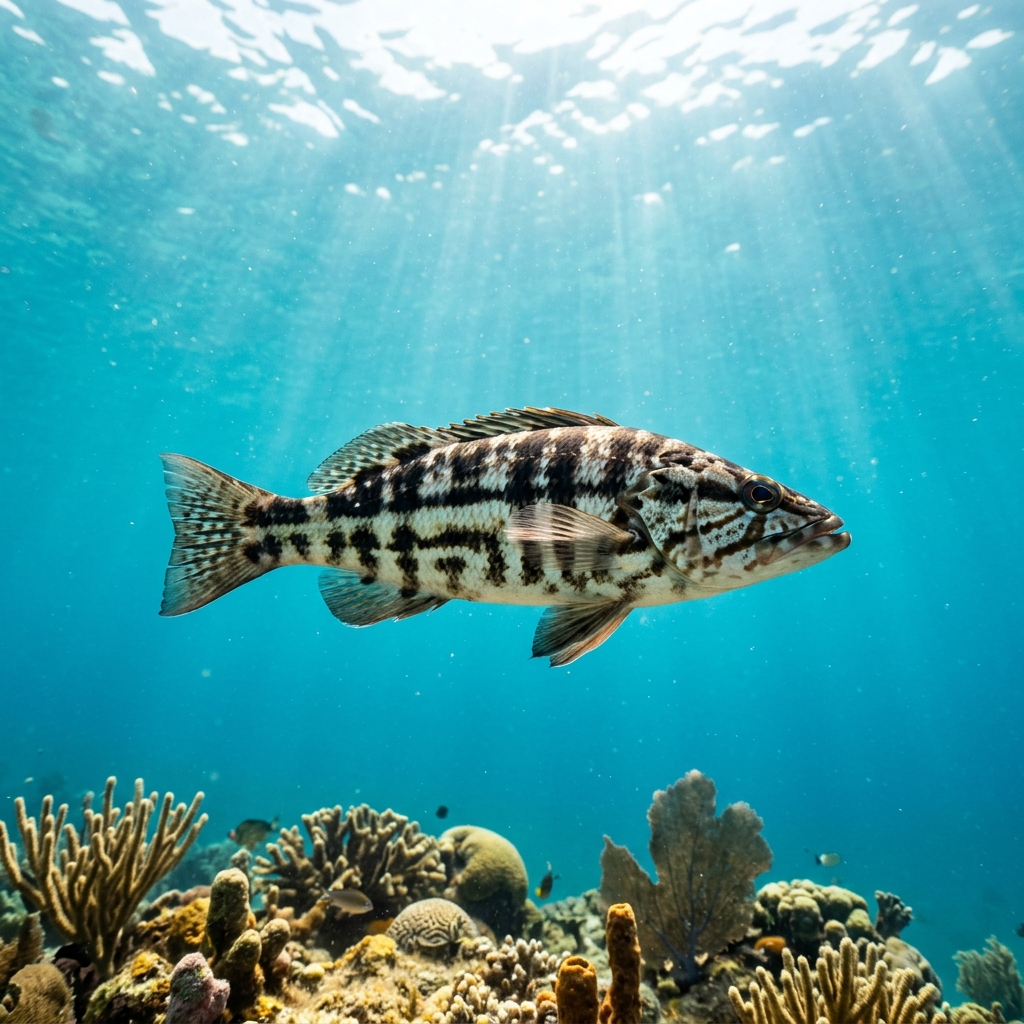
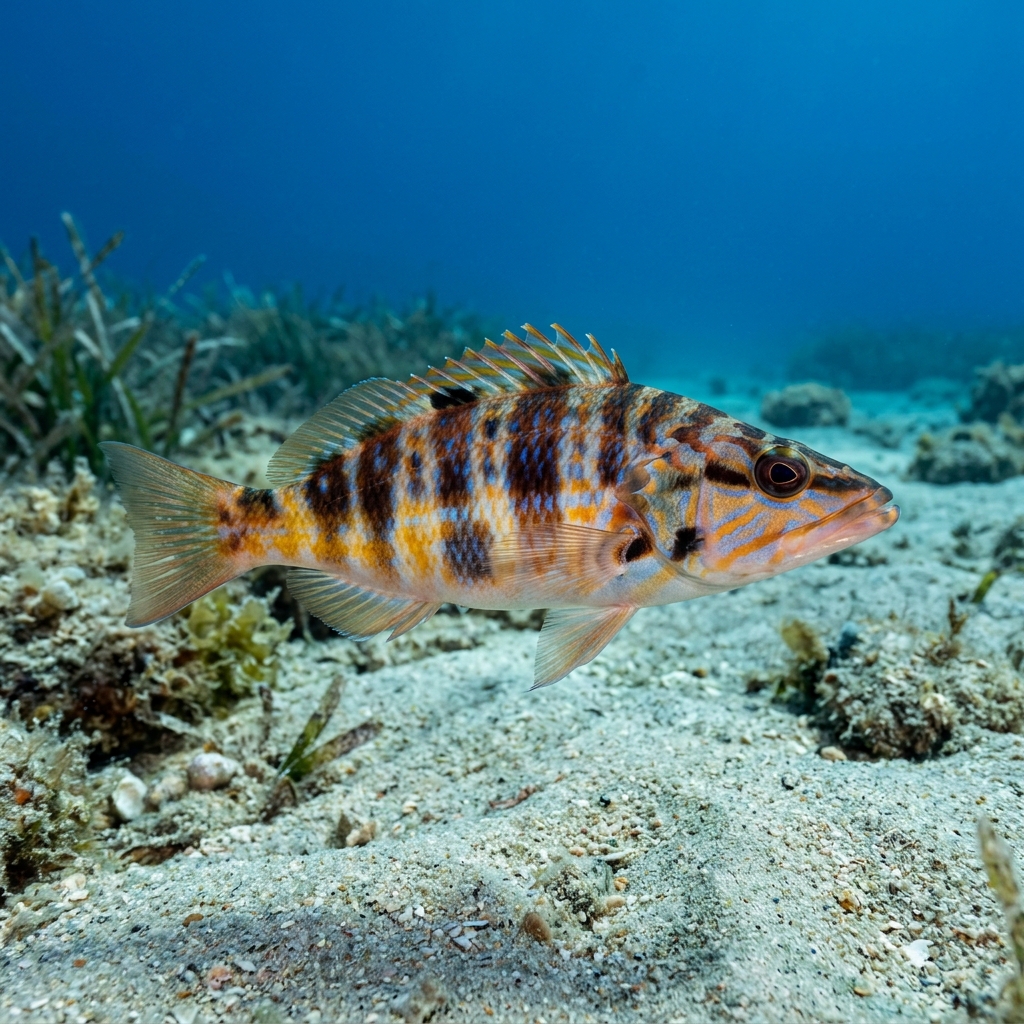
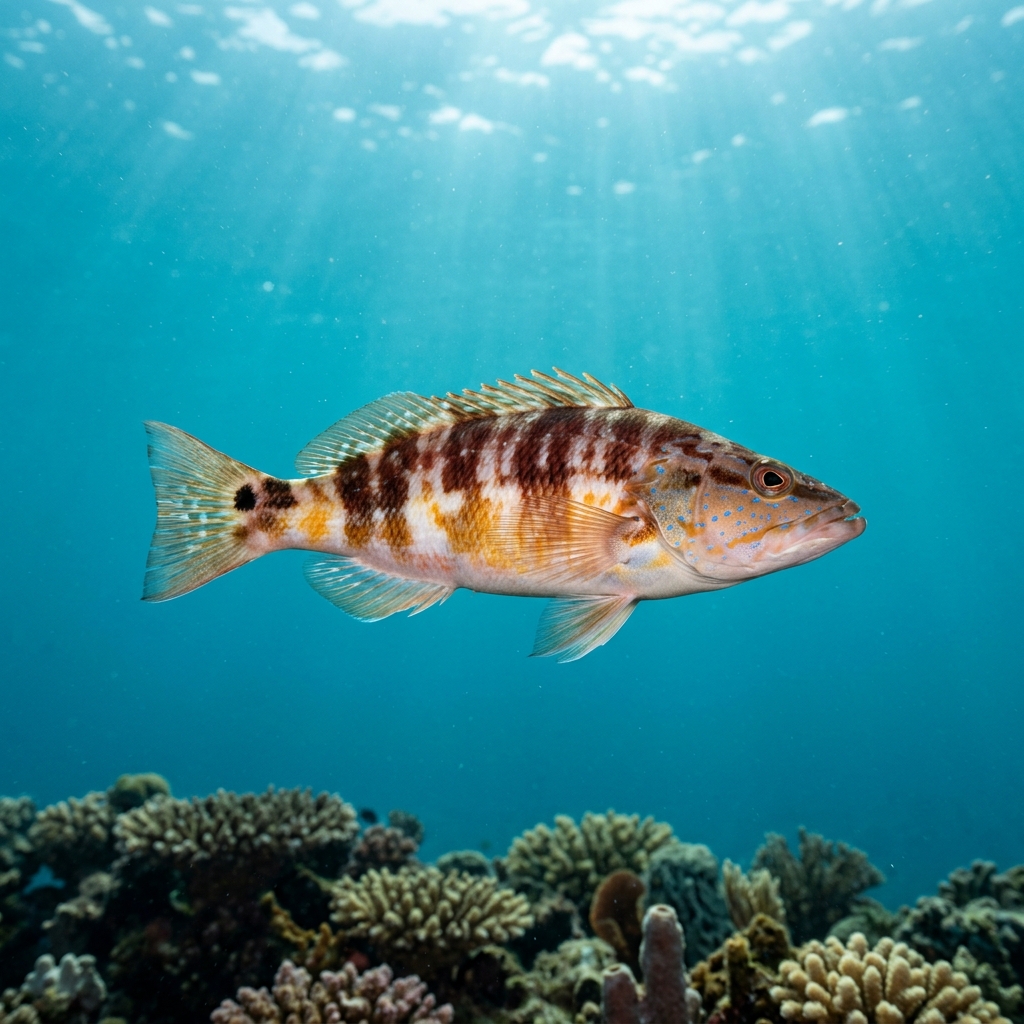
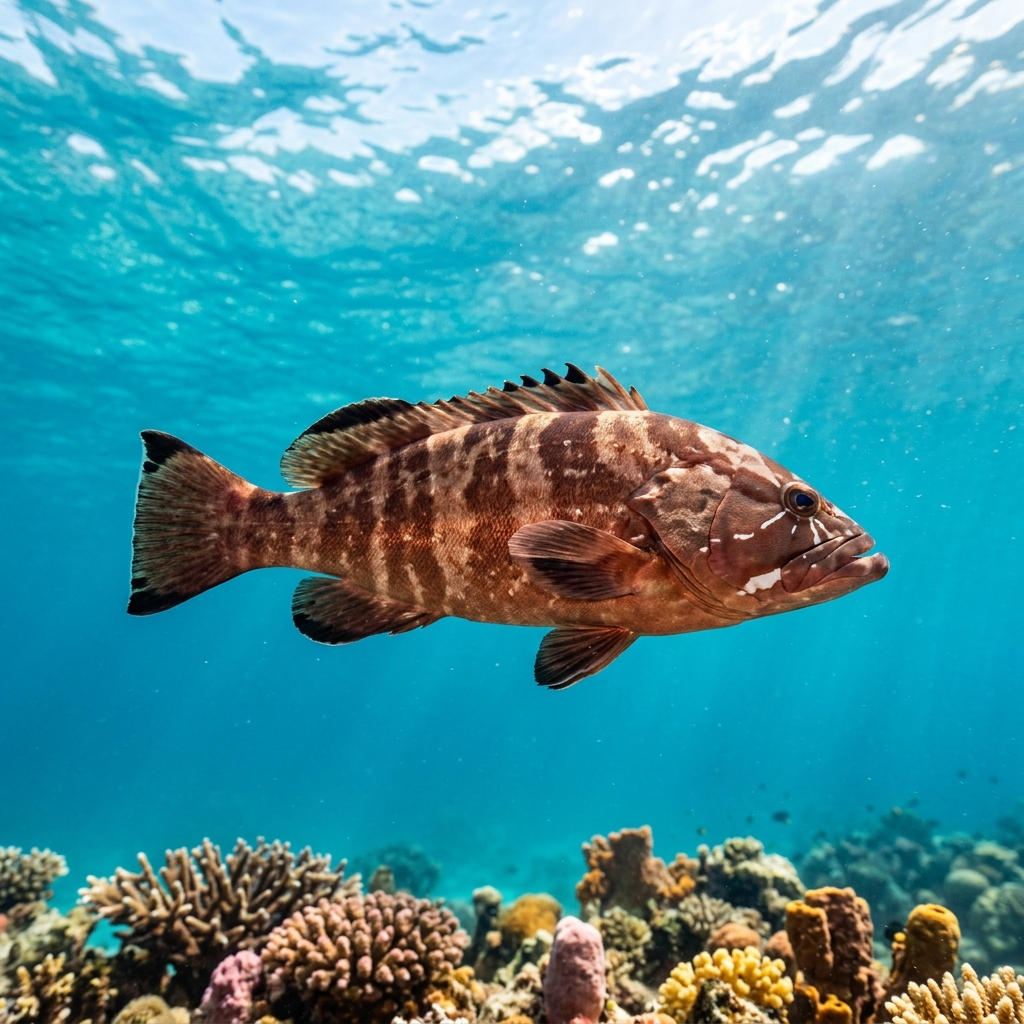
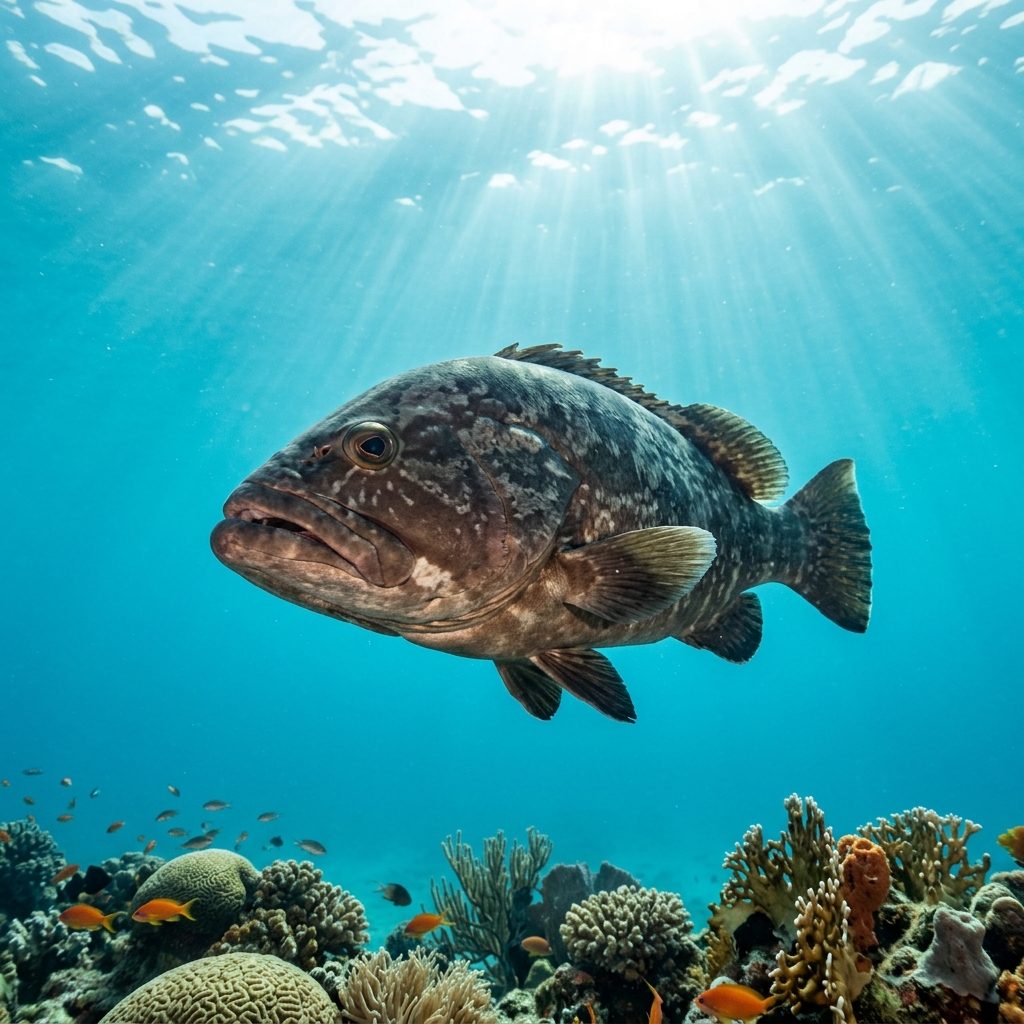
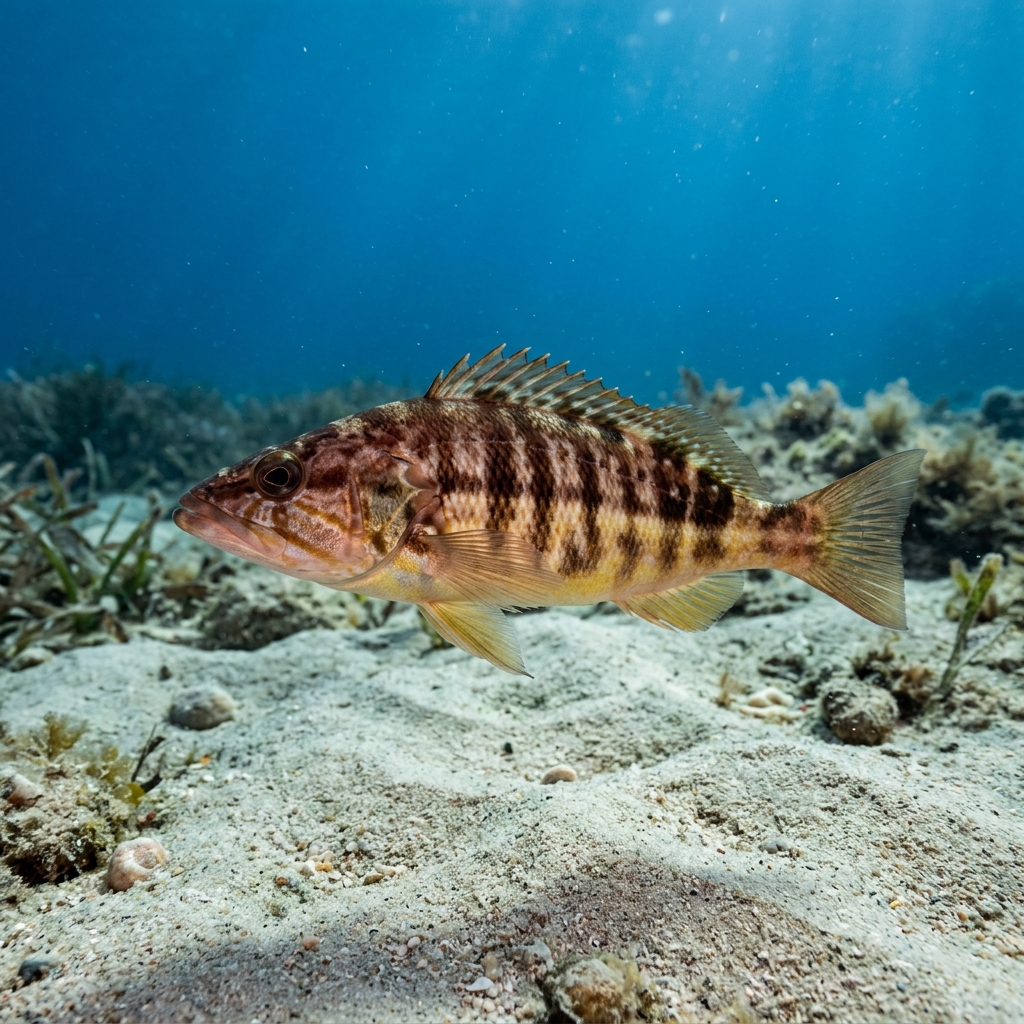
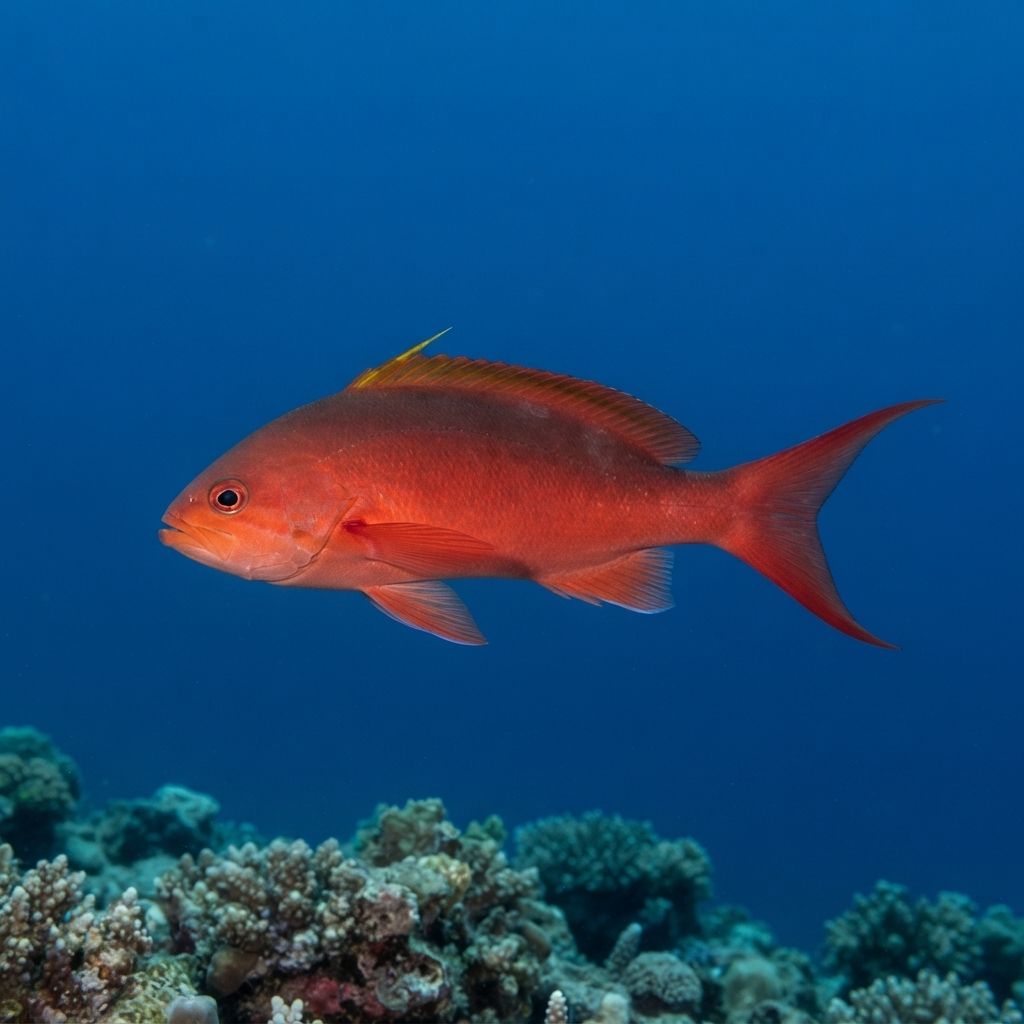
Look for a stocky, torpedo-shaped fish around 21 cm, olive to reddish-brown with faint pale spots scattered along the back half of the body. The tail is deeply forked, a useful cue since most reef fish of similar size have a squarer tail, and it often shows a dark blotch near the base of the dorsal fin. They hang in loose schools well off the bottom rather than hugging the reef, which is usually the first thing that gives them away.
Expect to see them schooling in open water above the reef, often along drop-offs and walls where they feed on plankton drifting past in the current. They tend to hold a loose, unhurried formation and don't scatter much when divers approach, though they'll drift a bit further off the wall rather than let you get close. Most logs describe them as uncommon rather than a guaranteed sighting, so a school is a nice bonus on a dive rather than the main event.
Creolefish are plankton feeders that swim well up off the reef to pick food out of the water column, an unusual habit for a grouper family member, since most of their relatives are bottom-hugging ambush predators.
No strong season shows up in the sighting data, and with a comfortable range of roughly 21 to 28C they seem to stick around these reefs year-round. Plan the trip around conditions at the destination rather than around creolefish timing.
Bonaire's Leeward Coast is the strongest spot for creolefish by a wide margin, with steady sightings also along Bonaire's East Coast and around Klein Bonaire. Fernando de Noronha in Brazil is the other major hotspot, and they turn up reliably at Saba's Tent Reef and The Pinnacles, plus sites around Curacao's East Point, Klein Curacao, and Willemstad.
Mapping where Creolefish is logged…
Bonaire's Leeward Coast is the most reliable spot, with East Coast Bonaire and Klein Bonaire also worth checking. Fernando de Noronha in Brazil and Saba's Tent Reef and The Pinnacles are the other consistent locations, along with several sites around Curacao.
There's no clear seasonal pattern in the sighting data, and the water temperature range they're found in, roughly 21 to 28C, spans most of the year on these reefs. They're best treated as a year-round possibility rather than something tied to a particular month.
Look for a stocky, olive-brown fish about 21 cm long with faint pale spots and a deeply forked tail, usually seen schooling in open water above the reef rather than sitting on it. The forked tail is the quickest tell since it's unusual for a fish this shape and size.
They typically reach around 21 cm, making them one of the smaller members of the grouper family. Don't expect the bulk of a typical grouper; they're built more like a schooling reef fish.
No, they pose no danger to divers. They're plankton feeders that keep their distance and have no reason to interact aggressively with people underwater.
Unlike most groupers, which lurk near the bottom to ambush prey, creolefish swim in schools well off the reef and feed on plankton in open water. It's a lifestyle more typical of surgeonfish or chromis than of their grouper relatives.
Site and sighting data is aggregated from diver logs, iNaturalist and GBIF. For taxonomy and conservation status:
Blacktip Grouper
2,734 sites