Cottus gobio
Spot the bullhead in Swiss alpine lakes and Austrian Salzkammergut rivers, a flat-headed bottom fish that hides in plain sight among rocks.
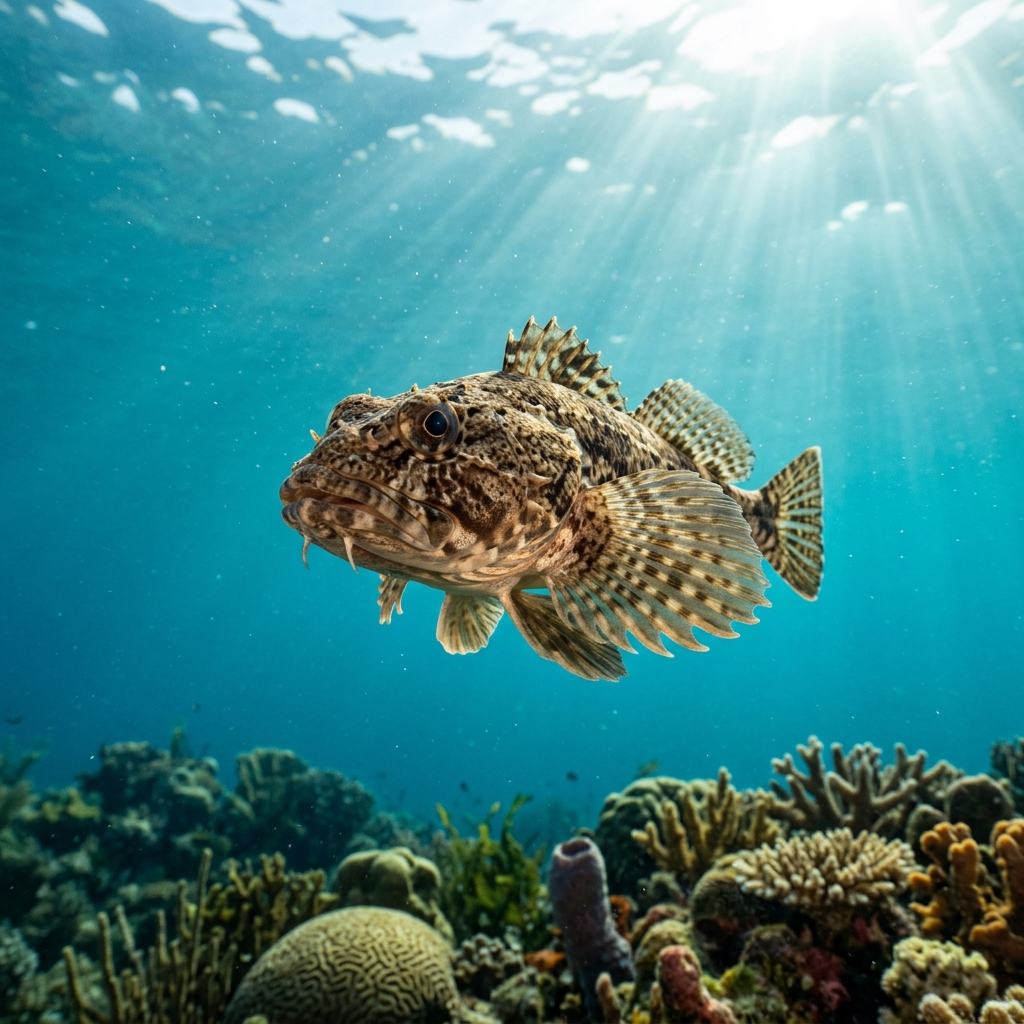
A broad, flattened head takes up nearly a third of the body length, making the bullhead instantly recognisable once you've seen one. The body is scaleless and mottled in browns, greys, and cream, colours that blend so well with gravel and cobble that you often nearly place your hand on one before noticing it. Large, fan-like pectoral fins splay out to the sides as it rests on the bottom, and the wide mouth gives the face a slightly frog-like look. There are no obvious lateral-line scales, and the skin has a smooth, almost rubbery texture.
Bullheads are ambush-oriented bottom-dwellers; when you find one, it is almost certainly sitting completely still under a rock ledge or pressed flat against the substrate. They tolerate a slow, cautious approach surprisingly well, they rely on camouflage rather than flight, but any sudden movement sends them darting under the nearest stone. Most encounters happen during daytime dives at relatively shallow depths in rocky, fast-flowing sections or along the stony margins of alpine lakes.
Males guard the egg clutch after spawning, fanning the eggs with their pectoral fins and defending them aggressively, behaviour that makes them briefly easier to spot in spring because the guarding fish stays put rather than hiding.
There is not enough monthly sighting data to point to a peak season, so treat it as a year-round resident in the cold, clear freshwater lakes and streams where it lives. Water temperatures in alpine sites stay low throughout the year, which suits this cold-water species fine.
Almost all diver sightings come from Switzerland and Austria, with Central Switzerland, including alpine lakes and their feeder streams, accounting for the largest share of logged sites. The Salzkammergut lake district in Austria is the next most productive area, followed by the Bernese Oberland in Switzerland and a handful of sites in the Lake Geneva Region. Freshwater diving in these two countries gives you the best realistic shot at an encounter.
Mapping where Bullhead is logged…
Virtually all logged diver sightings are from Switzerland and Austria. Central Switzerland has the greatest concentration of sites, with the Salzkammergut lake district in Austria and the Bernese Oberland also well represented. These are freshwater environments, alpine lakes and rocky rivers, so standard lake or river diving kit is needed.
No clear seasonal peak shows in the sighting data, so encounters are possible year-round. As a cold-water species it does not migrate or hibernate, and it stays active in alpine lakes and streams even through winter months.
Look for the very wide, flattened head and large pectoral fins spread out to the sides, the body tapers sharply behind the head. Colouring is mottled brown and grey to match gravel and rock. It sits motionless on the bottom and lacks the obvious scales or lateral stripes that most other freshwater fish have.
Adults typically reach around 10 to 15 cm in length, though some individuals approach 18 cm. In the water they look small and stocky, the large head makes the body seem shorter than it is.
Its mottled brown and grey skin is a near-perfect match for the gravel and cobble it rests on, and it relies on staying completely still rather than swimming away. Divers often miss them entirely or only notice one after it moves. Slow, methodical searching under rock ledges and along the base of boulders improves your chances significantly.
Site and sighting data is aggregated from diver logs, iNaturalist and GBIF. For taxonomy and conservation status:
Sun Perch
2,182 sites