Coryphellina exoptata
Spot the Desirable Flabellina in warm Indo-Pacific waters. Most logged in Sipadan, Sulawesi and the Visayas, here's what to look for and when to go.
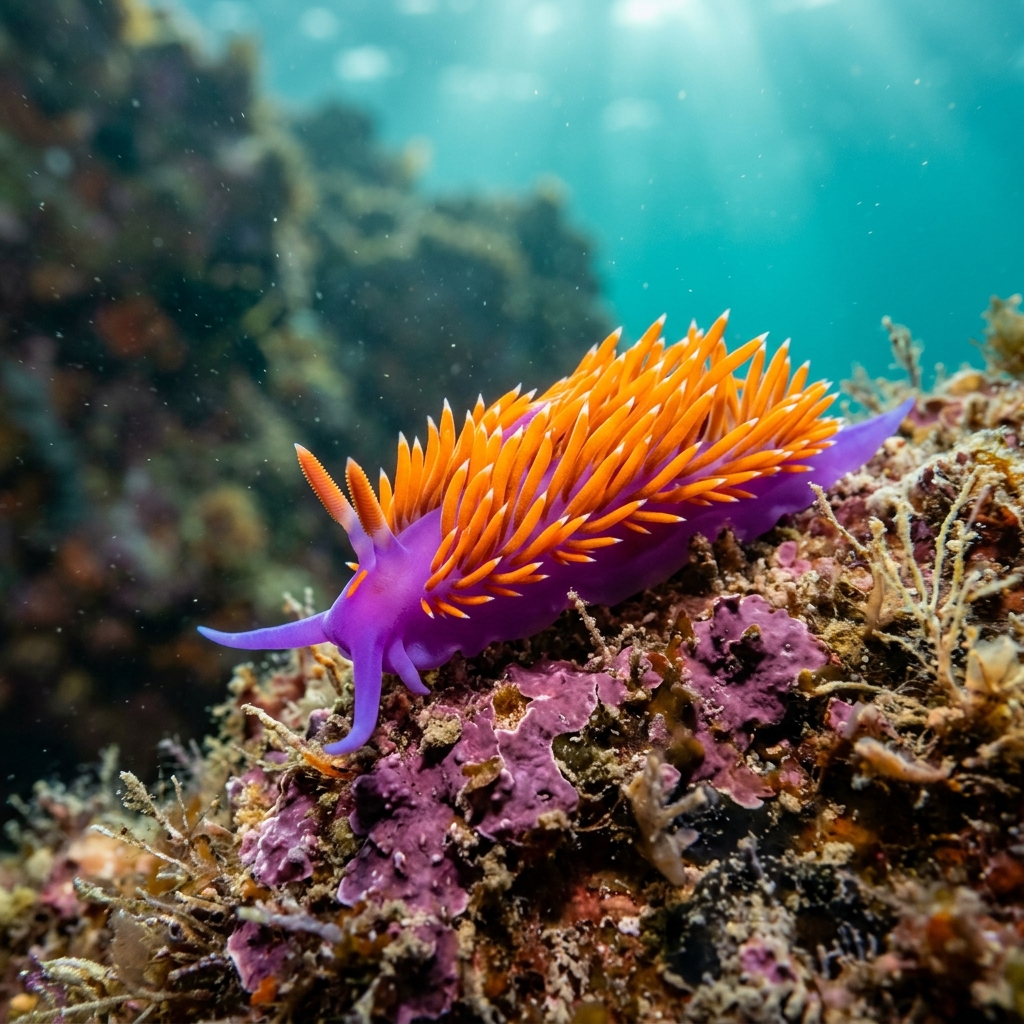
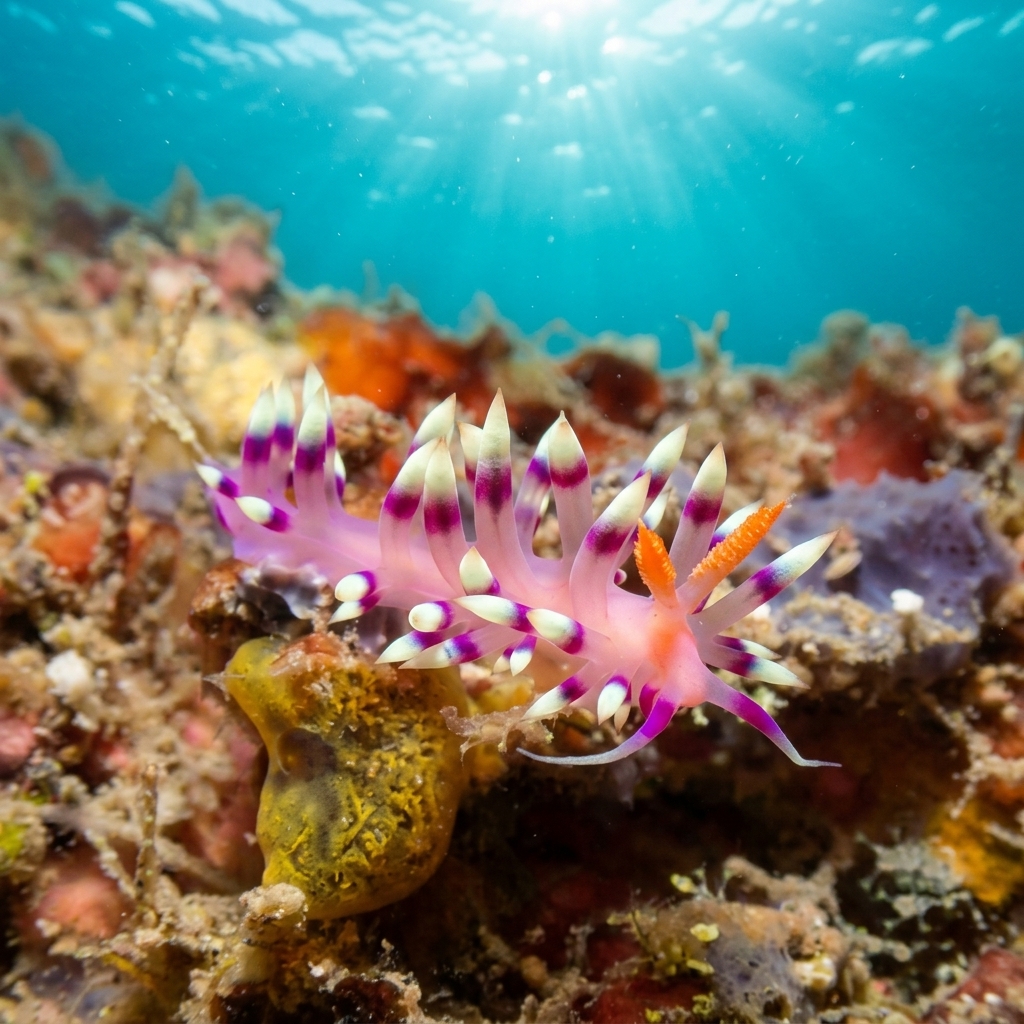
Look for a slender, elongated nudibranch body dressed in bright orange-tipped cerata (the finger-like projections that cover the back), typically with a pale or white base colour running along the body. The oral tentacles and rhinophores (sensory horns on the head) are usually a matching vivid orange or reddish-orange, making the head end a good focal point for ID. It is a small animal, so a macro eye is essential, scan slowly across rubble, coral rubble slopes, and hydroids where it tends to forage.
You will almost always find it moving slowly across hydroids or fine algae-covered rubble, grazing as it goes rather than sitting still. It tends to ignore divers completely, carrying on feeding while a camera is centimetres away, patience and a slow approach reward you with long observation windows. Sightings are most reported during the day, when photographers are actively hunting macro subjects on the reef.
Like other flabellinid nudibranchs, it is thought to sequester stinging nematocysts (tiny barbed cells) from the hydroids it eats and incorporate them into its cerata as a chemical defence, effectively recycling its prey's weapons.
Observed year-round with no concentrated season, which makes sense for a species tied to warm tropical water between roughly 26 and 29 °C, the kind of temperatures that persist across Indo-Pacific reef systems throughout the year.
Reef neighbours a diver could mistake it for. Use the identification notes above to tell them apart.
Most consistently logged across the Coral Triangle, Indonesia, Malaysia, and the Philippines account for the overwhelming majority of sightings. Within those countries, Sipadan and East Sabah, Sulawesi, and the Central Visayas stand out as the strongest areas. Hawaii also turns up reliable records, making it the most accessible option for divers based in the United States.
Mapping where Desirable Flabellina is logged…
The best odds are in the Coral Triangle. Sipadan and East Sabah in Malaysia, Sulawesi in Indonesia, and the Central Visayas in the Philippines are the top regions. Hawaii is a solid option for US-based divers, and Réunion adds a useful Indian Ocean outpost.
Any time of year. It shows no concentrated season in the data, and its preference for water between roughly 26 and 29 °C means it inhabits tropical reefs that maintain those temperatures year-round. Pick your destination based on dive conditions rather than a specific month.
Focus on the orange-tipped cerata covering a slender pale body, and the matching orange rhinophores on the head. It is a small nudibranch, so slow macro searching on rubble and hydroids is the best technique. The vivid colour contrast between the white body and the bright orange tips is the key field mark.
Uncommon is the most typical sighting frequency reported by divers, with a good number of sites where it is classed as rare. Common sightings do occur but represent a smaller fraction of records. Setting realistic expectations helps, treat any sighting as a welcome find rather than a certainty.
Not at all. They are tiny, slow-moving animals that pose no threat. Handle-free observation is encouraged, both for the diver's sake and because touching nudibranchs can damage them.
Site and sighting data is aggregated from diver logs, iNaturalist and GBIF. For taxonomy and conservation status:
Light-spotted Aegires
3,168 sites