Coryphaena hippurus
Spot common dolphinfish in Baja California, Mauritius and the Dominican Republic. A fast, vivid pelagic seen across warm-to-temperate waters from 14 to 29 °C.
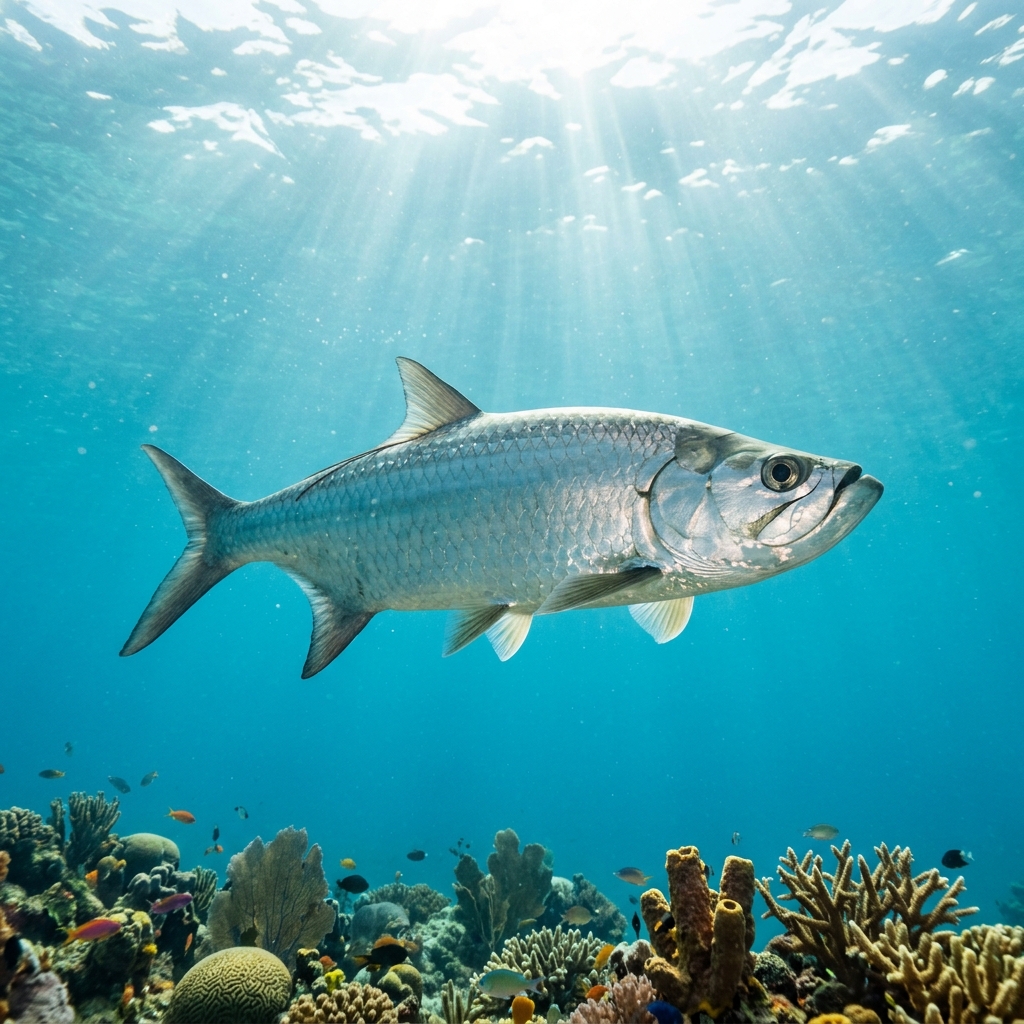
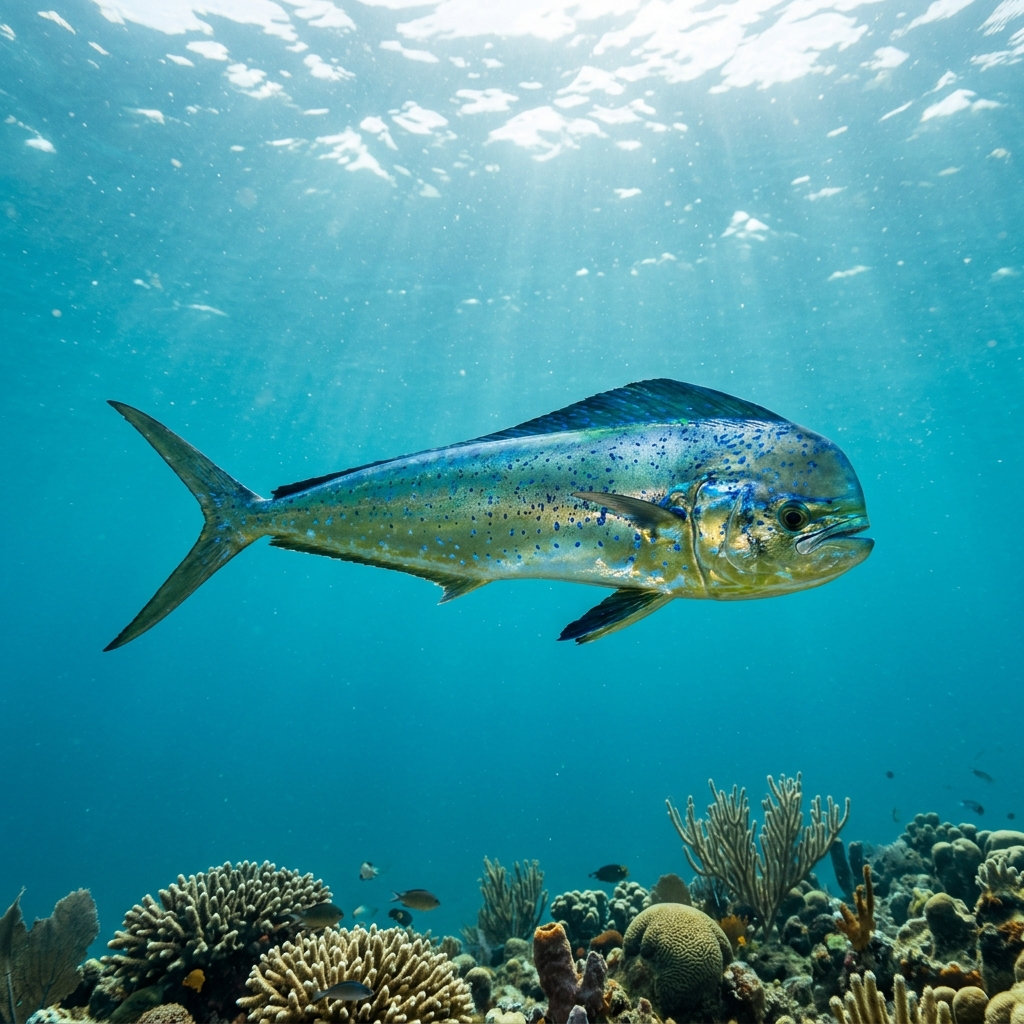
Few fish in open water are as visually arresting underwater: dolphinfish carry a blaze of iridescent gold, green, and electric blue along their flanks that shifts as they move. The body is long and laterally compressed, with a continuous dorsal fin running nearly the full length of the back. Adult males develop a steep, bony forehead (the 'bull' profile) that distinguishes them from the more rounded head of females. At speed they can appear simply as a bright, torpedo-shaped flash, so look for that single unbroken dorsal fin as the key underwater marker.
Dolphinfish are fast, open-water (pelagic) predators that typically appear near the surface, often around floating debris, lines, or buoys where baitfish aggregate. Encounters with divers tend to be brief, the fish circling with obvious curiosity before accelerating away, so staying still and avoiding sudden movements gives you the best window. They are usually seen alone or in small, loose groups rather than large schools.
Dolphinfish are among the fastest-growing fish on the reef circuit, reaching maturity in their first year and capable of growing several centimetres per week when food is plentiful, which partly explains how a species this heavily encountered by other users remains at Least Concern globally.
No clear seasonal peak emerges from the sighting data, so encounters are possible year-round at established sites. The species is recorded across water temperatures from around 14 °C to 29 °C, meaning it turns up in both tropical and warmer temperate destinations.
Most sightings come from Mexico, particularly the Baja California peninsula and the Yucatán Peninsula, and from North Mauritius. The Dominican Republic's Puerto Plata coast and the Mainland Coast of Ecuador also produce regular encounters. Smaller clusters of records exist around Dominica, northwest Italy, Greece, and a handful of US sites, reflecting the species' wide warm-water and warm-temperate range.
Mapping where Common Dolphinfish is logged…
The strongest records come from Baja California and the Yucatán Peninsula in Mexico, North Mauritius, Puerto Plata in the Dominican Republic, and the Mainland Coast of Ecuador. Smaller numbers of sightings are also logged around Dominica, northwest Italy, Greece, and the United States.
Available sighting data does not point to a single best season, so encounters can happen year-round at the top destinations. The species tolerates a wide temperature range, roughly 14 to 29 °C, which keeps it accessible across both tropical and warmer temperate sites throughout the year.
Look for a long, compressed body blazing with iridescent gold, green, and blue colouration, combined with a single long dorsal fin that runs almost from head to tail. Adult males have a steep, blunt forehead; females have a rounder head. No other common open-water fish shares that dorsal-fin-to-tail profile alongside such vivid metallic colour.
Adults commonly reach around 1 metre in length, with large individuals recorded past 1.5 metres. In the water they feel impressively long and fast, aided by a build that is deep at the front and tapers sharply toward a forked tail.
No. Dolphinfish pose no meaningful risk to divers. They are fast and may approach with curiosity, but they do not show aggressive behaviour toward people in the water.
The name predates modern marine biology and likely comes from the species' habit of bow-riding vessels, a behaviour associated with dolphins. They are also widely known as mahi-mahi, a Hawaiian name now commonly used to distinguish the fish from the marine mammal.
Site and sighting data is aggregated from diver logs, iNaturalist and GBIF. For taxonomy and conservation status:
Butterfish
1,423 sites