Kyphosus elegans
Silvery, deep-bodied chubs seen year-round across Baja California and Guanacaste in 18.6 to 28.4C water, usually in loose schools over rocky reef.
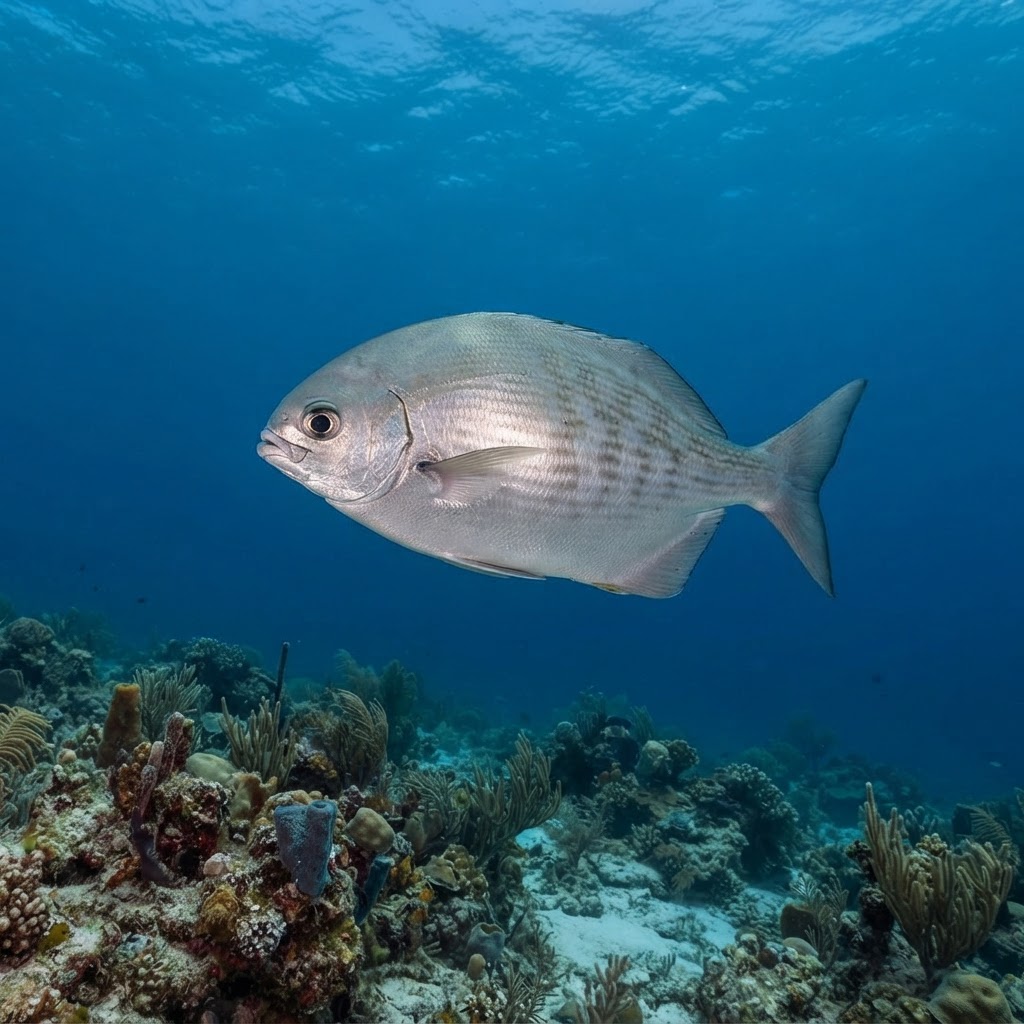
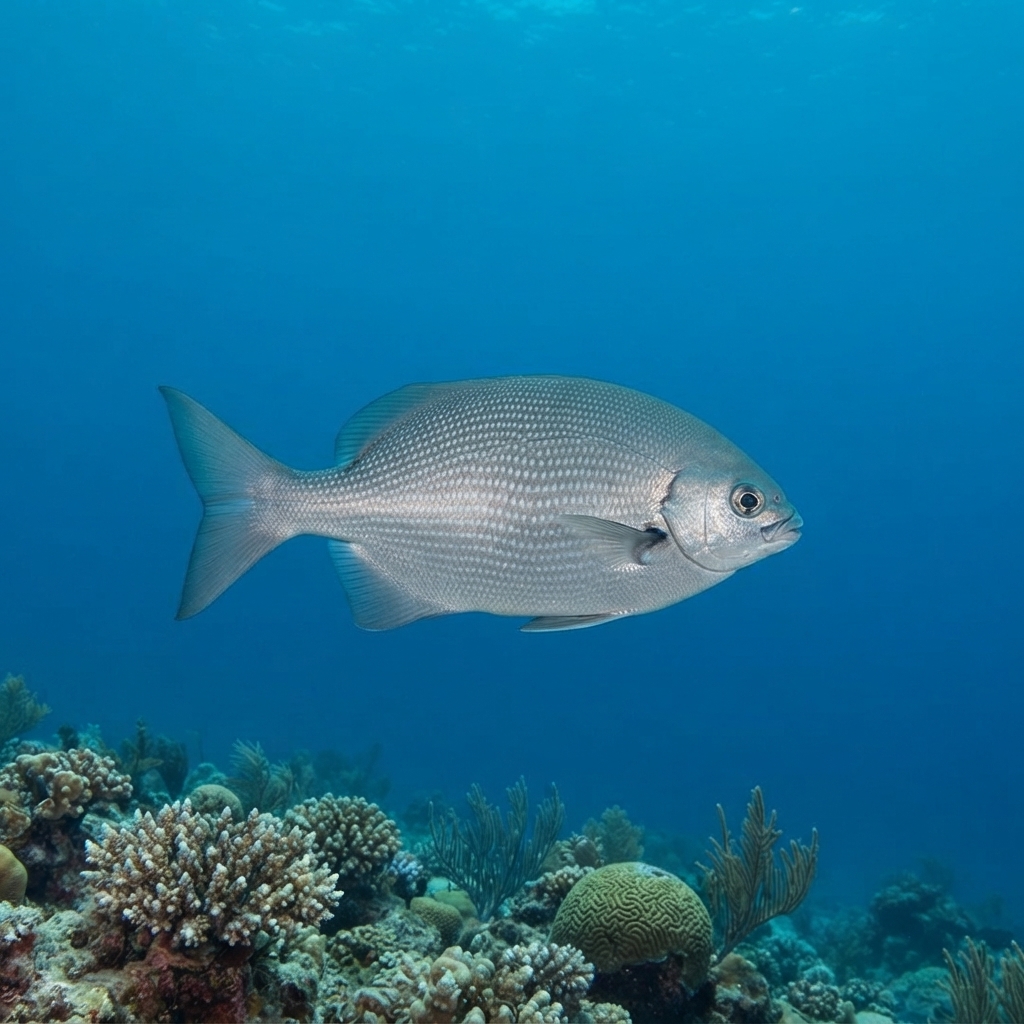
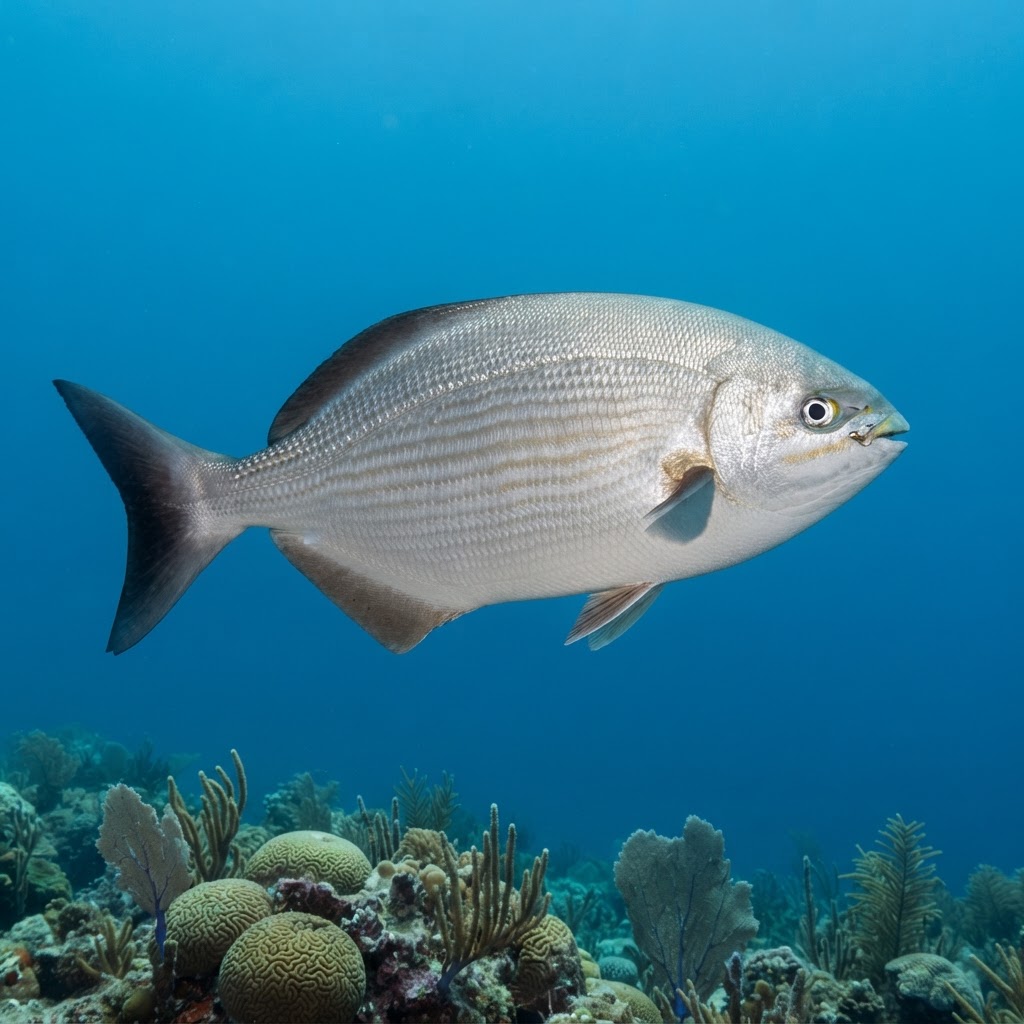
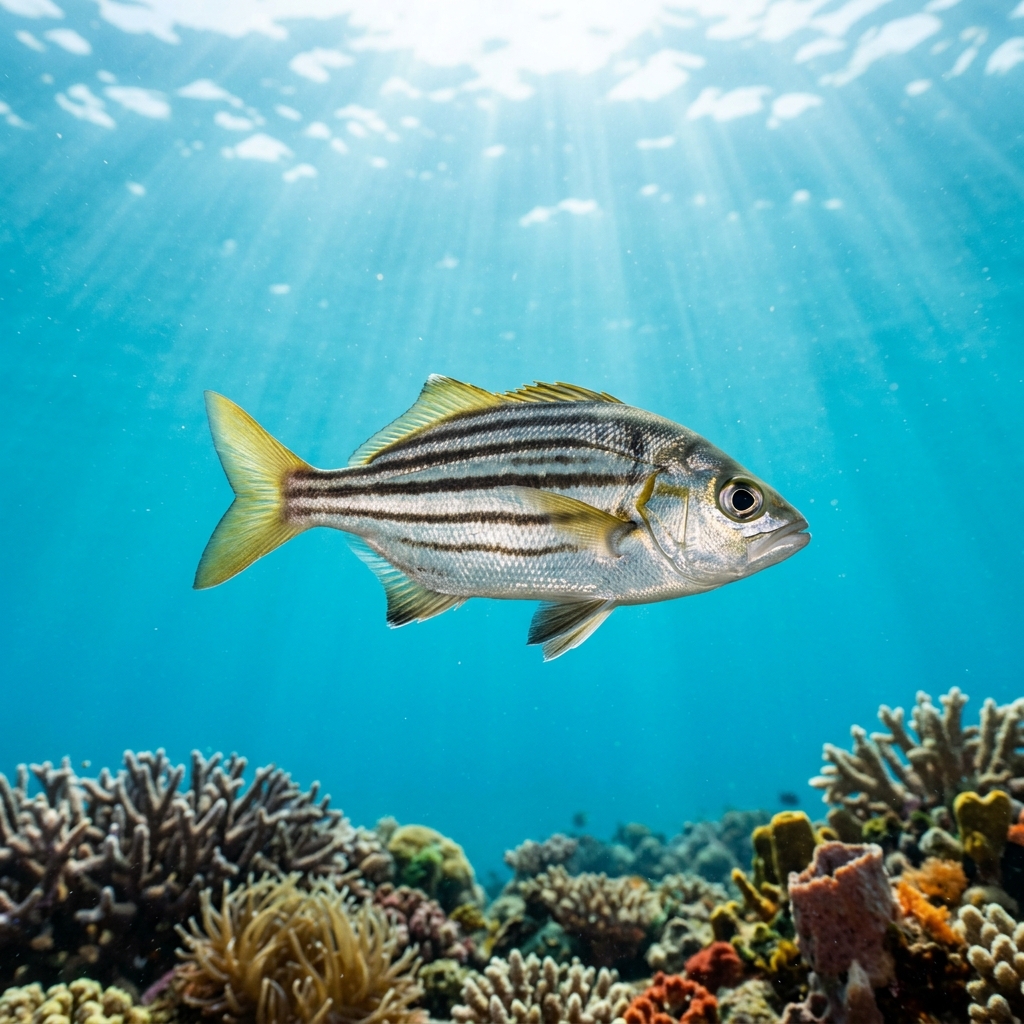
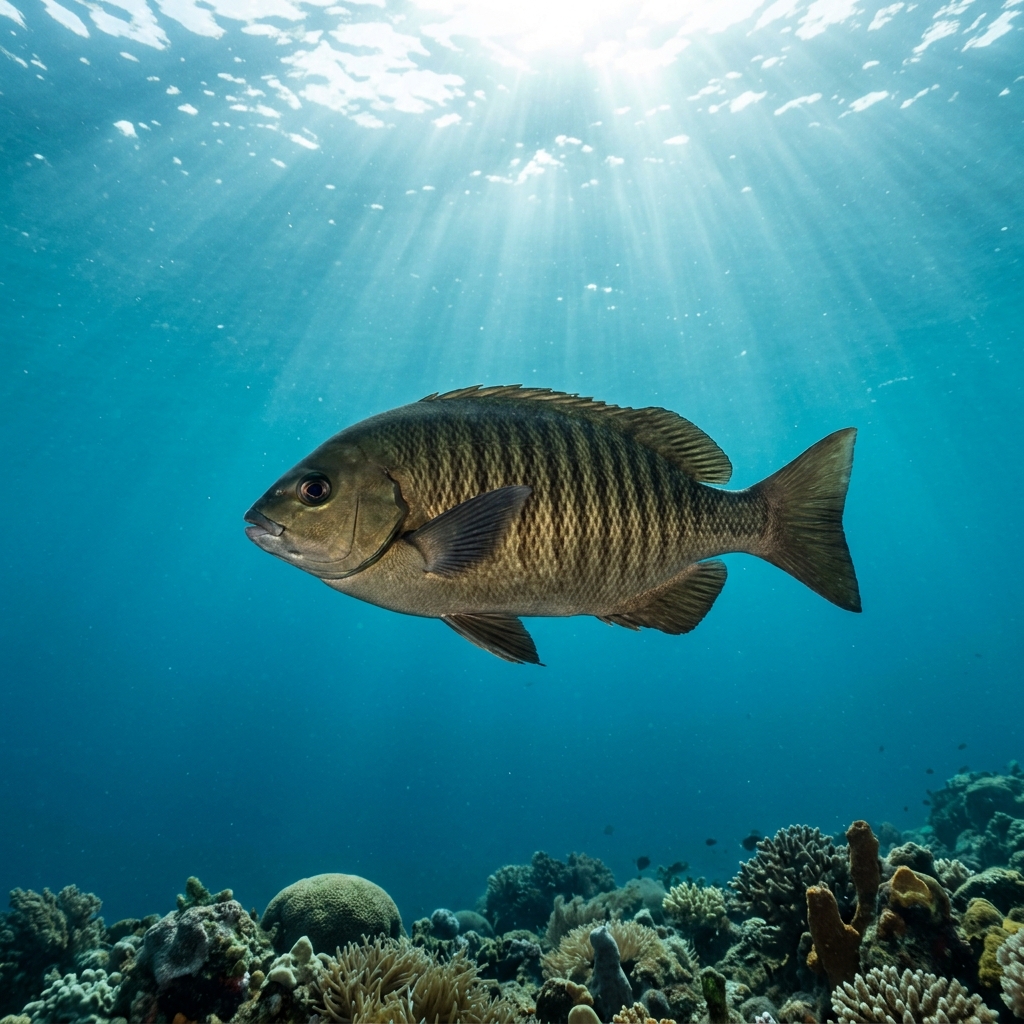
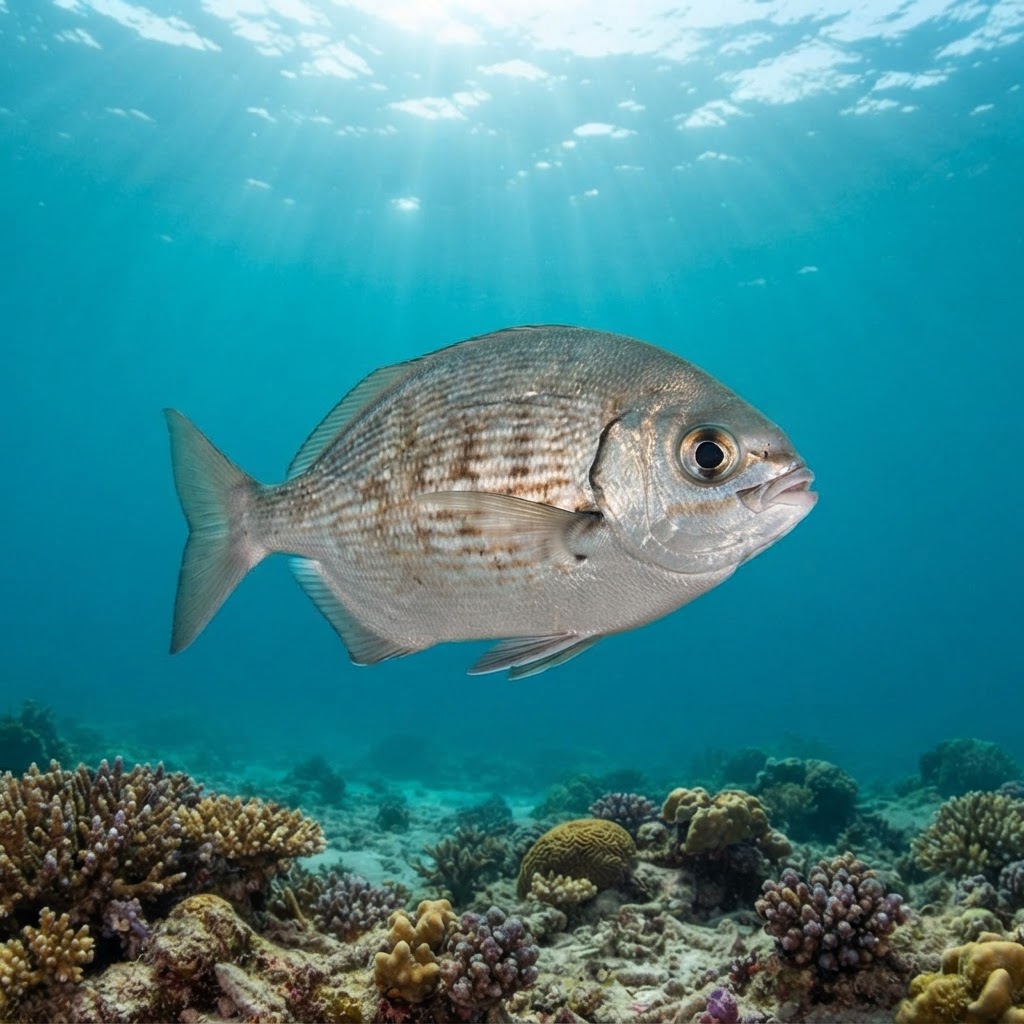
Look for a deep, oval, slightly compressed body around 37 cm long, coloured silvery-grey to brownish with faint pale striping running along the flanks. The head is blunt with small mouth set low, built for grazing rather than hunting, and the tail is moderately forked. They're usually spotted in loose, drifting schools rather than alone, hanging just off rocky or reef structure in mid-water.
Divers typically find them cruising in loose schools over rocky reef and boulder terrain, picking at algae and reef growth rather than chasing anything down. They're generally unbothered by divers, holding their position or drifting off at an easy pace rather than scattering. Most sightings come from mid-water over structure rather than tight to the bottom or hiding in cracks.
Sea chubs graze on algae and can shift gut function to digest tougher plant material more efficiently than most reef fish, which is part of why they're often seen working over algae-covered rock rather than coral.
No clear seasonal pattern shows up in the sightings data, and the recorded temperature range of 18.6 to 28.4C spans most of the year on these Pacific coasts, so divers log them across all months.
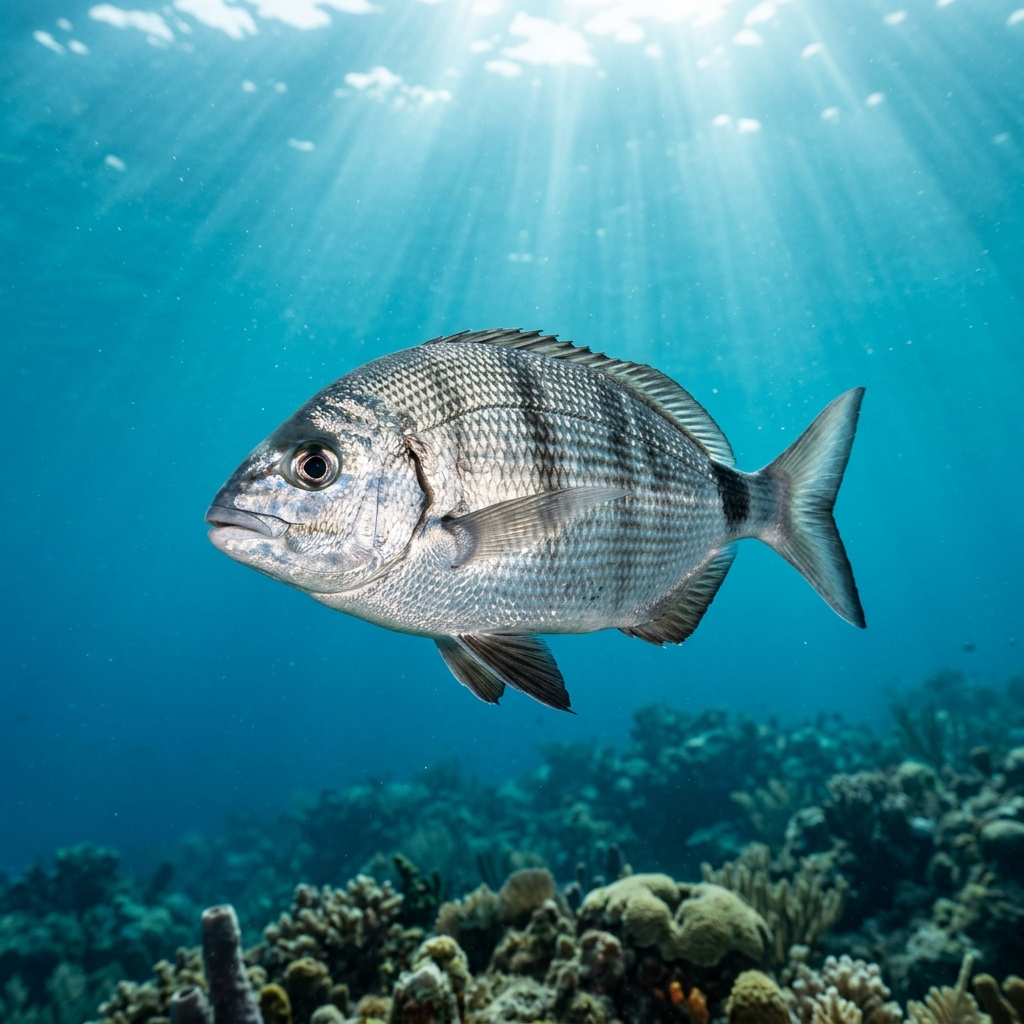
Reef neighbours a diver could mistake it for. Use the identification notes above to tell them apart.
Most reliably logged along the Pacific side of Central America, with strong numbers in Guanacaste, South Pacific and Central Pacific Costa Rica, plus Baja California and the Pacific Coast of Mexico. Panama's Pacific Coast and Ecuador's Galápagos Islands also produce regular sightings, making this a dependable find across the eastern tropical Pacific rather than any one standout site.
Mapping where Cortez Sea Chub is logged…
Best odds are along the Pacific coasts of Costa Rica and Mexico, especially Guanacaste, the South and Central Pacific of Costa Rica, and Baja California. Panama's Pacific Coast and Ecuador's Galápagos Islands also turn up regular sightings.
There's no strong season in the sightings, so they're seen year-round. Water temperatures they're found in range from 18.6 to 28.4C, which covers most months on the eastern Pacific coast.
Look for a deep, oval, silvery-grey body around 37 cm long with a small low mouth and faint pale stripes along the sides. They're usually seen drifting in loose schools over rocky reef rather than solo or hidden in cover.
They typically reach around 37 cm in length, a solid, deep-bodied fish rather than a small reef species.
No. They're not considered dangerous to divers and generally ignore people, continuing to graze or drift as divers pass.
Site and sighting data is aggregated from diver logs, iNaturalist and GBIF. For taxonomy and conservation status:
Blue Sea Chub
554 sites