Lepadogaster purpurea
A 6cm rock-pool clinger found in Brittany and along England and Wales, sitting tight under rocks in 10 to 16 C water year-round.
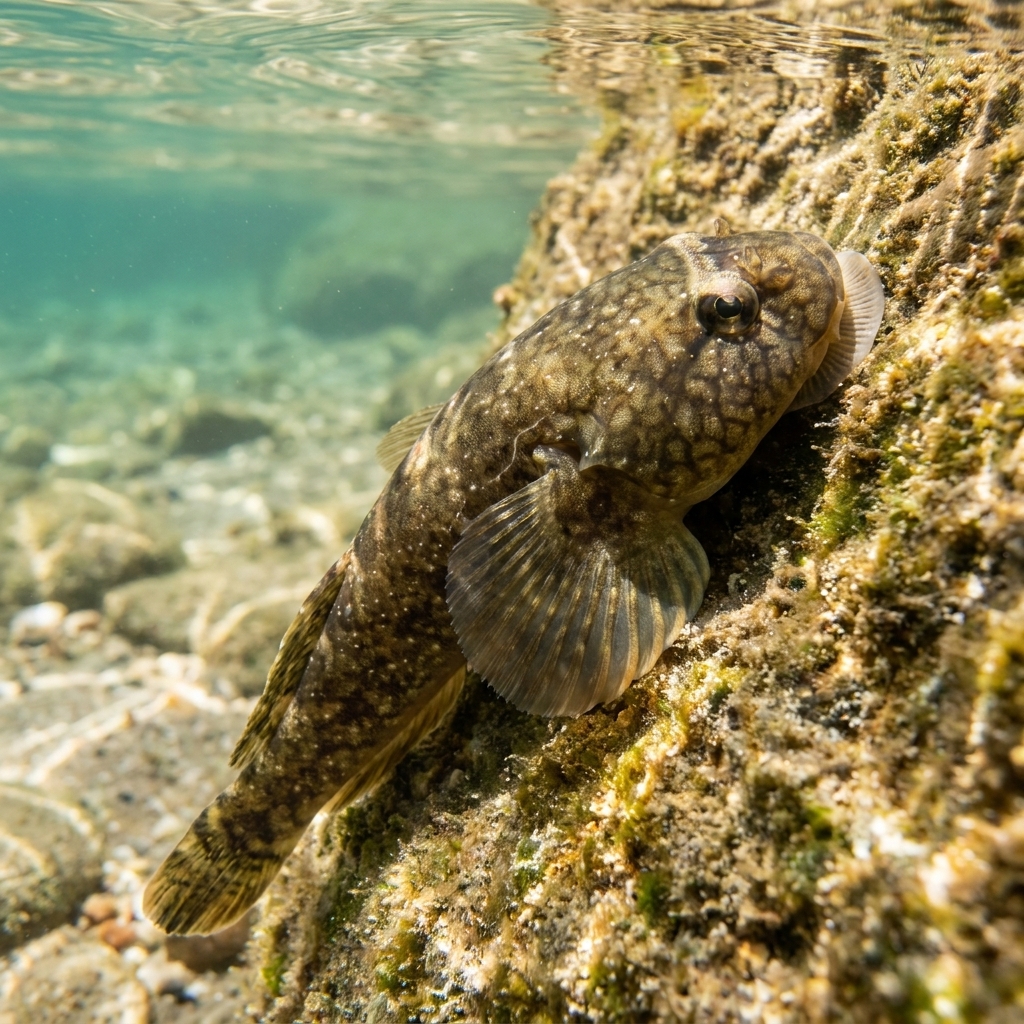
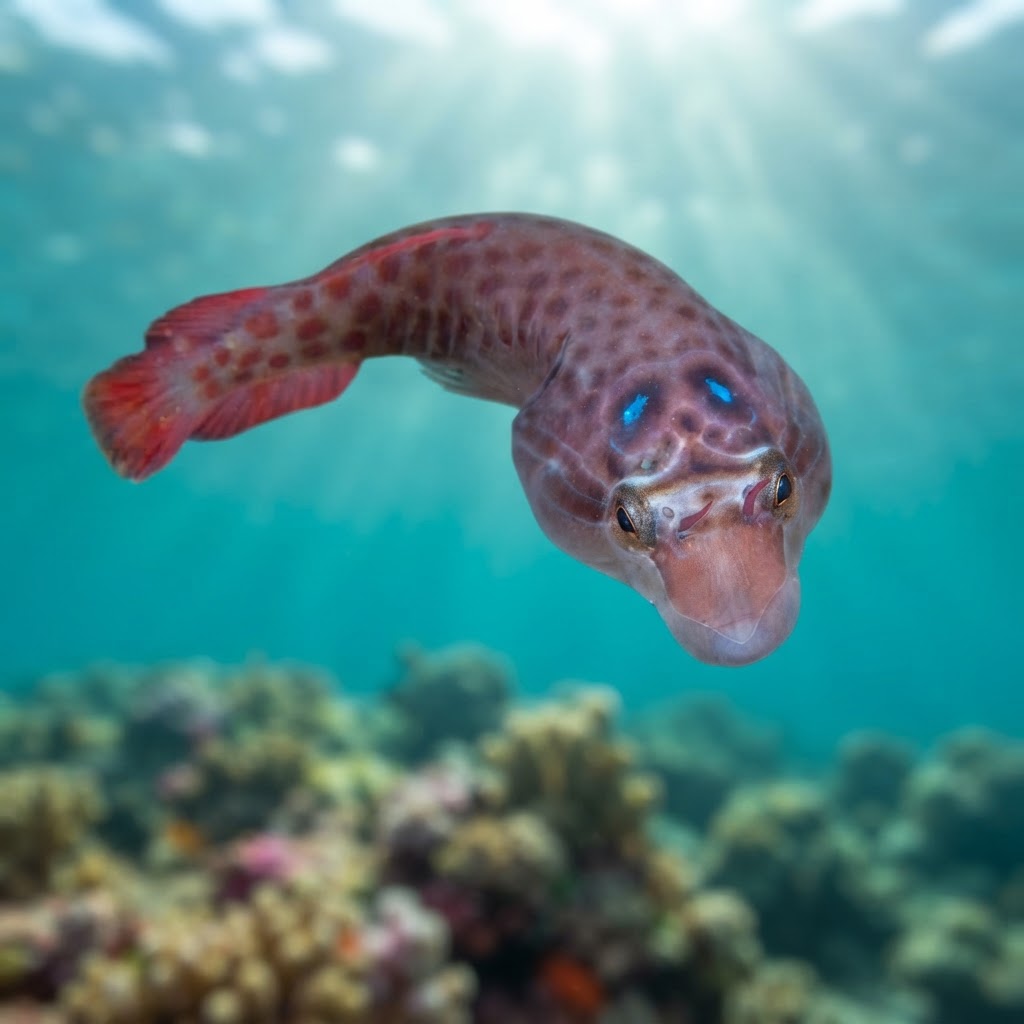
Tiny even for a diver looking closely, topping out around 6 centimetres, with a slender tapering body and reddish-brown to purplish mottled skin that blends straight into rock and rubble. The giveaway is the pair of blue-rimmed eyespots (ocelli) just behind the true eyes, plus a flattened underside where the pelvic fins have fused into a sucker disc it uses to grip rock. You will almost always find it pressed flat against a surface rather than swimming in open water.
Expect to find it clamped motionless to the underside of a rock or wedged in a crevice rather than cruising the reef, relying on its sucker disc to hold position even in surge. Divers report it as an uncommon to rare find at most sites, so spotting one usually means deliberately flipping over loose rocks or scanning low ledges rather than seeing one pass by. It shows little reaction to a diver's presence beyond staying put or shuffling deeper into a crack.
Those blue-ringed eyespots are not its real eyes at all, they sit further back on the head and are thought to help confuse predators about which way the fish is facing.
Sightings show no clear seasonal pattern, and with a comfortable range of 10.4 to 16.4C it can turn up on Channel and Atlantic coast dives through most of the year. Cooler months may simply mean fewer divers logging shallow rocky sites rather than the fish being absent.
Brittany in France is the strongest area for this species, with a solid scatter of sites logging it, followed by England and Wales in the UK. Look under rocks and in gullies on shallow, exposed rocky reef and in rockpool-type terrain typical of the English Channel and Celtic Sea coastlines.
Mapping where Cornish Sucker is logged…
Brittany in France is the best-known area, with further sightings across England and Wales in the UK. It favours shallow rocky reef and rockpool habitat rather than deep sites.
There is no strong recorded season, so sightings happen year-round. It sits comfortably in water from about 10 to 16C, which covers most of the diving calendar on these coasts.
Look for a small, flattened, reddish-mottled fish around 6cm long clinging to the underside of rocks. The clearest ID mark is a pair of blue-ringed eyespots just behind its actual eyes.
They are small, typically reaching only around 6 centimetres in length, so you need to look closely and often move rocks to spot one.
Its pelvic fins are fused into a disc-shaped sucker that lets it grip rock surfaces firmly, even in strong current or surge, instead of swimming freely like most fish.
Site and sighting data is aggregated from diver logs, iNaturalist and GBIF. For taxonomy and conservation status:
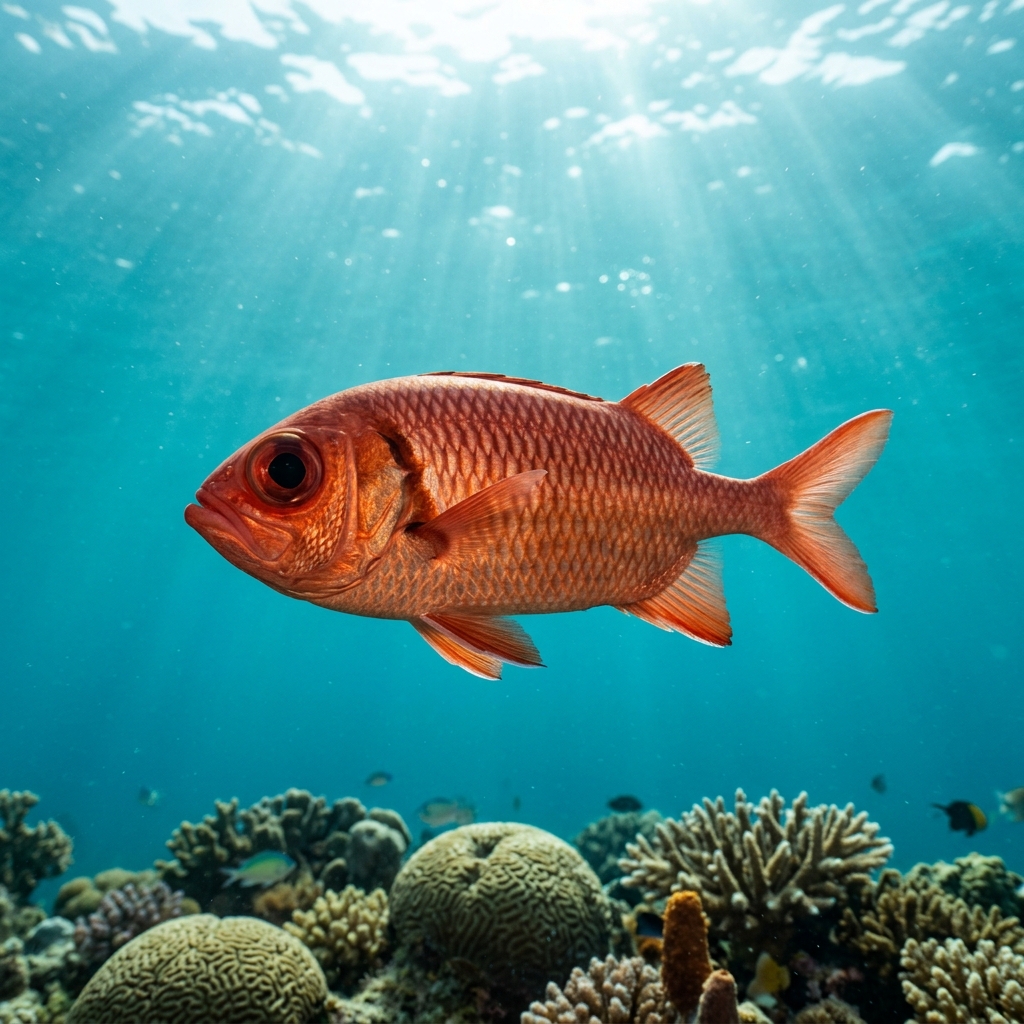
Soldierfish
3,621 sites