Artedius corallinus
A rare, reef-mottled 10cm fish logged off California, comfortable from 9.6 to 24.7C year-round. Here's how to spot one on a dive.
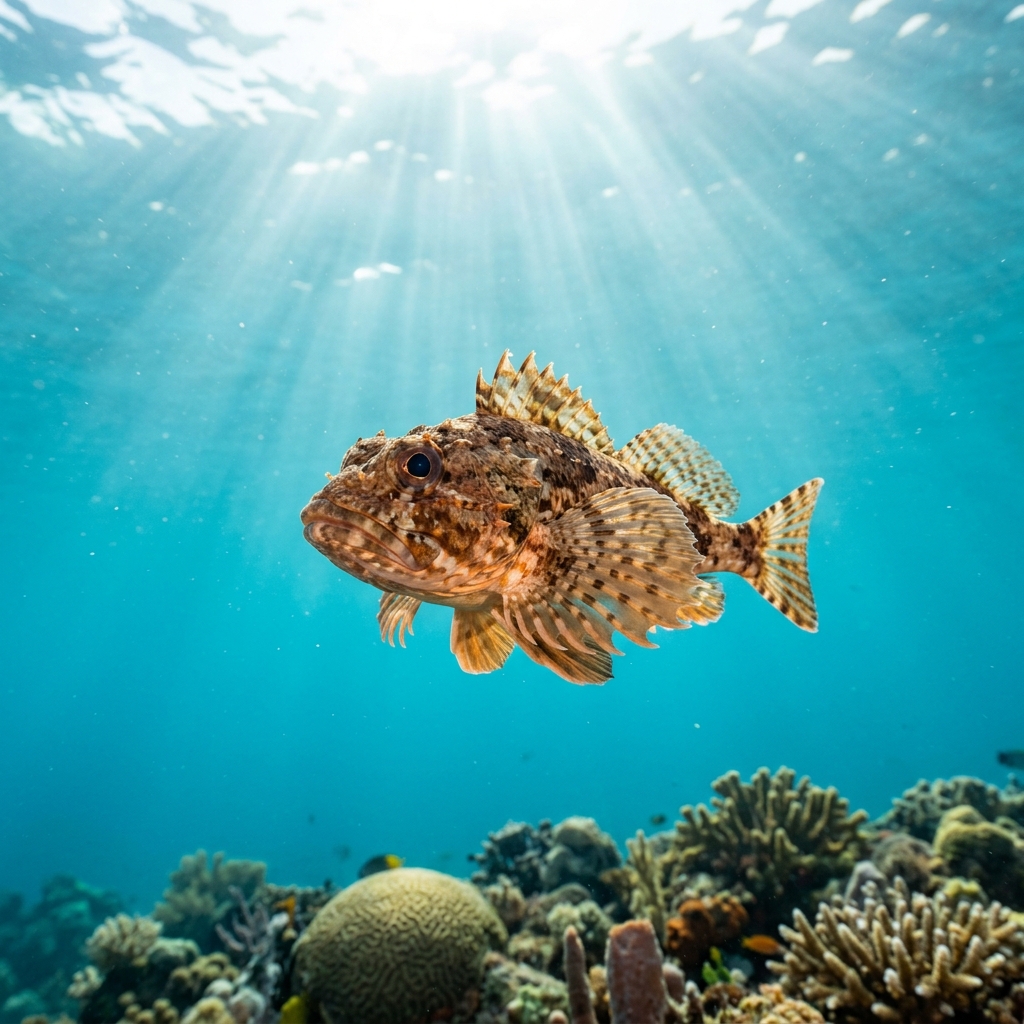
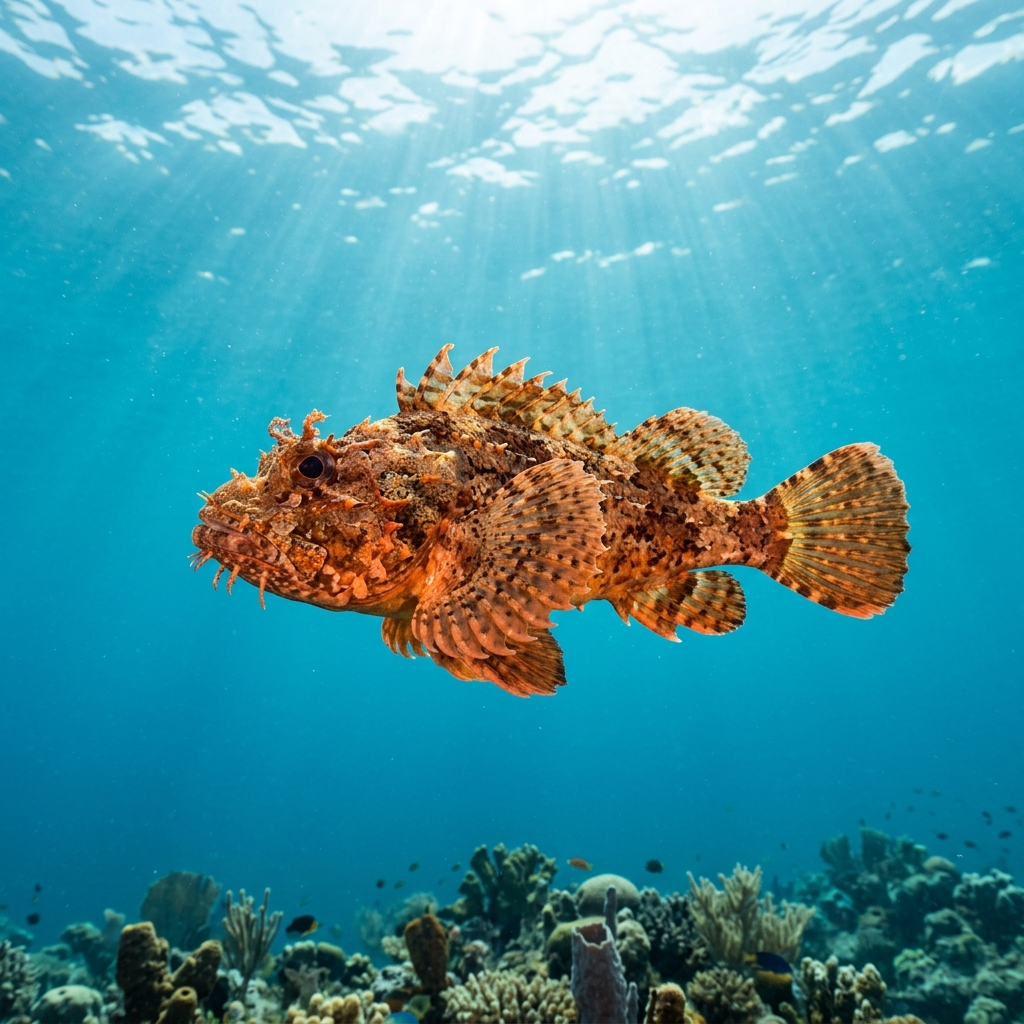
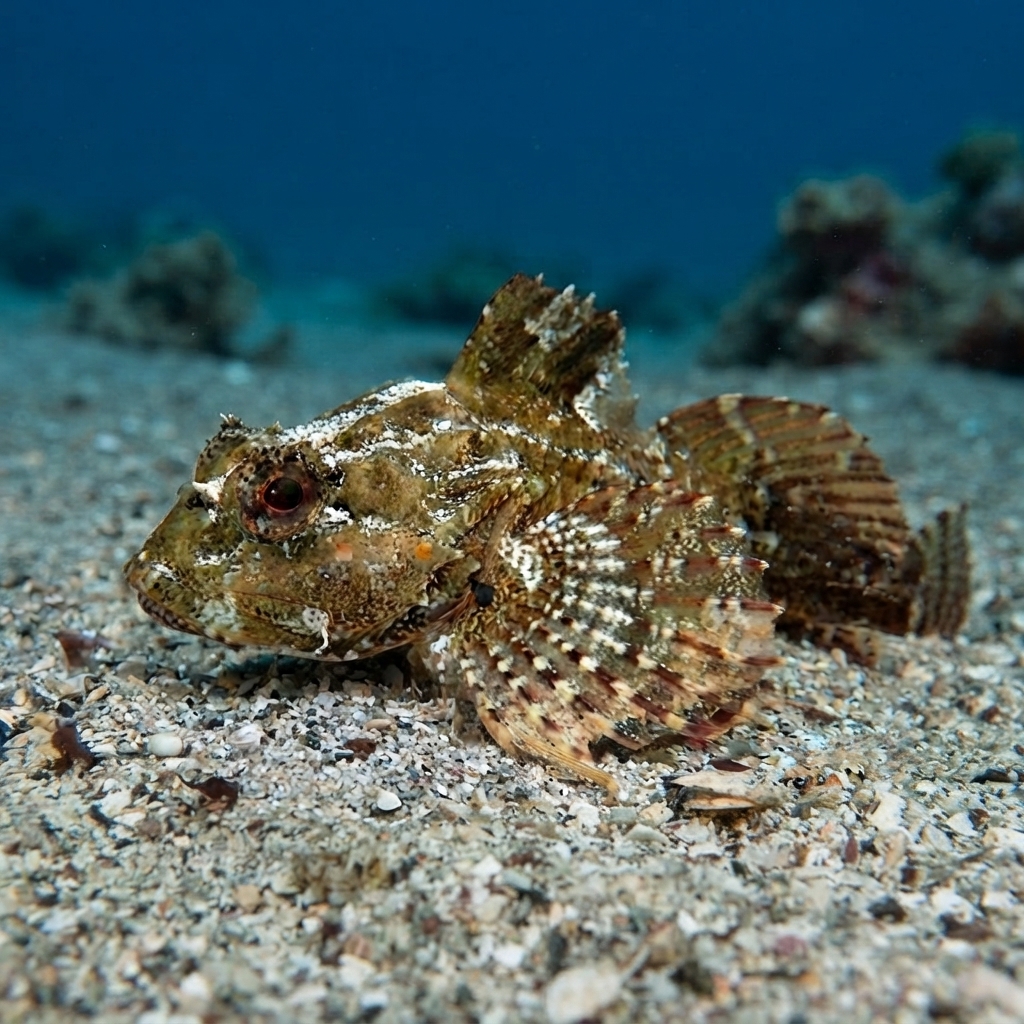
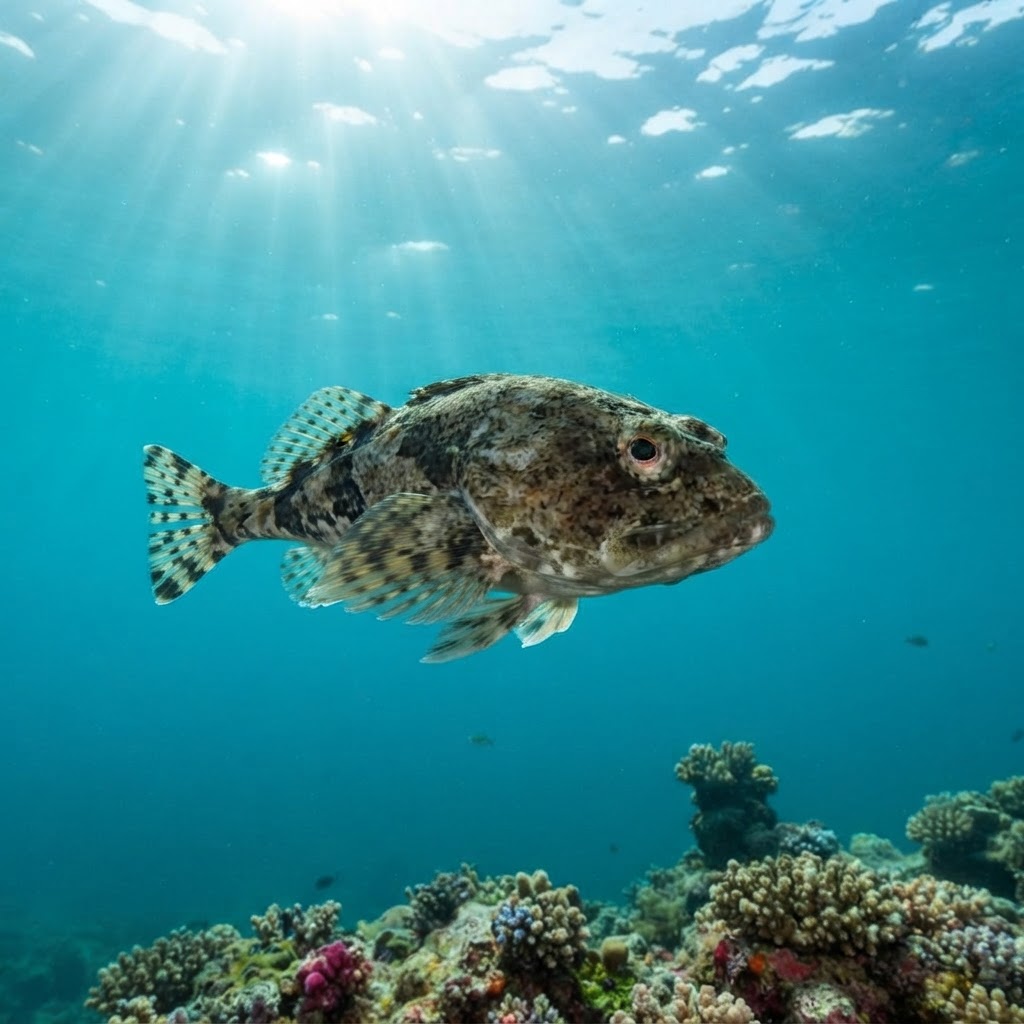
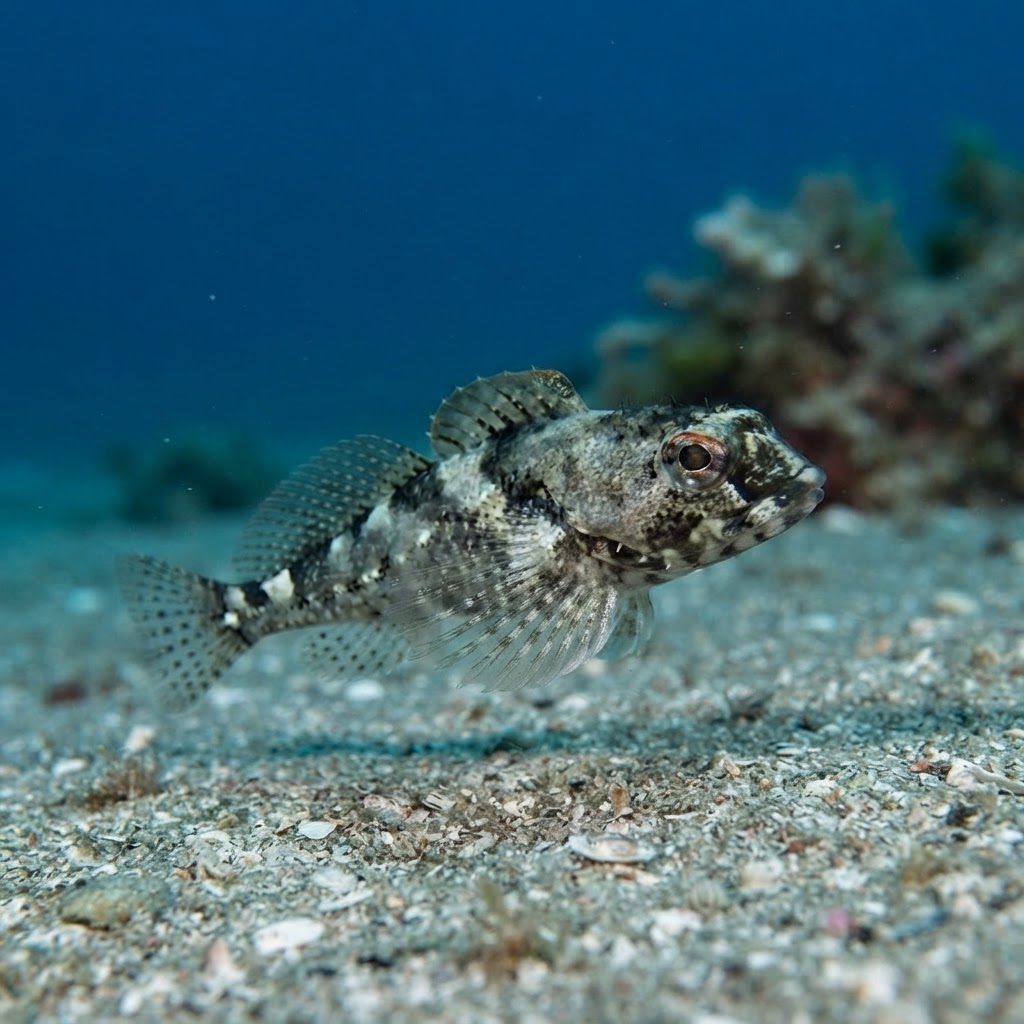
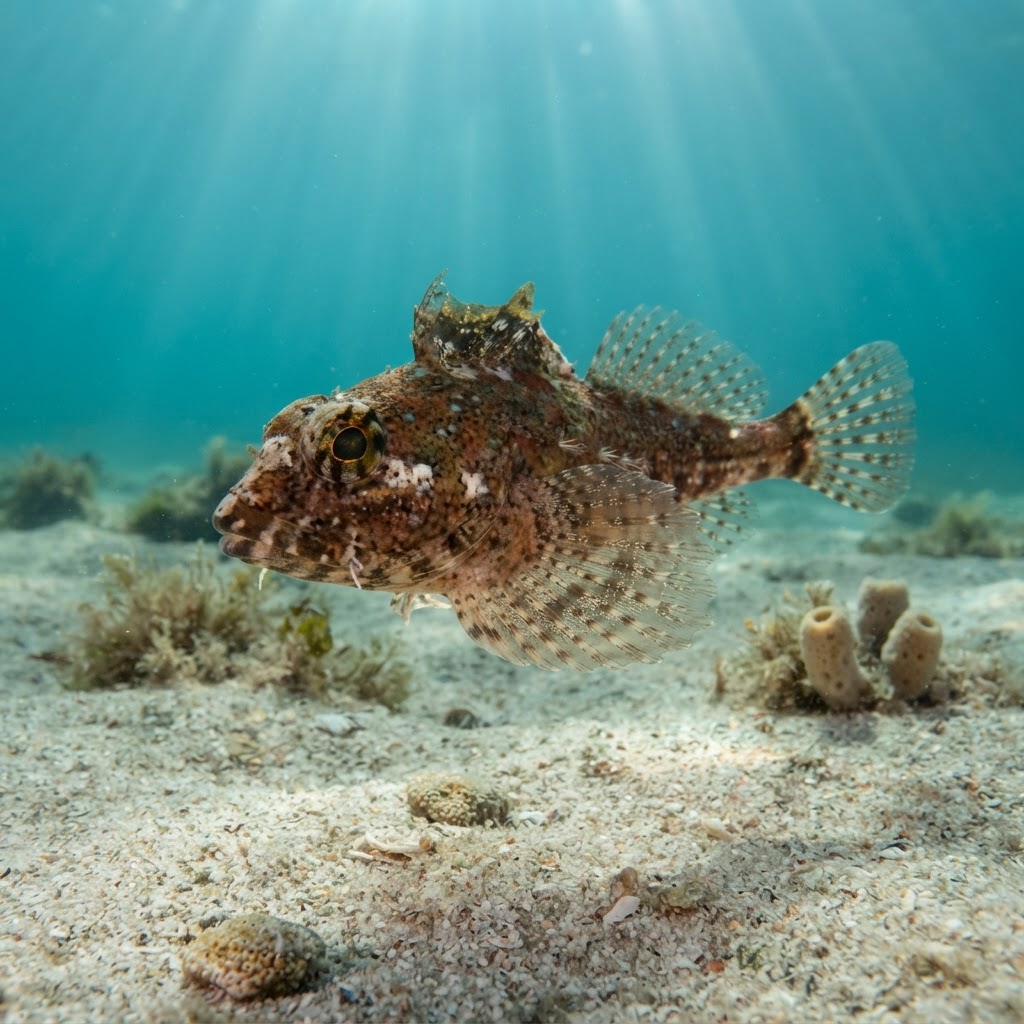
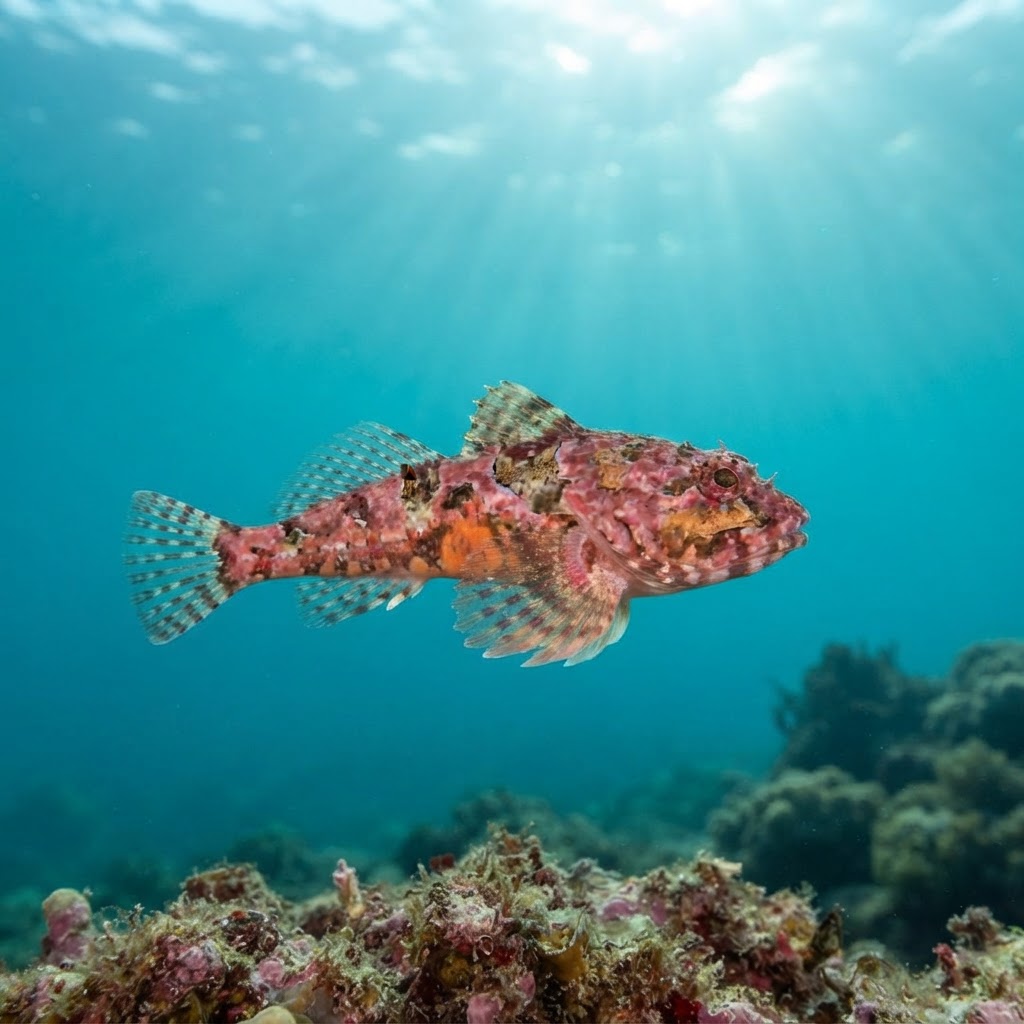
Small, thickset fish, rarely more than 10cm long, with a mottled pattern of reds, browns and pinks that mimics the coralline algae and encrusting growth it sits on. It has a blunt head, large eyes set high, and small fleshy cirri (skin flaps) above the eyes typical of sculpins. Rather than swimming in open water, it perches motionless on rock or reef structure, relying on camouflage rather than colour flashes to stand out.
Expect to find it sitting still on rock, rubble or encrusting algae rather than out swimming, using its mottled skin to blend into the background. It tends to stay put as divers pass, only darting a short distance if directly disturbed. Look closely at ledges and low-relief rocky reef rather than open water, since it spends most of its time perched and stationary.
Its blotchy reddish camouflage is a close match for the coralline algae it lives among, which is where both its common and scientific names come from.
Sightings don't show a clear season, and its wide tolerance from 9.6 to 24.7C means it can turn up on Californian reefs at any time of year. Plan around good visibility and site conditions rather than a particular month.
All logged sightings come from California, United States, making it the only real bet if you want to find one. Sites there report it only occasionally, so treat any sighting as a bonus rather than a target for the dive.
Mapping where Coralline Sculpin is logged…
The only confirmed sightings come from California, United States, where it turns up on rocky reef sites. It hasn't been logged elsewhere, so California is currently the place to look.
There's no clear seasonal pattern in sightings, and it tolerates a wide temperature range from about 9.6 to 24.7C, so it can be seen year-round in California waters.
Look for a small, chunky fish around 10cm long with mottled red-brown colouring sitting motionless on rock or algae. Its blunt head, high-set eyes and small skin flaps above the eyes are typical sculpin features that separate it from free-swimming reef fish.
They stay small, typically around 10cm long, making them easy to overlook against a mottled rocky reef.
Yes, at the handful of sites where they've been logged, divers report them as a rare find rather than a regular sighting. Spotting one usually comes down to a sharp eye on rock and rubble rather than an easy encounter.
Site and sighting data is aggregated from diver logs, iNaturalist and GBIF. For taxonomy and conservation status:
Shorthorn Sculpin
228 sites