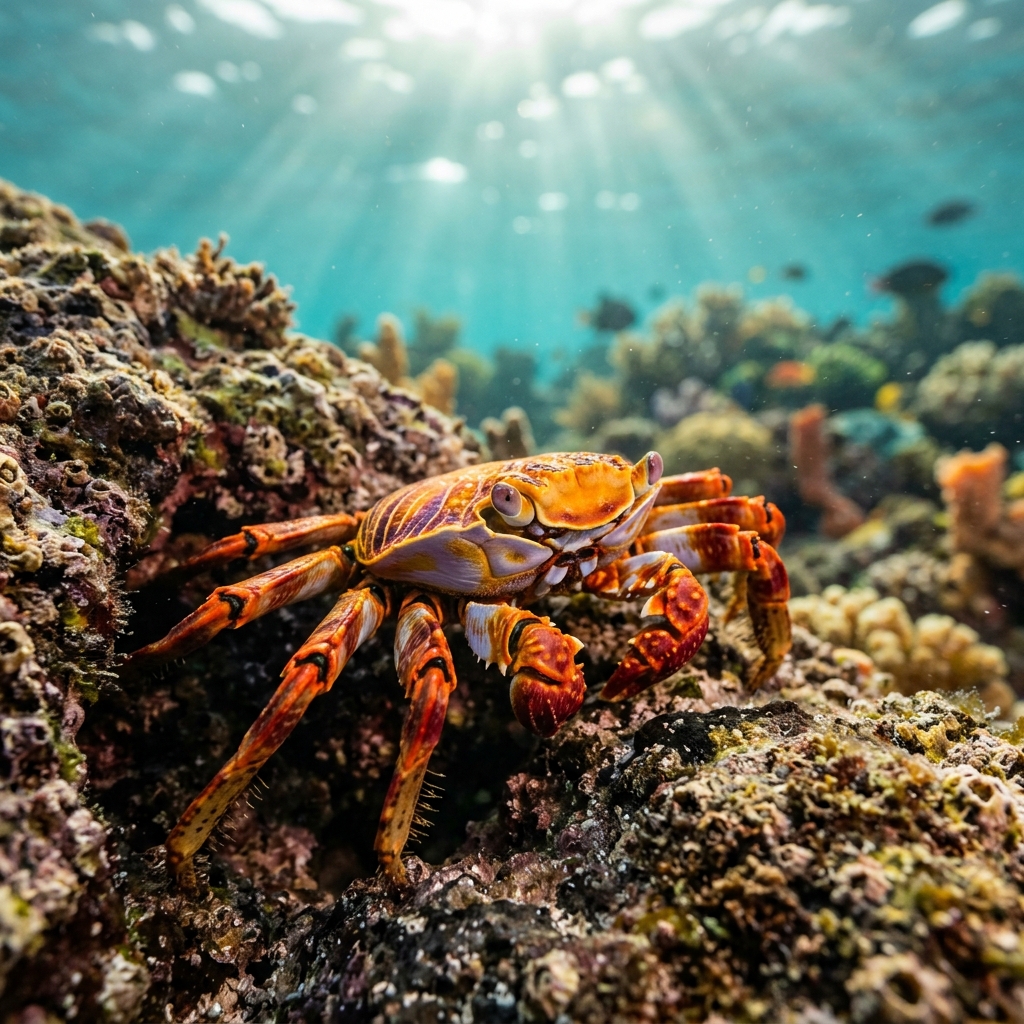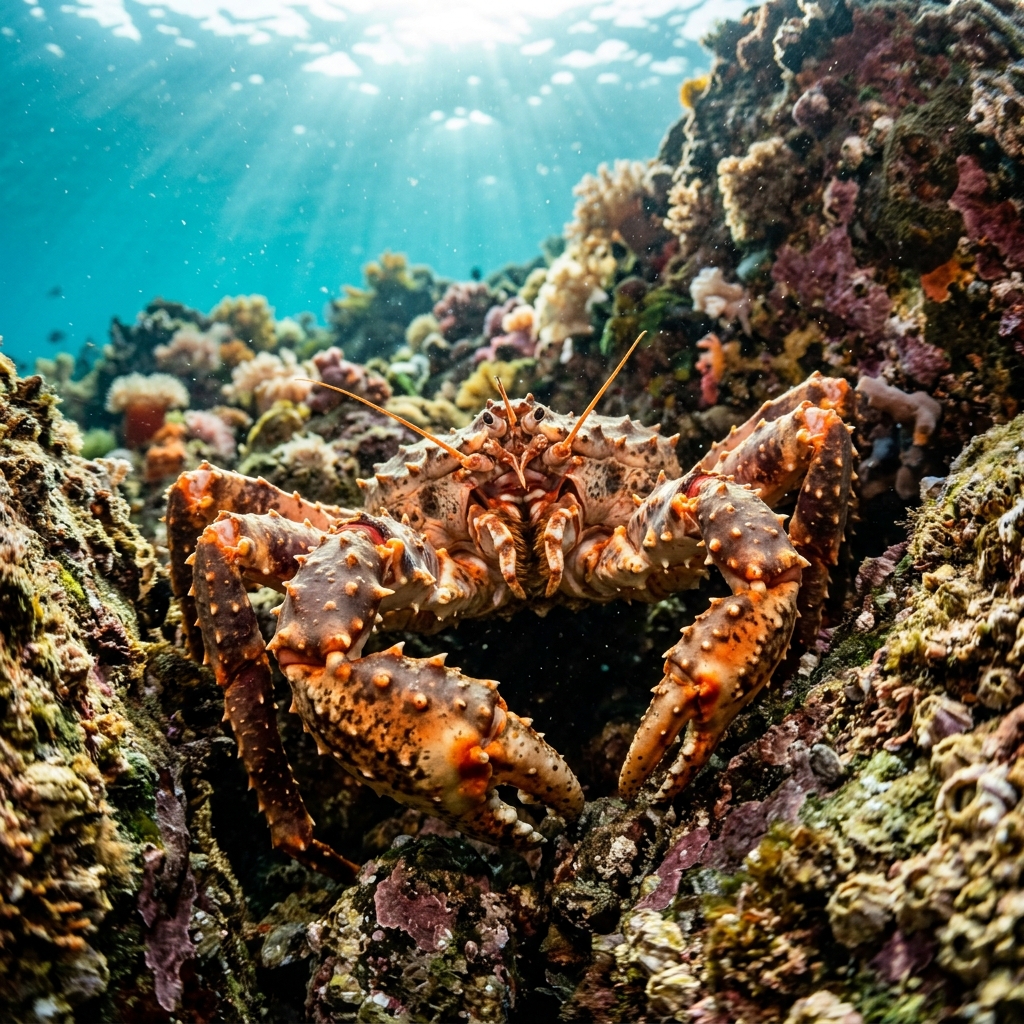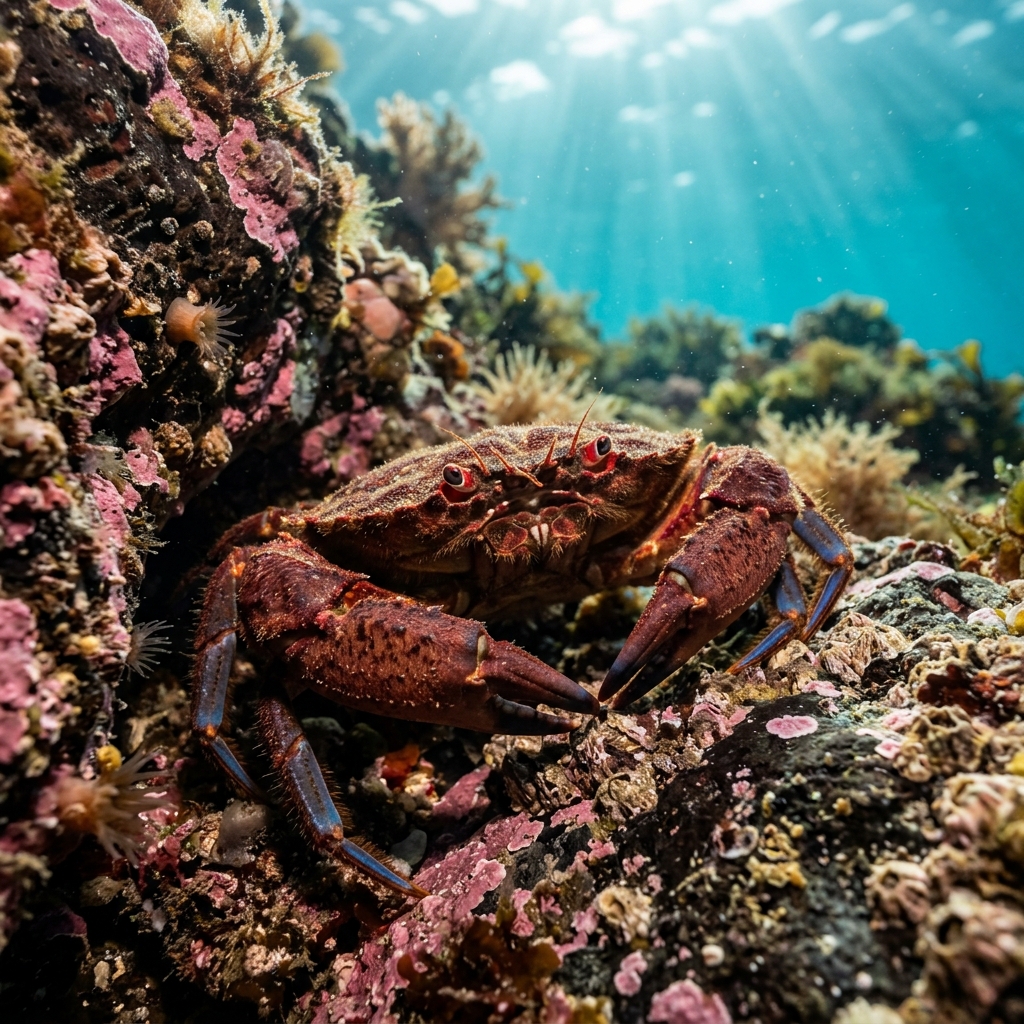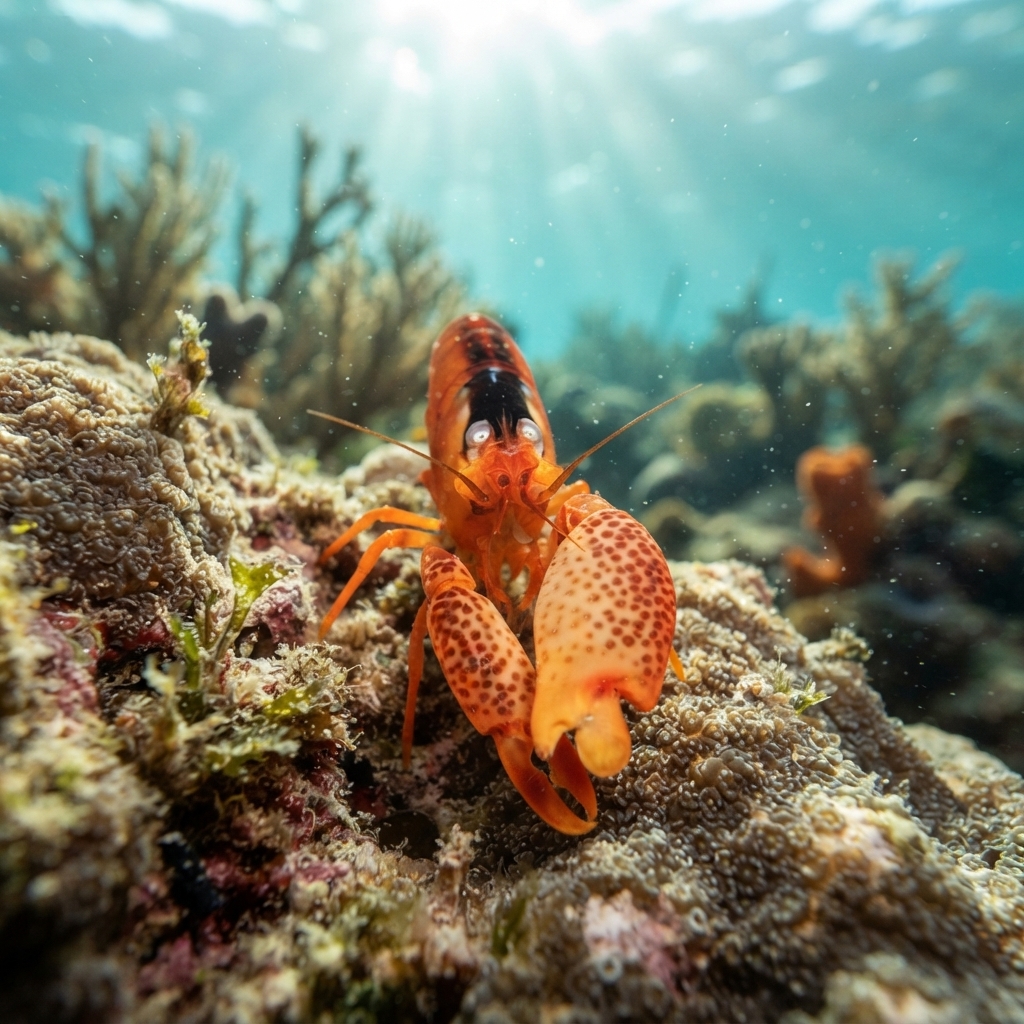
Alpheus lottini
Tiny reef residents in Maldives' Central Atolls, living inside Pocillopora coral in 24-30C water year-round. Here's how to spot one.
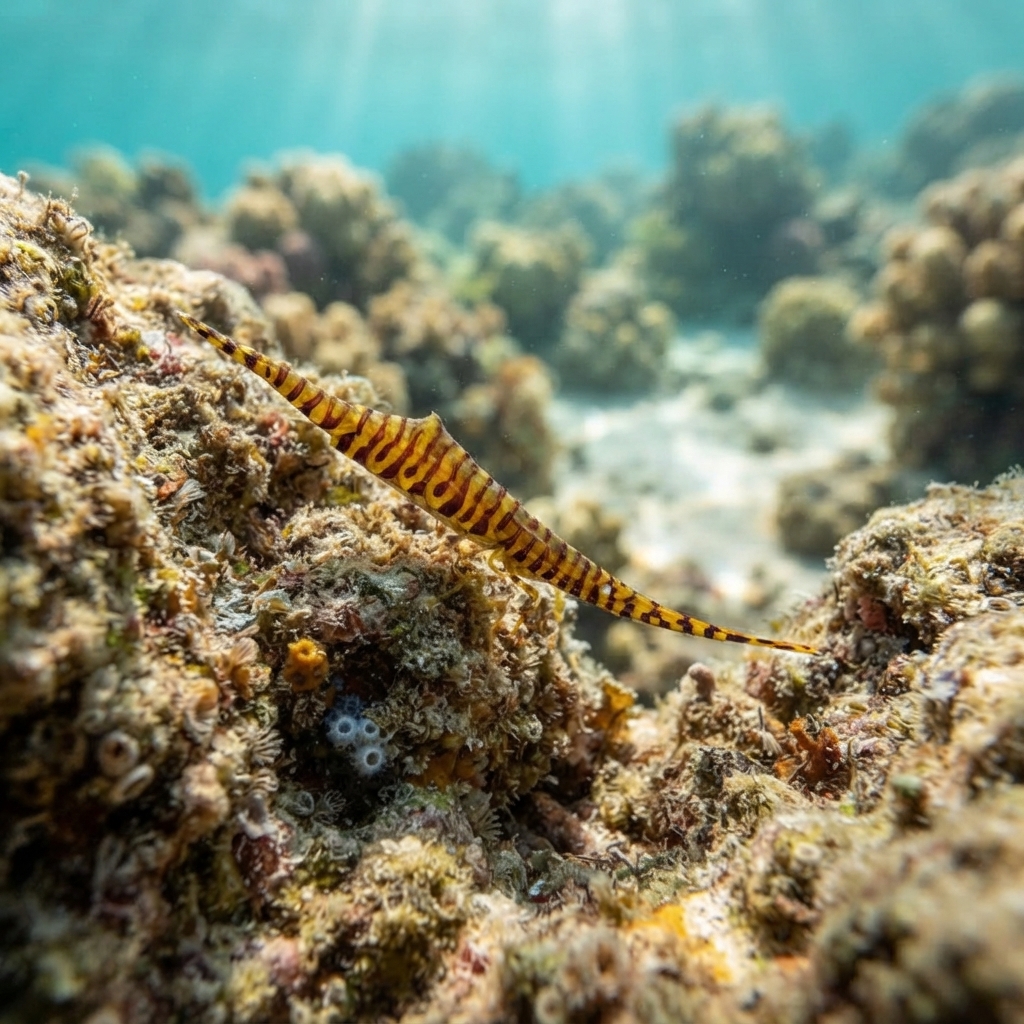
A tiny crustacean, barely 2cm long, that spends most of its life tucked inside the branches of Pocillopora coral rather than out on open reef. Look for a pale to orange banded body with one noticeably oversized claw, held cocked and ready. You'll usually clock the claw or a flash of movement before you clock the animal itself, and it vanishes back into the coral branches the instant a shadow passes over.
Divers usually spot this one by ear before they spot it by eye, the sharp snapping sound from its enlarged claw carries through the water as it defends its coral colony. It lives in a tight partnership with its host Pocillopora coral, darting between branches and rarely straying more than a few centimetres from cover. Slow down and hover near a coral head and you'll often see a pair working the same branches, ducking in and out as you get close.
That oversized claw isn't for feeding, it's a weapon: a rapid snap fires a jet of water fast enough to stun small intruders and produce an audible crack, the same trick used by other snapping shrimp species to defend their coral home turf.
No clear season shows up in the data, and with a comfortable range of 24.4 to 30.4C it's present on its coral hosts all year round. Any month works if you're diving reefs with healthy branching coral.
Reef neighbours a diver could mistake it for. Use the identification notes above to tell them apart.
Most reliably logged in the Maldives, especially across the Central Atolls, where sightings run year-round on Pocillopora-covered reef flats. Smaller but confirmed populations turn up at Saint-Paul in Reunion, the Visayas in the Philippines, and the Society Islands of French Polynesia.
Mapping where Coral Snapping Shrimp is logged…
The Central Atolls of the Maldives are the most reliable spot, with additional sightings logged at Saint-Paul in Reunion, the Visayas in the Philippines, and the Society Islands in French Polynesia.
There's no strong seasonal pattern in sightings, and the water temperatures it's found in, 24.4 to 30.4C, occur year-round on tropical reefs, so any month is workable.
Look for a small banded shrimp, around 2cm, tucked into branching Pocillopora coral with one claw noticeably larger than the other. You'll often hear its sharp snapping sound before you see it.
They stay tiny, topping out around 2cm long, which is part of why they're easy to miss unless you know to check inside branching coral heads.
Their enlarged claw snaps shut fast enough to fire a striking jet of water, a defence mechanism used to fend off intruders near their host coral colony.
Site and sighting data is aggregated from diver logs, iNaturalist and GBIF. For taxonomy and conservation status:
Sally Lightfoot Crab
2,422 sites