Coradion melanopus
Rare but rewarding in the Philippines and Bali, the Two Spot Coralfish lives in warm 27-29°C reef waters. Here's how to spot it and where to look.
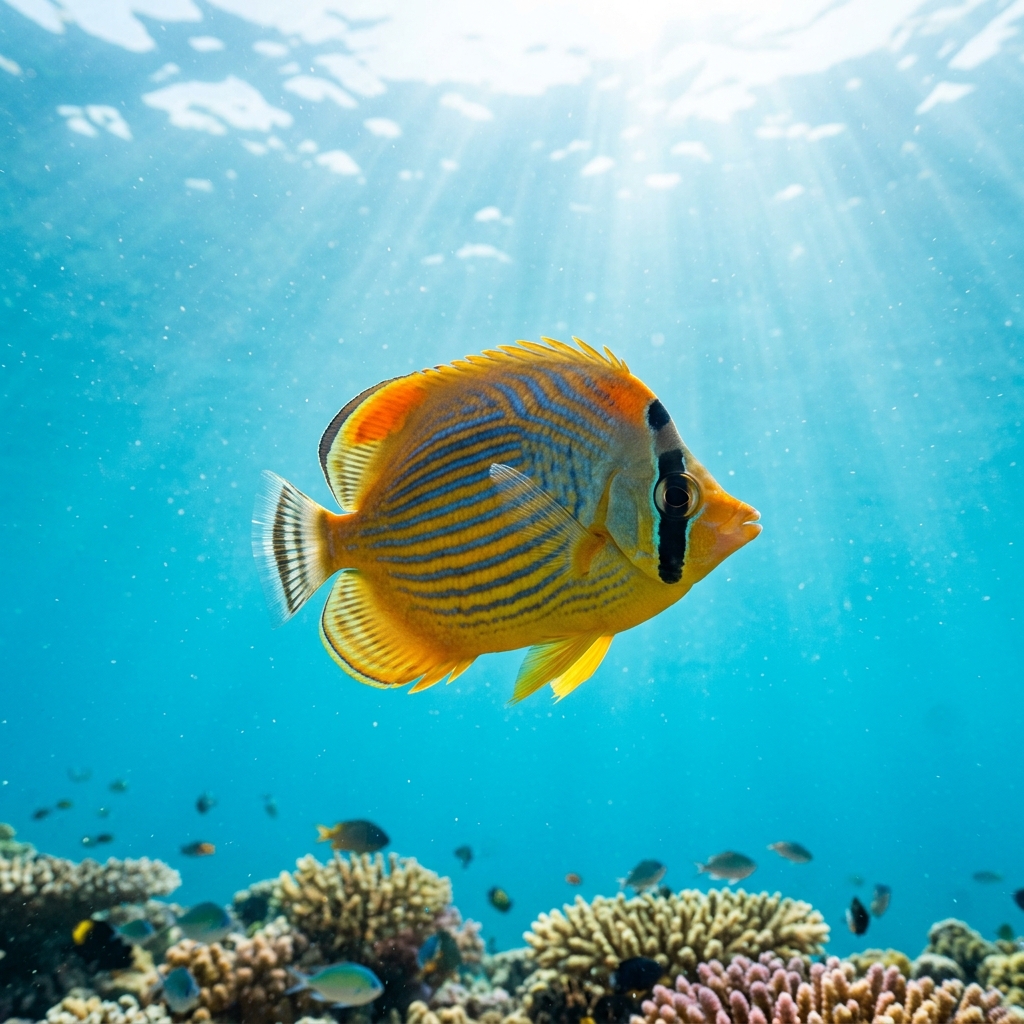
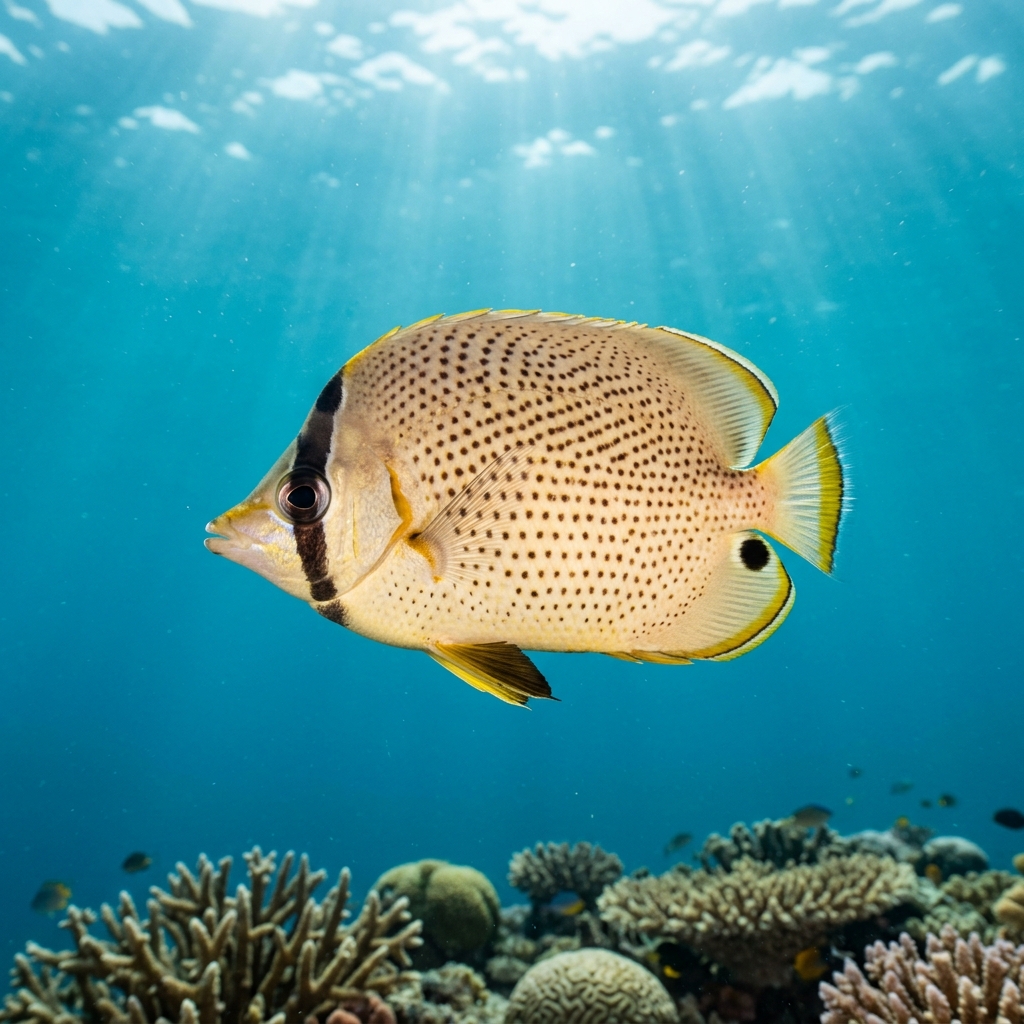
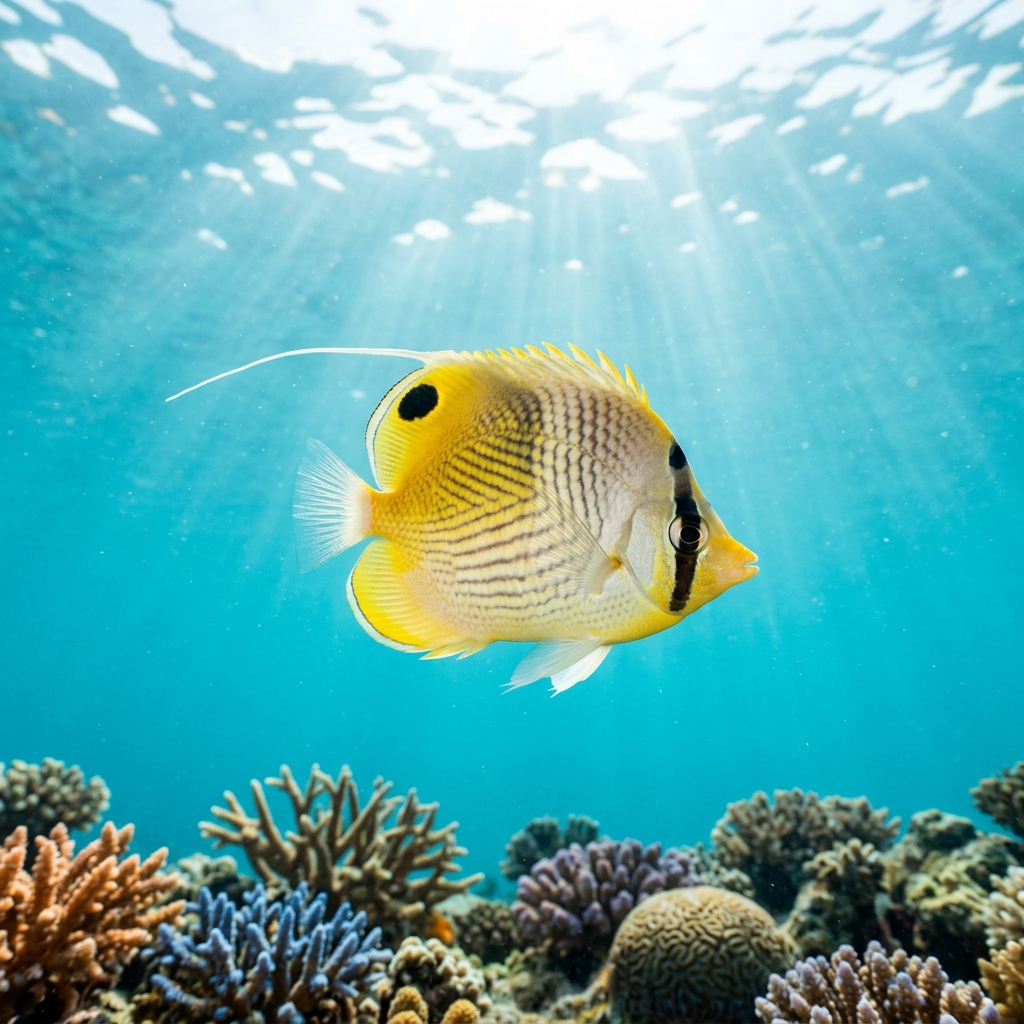
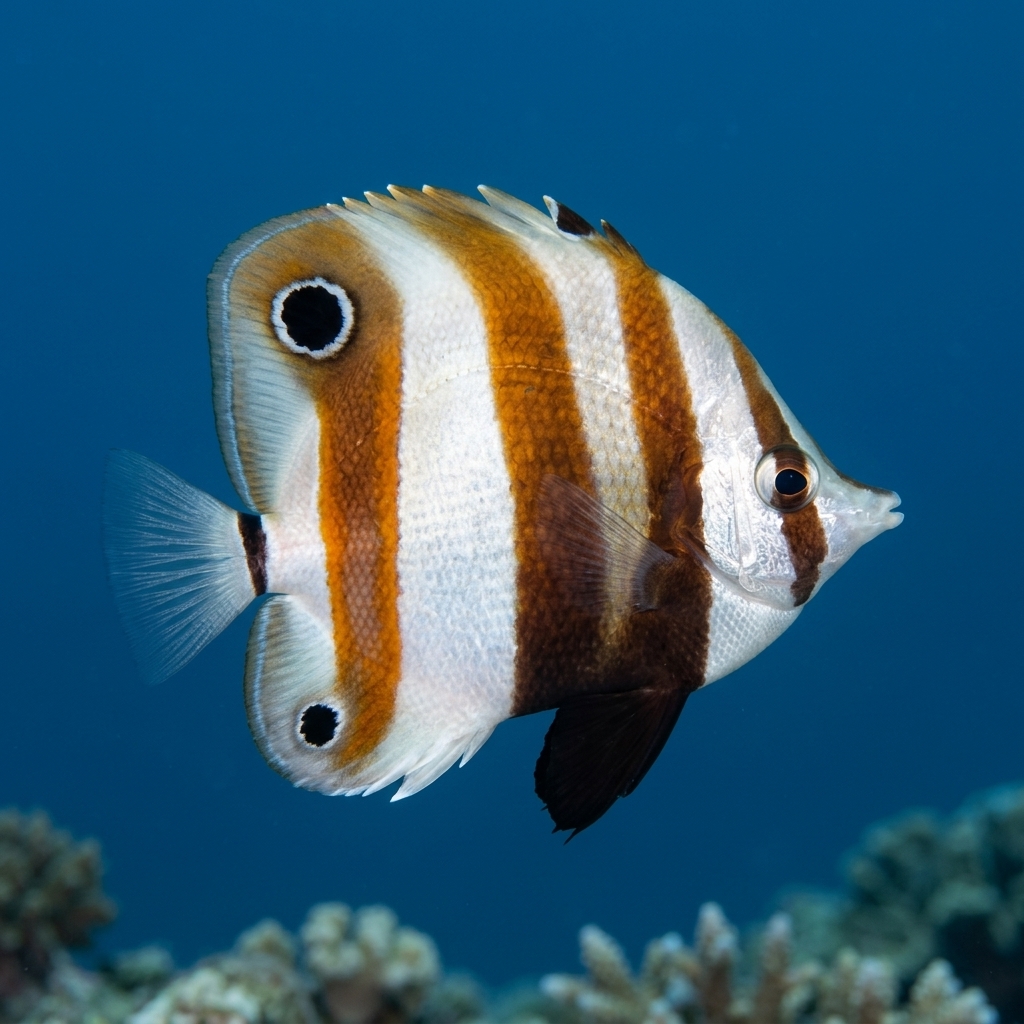
Look for a small, deep-bodied butterflyfish with a white base colour broken by bold orange-brown vertical bands and a dark spot at the rear of the dorsal fin, the feature that gives it its name. A second dark spot sits at the base of the tail, making the 'two spots' easy to count once you know what to look for. The snout is moderately pointed, typical of coralfish in this family, and the overall impression underwater is of a compact, vividly banded fish no bigger than your palm.
Typically encountered singly or in pairs moving slowly along coral-rich walls and slopes, picking at the reef structure as it goes, most likely feeding on coral polyps or small invertebrates in the manner of its butterflyfish relatives. It tends to stay close to coral cover and will drift a short distance away if approached, but rarely bolts entirely. Sightings are almost always brief glimpses among busier reef communities, which is partly why the rarity rating sticks across so many sites.
Like other members of the Coradion genus, the Two Spot Coralfish is thought to feed on sponges as well as coral polyps, an unusual dietary habit that sets it apart from many of the butterflyfish that share its reef.
No clear season has emerged from the available data, so it can reasonably be treated as a year-round resident. Its observed temperature range of 27 to 29°C points to stable tropical reef conditions, which both the Philippines and Indonesian sites maintain throughout the year.
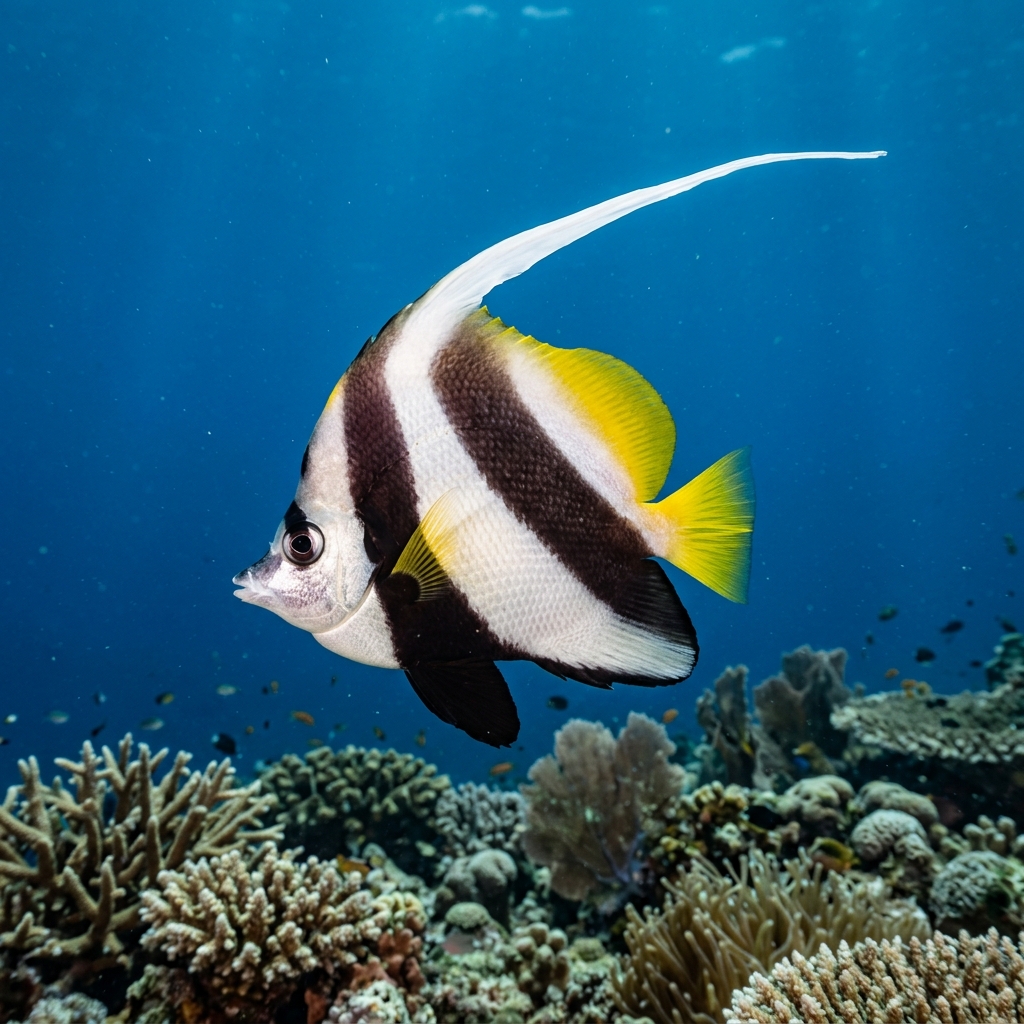
Reef neighbours a diver could mistake it for. Use the identification notes above to tell them apart.
Almost all logged sightings come from the Philippines and Indonesia, with the Visayas Central region of the Philippines accounting for the majority of records by a wide margin. Within Indonesia, Bali, Lombok and Java are the most consistent areas, with a smaller number of sightings from Sulawesi and the Nusa Tenggara and Banda Sea region.
Mapping where Two Spot Coralfish is logged…
The Philippines, particularly the Visayas Central region, is by far the most reliable area, followed by Bali, Lombok and Java in Indonesia. Smaller numbers have also been logged in Sulawesi and the Nusa Tenggara and Banda Sea area.
There is no detected seasonal peak, so any time of year is reasonable. Both the Philippines and Indonesia maintain water temperatures in the 27 to 29°C range that this species favours, making year-round diving viable.
Focus on the two dark spots: one at the rear of the dorsal fin and one at the tail base. Combined with the orange-brown vertical banding on a white body and a compact, deep profile, these marks distinguish it from similar butterflyfish once you know what to look for.
It is rated rare at the vast majority of sites where it has been logged, and uncommon at a handful of others. Expect it to be a fortunate sighting rather than a reliable one, even in the Philippines and Bali where most records exist.
Site and sighting data is aggregated from diver logs, iNaturalist and GBIF. For taxonomy and conservation status: