Coradion altivelis
Spot the Highfin Coralfish in the Philippines, Thailand or Australia. Rare but present year-round in warm Indo-Pacific reefs from 22 to 29°C.
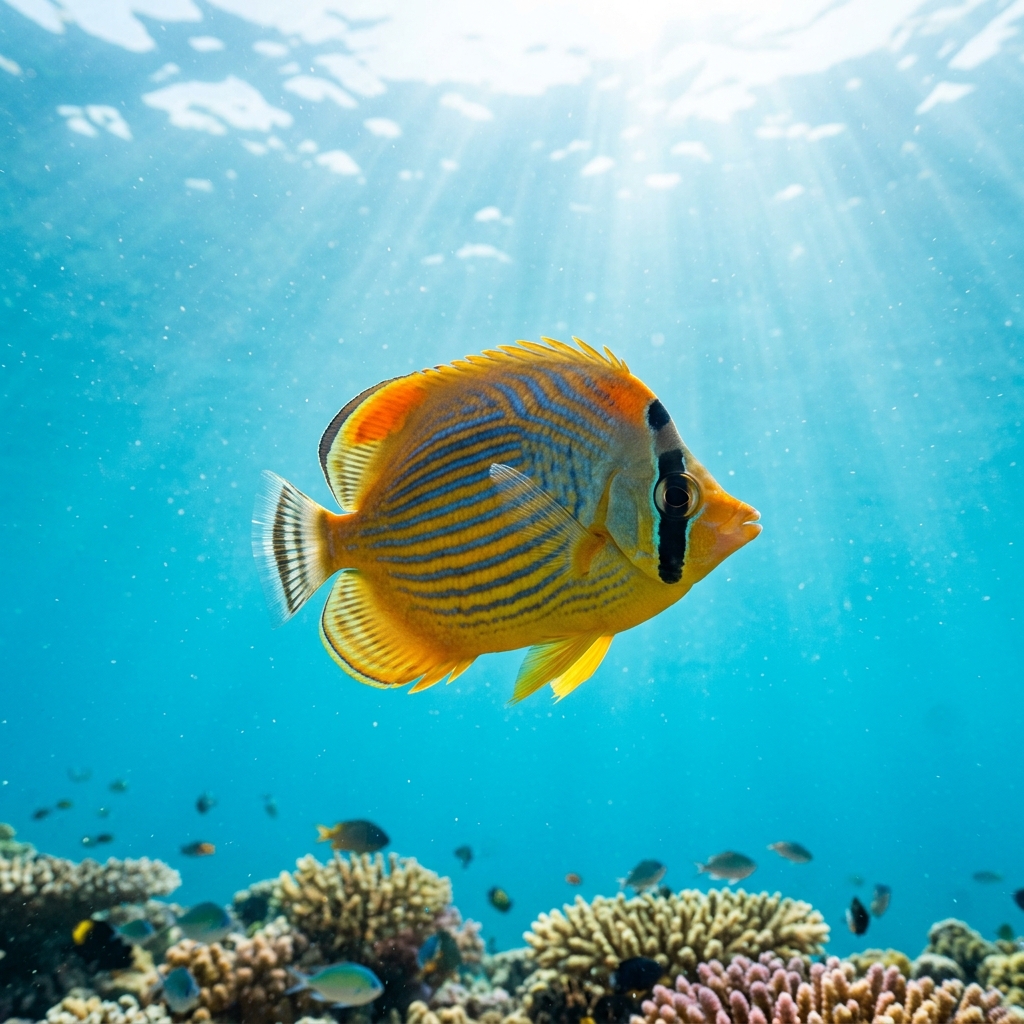
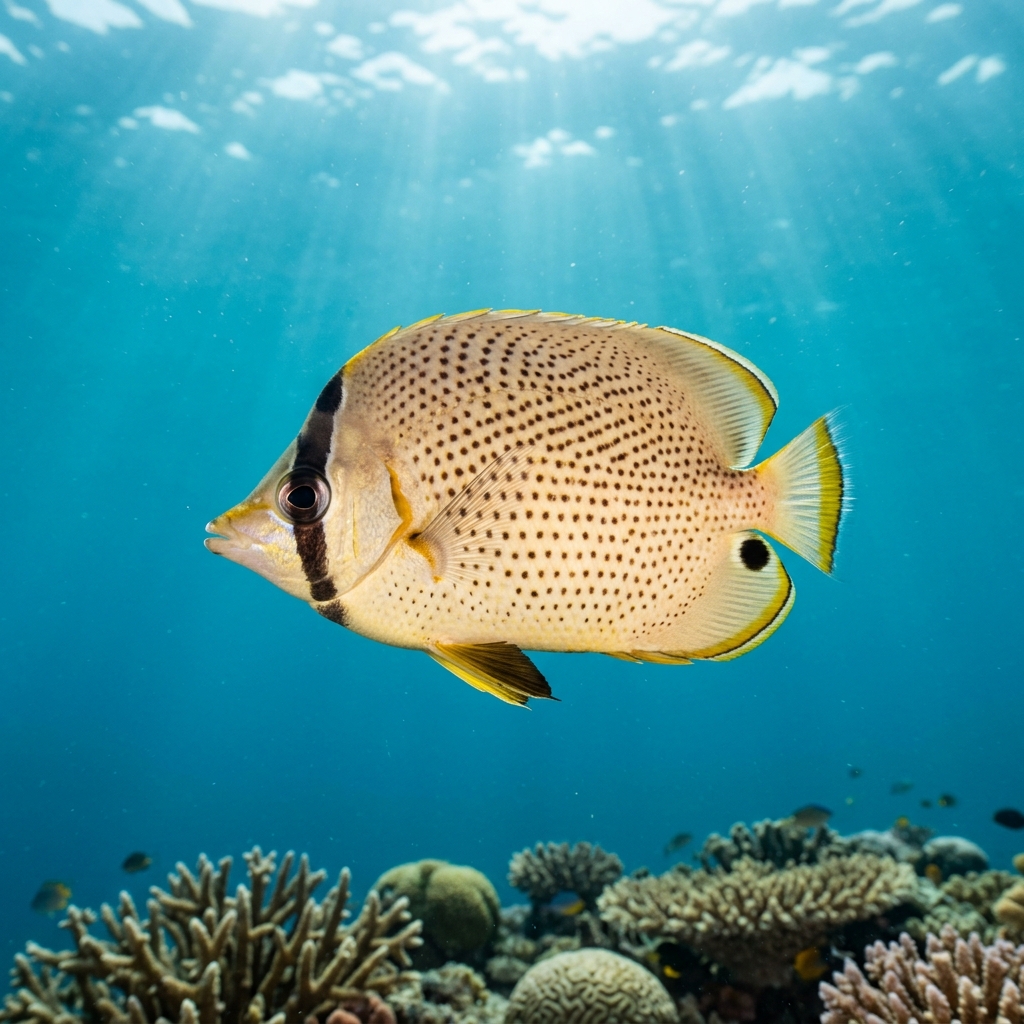
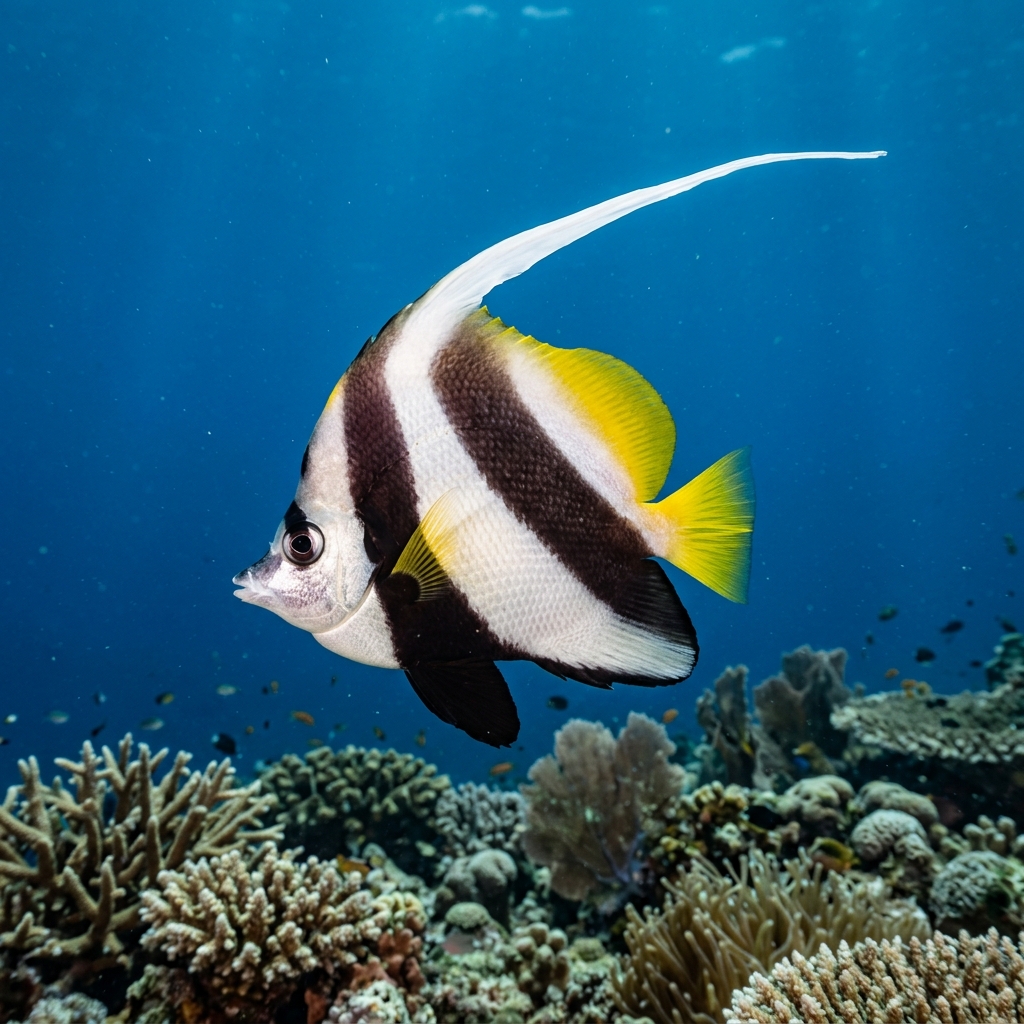
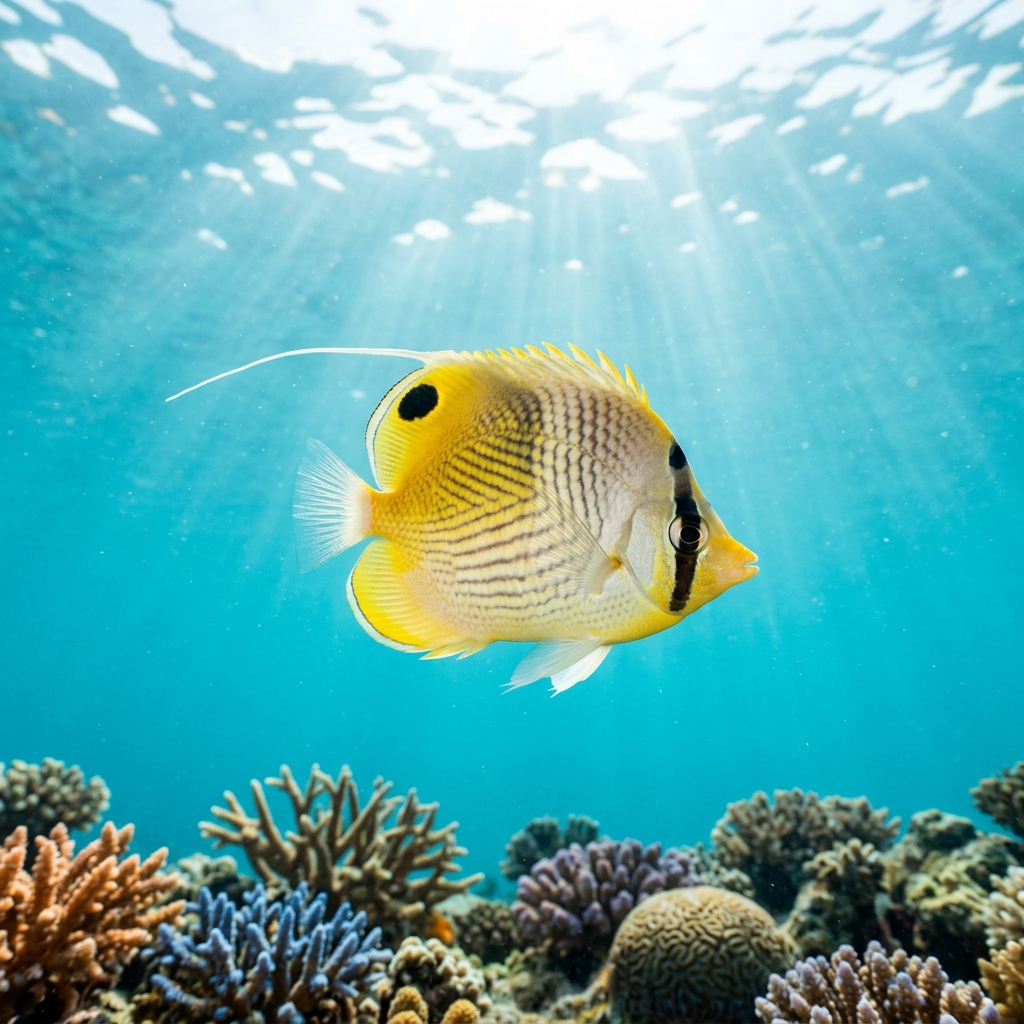
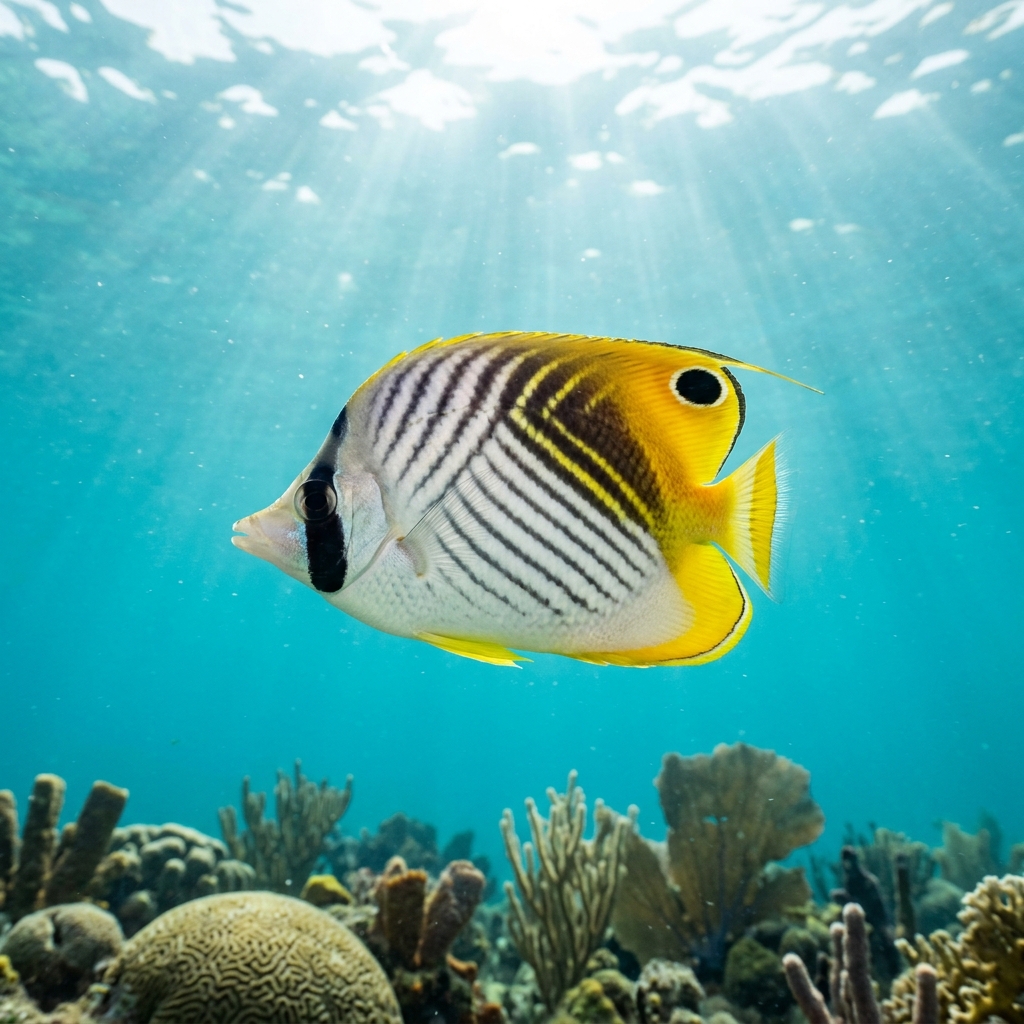
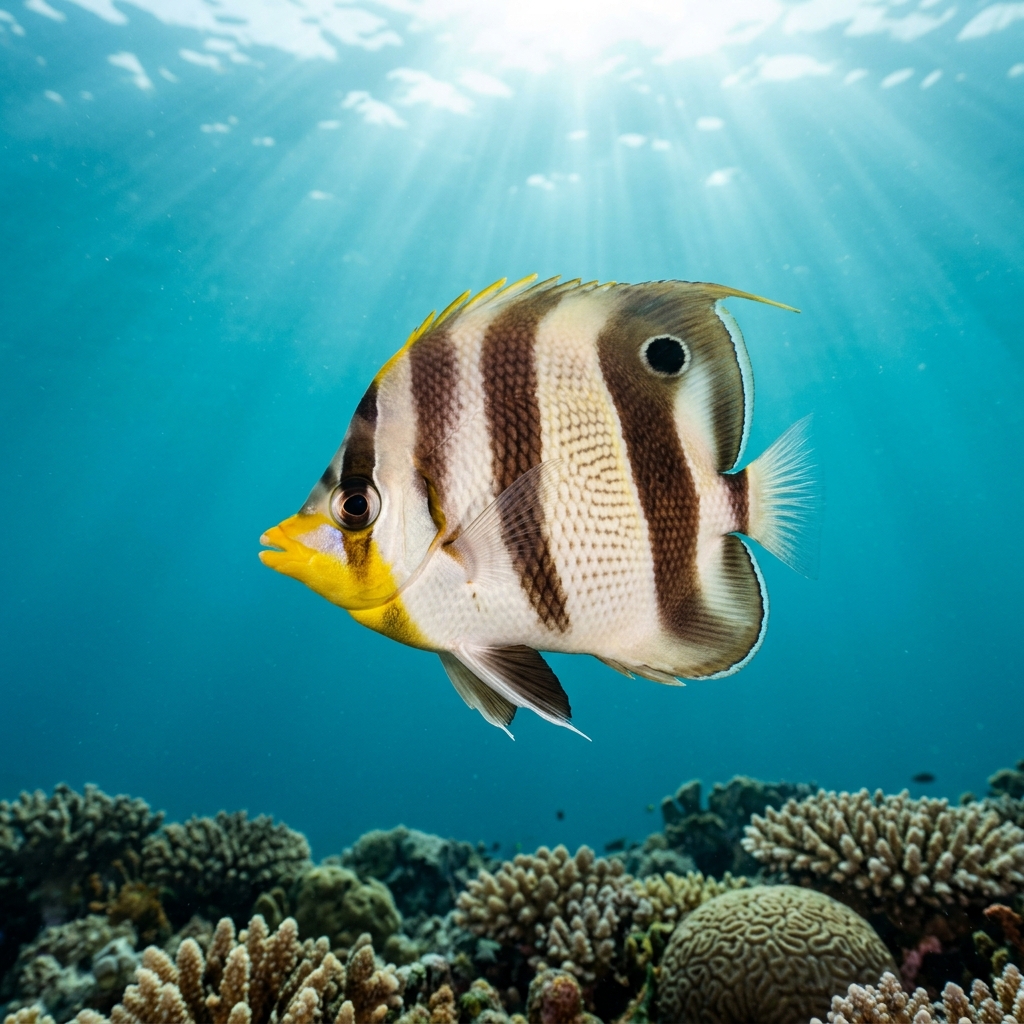
Two broad orange-brown vertical bars on a pale white body give this butterflyfish a bold, banded look underwater. The feature that sets it apart is the unusually elongated dorsal fin (the spiny fin along the back), which gives the fish a noticeably tall profile compared to most other butterflyfishes. A dark bar runs through the eye, and a smaller dark spot or bar sits near the tail end. Medium-small in size, it tends to hover close to coral structure rather than swimming in open water.
You are most likely to find this fish picking over coral heads and rubble patches, often in pairs, as butterflyfishes commonly pair bond for long periods. It tends to stay close to the reef rather than venturing into open water, and it is typically cautious around divers, retreating slowly into coral structure when approached. Slow, relaxed movement and keeping your distance give you the best chance of a close look before it tucks away.
Like many butterflyfishes, the highfin coralfish is believed to form long-term monogamous pairs, which is why sightings frequently involve two fish moving together in close proximity along the same section of reef.
No strong seasonal pattern has emerged from the sighting data, so it is treated as a year-round resident on tropical reefs. Its observed temperature range of 22 to 29°C fits the typical warm Indo-Pacific reef year-round, so timing your dive around other conditions such as visibility and sea state is more important than season.
Reef neighbours a diver could mistake it for. Use the identification notes above to tell them apart.
Most sightings come from the Philippines, particularly the reefs of Luzon and the north, making it the single best country to target this species. Thailand's Gulf of Thailand sites and Queensland, Australia are the next most productive areas, followed by the Andaman Islands of India and Northern Taiwan. Indonesia has produced verified sightings around Bali and Lombok as well.
Mapping where Highfin Coralfish is logged…
The Philippines, especially the reefs around Luzon, produce the most sightings. Thailand's Gulf of Thailand sites and Queensland, Australia are also reliable areas. Smaller numbers of sightings come from the Andaman Islands in India, Northern Taiwan, and Bali in Indonesia.
There is no clear peak season in the sighting data, so they appear to be present year-round wherever they live. They are recorded across a temperature range of 22 to 29°C, typical of tropical Indo-Pacific reefs throughout the year.
Look for two wide orange-brown bars on a white body and an unusually tall dorsal fin that gives the fish a noticeably high profile. The eye bar and a smaller dark mark near the tail complete the pattern. That elevated dorsal is the quickest field mark separating it from similarly banded butterflyfishes.
It is generally a rare to uncommon sighting. Across all the sites where it has been recorded, most divers rate it as rare. Patience, slow movement, and diving in the Philippines or Queensland improve your odds, but a sighting is never guaranteed.
Site and sighting data is aggregated from diver logs, iNaturalist and GBIF. For taxonomy and conservation status: