Pandalus danae
Cold-water shrimp with reddish stripes, most reliably logged in British Columbia's chilly 7.5-13.5C waters year-round.
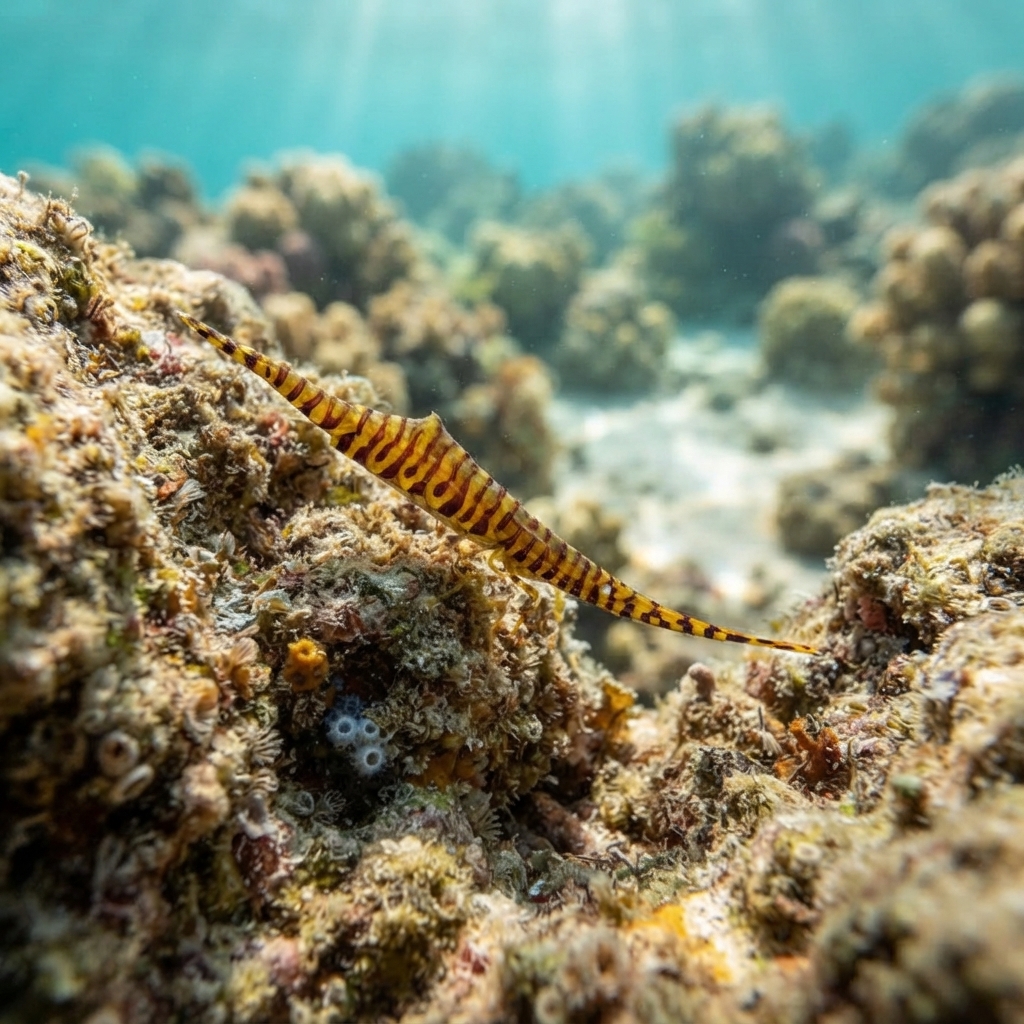
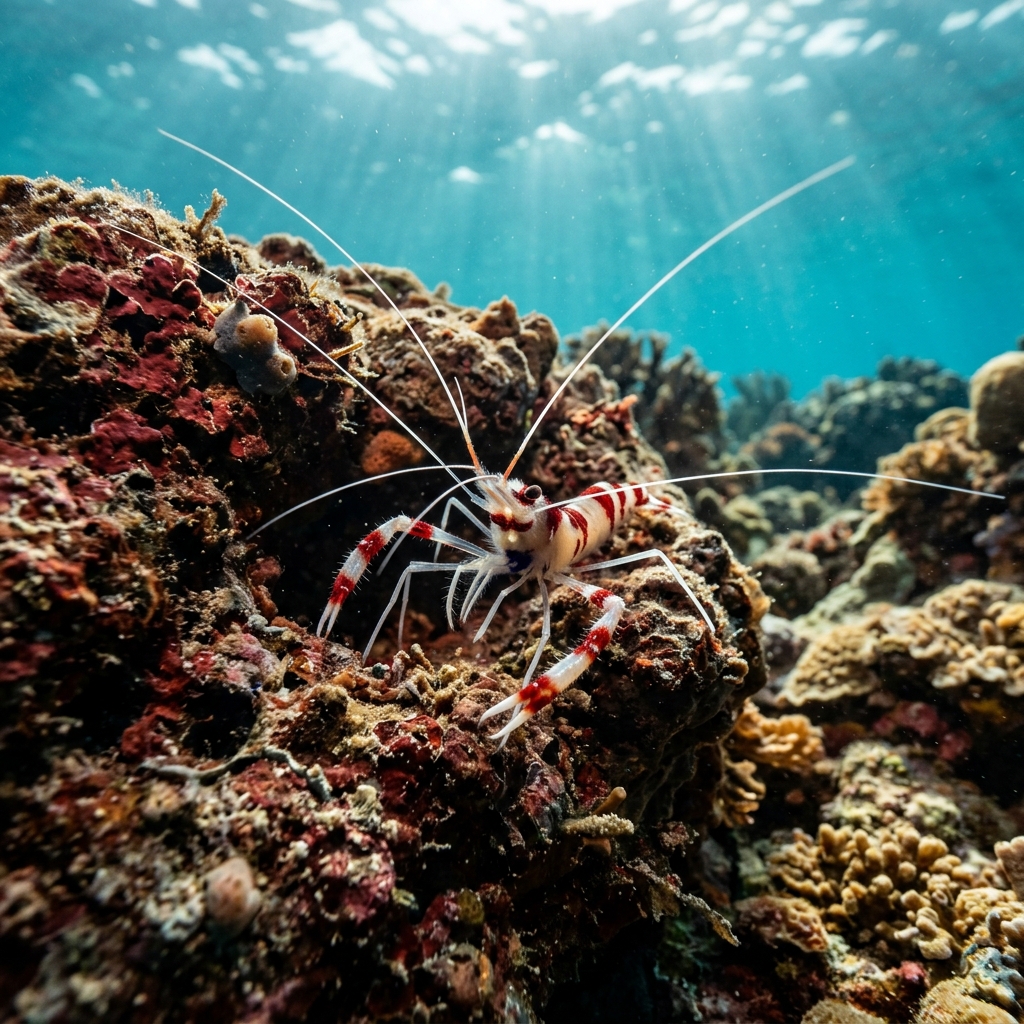
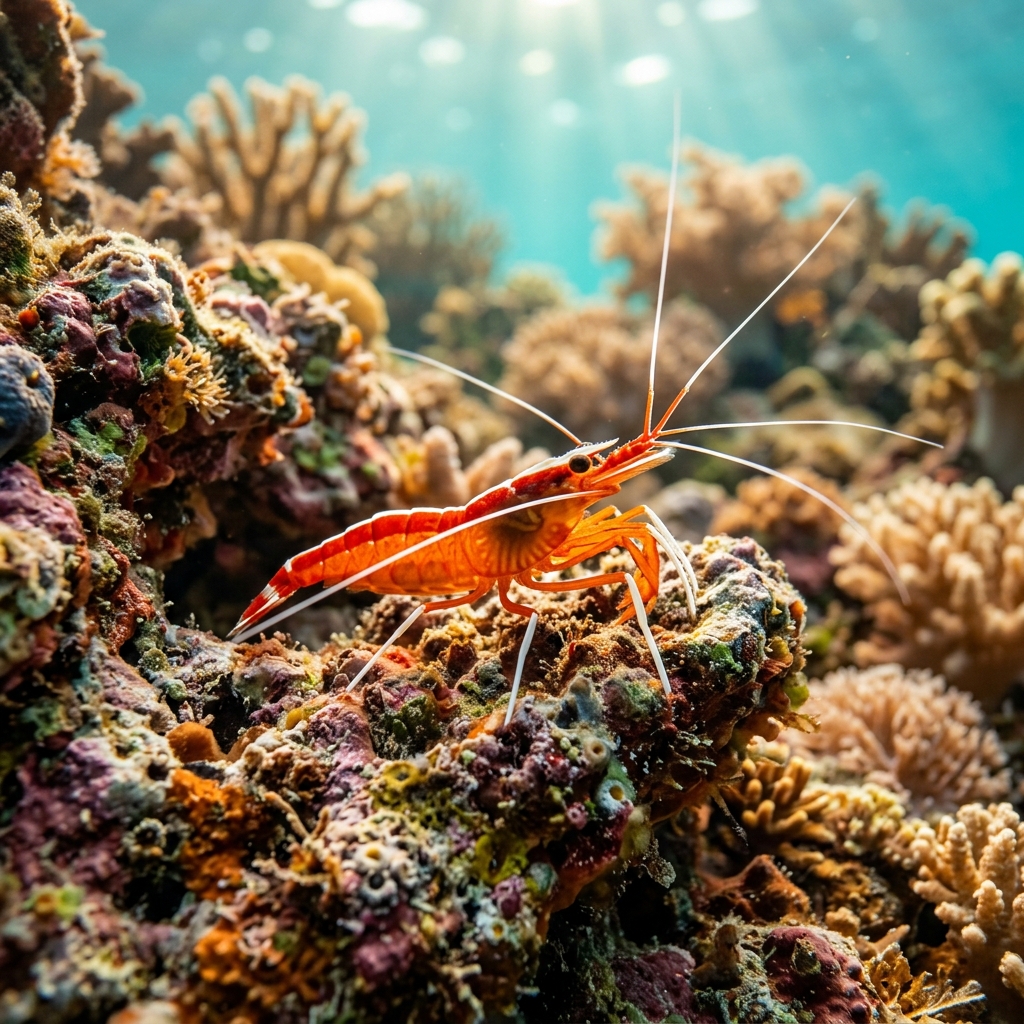
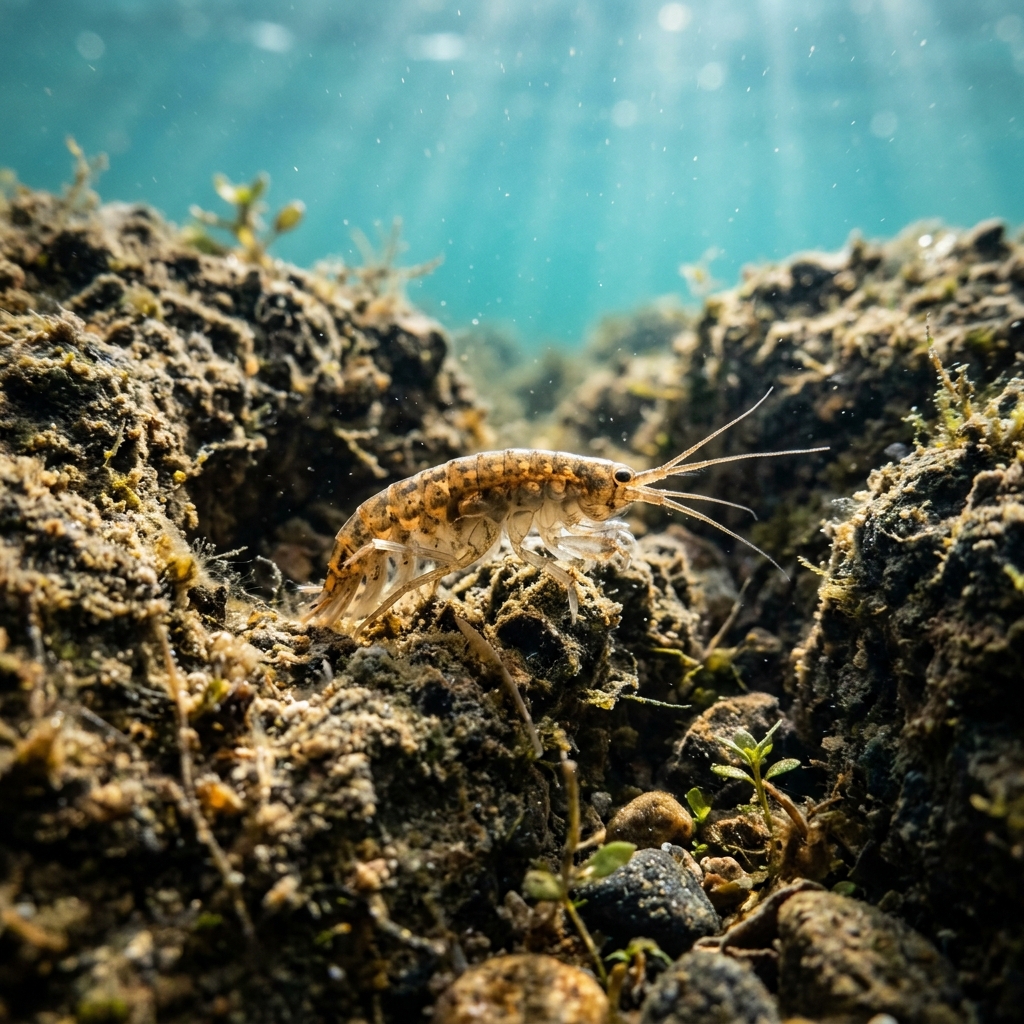
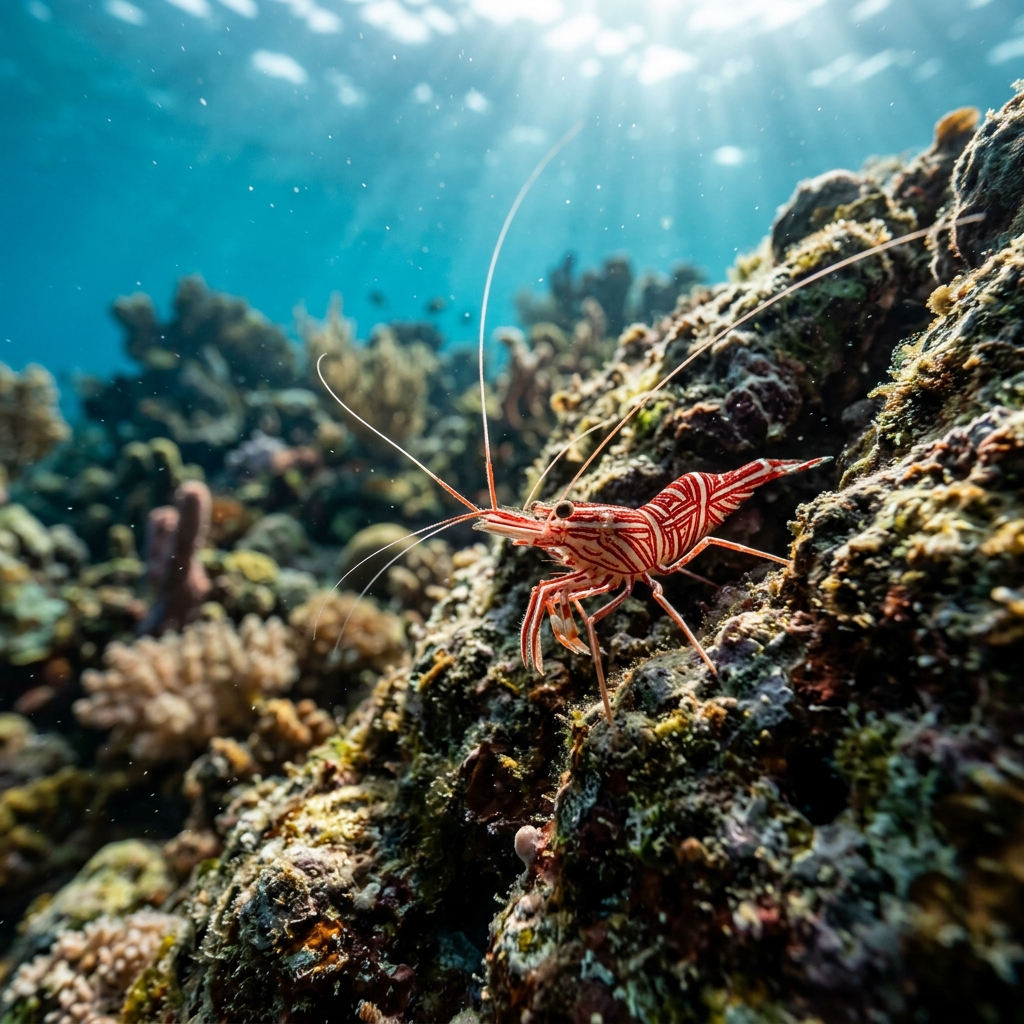
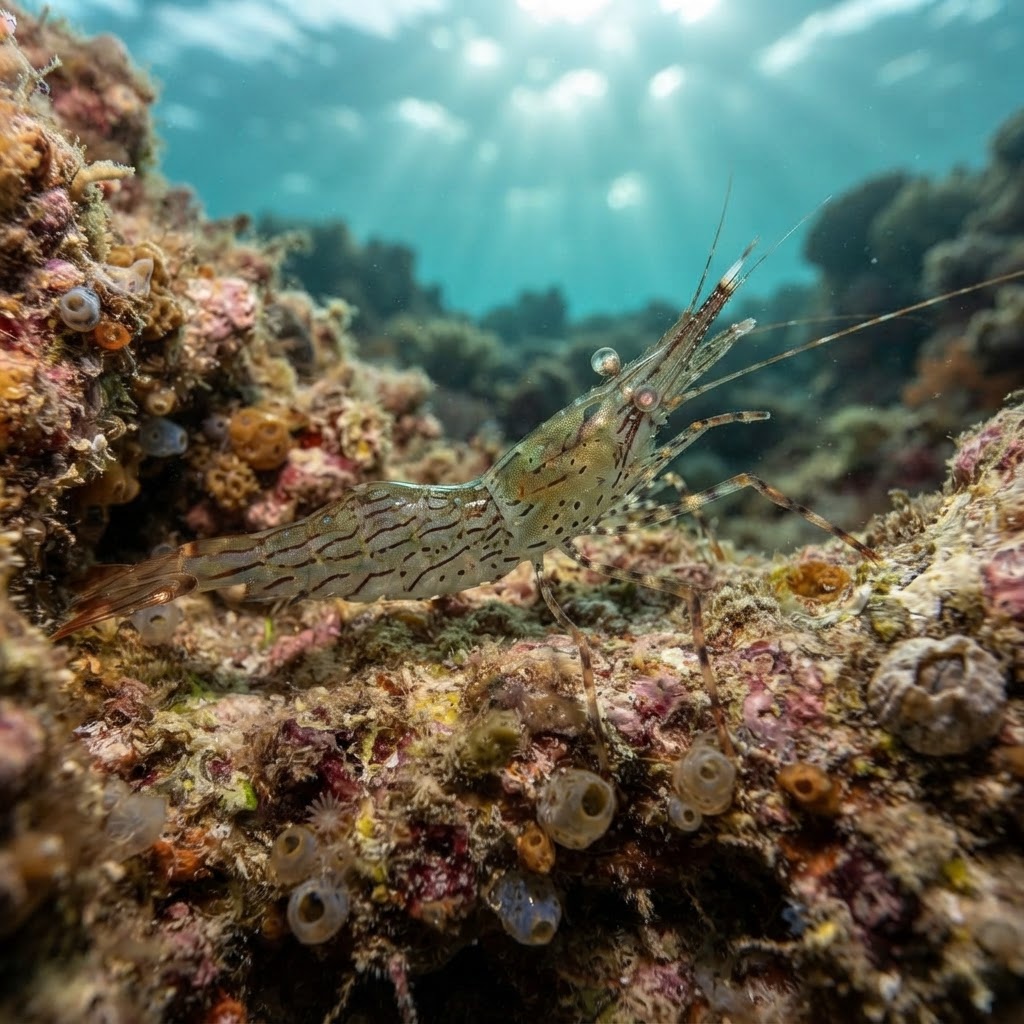
Small, slender-bodied shrimp with a translucent to pale body marked by reddish-brown longitudinal stripes running down the tail and carapace, plus fine white or blue spotting. Long, thin antennae often stick out well beyond the body length, and the tail fan usually shows a bolder stripe pattern than the rest of the body. Most divers spot them by torchlight against dark rock or gravel, where the striping stands out clearly.
Usually seen tucked against rock crevices, gravel patches or under ledges, picking over the substrate rather than swimming openly in the water column. They tend to hold still or back away slowly when a light passes over them rather than bolting, which makes them an easy subject for a patient macro shot. Most sightings come from divers working slowly along rocky or mixed bottom terrain rather than open sand or reef flats.
Coonstripe shrimp are protandric hermaphrodites, meaning individuals typically start life as males and later transition to females, a reproductive strategy shared with several other Pandalus species.
No clear seasonal pattern shows up in the data, and with a water-temperature niche of 7.5 to 13.5C, conditions stay suitable for sightings across the year in British Columbia and the Pacific Northwest. Treat it as a year-round find rather than something tied to a particular month.
Reef neighbours a diver could mistake it for. Use the identification notes above to tell them apart.
Most commonly logged in British Columbia, Canada, which accounts for the bulk of sightings, with a further reliable presence in the Pacific Northwest region of the United States and occasional reports from Alaska. This is a cold-water Pacific species, so sightings cluster tightly around these northern temperate coastlines rather than anywhere tropical.
Mapping where Dock Shrimp is logged…
British Columbia, Canada is by far the strongest region for sightings, with additional records from the Pacific Northwest and Alaska in the United States. It is a cold-water Pacific species tied to these northern temperate coasts.
There is no strong seasonal signal in the sighting data, and the species tolerates a fairly wide cold-water range of 7.5 to 13.5C, so divers report it across the year in British Columbia and nearby waters.
Look for a small, slender, mostly translucent shrimp with reddish-brown stripes running along the body and tail, plus long antennae. They sit on rock or gravel substrate rather than swimming in open water, and the striping is easiest to pick out under a dive light.
Exact size figures are not well documented, but like most Pandalus shrimp they are a small, slender species best appreciated as a macro subject rather than something you would spot from distance.
No. They pose no threat to divers and are harmless to approach and photograph at close range.
They are protandric hermaphrodites, starting life as males and later switching to female, a reproductive pattern common among Pandalus shrimp species.
Site and sighting data is aggregated from diver logs, iNaturalist and GBIF. For taxonomy and conservation status:
Rockpool Prawn
2,179 sites