Carpilius convexus
Round, red-brown reef crab found on rocky reefs from Hawaii to Muscat, Oman, in 24 to 30 C water year-round.
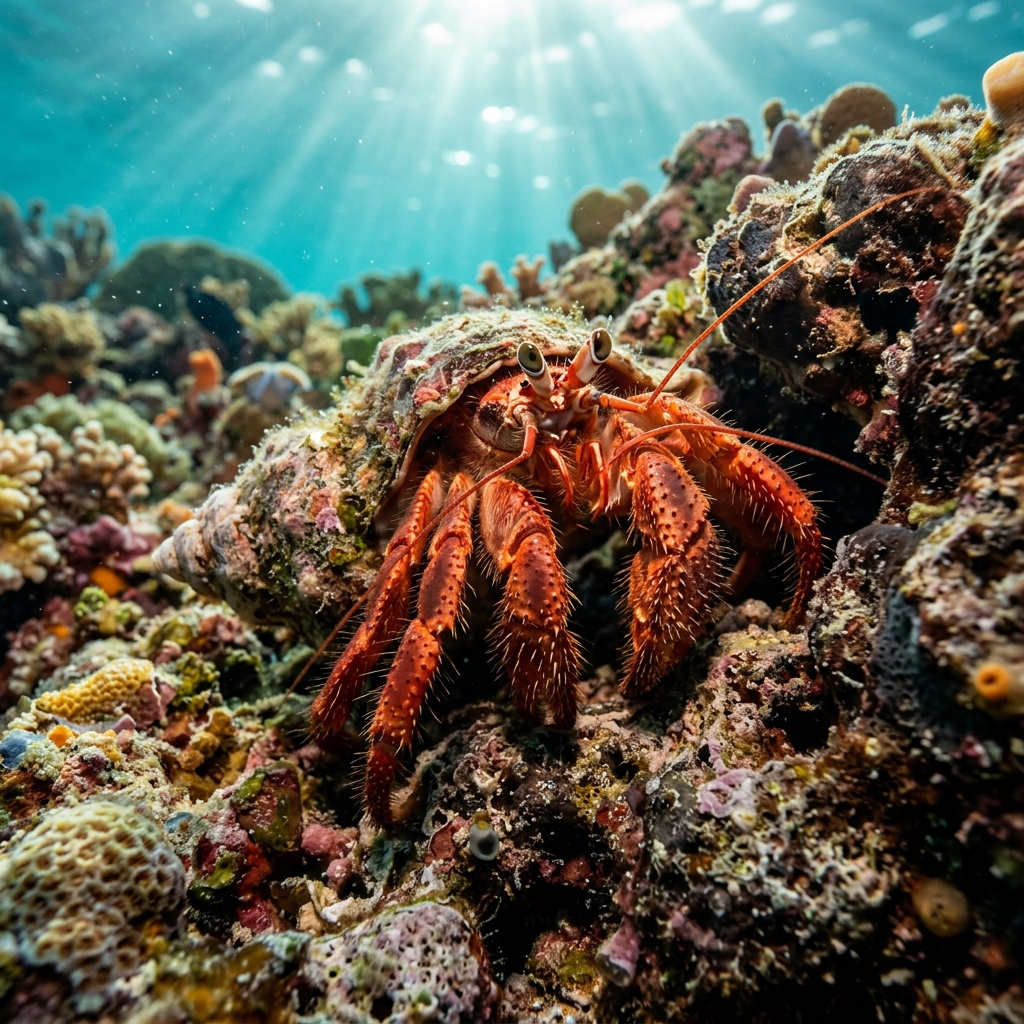
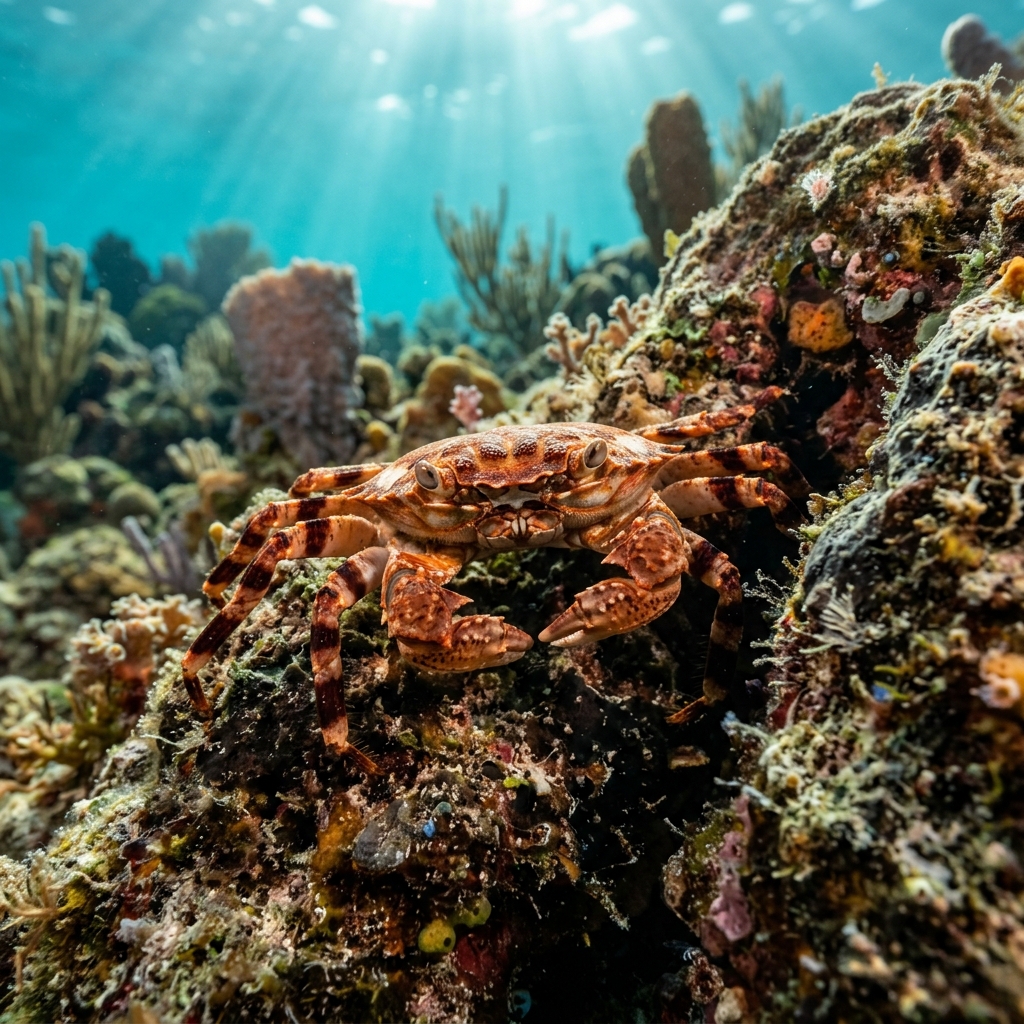
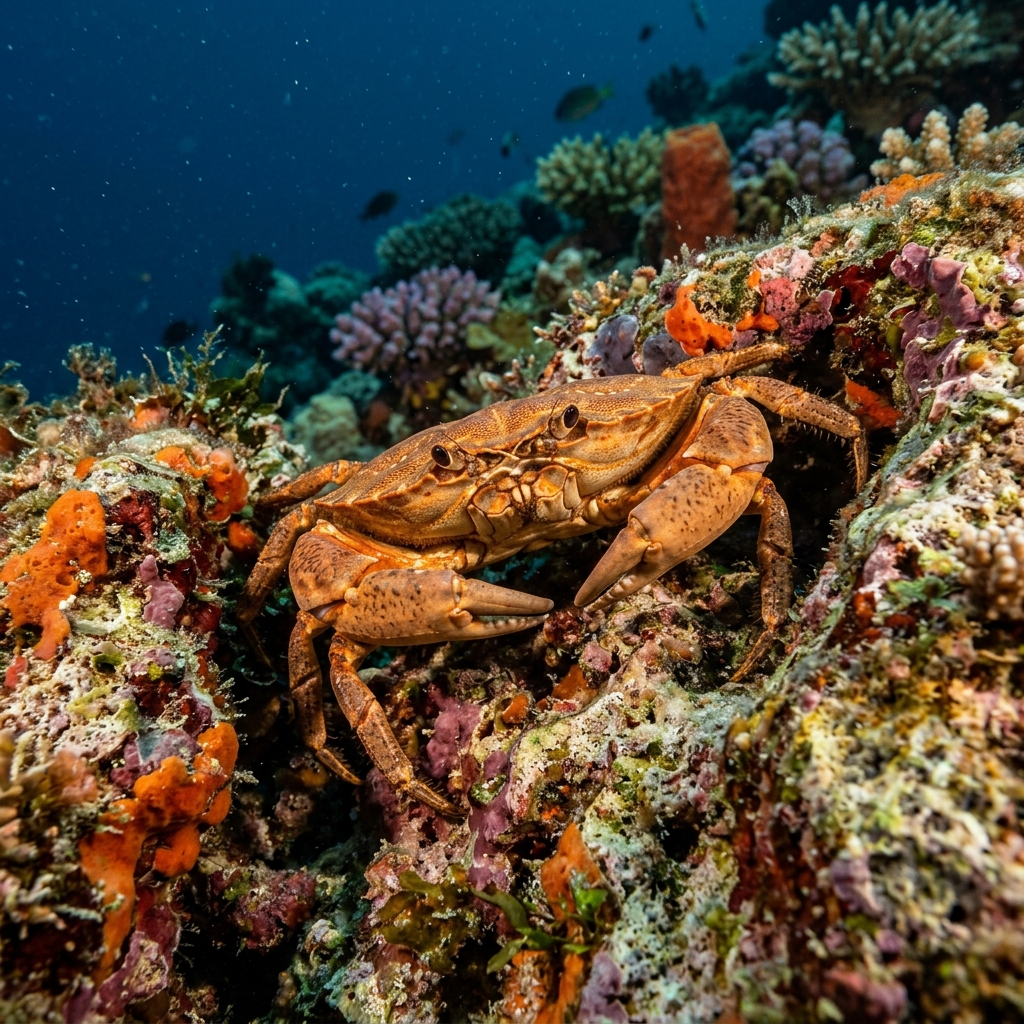
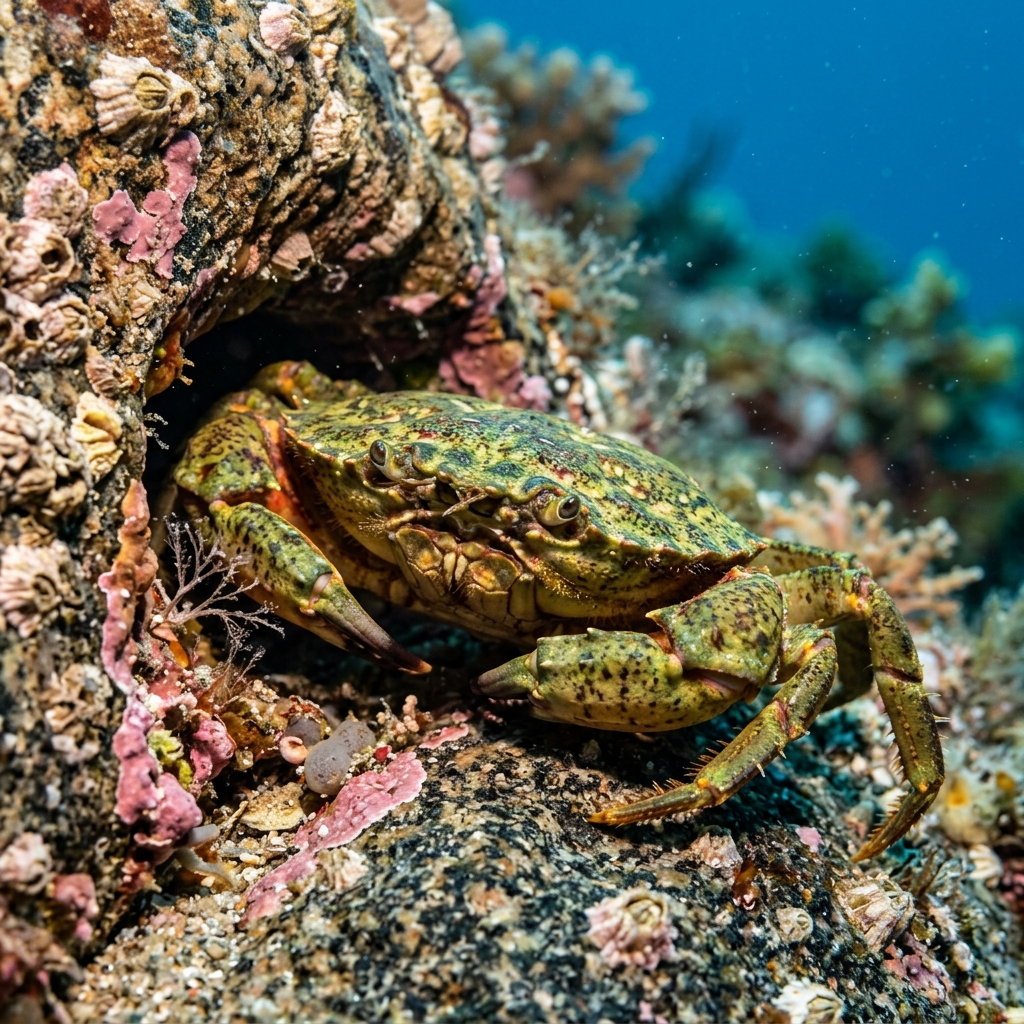
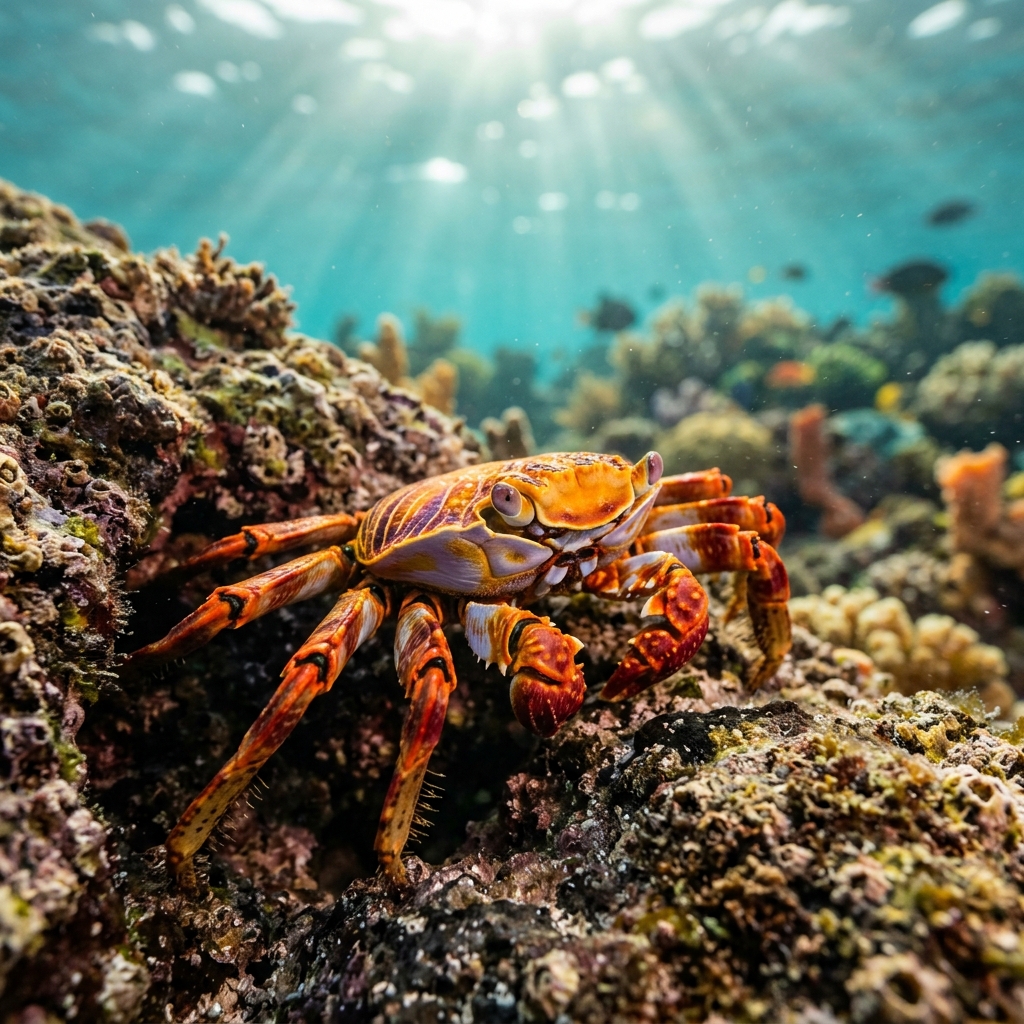
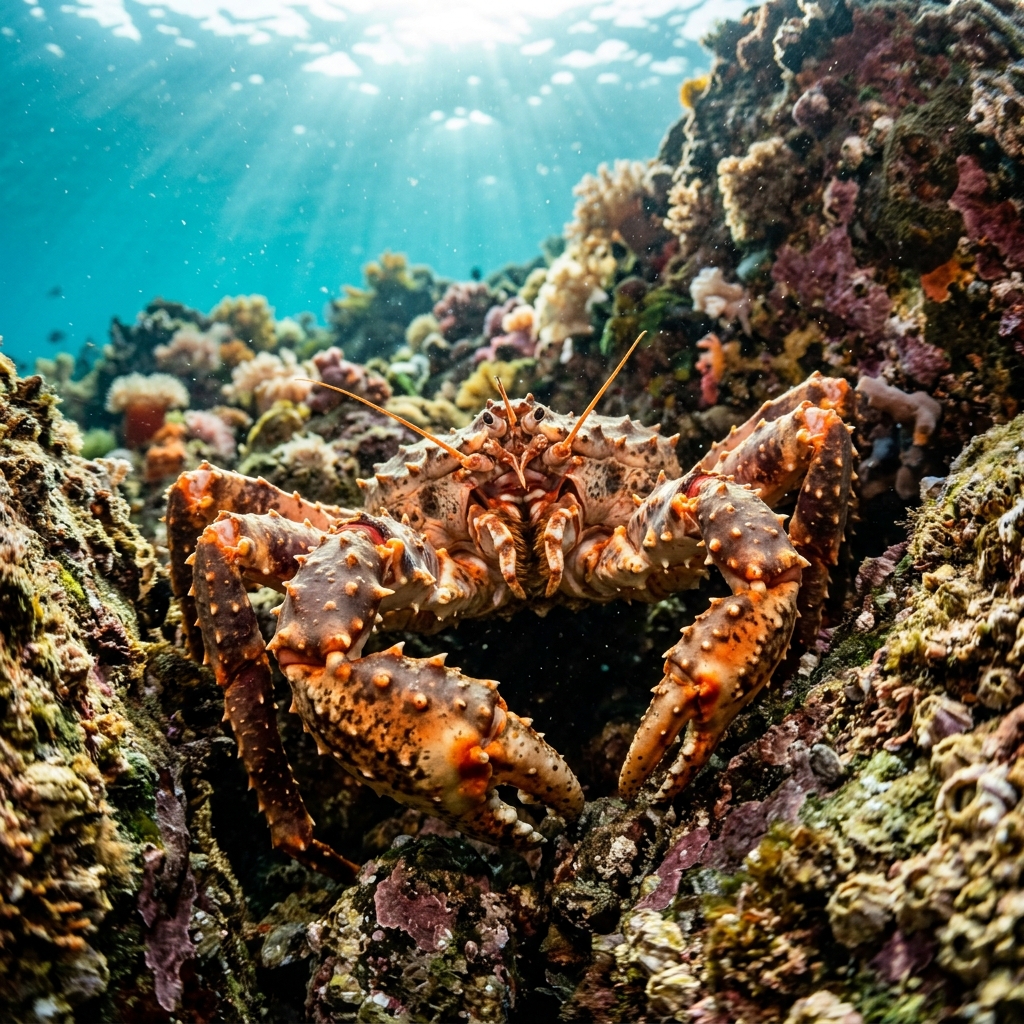
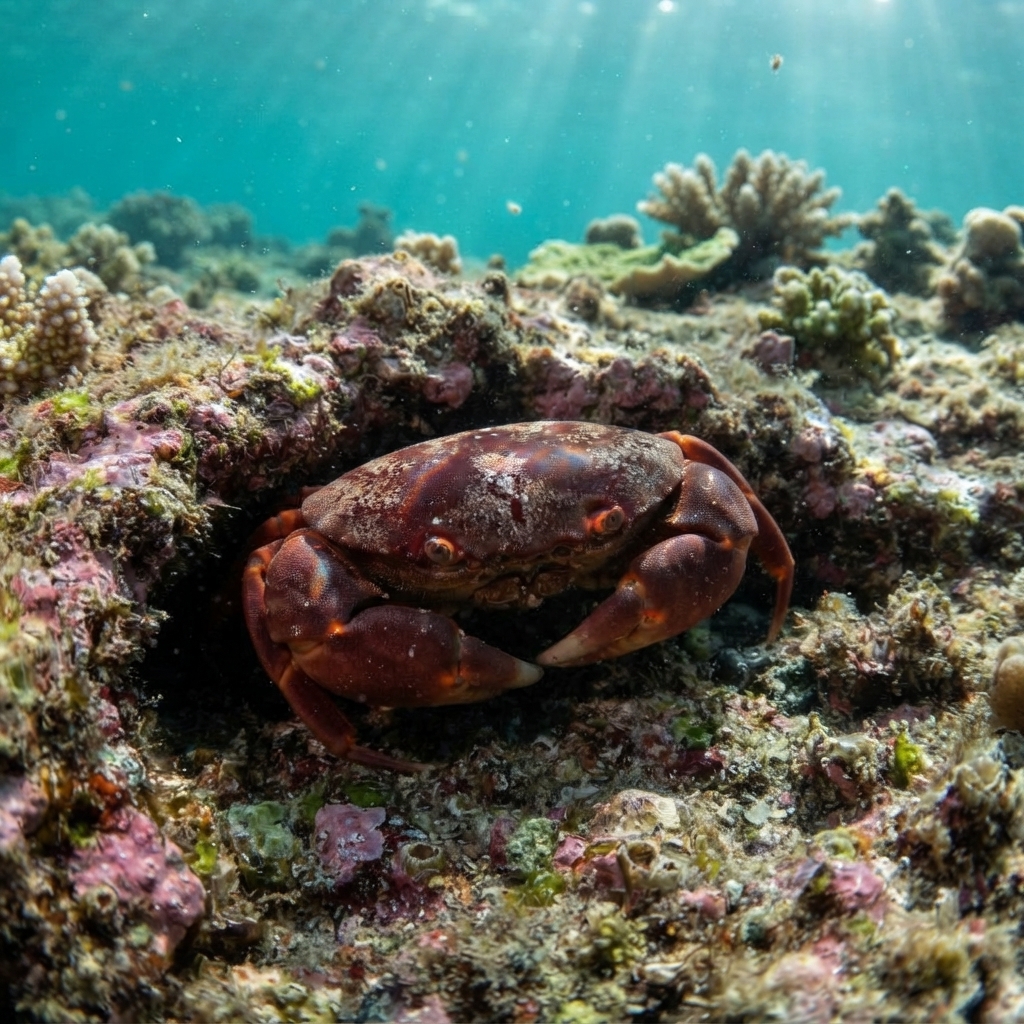
A round, smooth-shelled crab with a strongly domed (convex) carapace that looks almost polished, usually reddish-brown to orange-red with darker mottling. It sits low and compact against rock or reef rubble, growing to roughly 10 cm across the shell, with short thick claws rather than the long spindly legs of many reef crabs. The rounded shape and glossy finish are the main giveaways underwater, since it lacks the spines, hair, or camouflage decoration other reef crabs carry.
Divers typically find it tucked into rock crevices or wedged under ledges on the reef rather than out in the open, staying still and relying on its smooth, rock-coloured shell to blend in. It is not a fast mover and does not flee aggressively when approached, making it easy to overlook unless you are specifically scanning crevices and undercuts during the dive.
Its thick, blunt claws are built for cracking open snails and other hard-shelled prey, a heavier-duty toolset than the delicate picking claws seen on many decorator and hermit crabs sharing the same reef.
No clear seasonal pattern shows up in the data, and its temperature niche of 24.1 to 30.1 C spans the year-round range on the reefs where it is found, so it is best treated as a year-round sighting rather than tied to a particular month.
Most consistently logged around Hawaii in the United States, with a further reliable cluster of sightings near Muscat in Oman, and a smaller but confirmed presence around Bali, Indonesia. Across all these regions it turns up on rocky and reef substrate rather than sand, and sightings are generally uncommon to rare rather than a guaranteed find.
Mapping where Convex Reef Crab is logged…
It is most reliably reported around Hawaii in the United States and near Muscat in Oman, with additional sightings around Bali, Indonesia. Look for it on rocky or rubble-strewn reef rather than open sand.
There is no strong seasonal signal in the sighting data, and its comfortable water temperature range of roughly 24 to 30 C covers the year on the reefs where it lives, so it can turn up in any month.
Look for a smooth, rounded, dome-shaped shell in reddish-brown to orange tones tucked into a rock crevice or under a ledge. Its thick, blunt claws and lack of spines or hair help separate it from more decorated reef crabs.
They reach around 10 cm across the shell, making them a compact, easy-to-miss crab best spotted by checking crevices closely rather than scanning open reef.
No, they pose no danger to divers. They are slow-moving, shell-dwelling crabs that rely on staying hidden rather than defending themselves against anything the size of a diver.
Unlike many reef crabs that carry algae or debris for camouflage, it relies on a smooth, rock-toned shell and stout crushing claws suited to breaking open snails and other hard-shelled prey.
Site and sighting data is aggregated from diver logs, iNaturalist and GBIF. For taxonomy and conservation status:
European Green Crab
2,469 sites