Lepadogaster candolii
A 4cm clingfish that clings to rocks in Croatia's Kvarner and Portugal's Lisbon Coast year-round in 10 to 21C water. Here's how to find one.
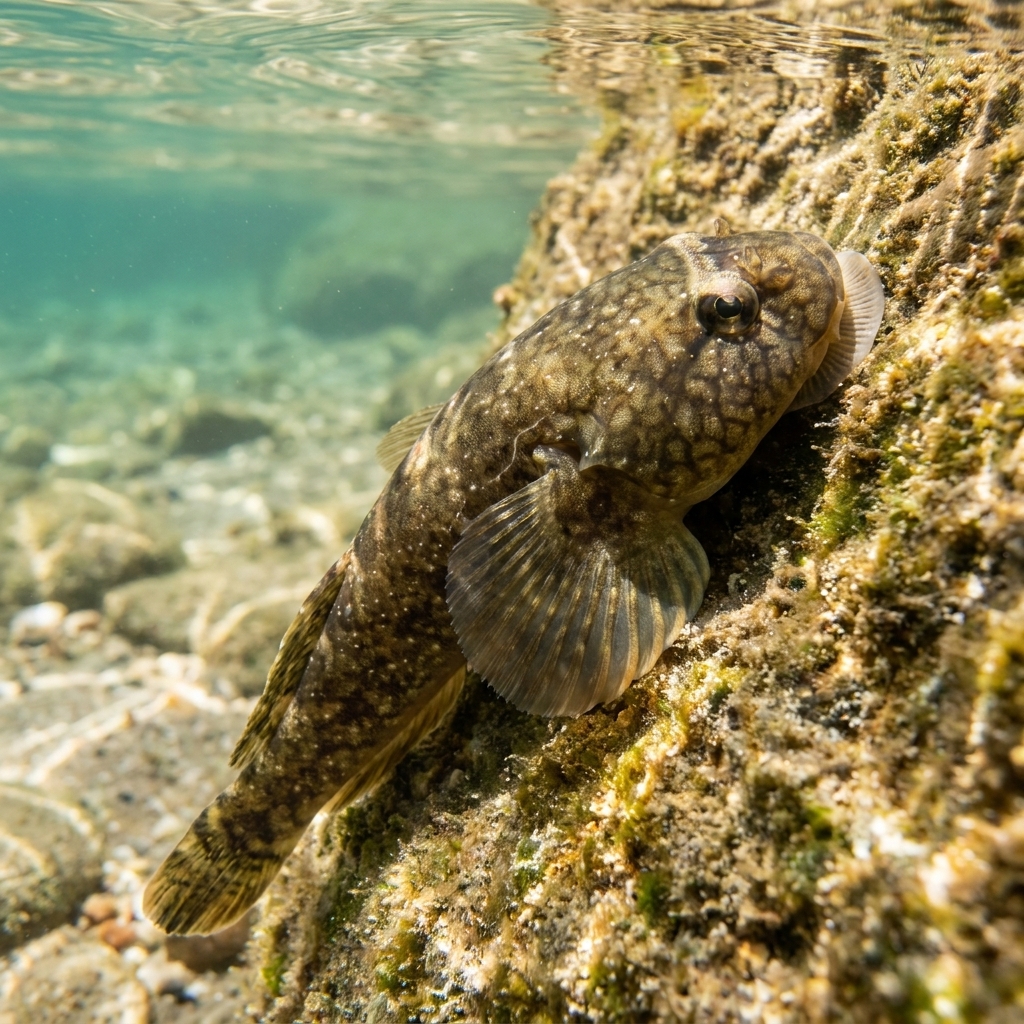
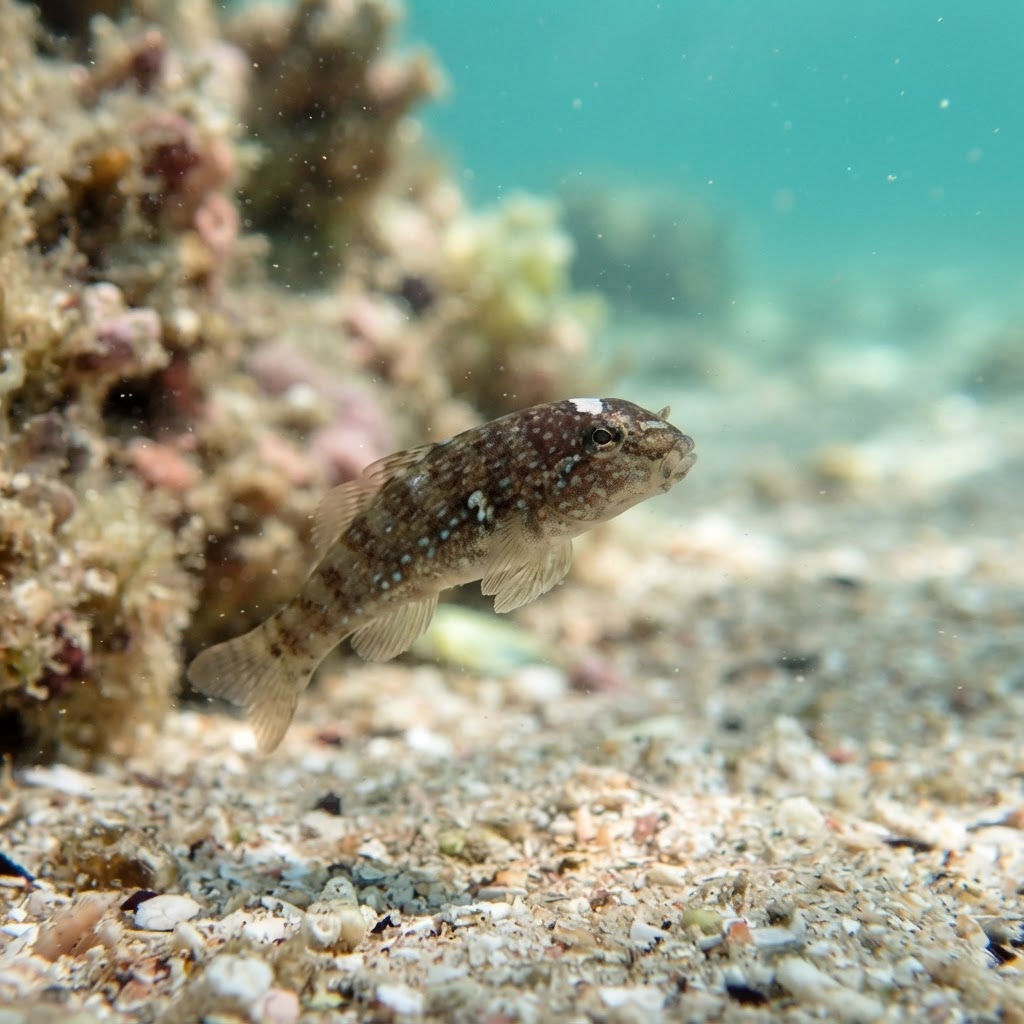
Barely 4cm long, this clingfish has a flattened, tadpole-like body that tapers to a thin tail, usually in shades of reddish-pink, orange or mottled brown to match the rock it's clamped to. Look closely at the head and you'll often spot pale blue or turquoise markings around the eyes, a useful clue since the rest of the body is so easy to overlook. It has no visible scales and lies pressed flat against rock or in crevices rather than swimming openly, held in place by a sucker disc formed from fused pelvic fins.
Divers find this fish wedged into rock crevices or lying flat on the underside of rocky overhangs, using its sucker disc to stay put even in surge. It doesn't dart off when approached the way many small fish do; instead it tends to hold its ground, relying on camouflage rather than flight. Most sightings come from slow, close looks at rocky reef rather than mid-water swims, so a careful eye scanning crevices is more productive than watching open water.
That sucker disc under its body is made from modified pelvic fins fused together, letting it grip rock surfaces firmly enough to resist wave surge in shallow, exposed habitat where most fish this size would get swept away.
There's no clear seasonal pattern in the sightings, and given it tolerates a wide range from about 10.6 to 20.7C, it's reasonable to look for it across the diving season rather than waiting for a specific month.
Croatia's Kvarner region is the strongest area for logging this species, with Portugal's Lisbon Coast close behind, and it also turns up reliably along France's Riviera and Provence coast, Corsica, Brittany and Occitanie, plus Catalonia and Murcia in Spain. A handful of sightings extend to Ireland and the Canary Islands, but the Mediterranean and Atlantic coasts of southern Europe are where divers actually find it.
Mapping where Connemara Sucker is logged…
Croatia's Kvarner region and Portugal's Lisbon Coast are the strongest areas for sightings, with good numbers also logged along France's Riviera, Corsica and Brittany, and in Catalonia and Murcia in Spain.
There isn't a clear season in the data, and it's recorded across a wide temperature range from around 10.6 to 20.7C, so it can turn up on rocky reef dives throughout the year.
Look for a tiny, flattened, pinkish or mottled fish only about 4cm long, wedged into rock crevices rather than swimming freely. Pale blue markings around the eyes are a helpful ID clue up close.
They're small, typically reaching only about 4cm in length, which makes them easy to swim right past unless you're checking rock crevices closely.
Its pelvic fins are fused into a sucker disc on the underside of its body, letting it clamp firmly to rock surfaces and resist being swept away by surge in shallow, exposed water.
Site and sighting data is aggregated from diver logs, iNaturalist and GBIF. For taxonomy and conservation status:
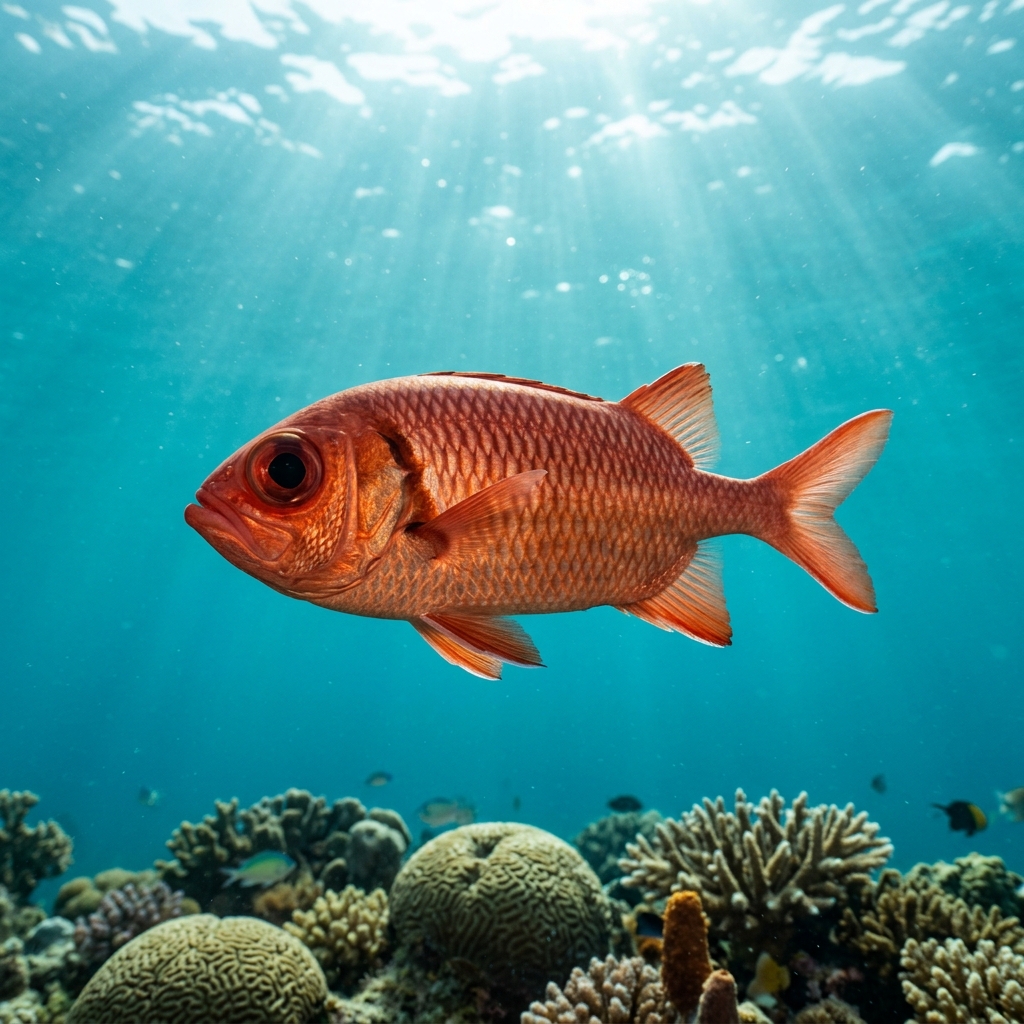
Soldierfish
3,612 sites