Cephalopholis fulva
Common on Bonaire's Leeward Coast and Grenada's reefs year-round, coney hovers head-down in crevices in shades from rust to golden yellow.
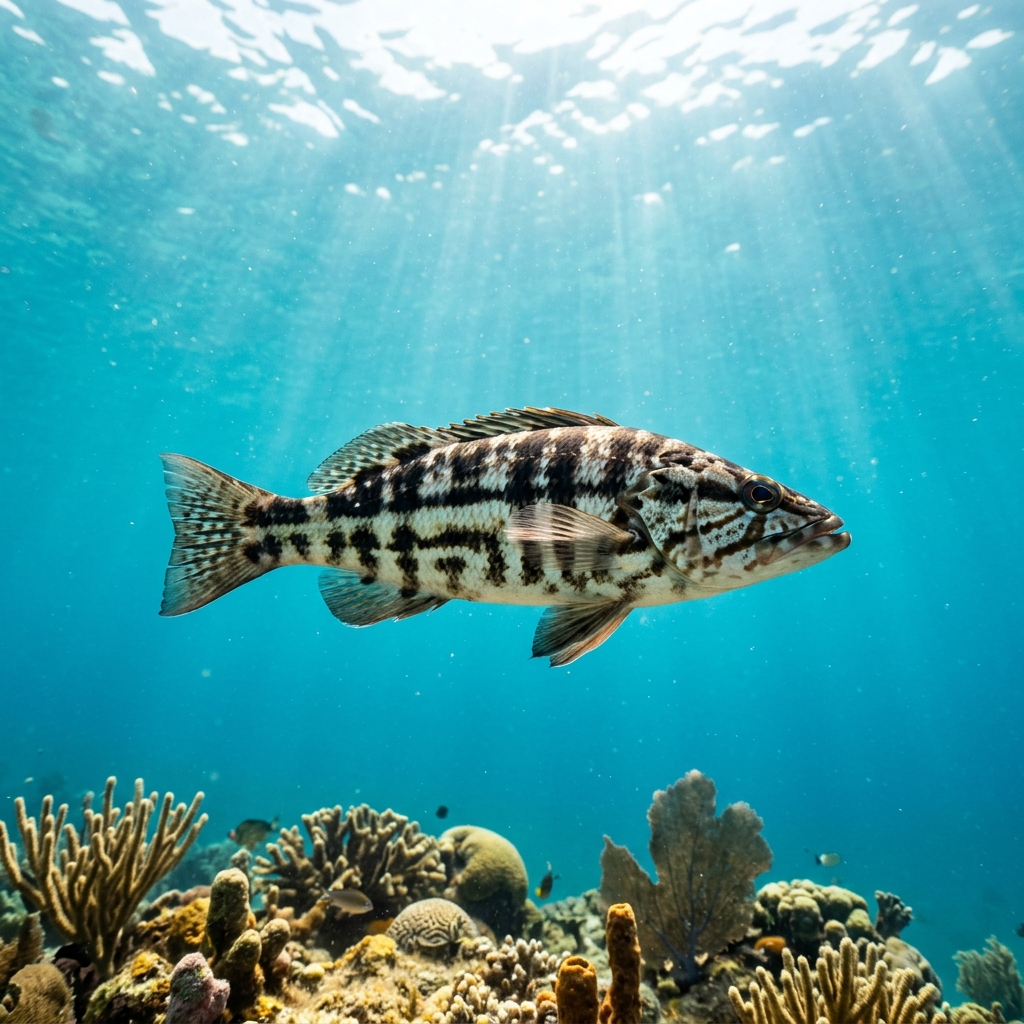
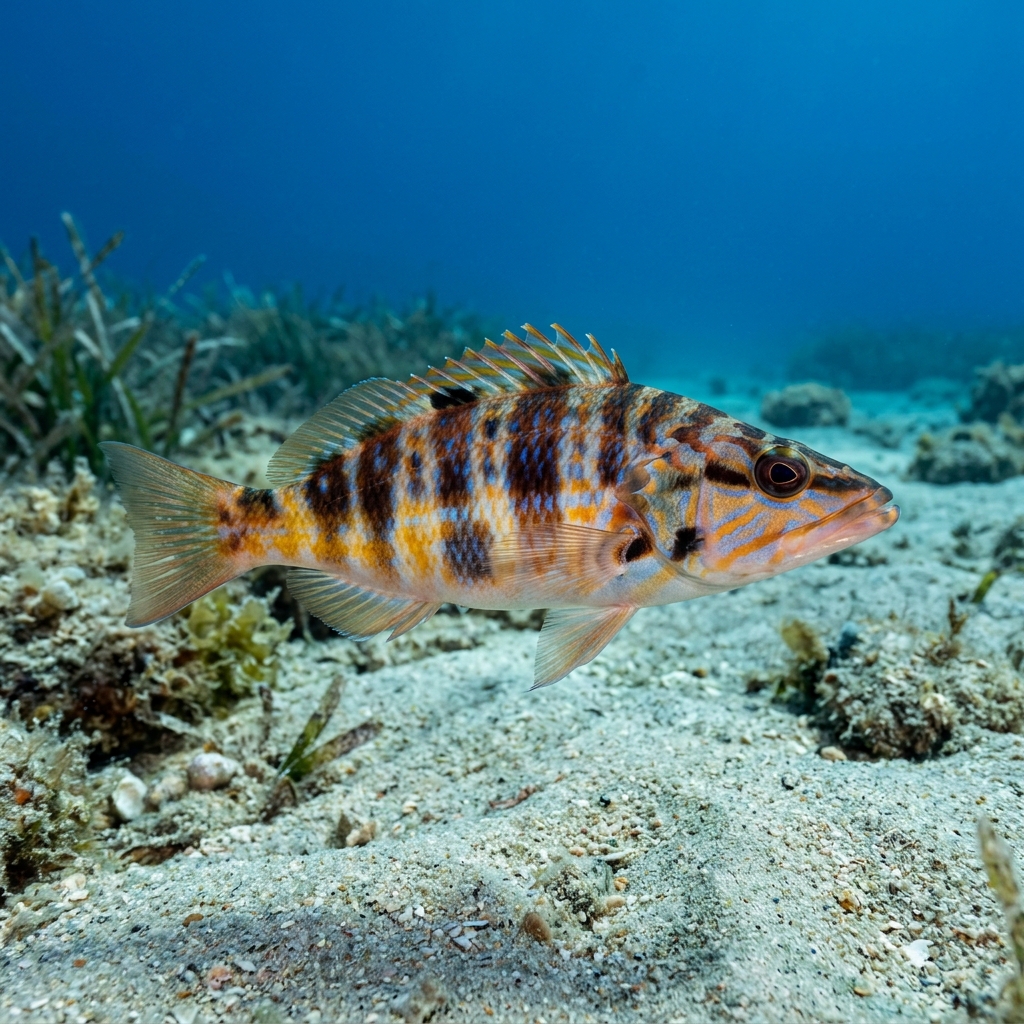
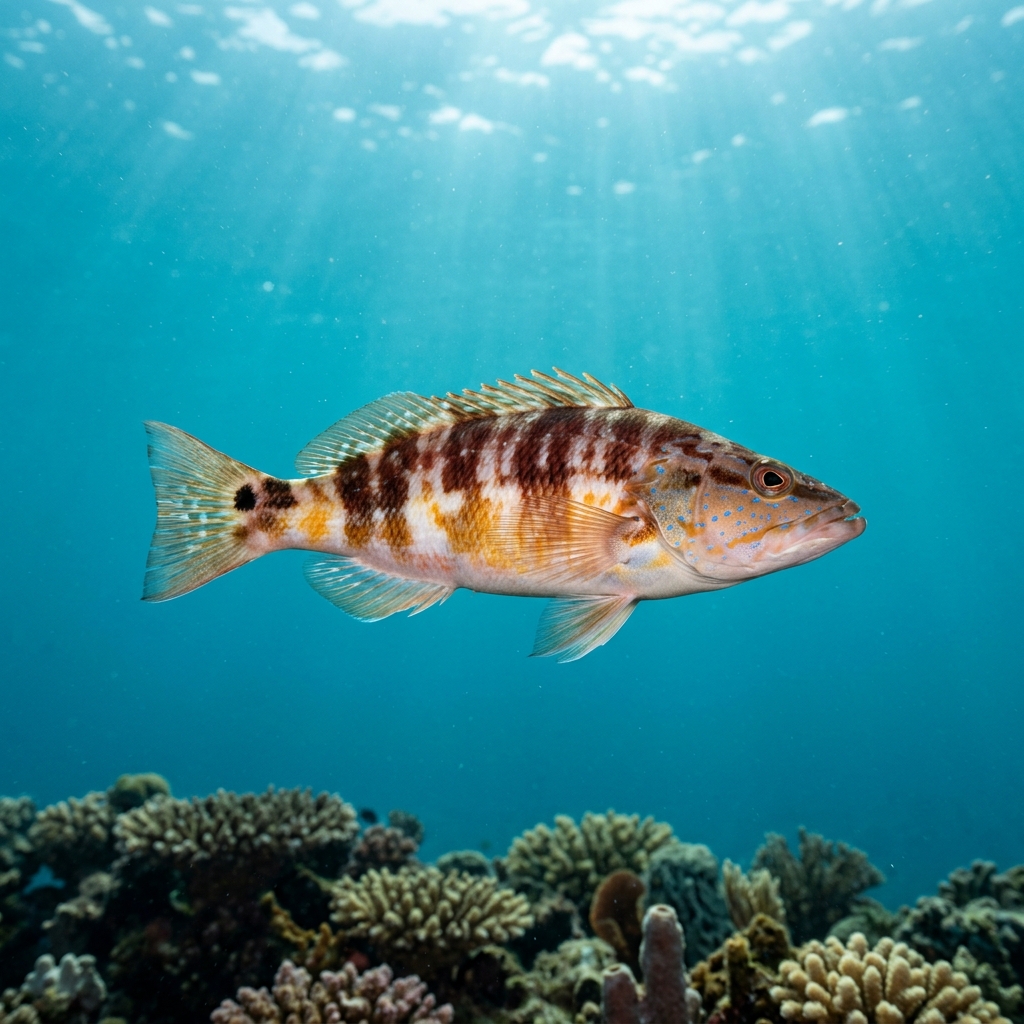
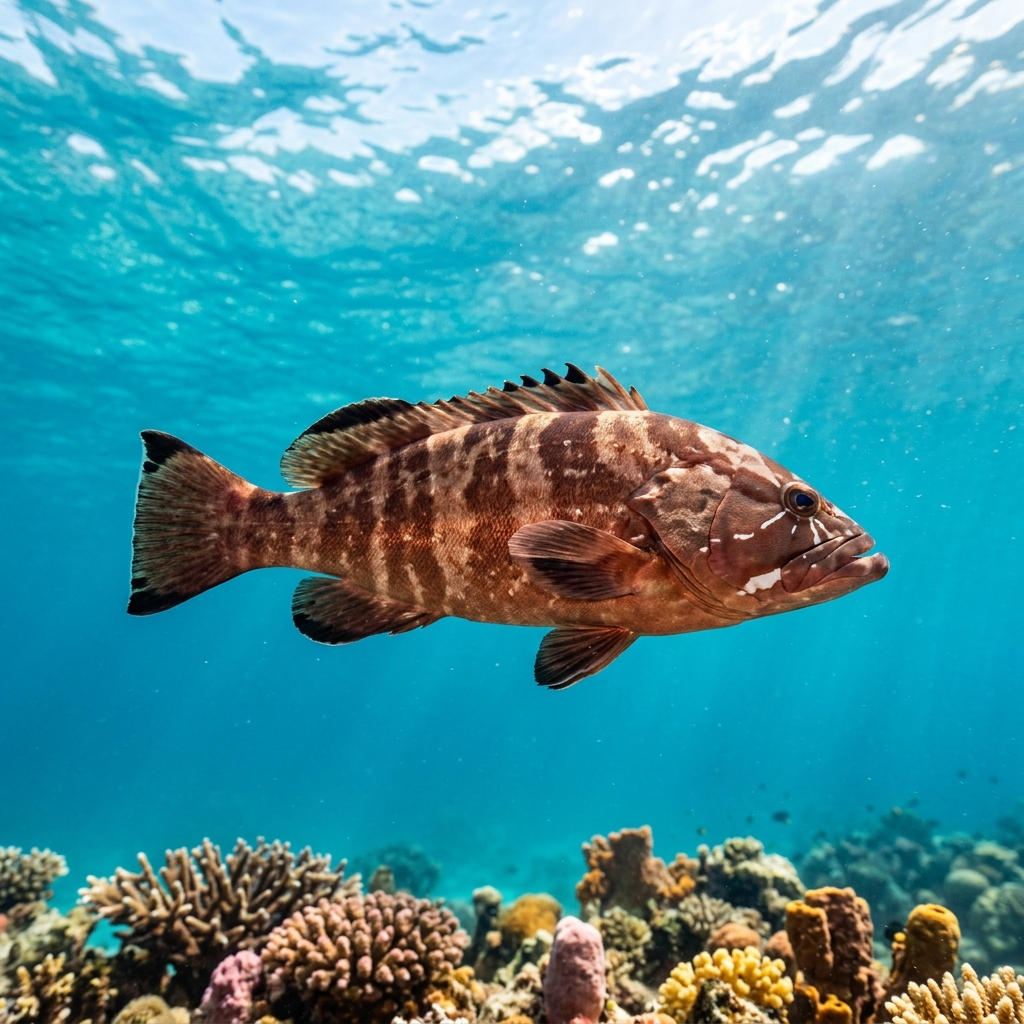
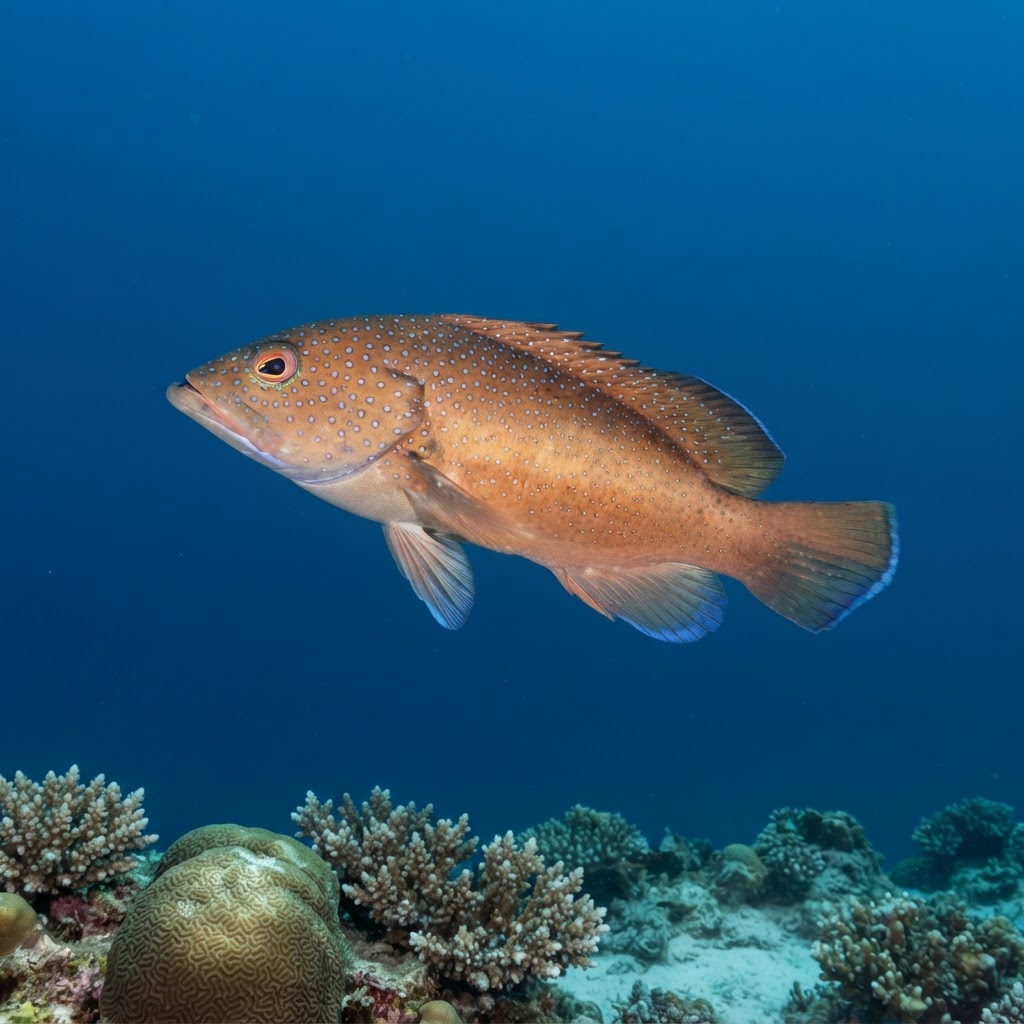
Small, slender grouper rarely more than 30 cm, usually seen hovering nose-down near a hole or ledge rather than swimming in open water. Colour is variable, from rusty red-brown to grey to a bright golden-yellow morph, but nearly all colour forms carry small pale blue spots scattered over the head and body and two black spots at the base of the tail. That pale-blue speckling combined with the tail-base spots is the giveaway even when the base colour changes.
Look for it hovering at an angle near a coral head, sponge, or crevice entrance rather than cruising the open reef, often tilted head-down as if peering into a hole. It is generally unbothered by divers and will hold its position or duck in and out of cover for a photo rather than bolt. Most sightings are on shallower reef sections during the day, where it sits and watches for smaller fish or crustaceans to ambush.
Coney can change colour rapidly between its brown, grey, and golden-yellow forms, so the same fish spotted on two different dives might look like two different species if you are only going on base colour.
No clear season shows up in the sightings, and with a comfort range of roughly 24 to 28 C it stays active on Caribbean reefs all year, so any month is fair game.
Best logged in the Caribbean, with Bonaire's Leeward Coast the single strongest area, followed by Tortola and the southern islands of the British Virgin Islands, Grenada Island, and Saint Croix in the US Virgin Islands. It also turns up reliably in Guadeloupe, the Bahamas, Grand Cayman, and off Fernando de Noronha in Brazil, and is a regular but never guaranteed find on most Caribbean reef dives.
Mapping where Coney is logged…
Coney is most reliably seen in the Caribbean, with Bonaire's Leeward Coast, the British Virgin Islands, Grenada, and the US Virgin Islands among the strongest spots. It also shows up in Guadeloupe, the Bahamas, Grand Cayman, and off Brazil's Fernando de Noronha.
There is no strong seasonal pattern in sightings, and it tolerates a warm year-round range of about 24 to 28 C, so it can be seen on Caribbean reef dives in any month.
Look for a small, slim grouper around 30 cm hovering at an angle near a hole or ledge. Base colour varies from brown to grey to golden-yellow, but small pale blue spots on the head and body plus two black spots at the tail base are consistent across all colour forms.
Coney typically reach about 30 cm in length, making them one of the smaller members of the grouper family found on Caribbean reefs.
No, coney pose no danger to divers. They are a small, non-aggressive reef predator that will typically hold still or retreat into cover rather than react defensively to a diver nearby.
Coney can shift between brown, grey, and bright golden-yellow colour phases, sometimes fairly quickly, which is thought to relate to mood, habitat, or social signalling rather than camouflage alone.
Site and sighting data is aggregated from diver logs, iNaturalist and GBIF. For taxonomy and conservation status:
Blacktip Grouper
2,726 sites