Centropomus undecimalis
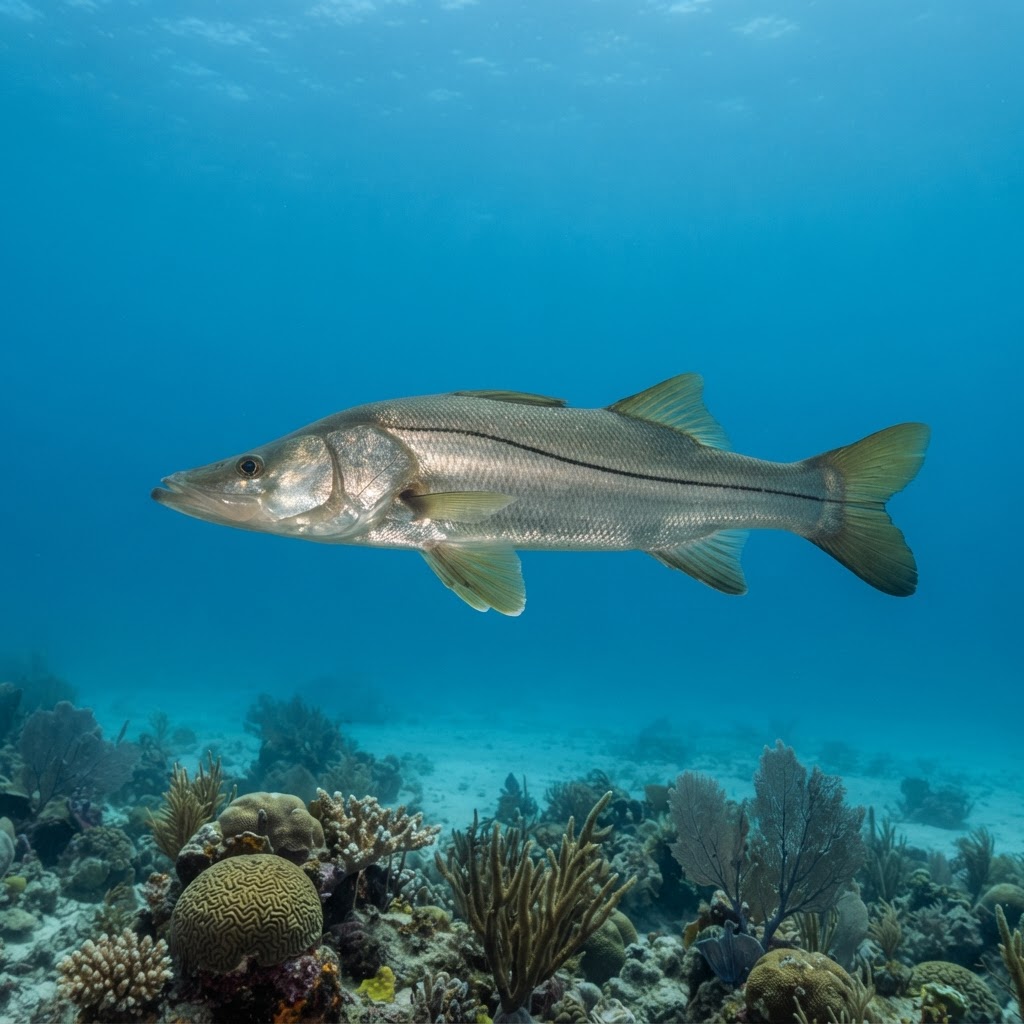
Spot the yellow fins and black lateral line of Common Snook on Florida flats and Yucatán reefs, active year-round in warm 24-28C water.
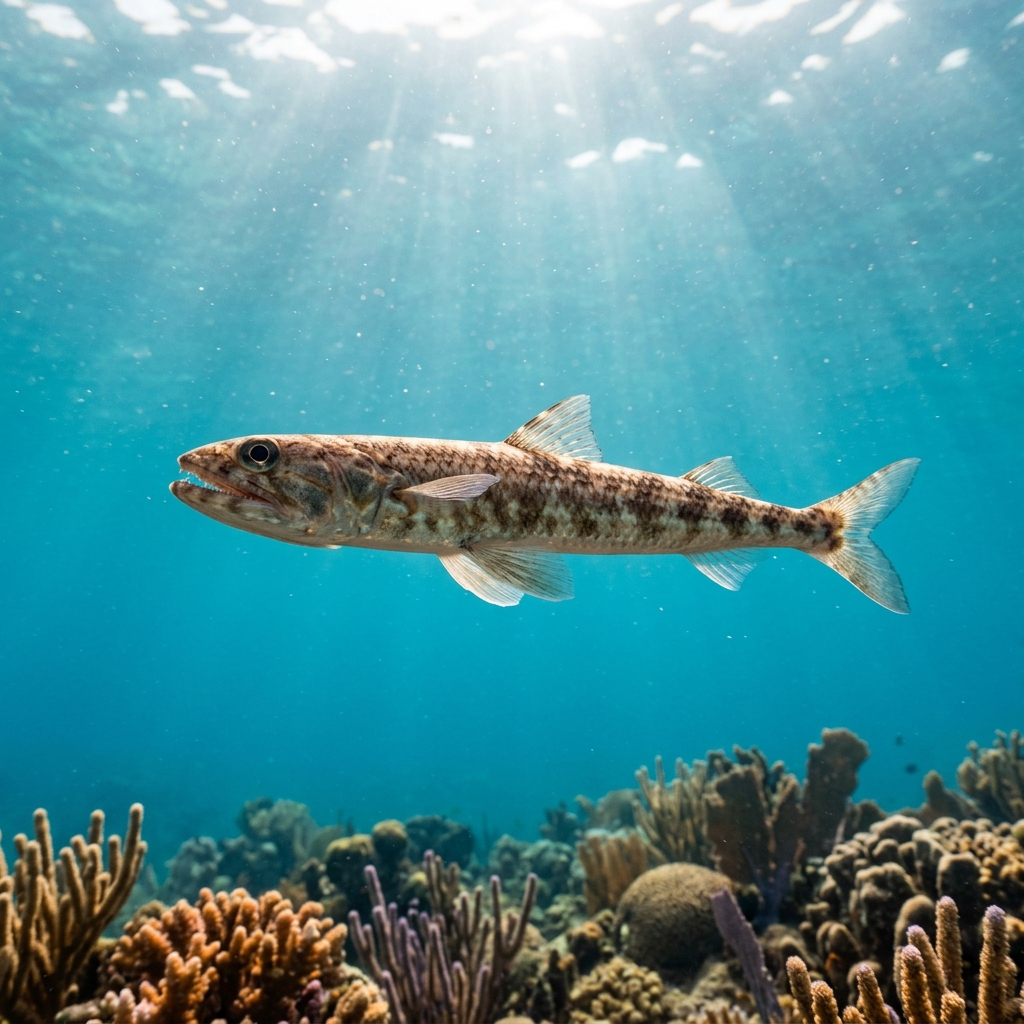
Look for a long, torpedo-shaped silver body with a distinctive black stripe running the length of the flank straight into the tail. The lower jaw juts out noticeably and the back has a subtle olive-brown wash, while the fins often carry a yellow tinge, especially on the pelvic and anal fins. Adults can reach close to a metre, giving them a noticeably elongated, almost pike-like profile compared to most reef fish sharing the same water.
Divers most often find them holding near structure such as reef edges, pilings, or mangrove-lined drop-offs, hanging fairly motionless before making short, sharp bursts after passing baitfish. They tend to sit at the wary end of the spectrum, easing off into cover rather than bolting outright when a diver approaches slowly. Sightings lean toward uncommon rather than routine at most sites, so a calm, unhurried approach along structure gives the best chance of a close look.
Common Snook are protandric hermaphrodites, meaning many individuals start life as males and later transition to females, a reproductive strategy that helps balance sex ratios in a population concentrated around estuaries and inshore structure.
No clear seasonal pattern shows up in the sighting data, and with a comfortable range of 23.5 to 28.1C it stays active on these reefs and flats throughout the year. Treat it as a year-round target rather than something tied to a particular month.
Most reliably logged in Florida, particularly around its coastal reefs and inshore structure, with a strong secondary population along Mexico's Yucatán Peninsula. Smaller numbers turn up around Basse-Terre in Guadeloupe and along the Texas coast, so it is very much a western Atlantic and Gulf species from a diver's perspective.
Mapping where Common Snook is logged…
Florida is the most consistent place to find them, especially around inshore structure and coastal reefs, with Mexico's Yucatán Peninsula a strong second option. Smaller populations are logged around Guadeloupe's Basse-Terre coast and the Texas Gulf coast.
There is no strong seasonal signal in the sighting data, and warm water in the 23.5 to 28.1C range keeps them present year-round. Any month is a reasonable bet at the sites where they are known to turn up.
Check for a silvery, elongated body with a bold black stripe running straight from head to tail, a protruding lower jaw, and a yellowish tint on the fins. Their almost pike-like shape sets them apart from rounder reef fish nearby.
They typically reach around 98cm in length, giving them a distinctly long, streamlined profile compared to most fish sharing the same inshore structure.
No, they are not considered dangerous to divers and tend to ease away from divers rather than react aggressively.
Many individuals begin life as males and later change sex to become females, a trait called protandric hermaphroditism that helps sustain breeding populations around estuaries and coastal structure.
Site and sighting data is aggregated from diver logs, iNaturalist and GBIF. For taxonomy and conservation status:
Soldierfish
3,612 sites