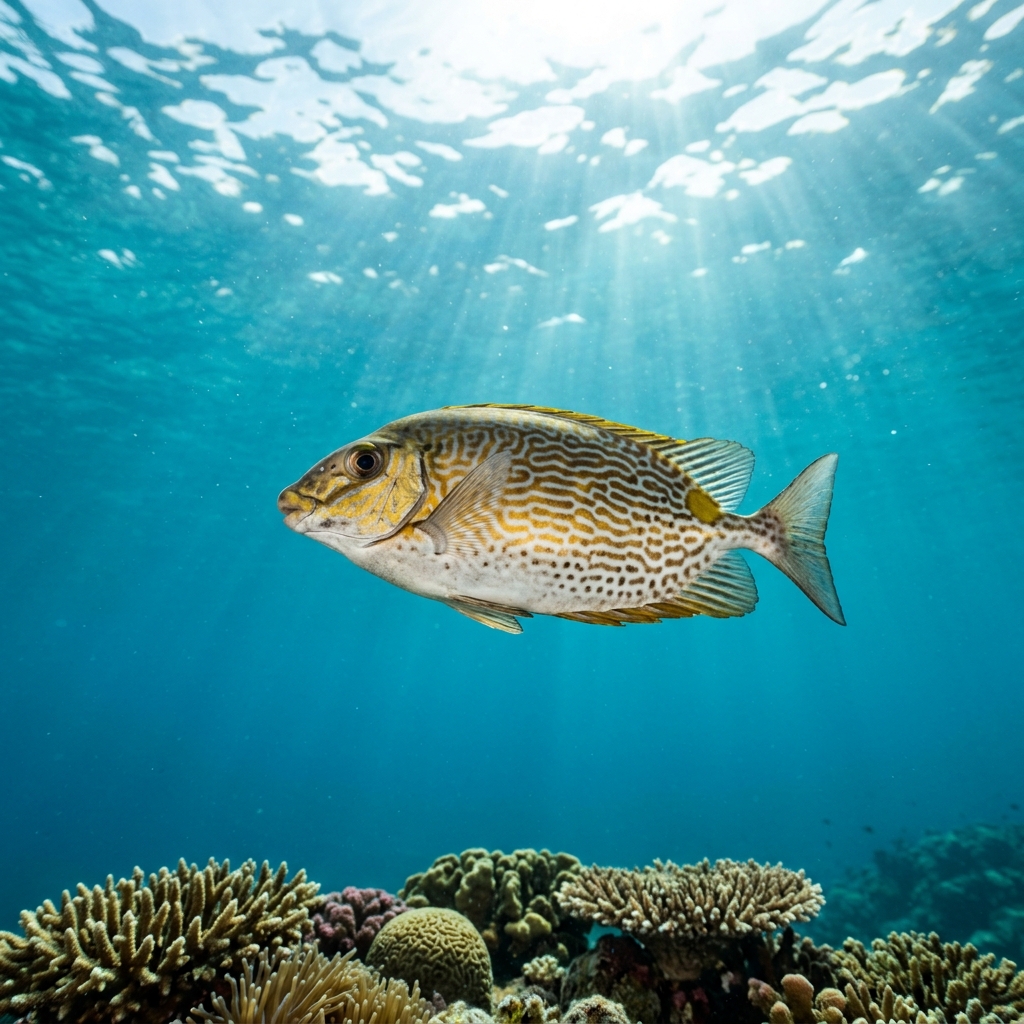
Gerres oyena
Silvery and easy to overlook, this small reef fish turns up uncommonly around Koh Chang and Sai Kung in warm 25-29C water year-round.
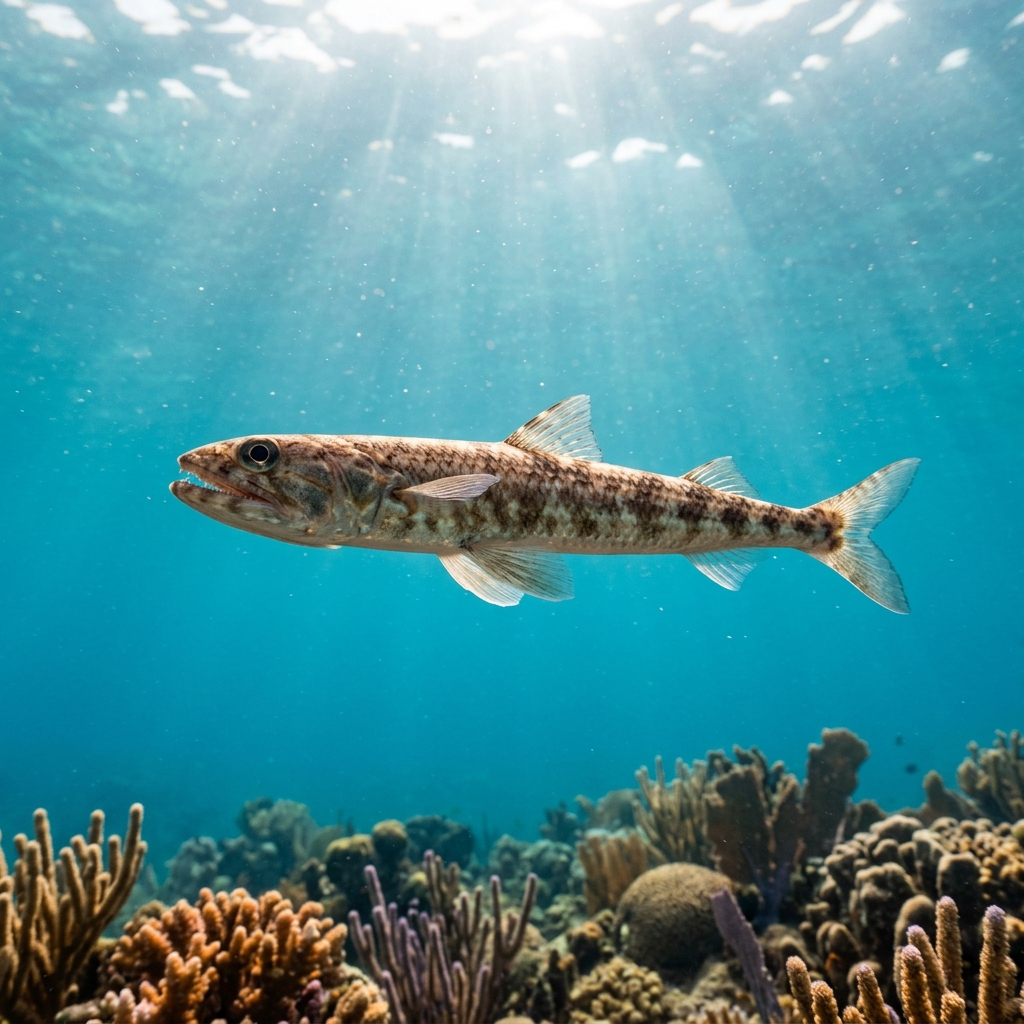
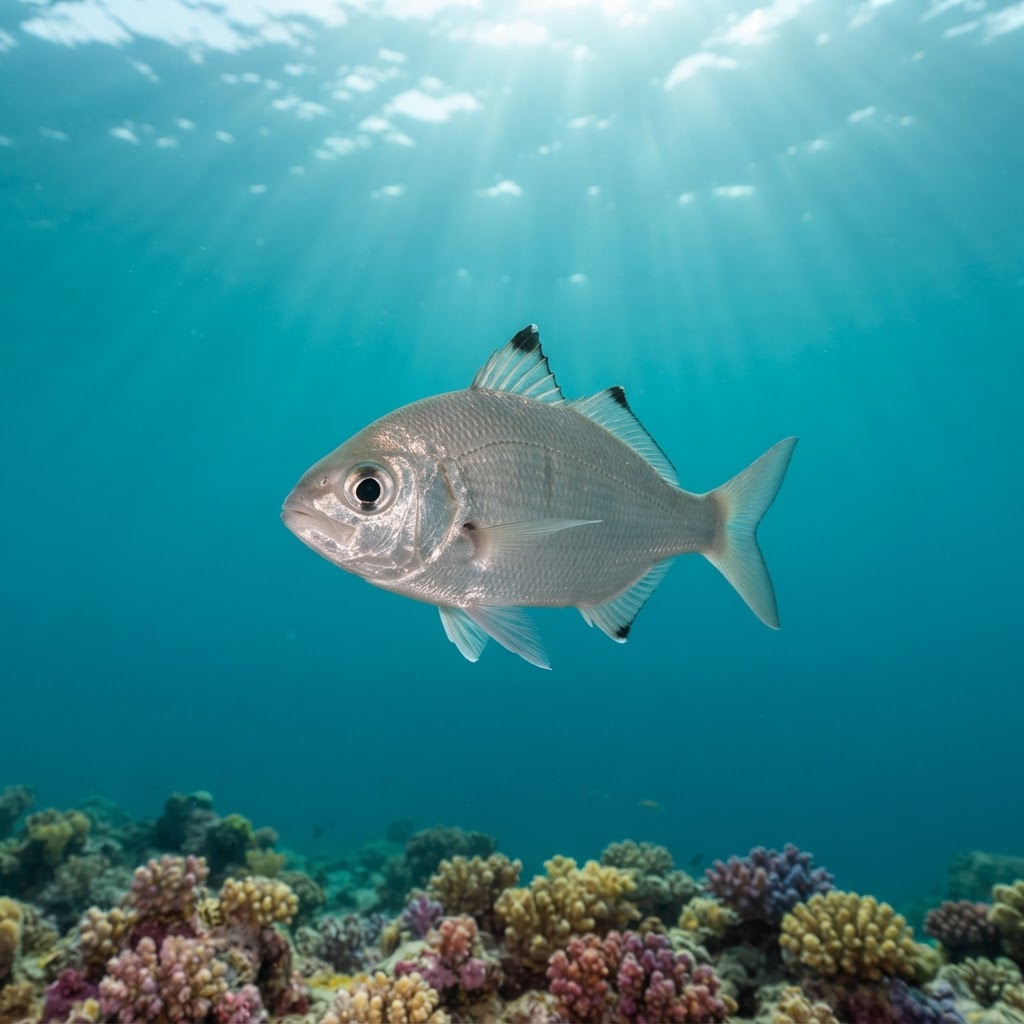
A slim, laterally flattened fish with a silvery body that can flash faint darker bars when startled, growing to around 21 cm. The mouth points downward and is protrusible, which it uses to poke into sand for food, a useful tell when you see one feeding low over a sandy patch. Look for the high, slightly arched back profile and translucent, almost bluish sheen rather than any bold pattern, since this is a plain, easily missed fish rather than a showy one.
Divers most often see this fish hovering or slowly cruising just above sandy or silty patches near reef edges, sometimes in small loose groups rather than tight schools. It feeds by tilting down and probing the sand with its extendable mouth, an easy behaviour to catch on camera if you slow down and watch a patch for a minute. It is not bold around divers and tends to drift off rather than approach, so a careful, low approach gets the best look.
Its lower jaw and mouth can extend downward like a small tube, letting it winkle out worms and tiny invertebrates buried just under the sand surface, a feeding trick shared by other silver-biddies but easy to miss unless you watch it hunt.
Sightings do not show a clear seasonal pattern, so treat this as a year-round fish on the reefs where it is logged. Its observed range of 25.2 to 29.3 C matches typical tropical reef temperatures for most of the year in both Thailand and Hong Kong.
Most consistently logged around Koh Chang in Thailand, which carries the bulk of sightings, with a smaller but reliable presence around Sai Kung in Hong Kong. Both regions sit within its warm-water comfort zone, and it turns up on sandy and mixed sand-reef terrain rather than open water.
Mapping where Blacktip Silverbiddy is logged…
It is most reliably seen around Koh Chang in Thailand, with a smaller population logged around Sai Kung in Hong Kong. Look for it over sandy patches near reef structure rather than on hard coral itself.
There is no strong seasonal pattern in the sightings, so it is considered a year-round fish. It stays within a comfortable 25.2 to 29.3 C water temperature range, which holds for most of the year in both Thailand and Hong Kong.
Look for a slim, silvery, laterally flattened fish around 21 cm with a downward-pointing, extendable mouth and no bold markings. It is usually seen low over sand, sometimes flashing faint bars when disturbed.
They typically reach around 21 cm in length, making them a small to mid-sized reef fish rather than a standout-sized one.
Its mouth can extend downward like a small tube to probe sand for buried worms and tiny invertebrates. Watching it feed over a sandy patch is often the easiest way to notice it at all, since it otherwise blends in well.
Site and sighting data is aggregated from diver logs, iNaturalist and GBIF. For taxonomy and conservation status:
Soldierfish
3,612 sites