Pomatoschistus microps
Small, sand-coloured and easy to miss: find common goby year-round in Zeeland's estuaries and England's cool coastal shallows.
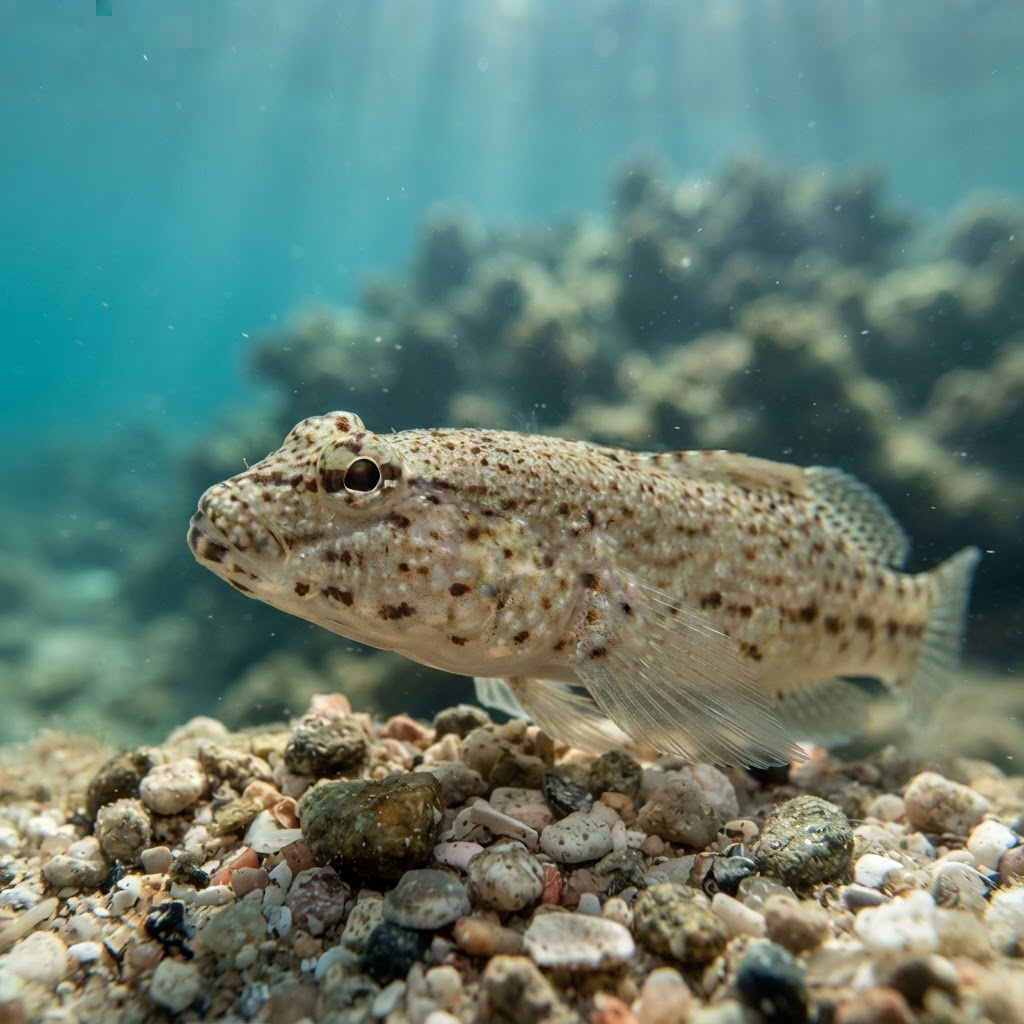
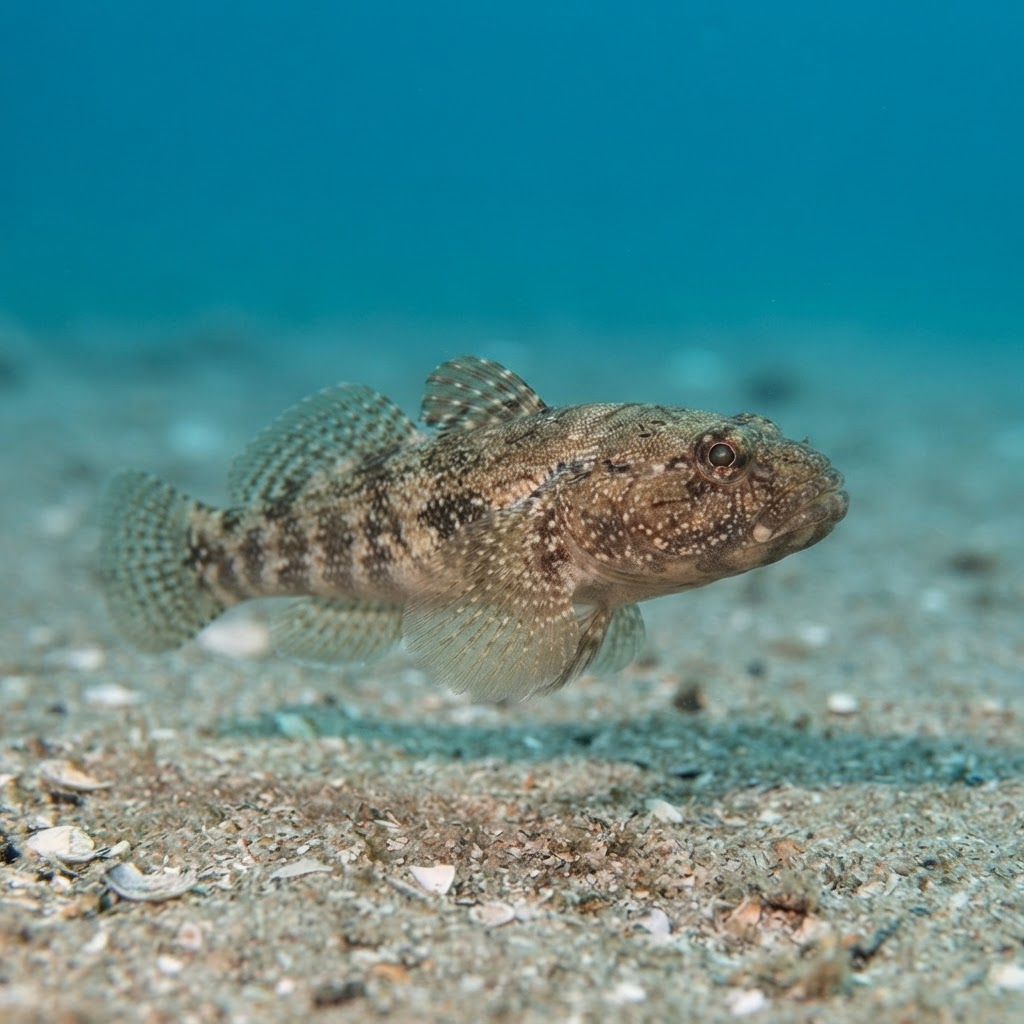
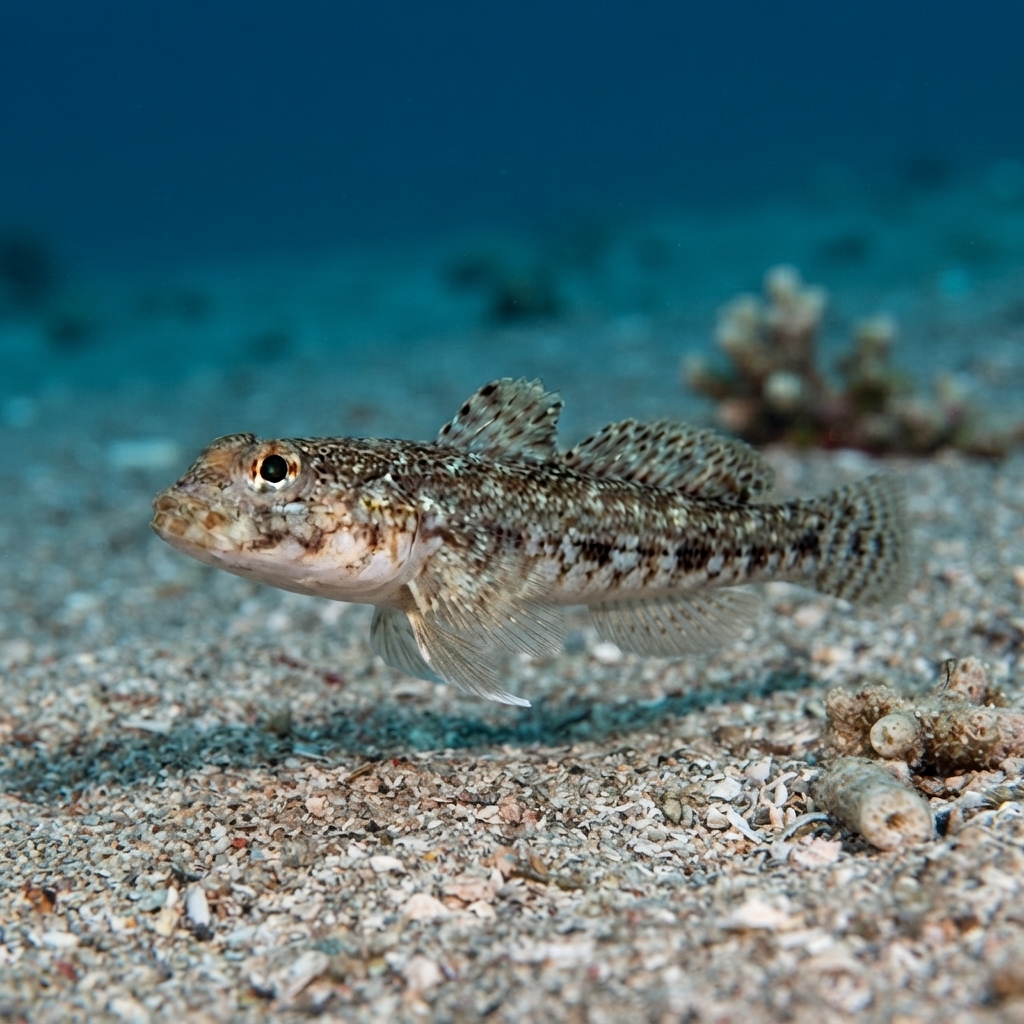
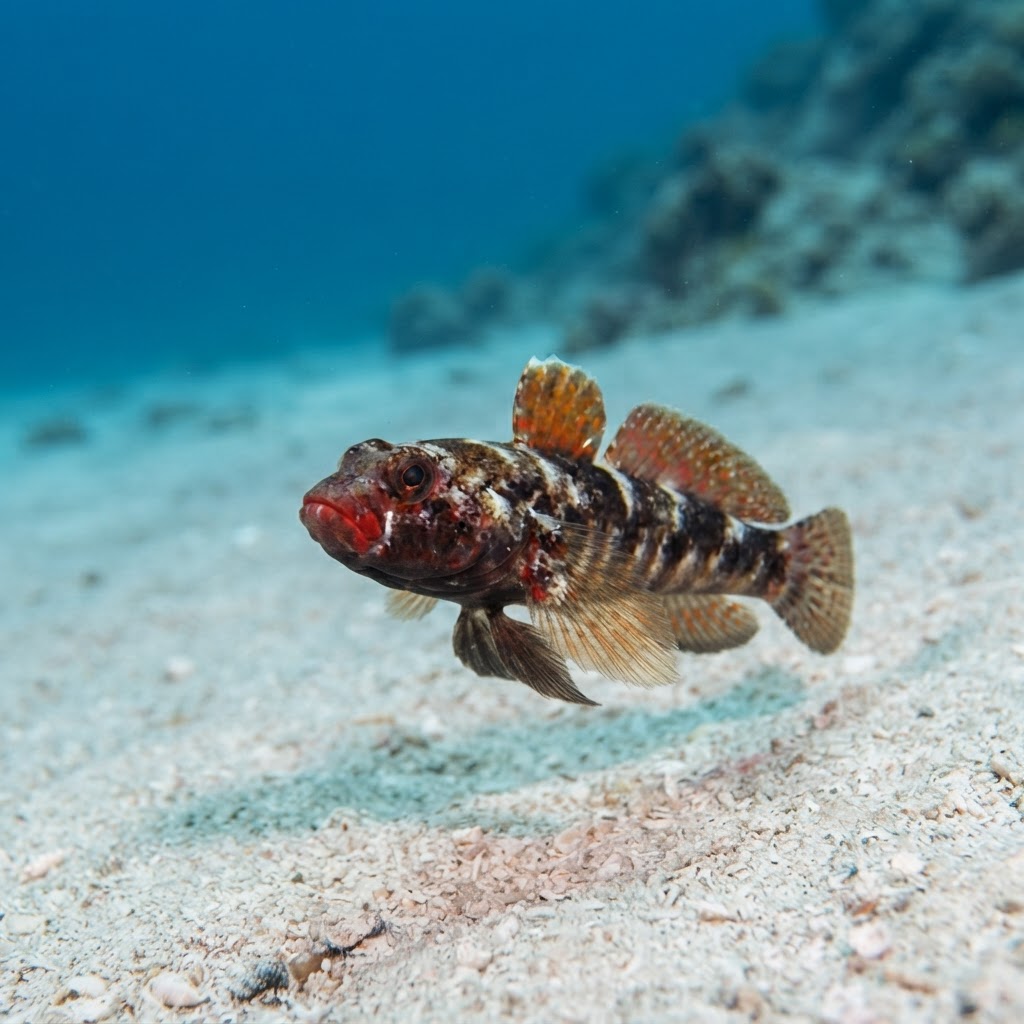
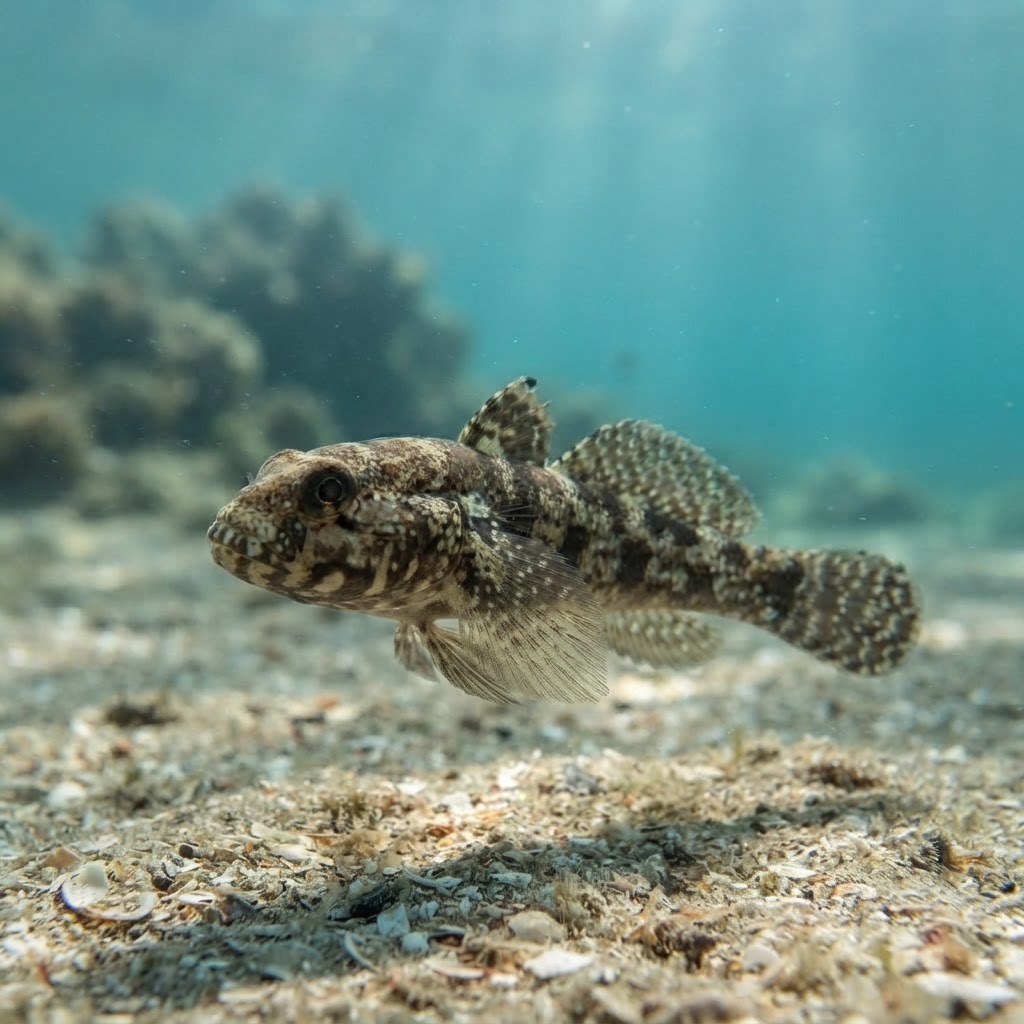
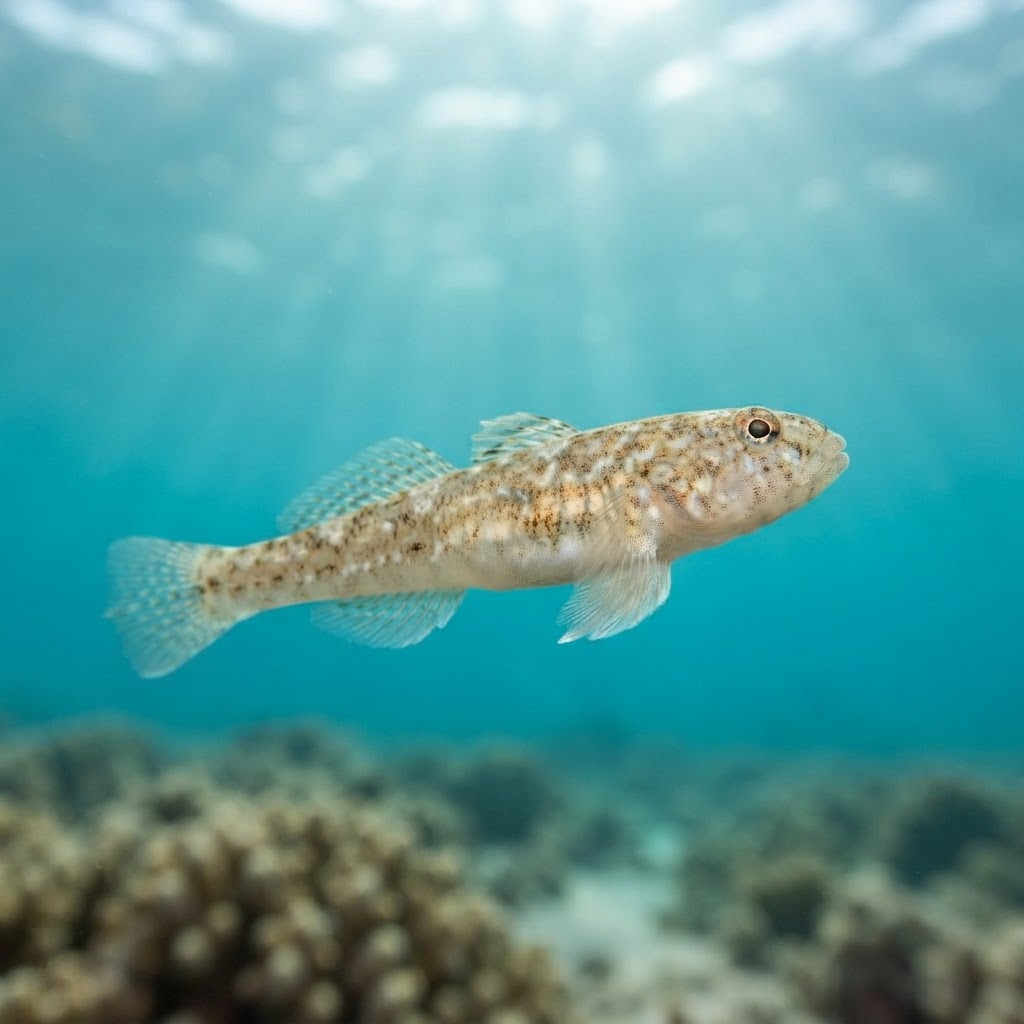
A slim, small fish reaching about 6 cm, sandy brown to grey with faint mottled blotches down the flanks that break up its outline against sediment. Look for the two fused pelvic fins forming a small sucker-like disc on the belly, a trait of the goby family, and a slightly humped, blunt-nosed profile. It usually sits propped on the bottom rather than swimming in open water, which is often the biggest giveaway.
Divers and snorkellers typically find it resting on sand, mud or fine gravel in shallow water, often half-buried or tucked against a pebble where its mottled colouring blends in. It tends to hold still rather than dart off when approached, relying on camouflage over flight, and is most often spotted by divers moving slowly and scanning the substrate rather than the water column. Reported sightings skew towards uncommon to rare, so patience and a close look at the bottom pay off more than searching mid-water.
Common gobies are short-lived, with most individuals completing their life cycle within a year or two, and males guard nests of eggs laid under shells or debris until they hatch.
Sightings show no clear seasonal pattern, and the species tolerates a fairly narrow cool-water band of roughly 9 to 16 C, so it is worth looking for whenever conditions in these regions sit in that range rather than chasing a specific month.
Most reliably found in Zeeland in the Netherlands, which logs by far the highest number of sightings, followed by England in the UK and Brittany in France. Smaller but consistent numbers turn up in the Algarve in Portugal and along the Bay of Biscay, so it is very much a European shallows and estuary species rather than a tropical reef one.
Mapping where Common Goby is logged…
Zeeland in the Netherlands is the strongest area for sightings, with England, Brittany in France, and the Algarve in Portugal also producing regular records. It favours shallow sandy or muddy coastal habitat over open reef.
There is no strong seasonal pattern in sightings, so it can turn up year-round in its core regions. It is recorded in cooler water, roughly 9 to 16 C, so it suits temperate dives rather than warm tropical conditions.
It is a small, sandy brown fish around 6 cm long with mottled markings that camouflage it against sediment. The clearest clue is its resting posture on the bottom, propped on fused pelvic fins that form a small sucker disc, rather than swimming freely.
It is a small species, typically reaching around 6 cm in length, so it is easy to overlook against sand or mud unless you are looking closely at the substrate.
It lives fast: most individuals only survive a year or two, and males take on nest-guarding duty, protecting eggs laid under shells or debris on the seabed until they hatch.
No, it poses no danger to divers or snorkellers. It is a small, bottom-dwelling fish that relies on staying still and camouflaged rather than any defensive behaviour.
Site and sighting data is aggregated from diver logs, iNaturalist and GBIF. For taxonomy and conservation status:
Slender Goby
806 sites