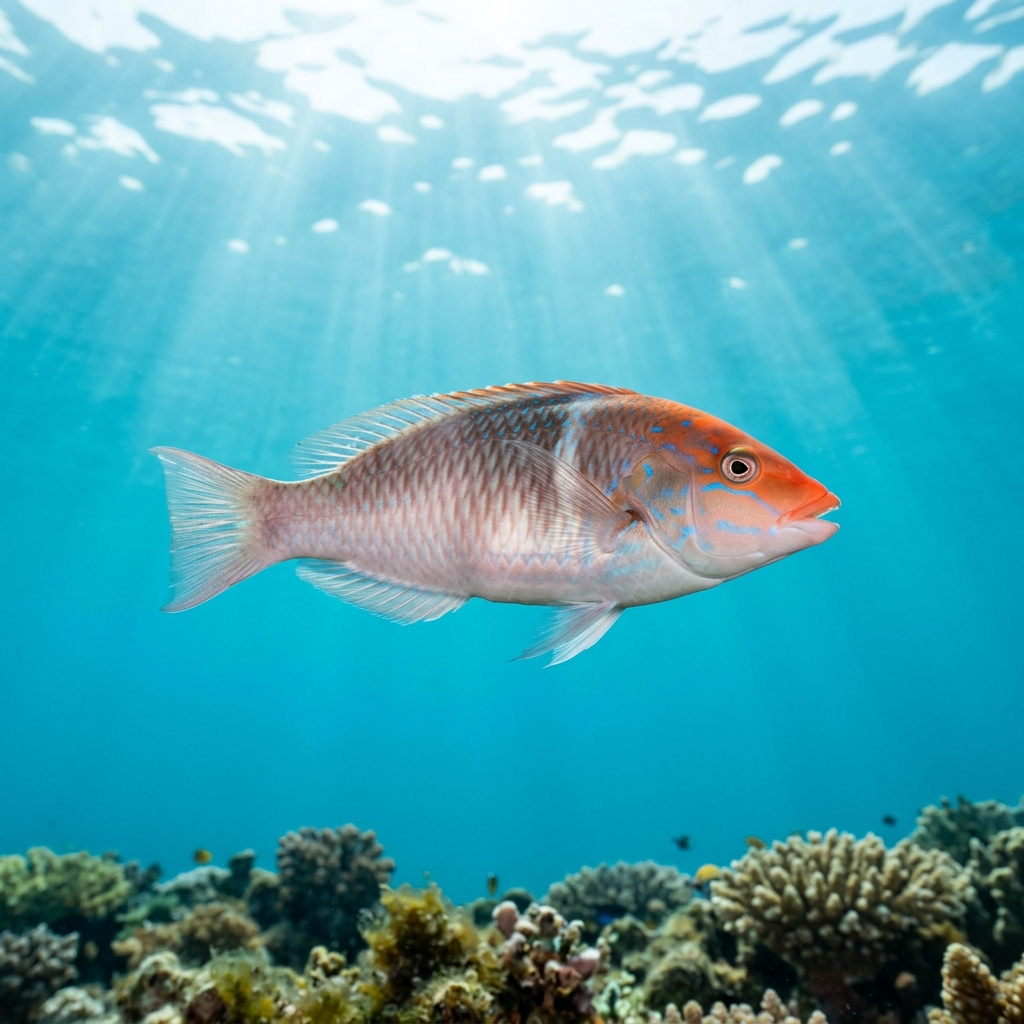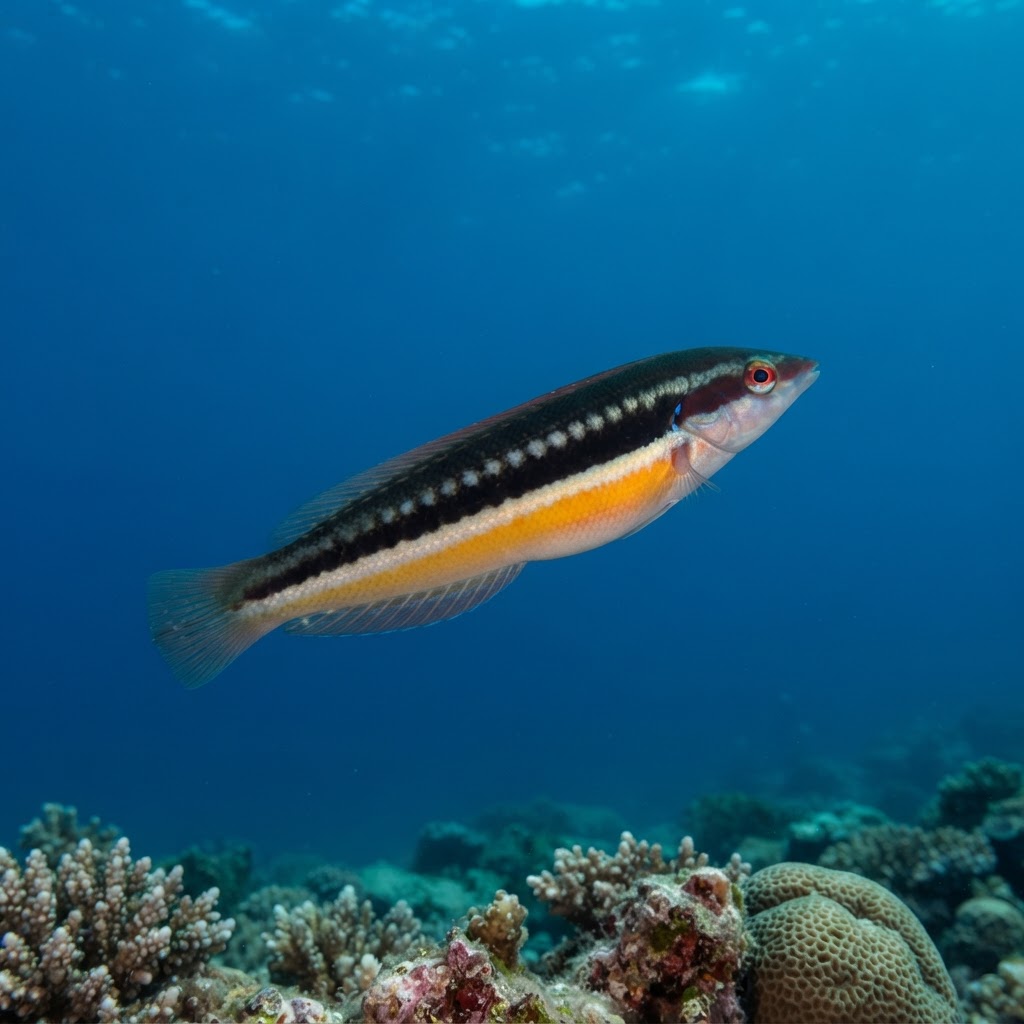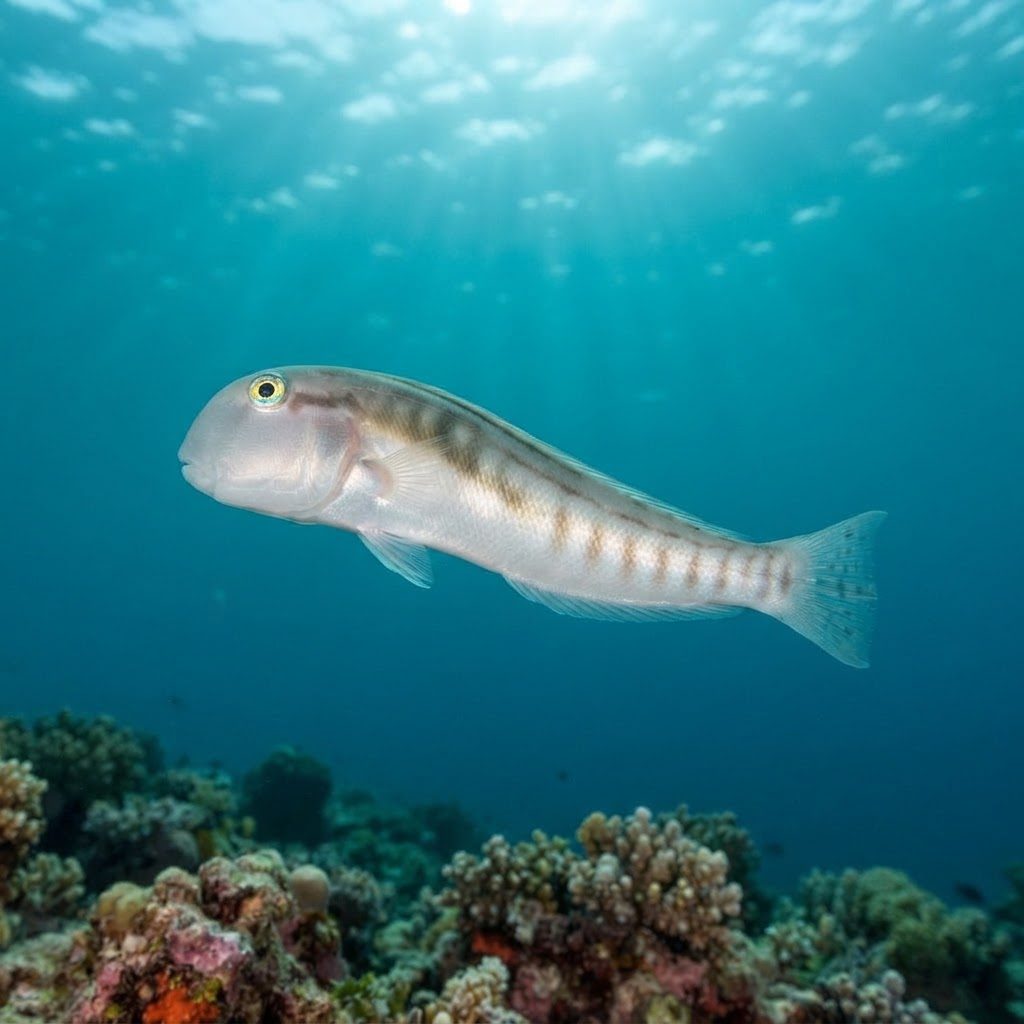
Cymolutes torquatus
A small, uncommon wrasse best spotted on sandy reef flats in Luzon and Visayas, comfortable year-round in 25-29C water.
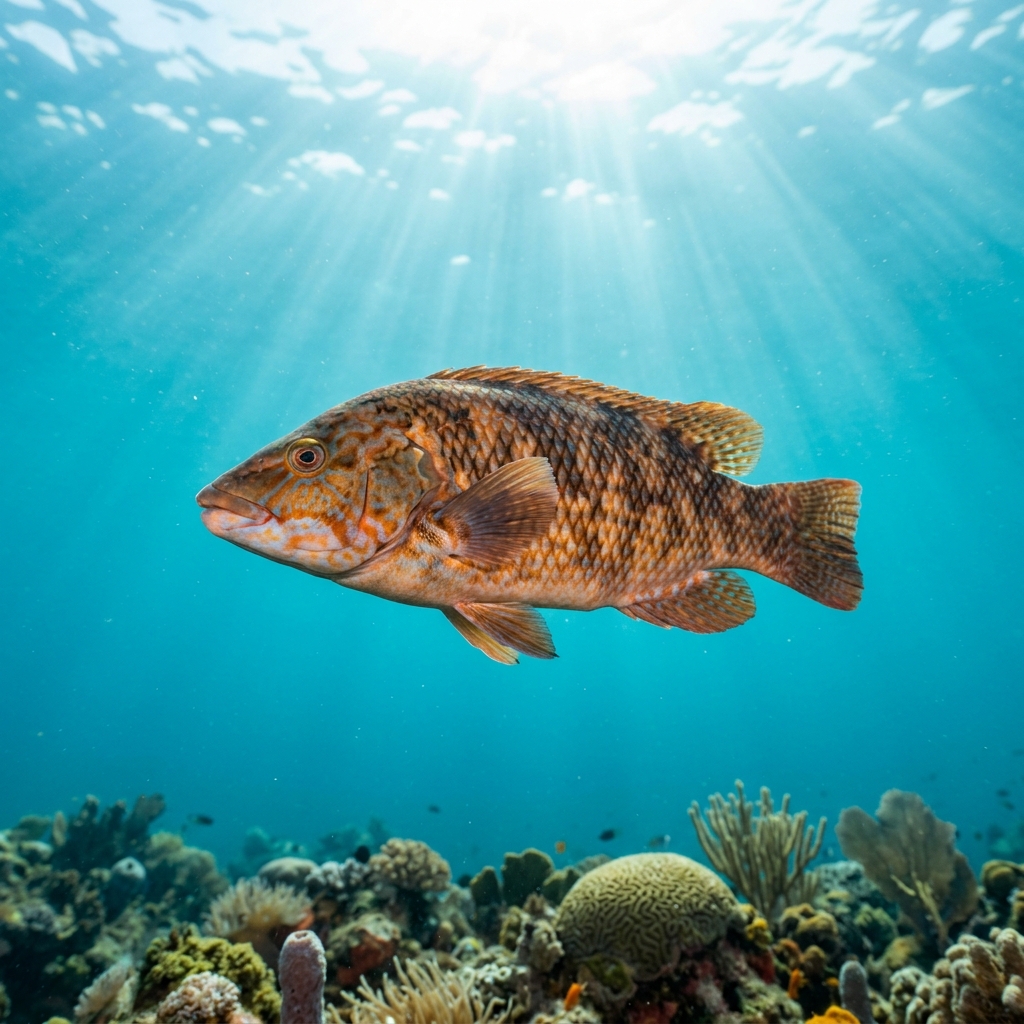
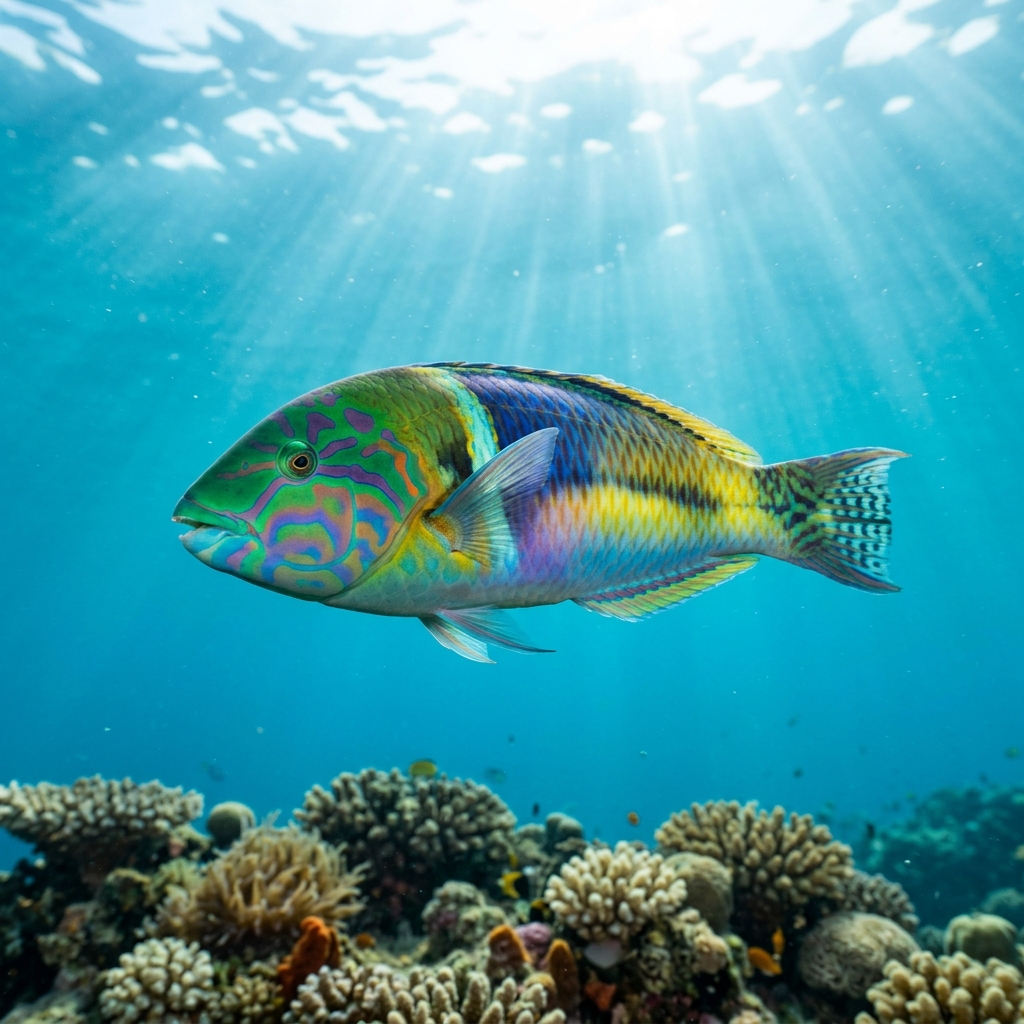
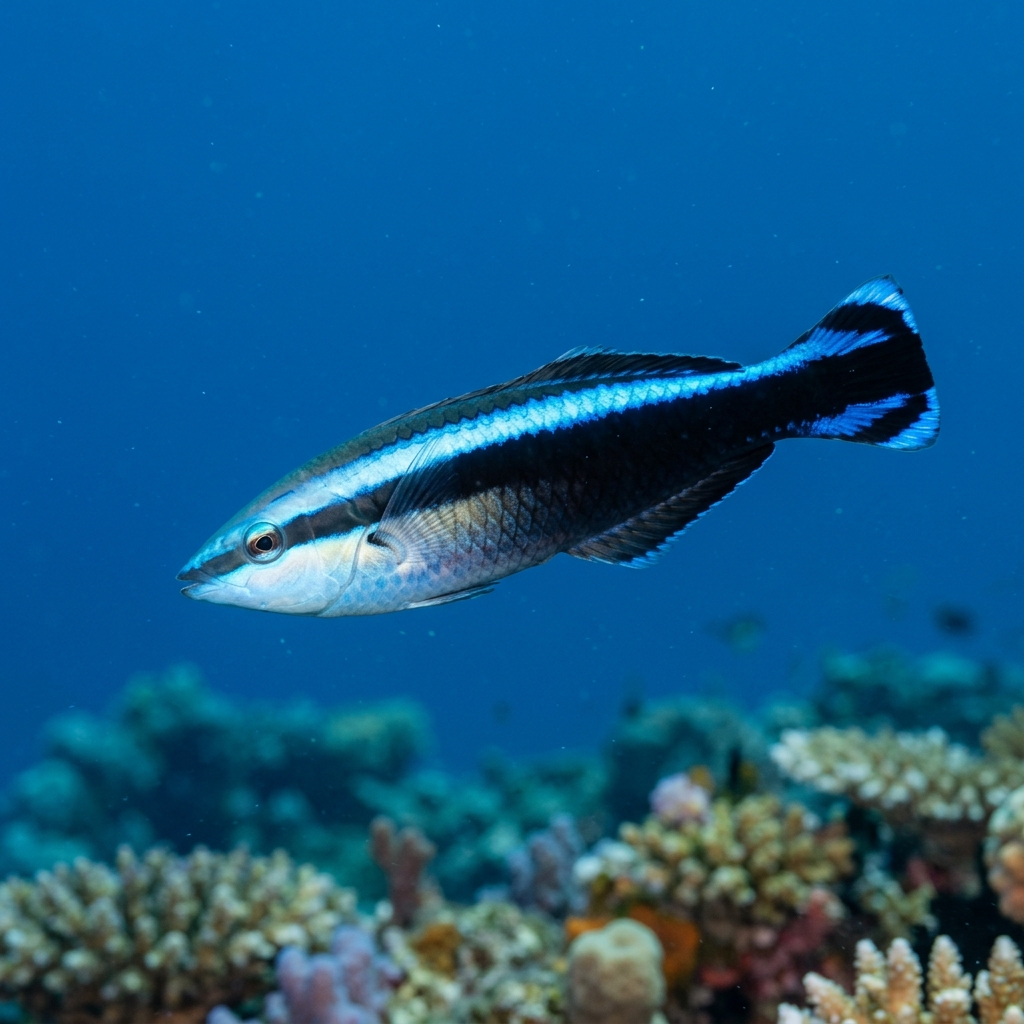
A slim, elongate wrasse reaching only around 14 cm, easy to overlook against sand or rubble patches. Look for the pale, slightly compressed body and the dark collar-like band behind the head that gives it its name. It swims with quick, darting bursts rather than the steady cruising typical of larger wrasses, often staying low over open sand.
Divers typically find it hovering low over sand flats or rubble patches adjoining reef, darting for cover rather than holding still for a photo. It is logged as uncommon even at the sites where it turns up, so sightings tend to be a brief, lucky pass rather than a guaranteed encounter. Look for it during the day when it is out foraging over open bottom near reef structure.
Like other razorwrasses, it can dive headfirst into sand to vanish when startled, a trick shared by several sand-dwelling wrasses that use loose substrate as an escape hatch rather than fleeing across open reef.
No clear seasonal pattern shows up in the sightings, and with a comfortable range of 24.6 to 29.3C it seems to stick to warm tropical reefs all year. Plan around site access and conditions rather than a particular month.
Most reliably logged in the Philippines, with the strongest concentration of sightings in Luzon and a smaller but steady presence in the Visayas. Divers in Timor-Leste have also recorded it around Dili, making that the other confirmed spot outside the Philippines.
Mapping where Collared Razorwrasse is logged…
The Philippines is the strongest bet, particularly Luzon and the Visayas, with additional confirmed sightings around Dili in Timor-Leste.
There is no detected season, and its warm-water niche of roughly 25 to 29C suggests it is present on tropical reefs year-round.
Look for a small, slender pale-bodied wrasse around 14 cm long with a dark band behind the head, usually seen darting low over sand near reef edges.
They stay small, typically reaching around 14 cm in length, so they are easy to miss against sand and rubble.
No, they pose no danger to divers and simply dart away or bury in sand if approached.
It is logged as uncommon even at the sites where divers have found it, so spotting one is more a matter of luck than a sure thing.
Site and sighting data is aggregated from diver logs, iNaturalist and GBIF. For taxonomy and conservation status:
Bird Wrasse
3,632 sites