Oncorhynchus kisutch
Cold-water encounters in the Pacific Northwest and Alaska, usually uncommon sightings in water under 9C. Here's where divers find coho.
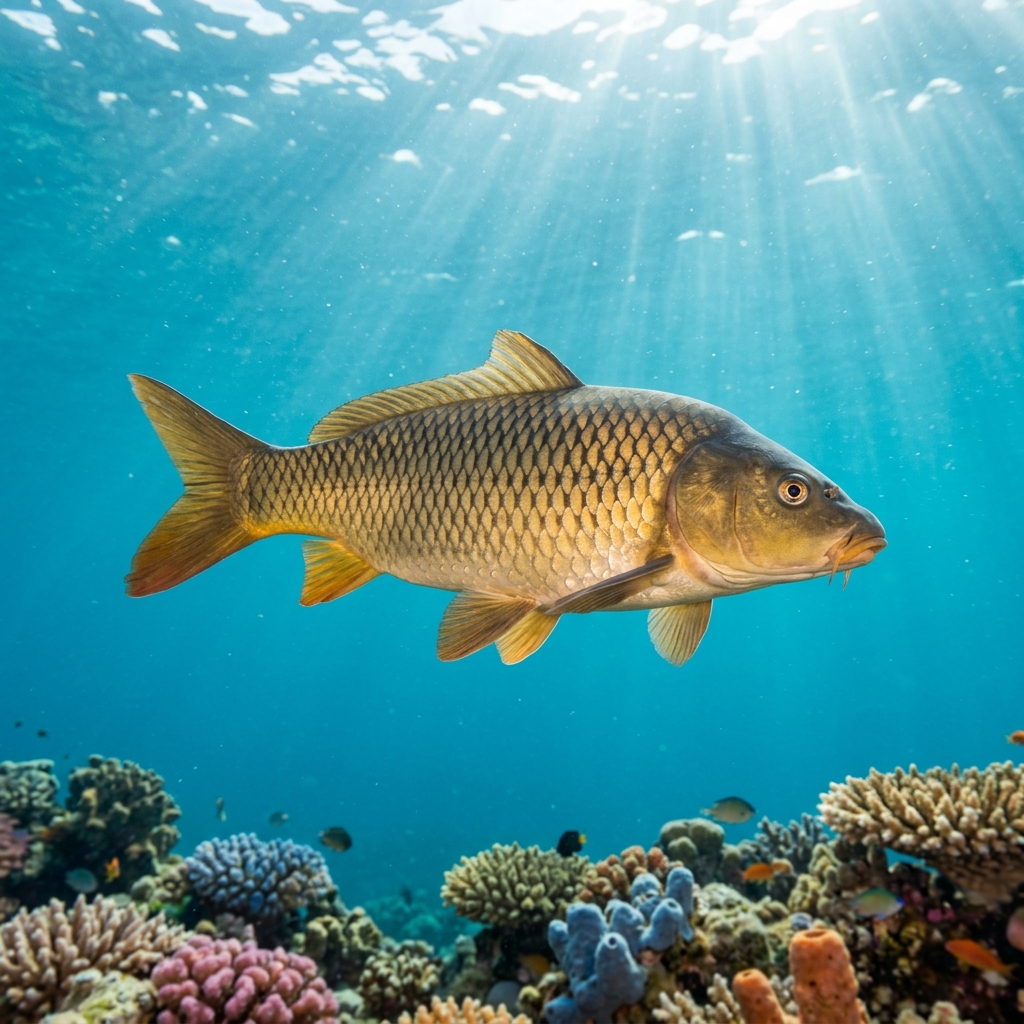
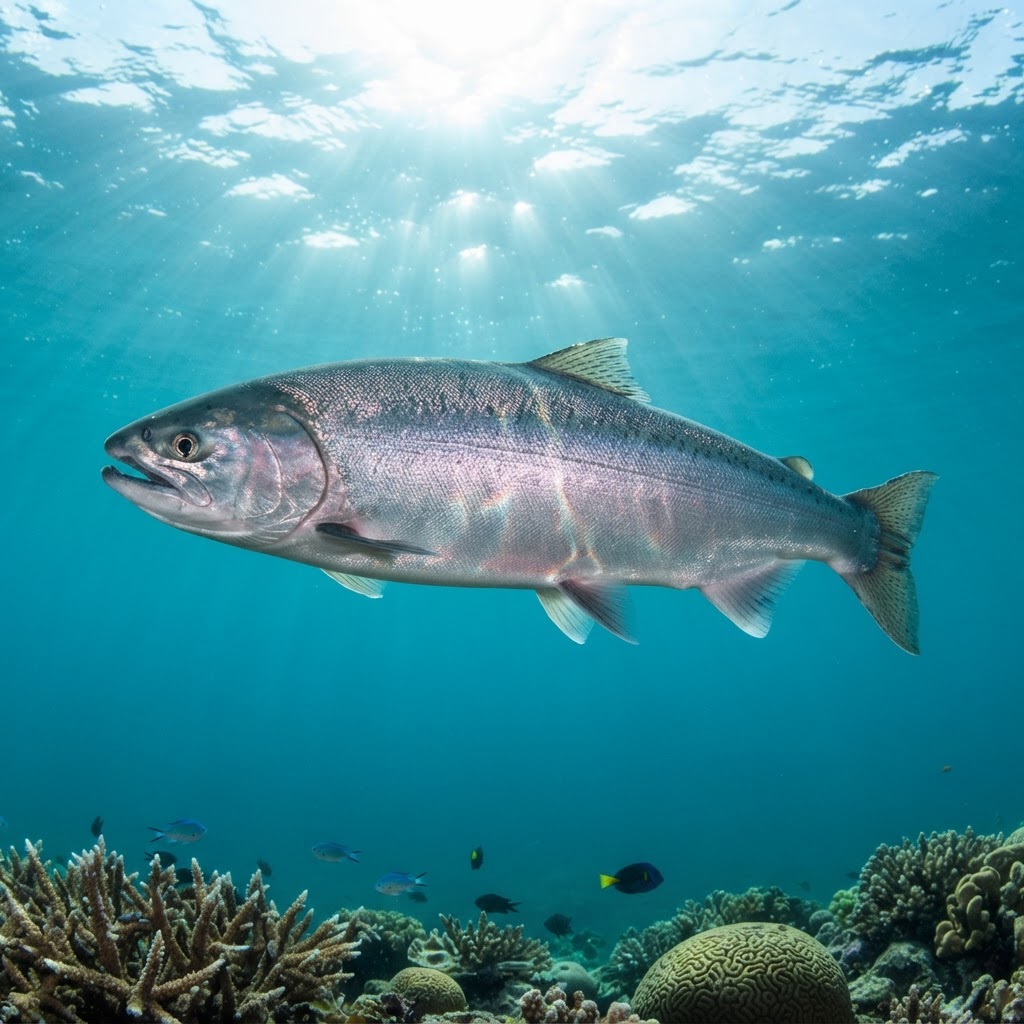
Adult coho salmon run to around 76cm, with a torpedo-shaped body, silvery flanks and a metallic blue-green back. Look for small black spots scattered across the upper back and the upper lobe of the tail fin, which helps separate them from other salmonids at a glance. Fish nearing spawning develop a hooked jaw and can flush reddish along the body, so colouring underwater varies with the season of the run.
Divers most often describe coho as uncommon to rare encounters, so seeing one tends to be a highlight rather than a given. Expect them cruising mid-water or holding near structure in cold, often low-visibility coastal water, generally unbothered by divers but not one to approach closely either. Near spawning time, behaviour shifts as fish stage near river mouths before pushing upstream.
Coho salmon are anadromous, meaning they hatch in freshwater, migrate out to the ocean to grow, then return to their home river to spawn once and die, so any given encounter is a snapshot of one stage in that life cycle.
Sighting data doesn't show a clear seasonal spike, so treat this as a year-round possibility if you're diving the right cold-water sites. Given the observed range of 1 to 8.9C, coho are found in cold water, so plan dives with appropriate exposure protection whenever you go looking.
Most divers log coho salmon in the Pacific Northwest region of the United States, with further sightings in Alaska and across the border in British Columbia, Canada. Sightings are spread across coastal and estuarine dive sites in these two countries rather than concentrated at a handful of famous spots, so it pays to ask locally about river mouths and inlets where fish stage before heading upstream.
Mapping where Coho Salmon is logged…
The Pacific Northwest of the United States is the most reliable region, with further sightings in Alaska and British Columbia, Canada. Coastal and estuary sites near river systems tend to be the best bet.
There isn't a strong seasonal signal in the sighting data, so coho can turn up year-round at cold-water sites. They're found in water as cold as 1C and up to about 9C, so cold-water diving skills and gear matter more than timing.
Look for a silvery, torpedo-shaped fish around 76cm long with a metallic blue-green back scattered with small black spots, including on the upper tail lobe. Near spawning, the jaw hooks and the body can flush red and green.
Coho salmon typically reach around 76cm in length as adults.
Coho are anadromous: they hatch in rivers, spend time growing at sea, then return to their home river to spawn a single time before dying. So encountering one underwater often means catching a specific stage of that one-way journey.
No, coho salmon pose no danger to divers and are simply cold-water fish that tend to keep their distance.
Site and sighting data is aggregated from diver logs, iNaturalist and GBIF. For taxonomy and conservation status:
Sun Perch
2,182 sites