Bathygobius cocosensis
A small, well-camouflaged goby logged mainly on Queensland reefs, resting on rubble in 25-29C water year-round.
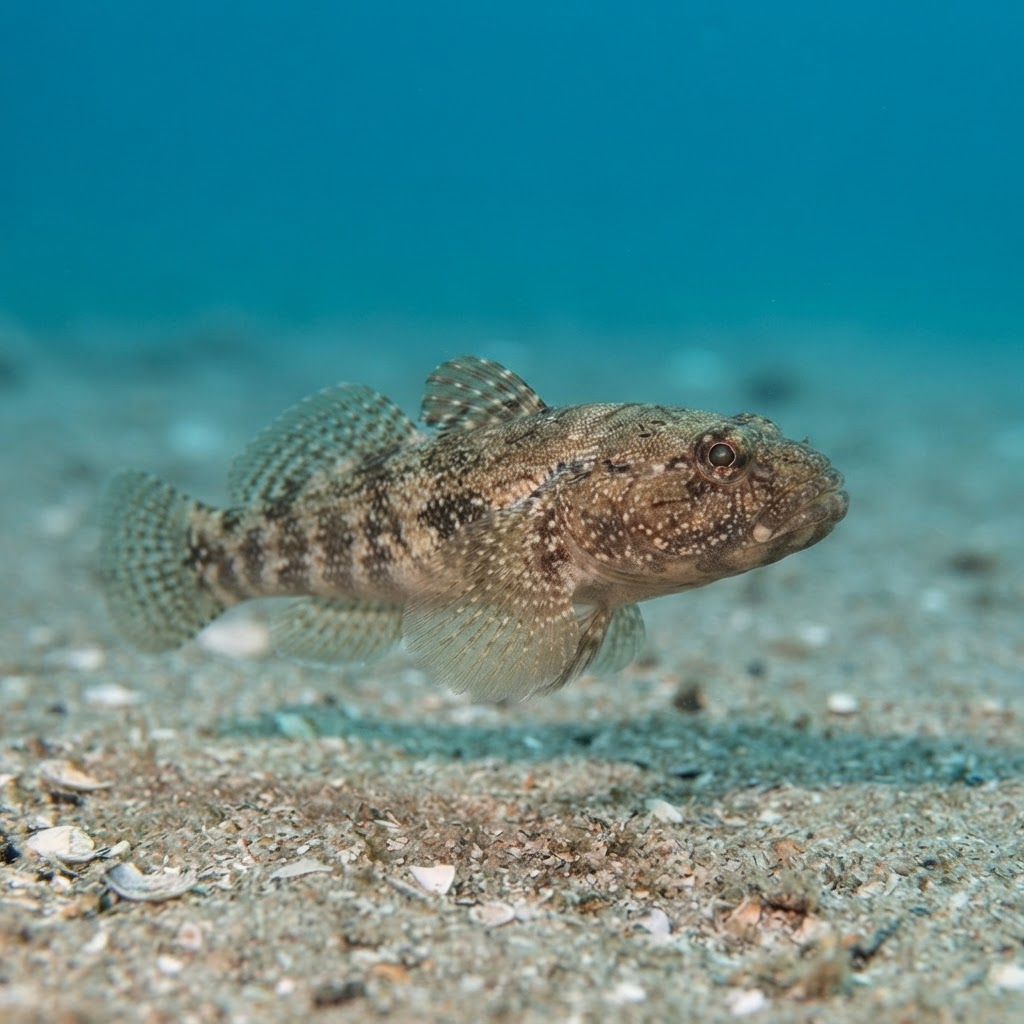
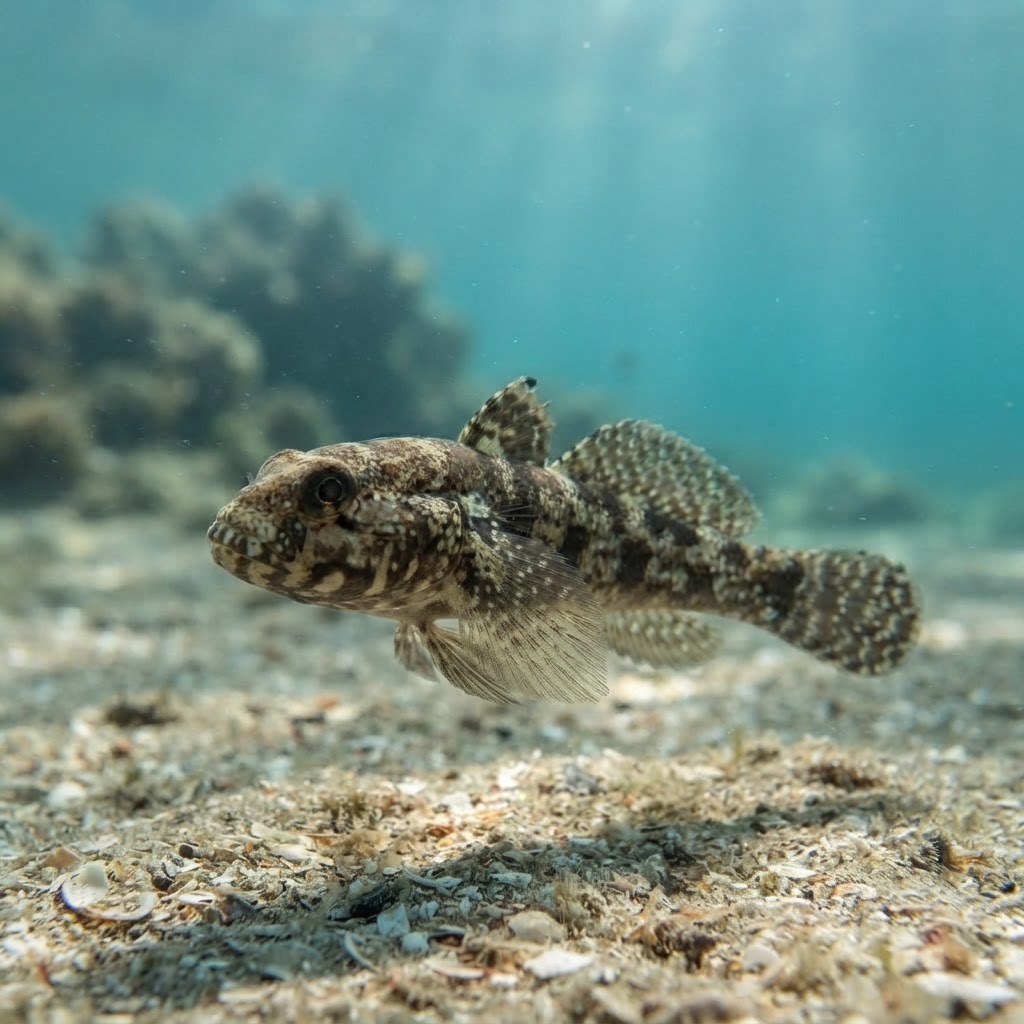
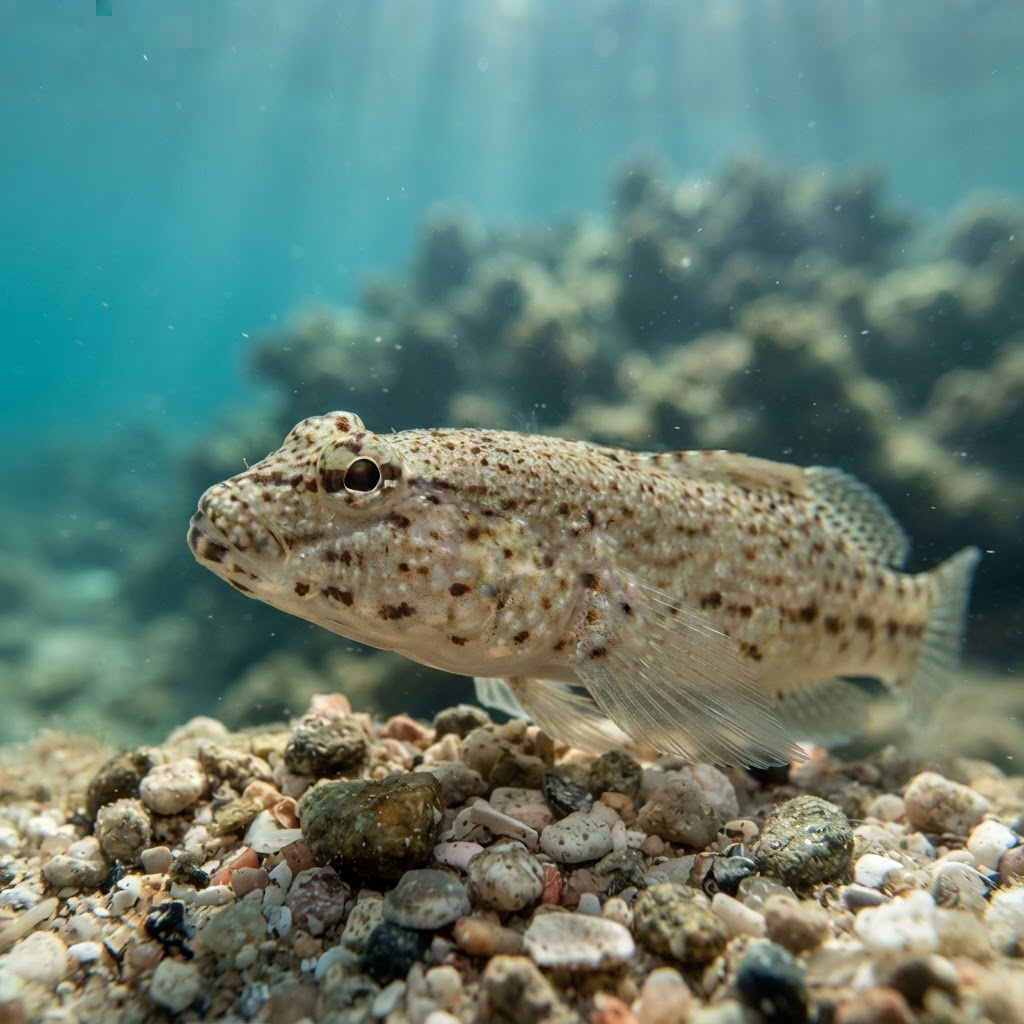
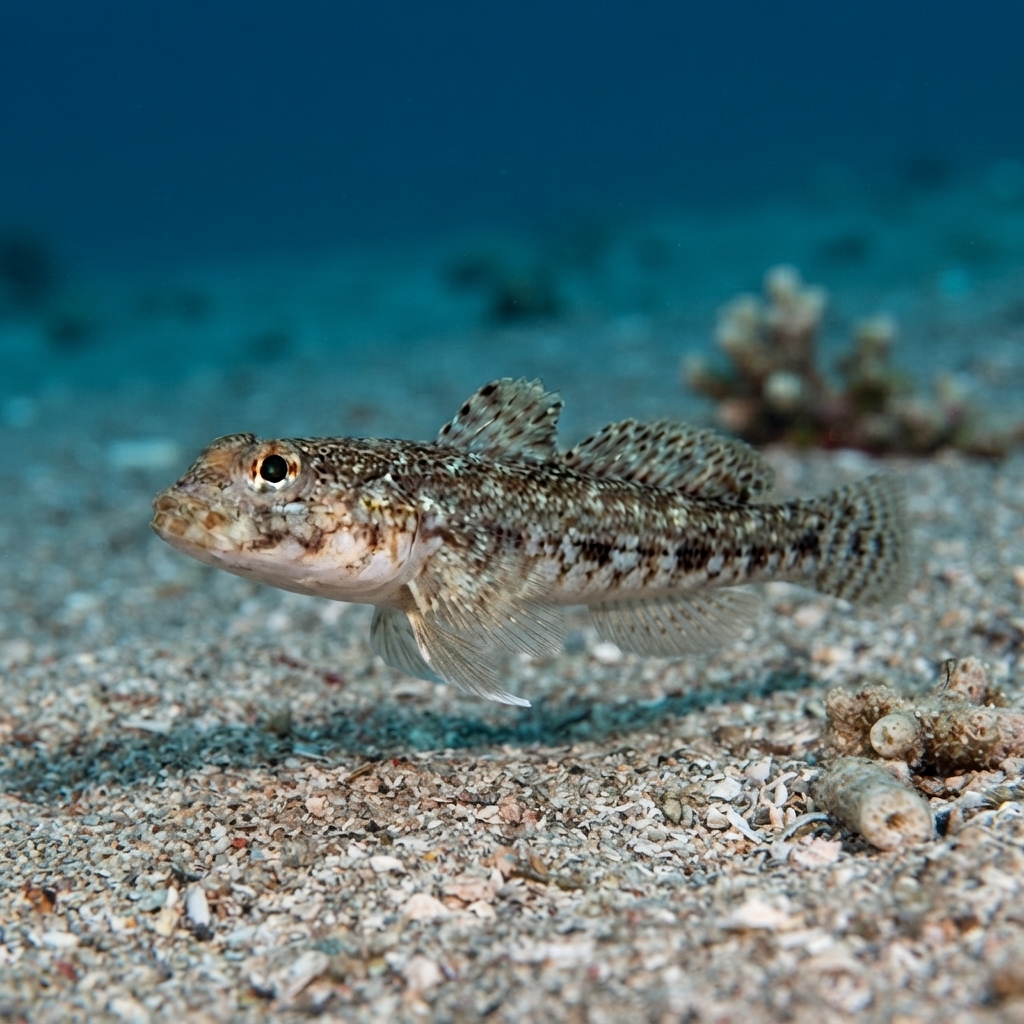
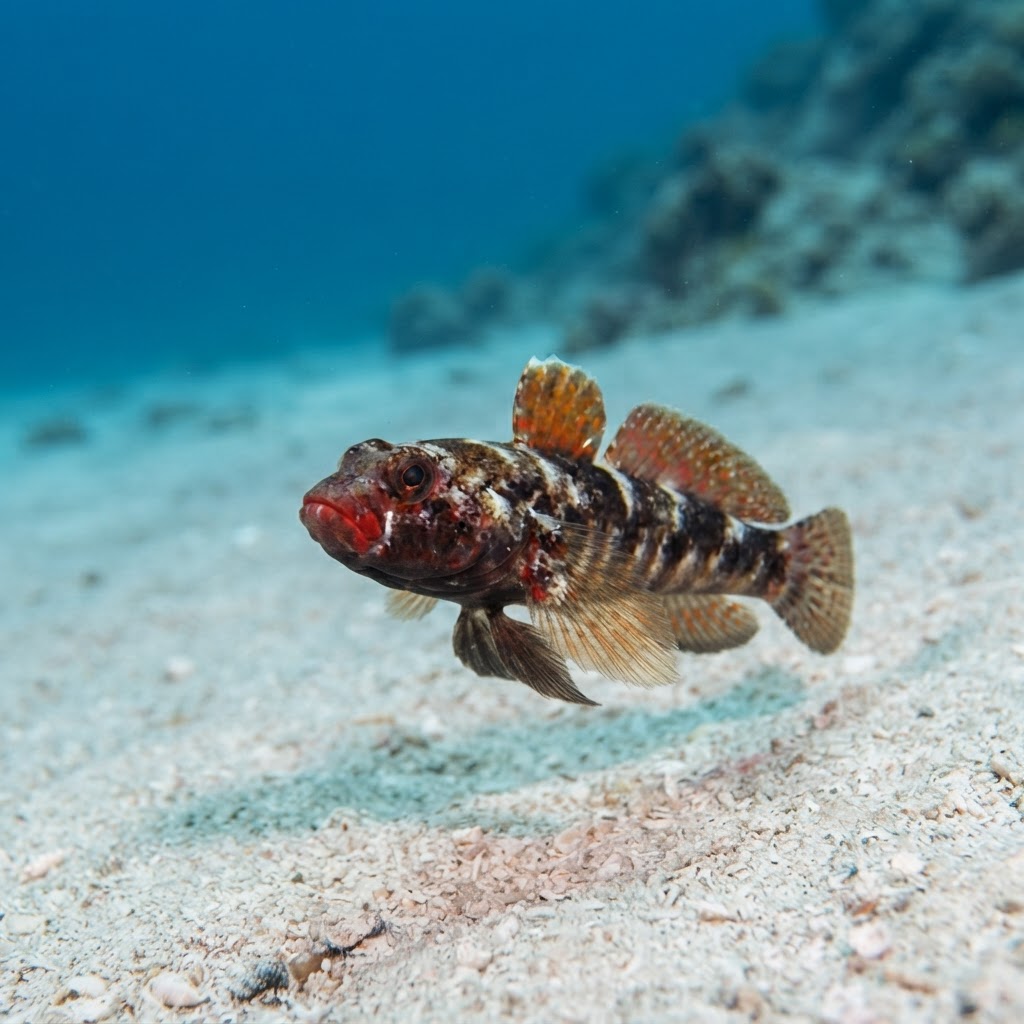
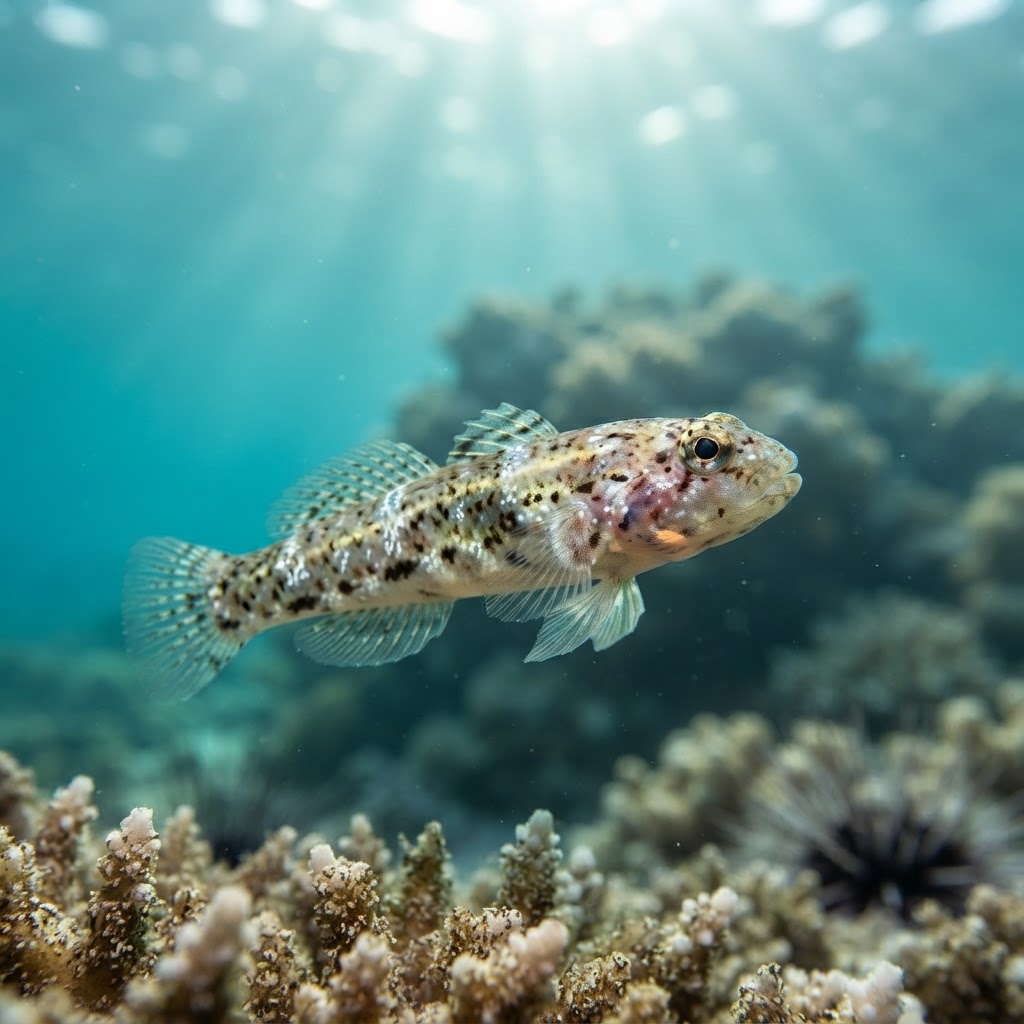
A stocky little goby at around 8 cm, mottled in brown and sandy tones that blend into rubble and rock. Look for the blunt head, large eyes set high on the skull, and the way it props itself on its front fins rather than swimming freely. It sits motionless on the substrate more often than not, which is usually how divers spot it, and the fine banding on the fins is the best close-up clue once you have it in view.
Divers typically find this goby parked on rubble, rock, or low reef structure, using its front fins to prop itself up while it watches the water column rather than cruising around. It is not shy so much as inconspicuous, relying on camouflage and stillness to go unnoticed, so slow, close looking along the substrate is what turns up a sighting. Logged as rare to uncommon at most sites, it rewards divers who check the bottom rather than the blue.
Like other gobies, it likely lacks a swim bladder, which is exactly why it perches on the bottom instead of hovering in midwater like most reef fish.
No clear seasonal pattern shows up in the sightings, and with a comfortable range of roughly 24.7 to 29.3C it's a year-round proposition on Queensland and New South Wales dives rather than a seasonal target.
Reef neighbours a diver could mistake it for. Use the identification notes above to tell them apart.
This one is essentially an Australian speciality in the logged data, with every recorded sighting coming from Australia. Queensland carries the bulk of sightings, with New South Wales as the other reliable region, so reef and rocky-shore dives along the east coast are your best shot.
Mapping where Cocos Frillgoby is logged…
Sightings are concentrated in Australia, especially along Queensland reefs, with a smaller number of records from New South Wales. It has not been logged outside Australia in current dive data.
There is no strong season in the sightings, and its comfortable temperature range of roughly 25 to 29C means it can turn up on Queensland and New South Wales dives at any time of year.
Look for a small, mottled brown goby around 8 cm long, resting motionless on rubble or rock rather than swimming in open water. Its blunt head, high-set eyes, and fin-propped posture on the substrate are the giveaways.
They stay small, typically around 8 cm in length, which along with their camouflage makes them easy to swim past unnoticed.
No, they pose no danger to divers. They are small, sedentary bottom-dwellers with no venom or aggressive behaviour towards people.
Like many gobies, they likely lack a swim bladder, so rather than hovering in midwater they prop themselves on rubble or rock using their front fins, relying on stillness and camouflage instead of active swimming.
Site and sighting data is aggregated from diver logs, iNaturalist and GBIF. For taxonomy and conservation status:
Slender Goby
806 sites