Pteragogus enneacanthus
A small, patchy wrasse divers log uncommonly around Longdong, Taiwan and Sai Kung, Hong Kong in warm 25-29C water year-round.
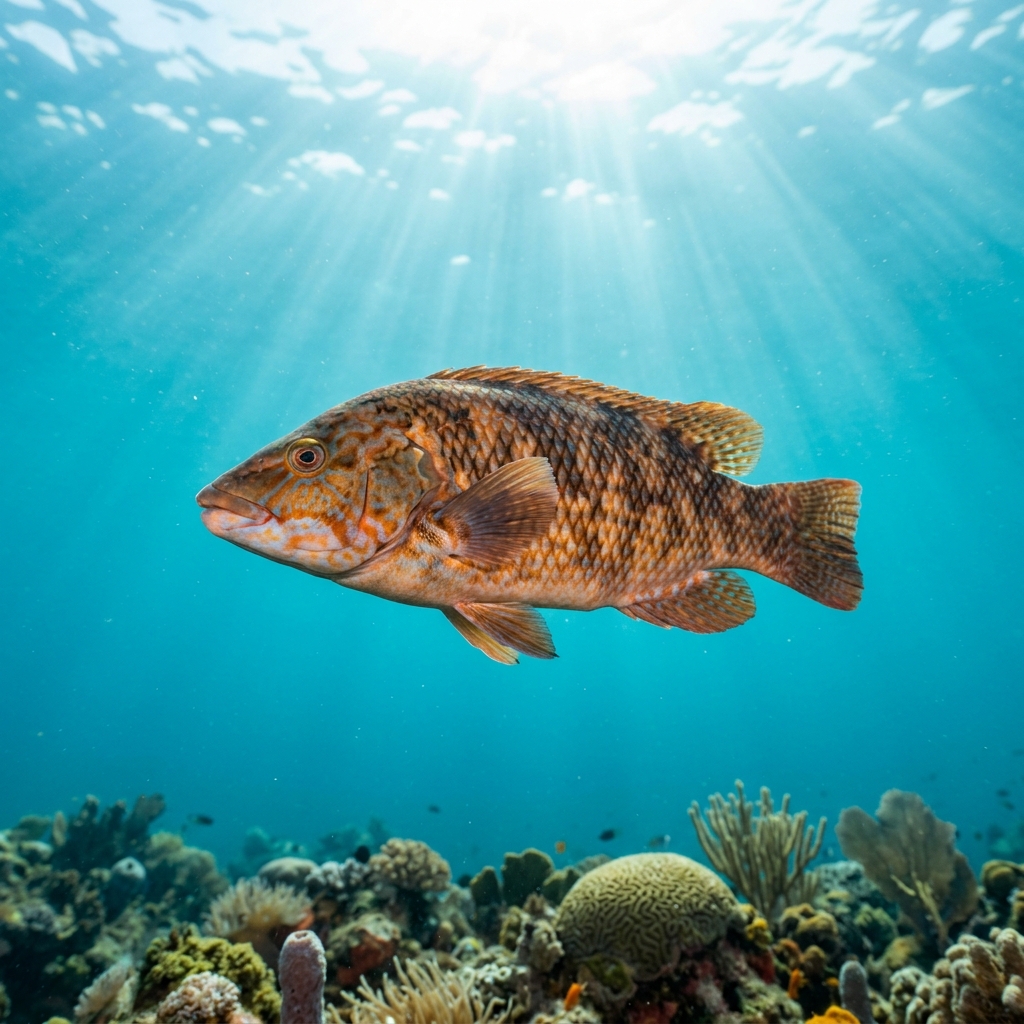
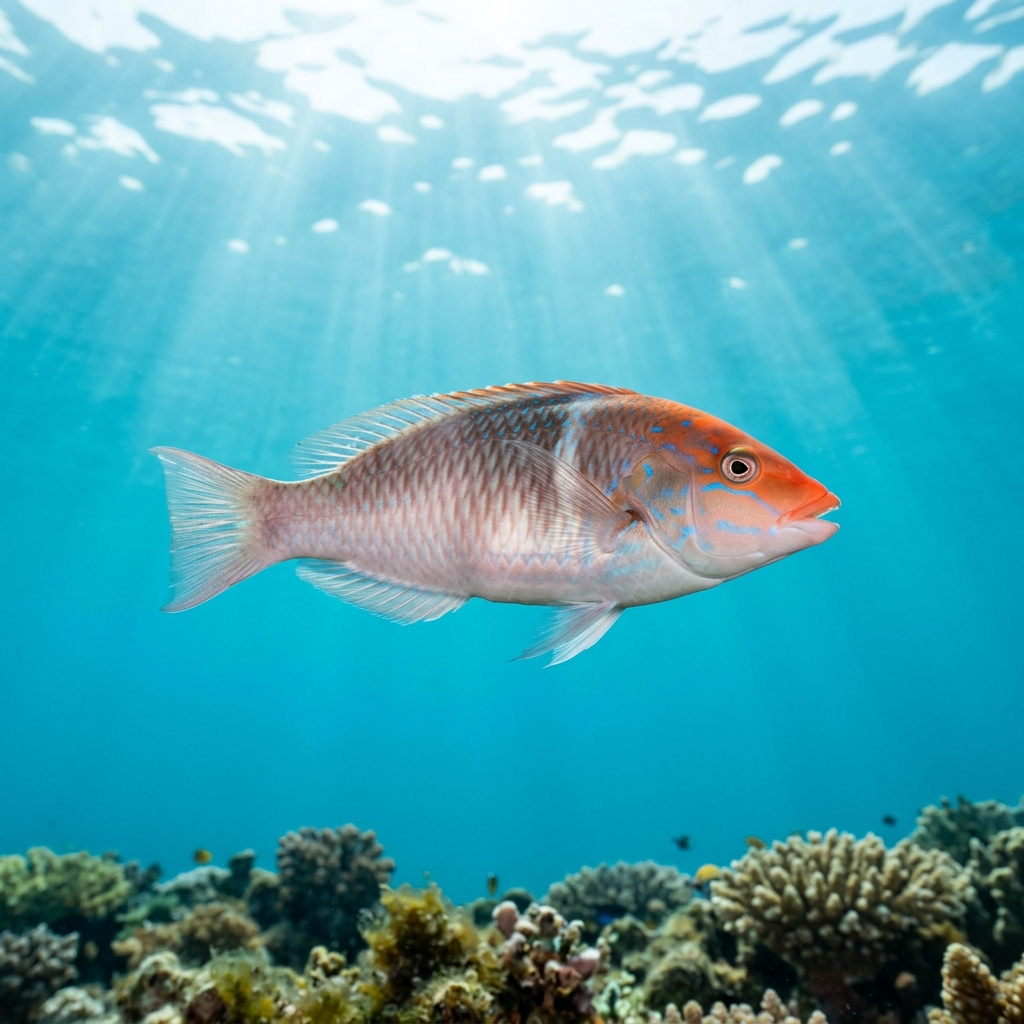
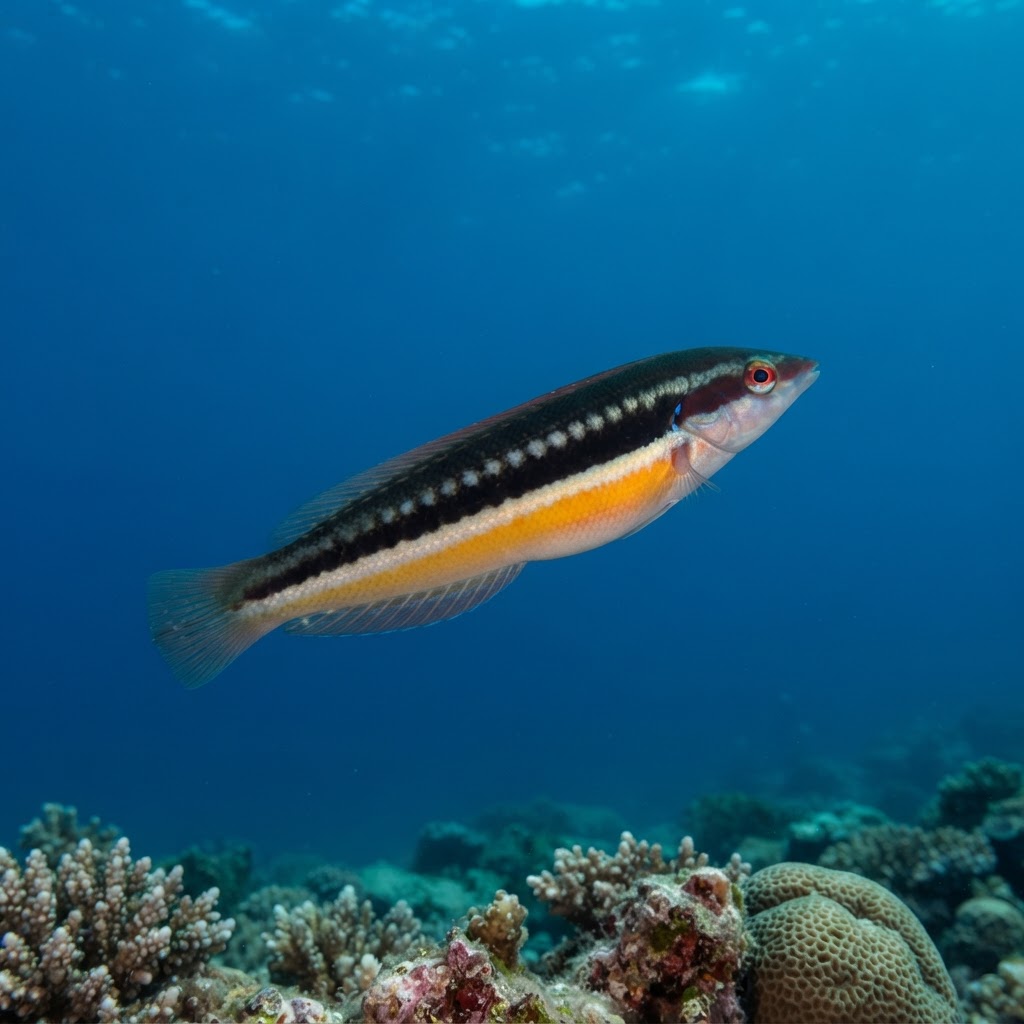
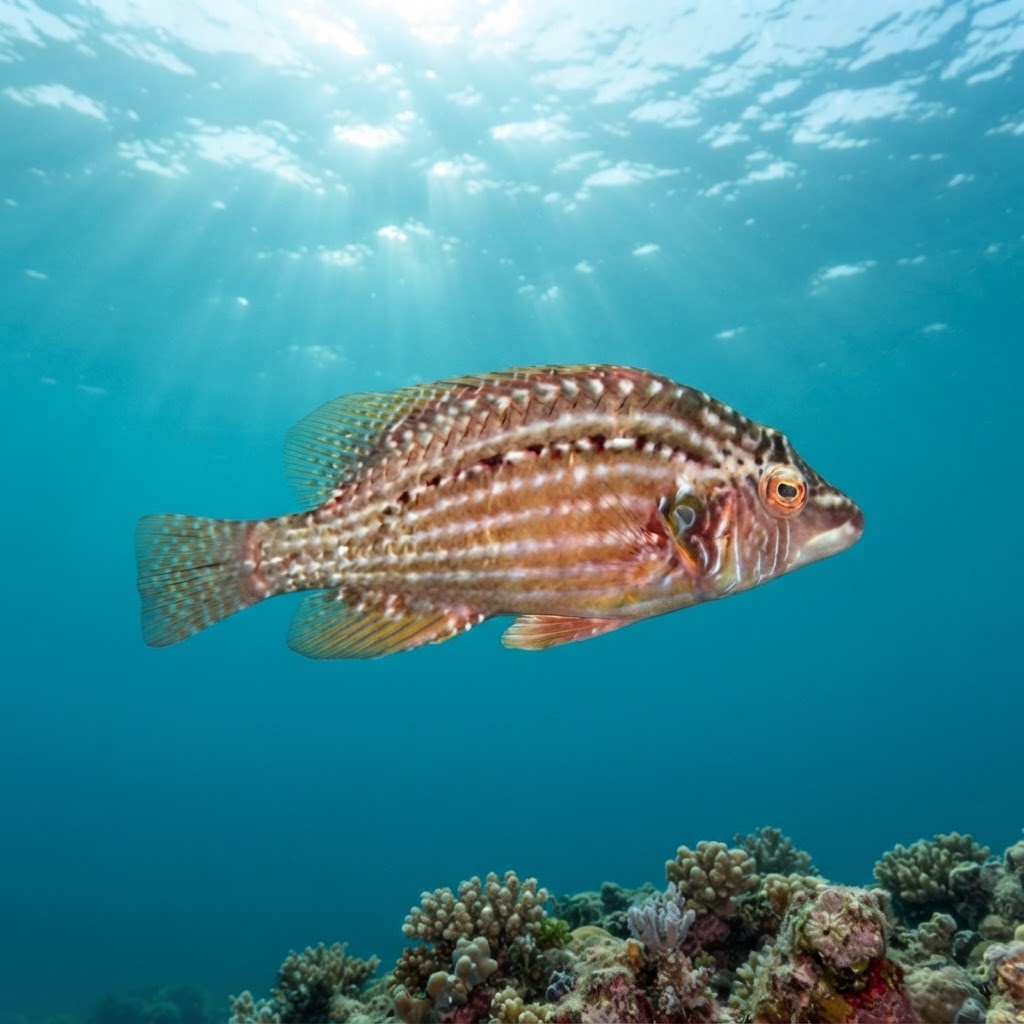
A small wrasse, topping out around 10 cm, with a mottled reddish-brown to olive body that breaks up its outline against rubble and weedy reef. Look for a somewhat elongated, torpedo-shaped body typical of small wrasses and a habit of hugging the substrate rather than swimming in open water. Its patchy, camouflage-style colouring rather than any bold stripe or spot is the main thing that separates it from flashier reef wrasses.
Divers tend to find this one tucked close to the reef or rubble rather than out swimming in the open, consistent with its uncommon-to-rare sighting rate at most sites. It's a small, low-profile fish that is easy to swim past without noticing, so slow, close looking near rocky or weedy patches is the best way to pick it out. It shows no particular reaction to divers beyond typical small-wrasse wariness, holding position or slipping into cover rather than fleeing far.
Like many small wrasses in the family Labridae, it likely shifts sex over its lifetime, though this has not been specifically documented for this species and is included here only as a general family trait worth checking for on any given dive.
Sightings don't show a clear seasonal pattern, and with a comfortable temperature range of roughly 25.2 to 29.3C it's treated as a year-round find on the reefs where it occurs. Plan around good visibility and calm conditions at your chosen site rather than a specific month.
Most reliably logged around Longdong in Taiwan and Sai Kung in Hong Kong, with these two regions accounting for the bulk of recorded sightings. It also turns up in Indonesia, with records from Bali and Sulawesi, though at lower and more scattered frequency.
Mapping where Cockerel Wrasse is logged…
It's most commonly logged around Longdong in Taiwan and Sai Kung in Hong Kong, with additional records from Bali and Sulawesi in Indonesia. Outside these regions it hasn't been widely documented by divers.
There's no strong seasonal pattern in the sightings, and it's found in warm water between about 25 and 29C, so it's treated as a year-round species wherever it occurs.
Look for a small wrasse around 10 cm long with a mottled, reddish-brown to olive pattern that breaks up its outline. It stays close to rubble or low reef structure rather than swimming in open water, which is often the first clue to its identity.
They're a small species, typically reaching around 10 cm in length, which puts them among the smaller wrasses divers encounter on the reef.
No, they pose no danger to divers. They're a small, non-aggressive reef wrasse that keeps to itself near the substrate.
Site and sighting data is aggregated from diver logs, iNaturalist and GBIF. For taxonomy and conservation status:
Bird Wrasses
3,632 sites