Canthigaster callisterna
Small, round and orange-striped, the Clown Toado turns up on temperate reefs across New South Wales and North Island, New Zealand, year-round.
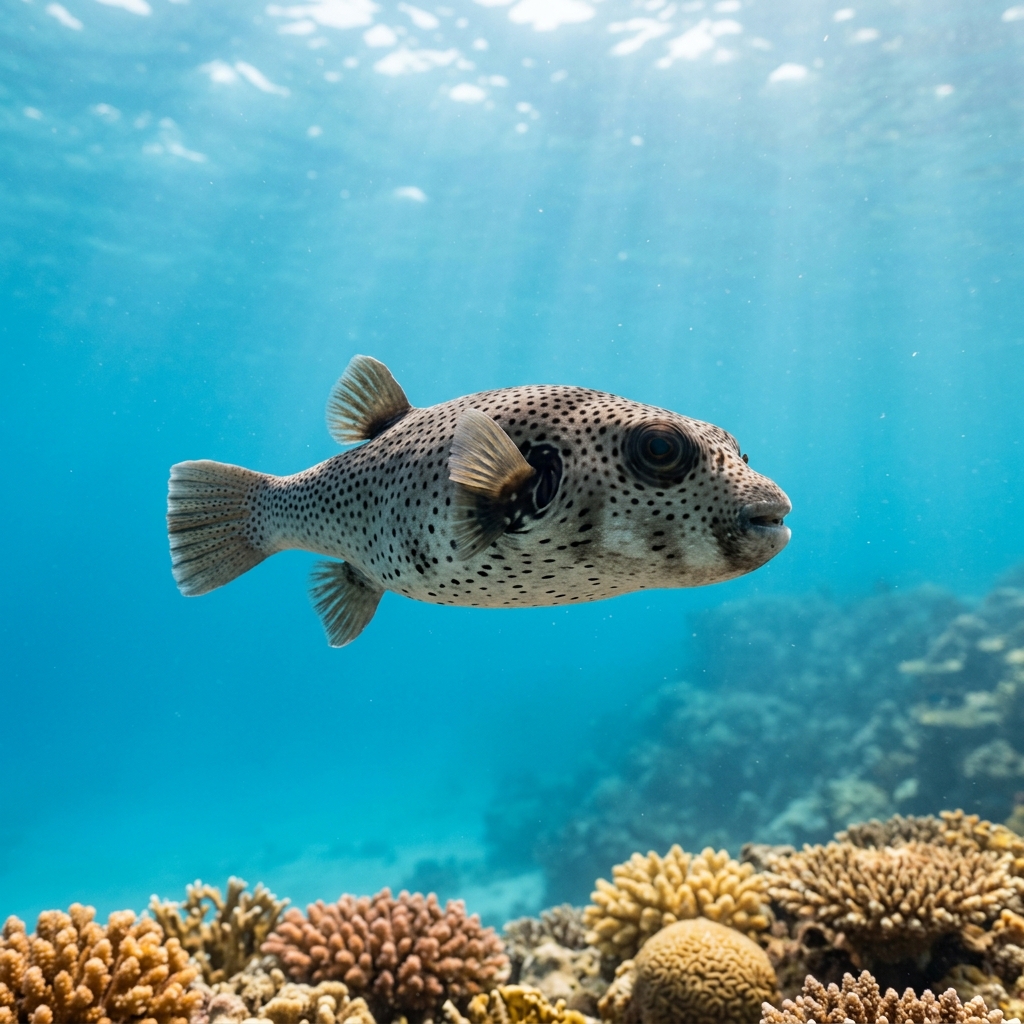
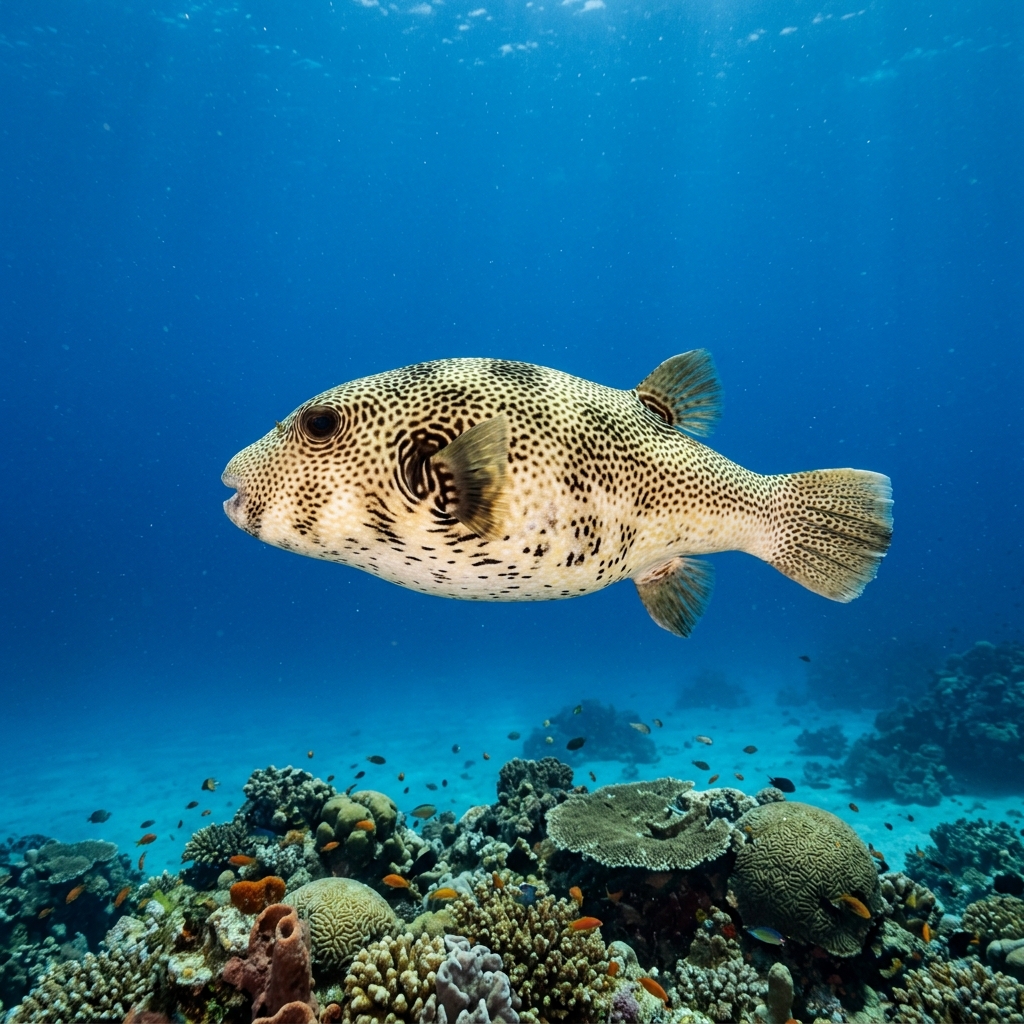
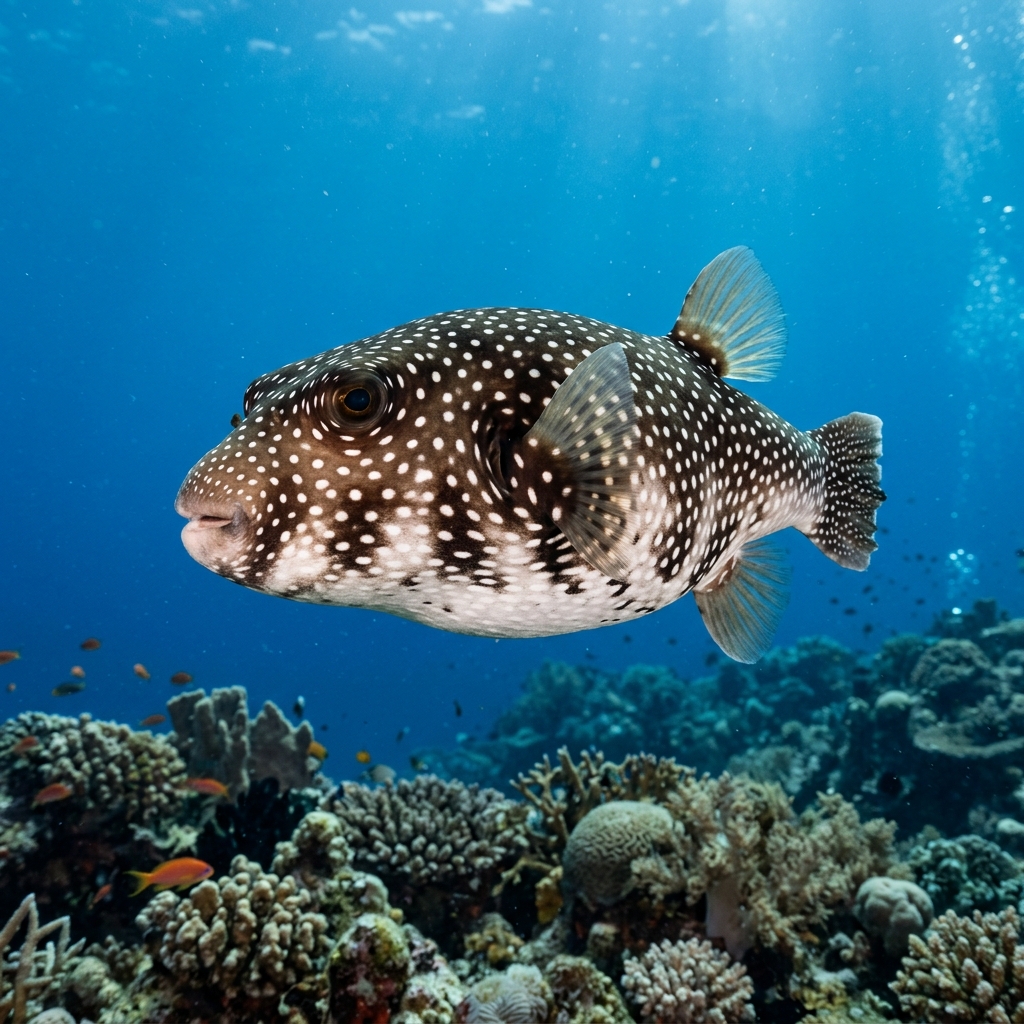
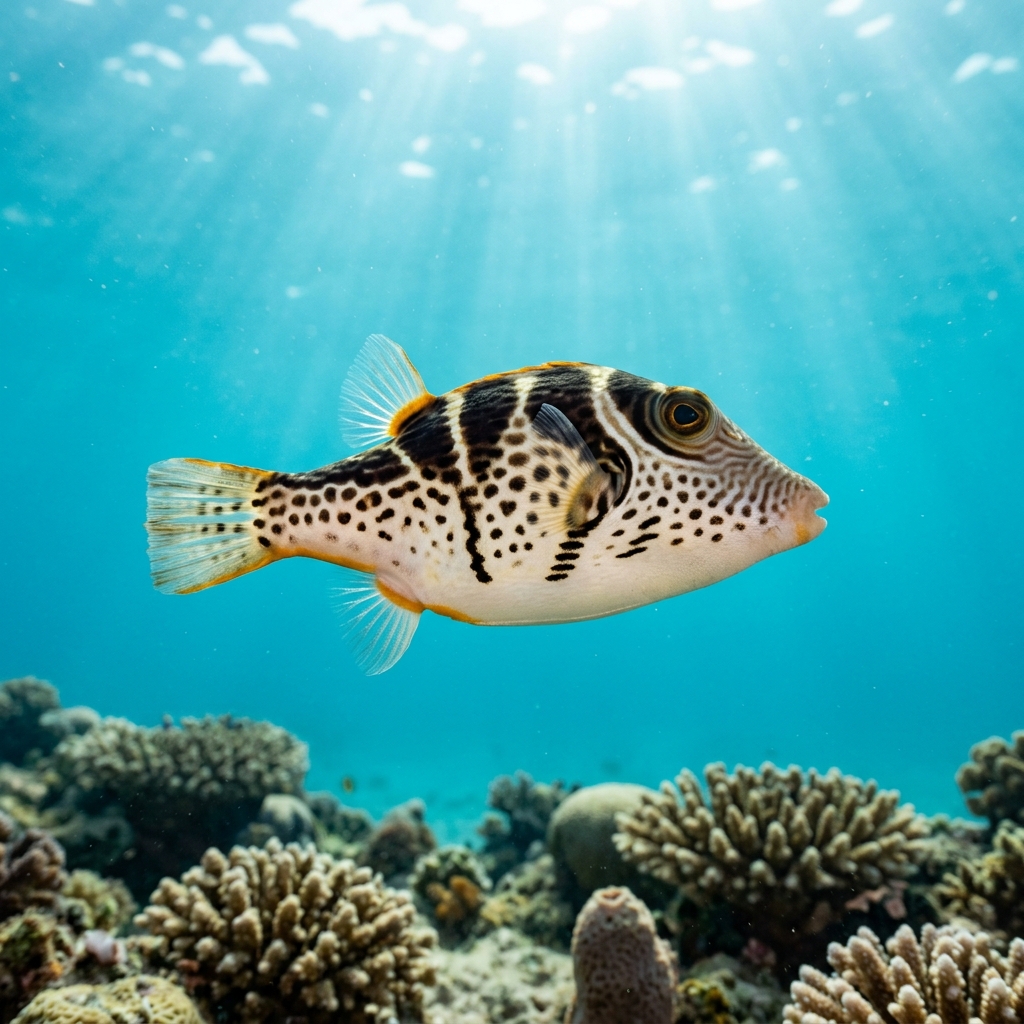
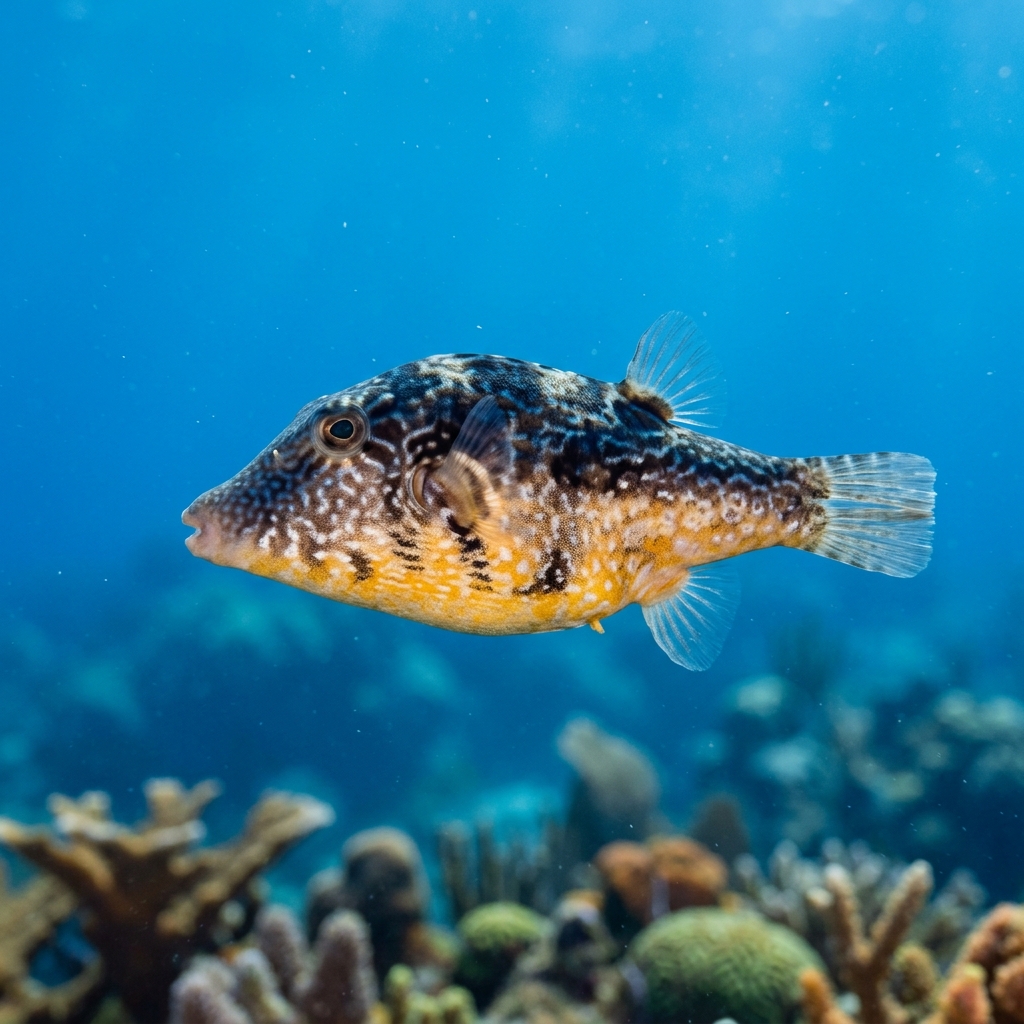
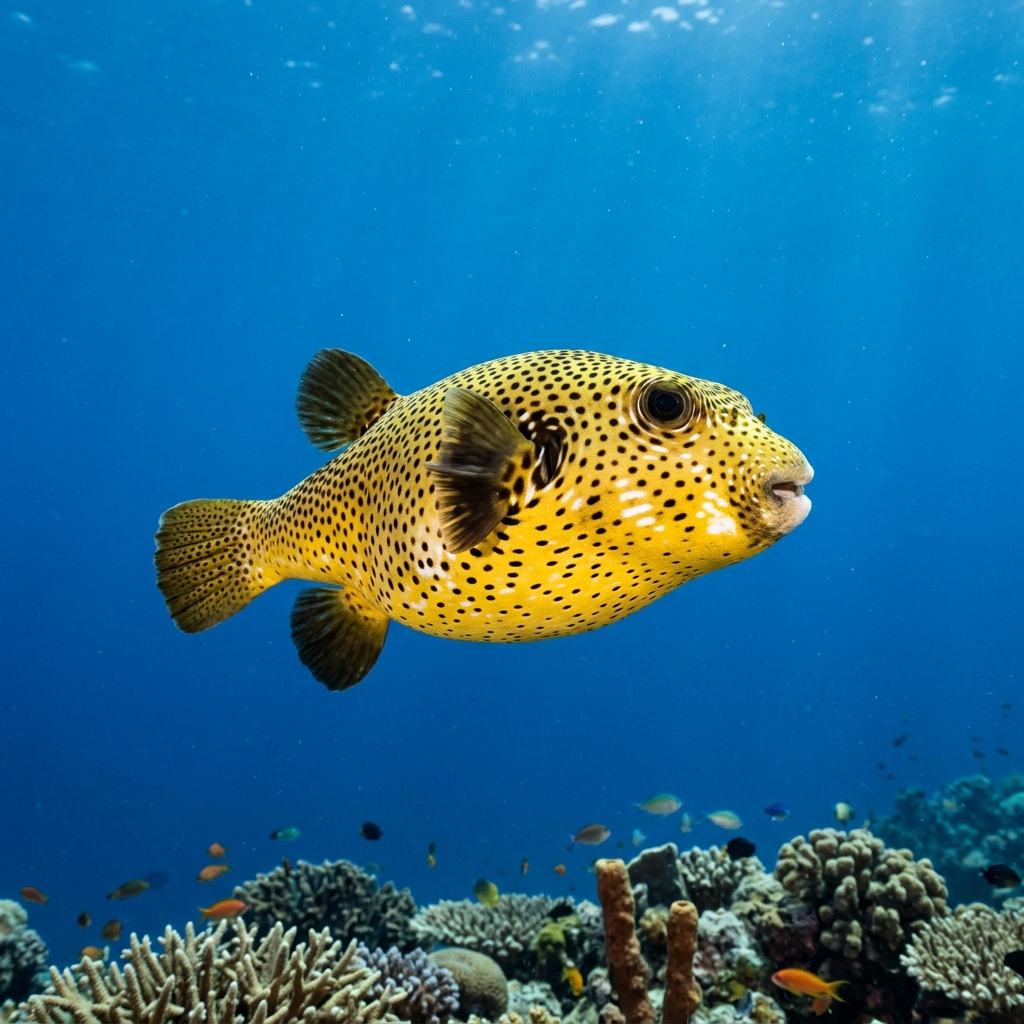
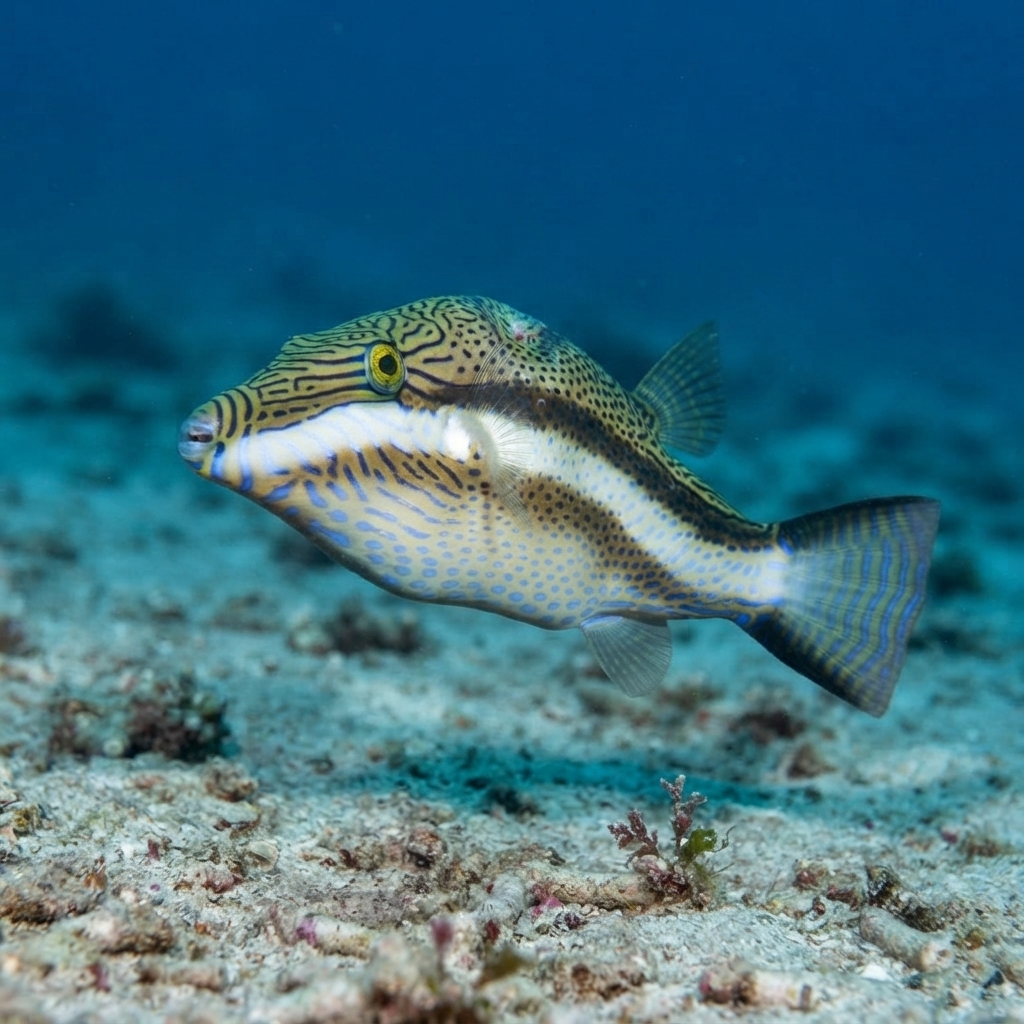
A stocky, round-bodied pufferfish reaching about 16 cm, with a pattern of bright orange-yellow stripes and lines running across a blue-grey to olive body, plus scattered blue spots on the head and back. It moves with the slow, almost hovering paddle-fin motion typical of pufferfish, using small fins rather than a sweeping tail. The bold striping and spotting combination is fairly distinctive among temperate reef pufferfish, making it one of the easier toadfish to pin an ID on underwater.
Usually spotted cruising slowly and low over rocky reef and sand patches, often solitary and unhurried, browsing along ledges and crevices rather than schooling in open water. It tends to be tolerant of divers, holding its ground or drifting off at an easy pace rather than bolting, which makes it a reliable photo subject when you do cross paths with one. Most logs describe it as an uncommon rather than everyday find, so a sighting is worth pausing for.
Like other pufferfish, it can inflate itself by gulping water if seriously threatened, a last-resort defence that also makes it awkward for a predator to swallow.
Sightings show no clear seasonal pattern, and with a wide observed temperature range of roughly 16 to 25 degrees C, it appears to tolerate cooler and warmer reef conditions alike, so divers report it across the year rather than in one tight window.
Reef neighbours a diver could mistake it for. Use the identification notes above to tell them apart.
Most consistently logged on the reefs of New South Wales, Australia, which accounts for the bulk of sightings, with North Island, New Zealand a strong second region. Queensland adds a smaller number of records further north, but this is fundamentally a temperate to subtropical species best sought on southeast Australian and northern New Zealand reefs.
Mapping where Clown Toado is logged…
It is most reliably seen on reefs in New South Wales, Australia, and around North Island, New Zealand, with a smaller number of sightings further north in Queensland.
There is no strong seasonal pattern in sightings, and it is found across a wide temperature range of about 16 to 25 degrees C, so it is logged year-round rather than in a specific season.
Look for a round, slow-moving pufferfish around 16 cm long with orange-yellow stripes over a blue-grey body and scattered blue spots on the head and back. Its unhurried, hovering swimming style is another giveaway.
They typically reach about 16 cm in length, a compact size consistent with most reef-dwelling pufferfish in the same family.
No, they pose no threat to divers and are generally tolerant of a calm, non-grabby approach. Like all pufferfish they carry toxins if eaten, but this has no bearing on diver safety.
As a member of the pufferfish family, it can inflate its body with water when threatened, a defensive trick that makes it far harder for predators to bite or swallow.
Site and sighting data is aggregated from diver logs, iNaturalist and GBIF. For taxonomy and conservation status:
Valentini Pufferfish
2,830 sites