Triopha catalinae
Spot the Clown Dorid along the US Pacific Coast and British Columbia in cold water from 1.5 to 5.7°C. Best sightings April to November.
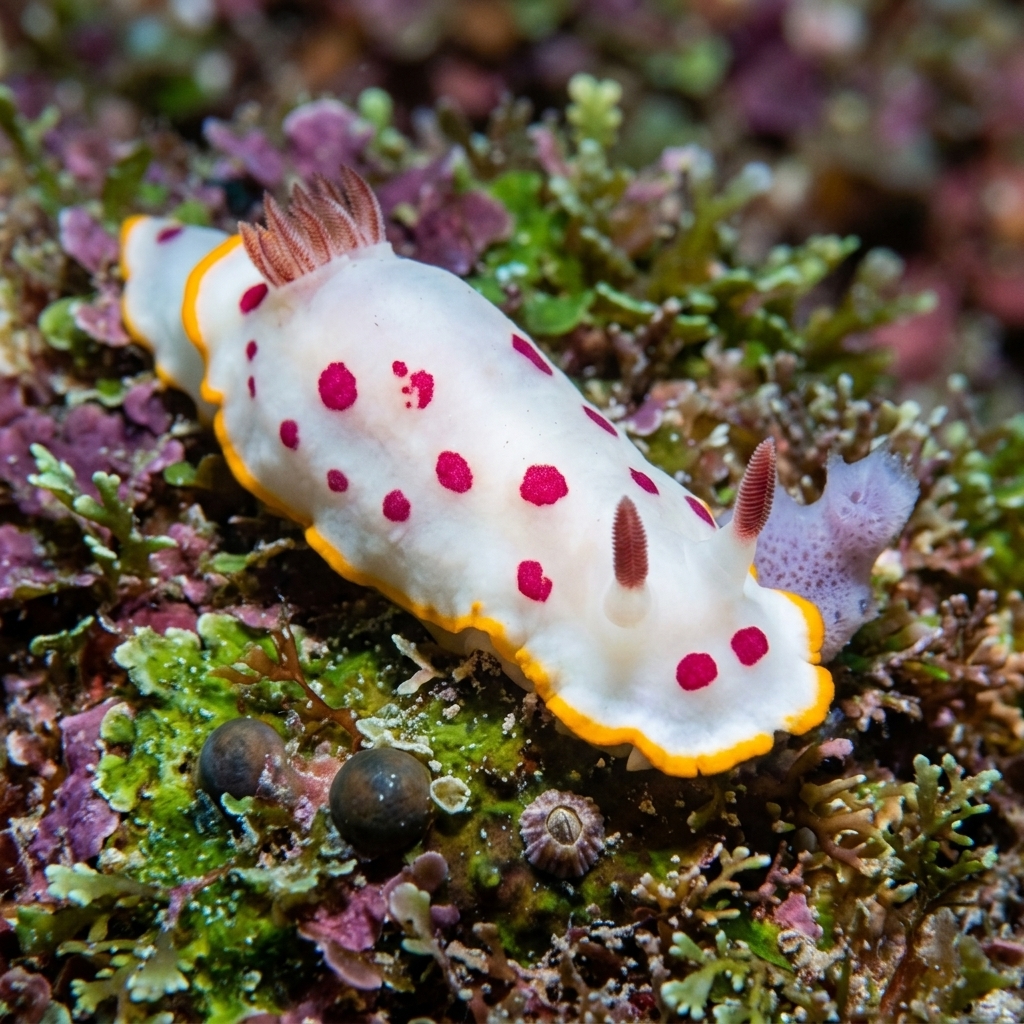
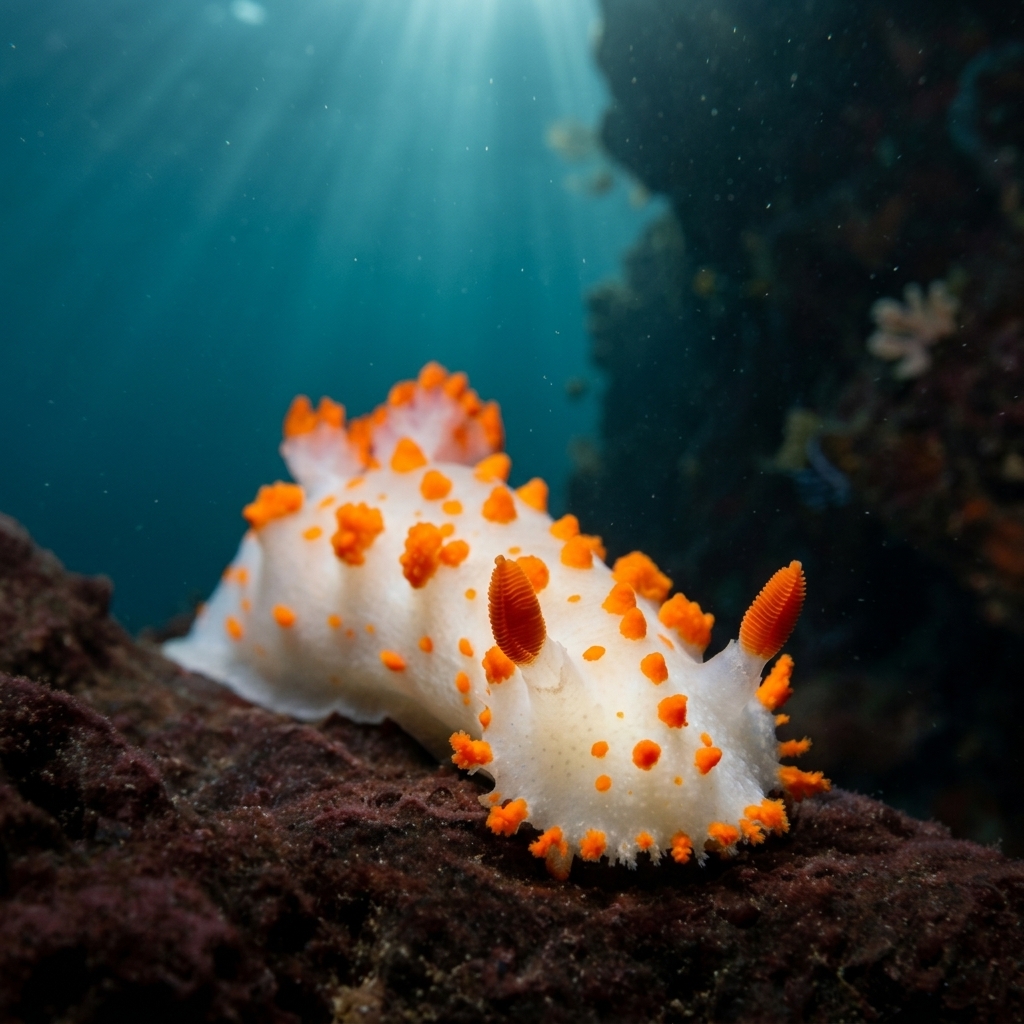
A small nudibranch, typically around 4 cm, with a white to cream body covered in orange-tipped club-shaped projections (cerata) that make it look almost cartoon-like underwater. The orange markings are vivid enough to stand out against dark, cold-water rock. Body shape is elongated and flattened, and the animal moves with a slow, deliberate glide. Size alone won't clinch the ID, but the combination of stark white and bold orange spotting is distinctive among Pacific cold-water nudibranchs.
Clown Dorids are slow-moving and spend their time crawling across rocky, benthic (seafloor) substrate, making them easy to observe without any real effort to keep up. They show little reaction to divers approaching for a close look, so unhurried observation is straightforward. Daylight dives are the way to go, as their orange markings are far easier to pick out in good light.
Adult Clown Dorids do not feed at all; like many nudibranchs in their adult phase, they focus entirely on reproduction rather than foraging, meaning you will not catch them hunting prey no matter how long you watch.
In the Northern Hemisphere, sightings concentrate from April through November. Outside that window, sightings drop off noticeably, so plan your dive for the warmer half of the year even though the water itself remains cold.
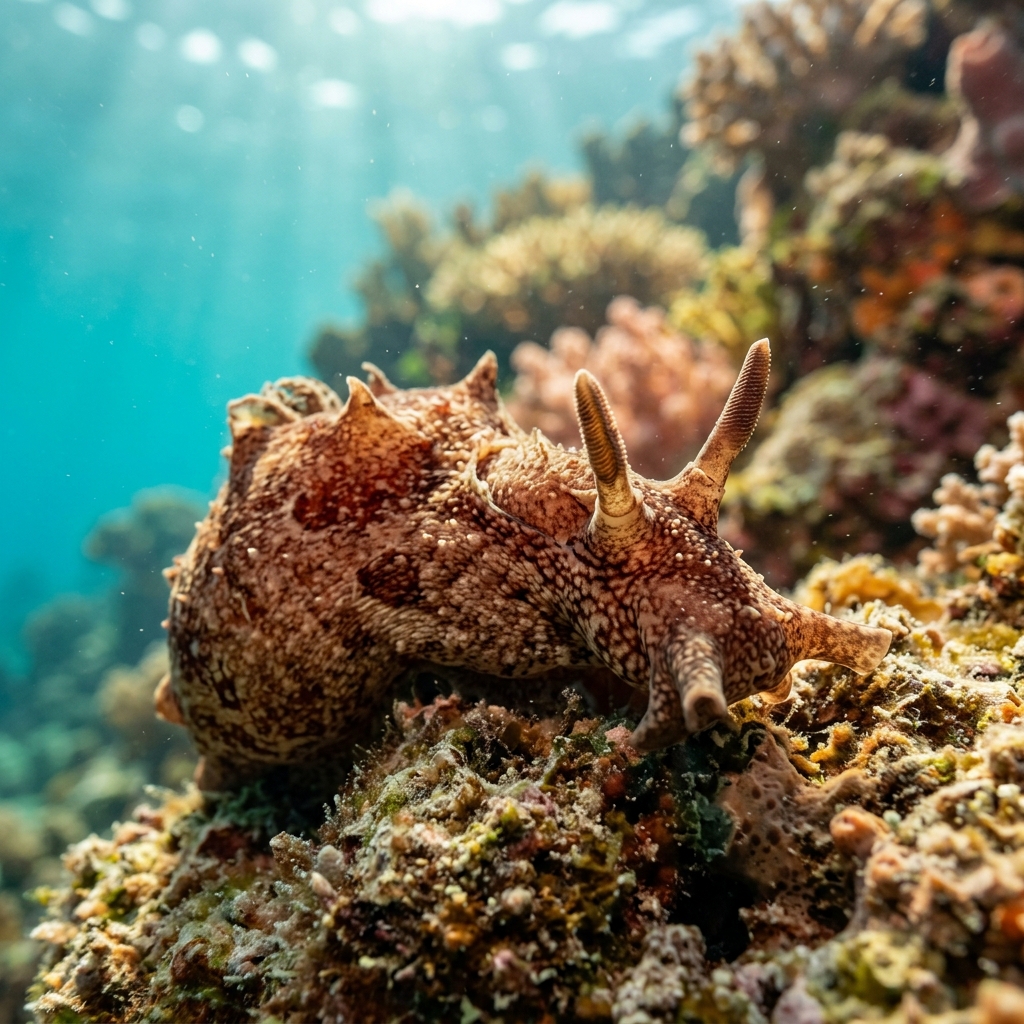
Reef neighbours a diver could mistake it for. Use the identification notes above to tell them apart.
Most sightings come from the US Pacific Coast, which accounts for the overwhelming majority of logged dive sites, with hotspots running from California northward. British Columbia's coast is the next most reliable destination, with a solid spread of records across the region. Occasional sightings extend into Alaska, and a small number of range-model predictions reach into Pacific Mexico.
Mapping where Clown Dorid is logged…
The US Pacific Coast is by far the most productive place to look, with strong records running from California up through the Pacific Northwest. British Columbia's coast is a reliable second option, and a smaller number of sightings extend into Alaskan waters.
April through November is when sightings peak in the Northern Hemisphere. Outside those months, observations become sparse, so planning a dive within that window gives you the best chance of an encounter.
Look for a small, roughly 4 cm, white or cream nudibranch covered in bright orange-tipped club-shaped projections moving slowly across rocky seafloor. The white body combined with vivid orange tips is the key feature to lock onto. In cold, low-visibility Pacific water, that orange really stands out against dark rock.
Clown Dorids typically reach around 4 cm in length. That makes them small enough to miss if you are moving quickly, so slow, methodical searching of rocky substrate pays off.
Adult Clown Dorids do not eat. They reach adulthood focused entirely on reproduction, not feeding, so you will never observe one hunting or grazing no matter how long you watch it.
Site and sighting data is aggregated from diver logs, iNaturalist and GBIF. For taxonomy and conservation status:
Light-spotted Aegires
3,168 sites