Gymnothorax nubilus
Mottled grey-brown eel found at reef sites across North Island, New Zealand, in 15-21C water, most sites report common sightings year-round.
Safety warning
It has a real bite risk if provoked or if a diver puts a hand into a crevice without checking first. Give it space, don't attempt to touch or feed it, and treat any moray sighting as look-don't-touch.
If you're bitten
BiteGeneral first-aid guidance, not a substitute for professional medical care. In an emergency, call your local emergency number.
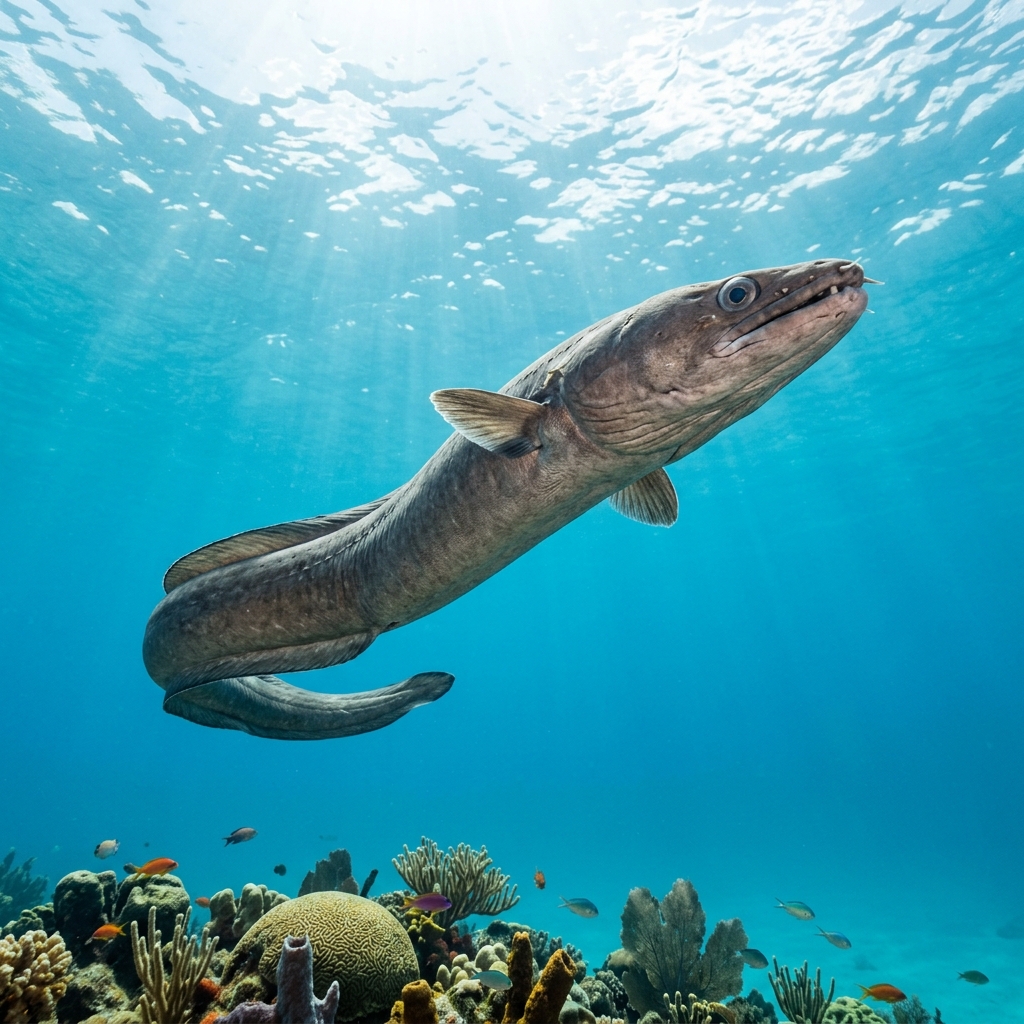
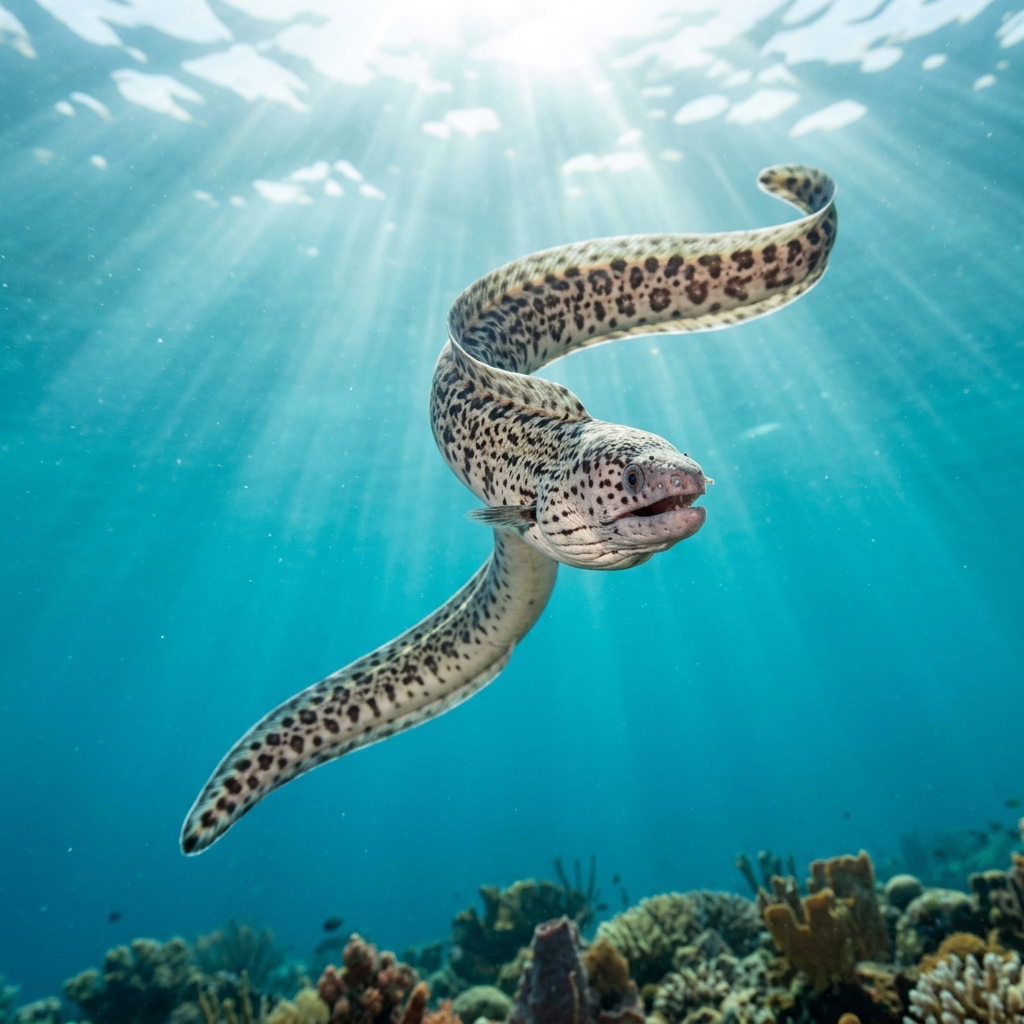
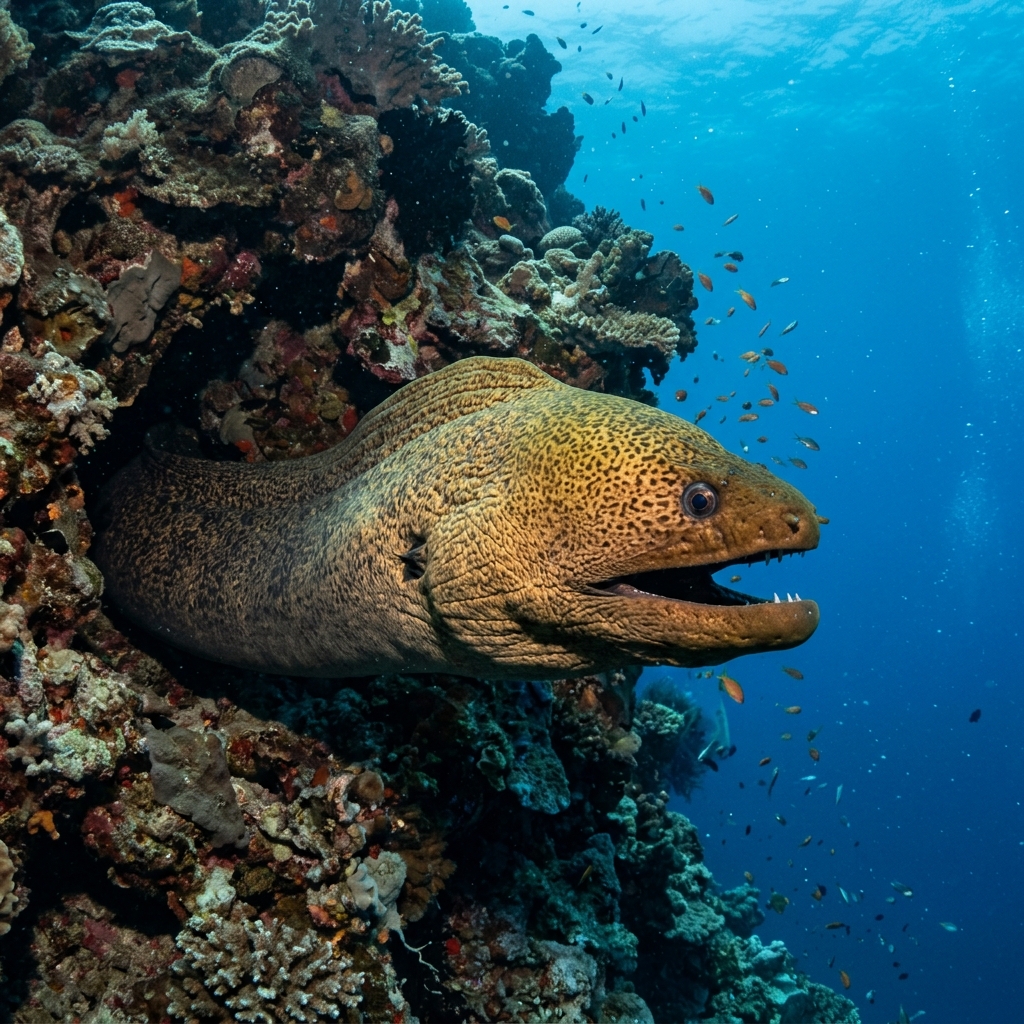
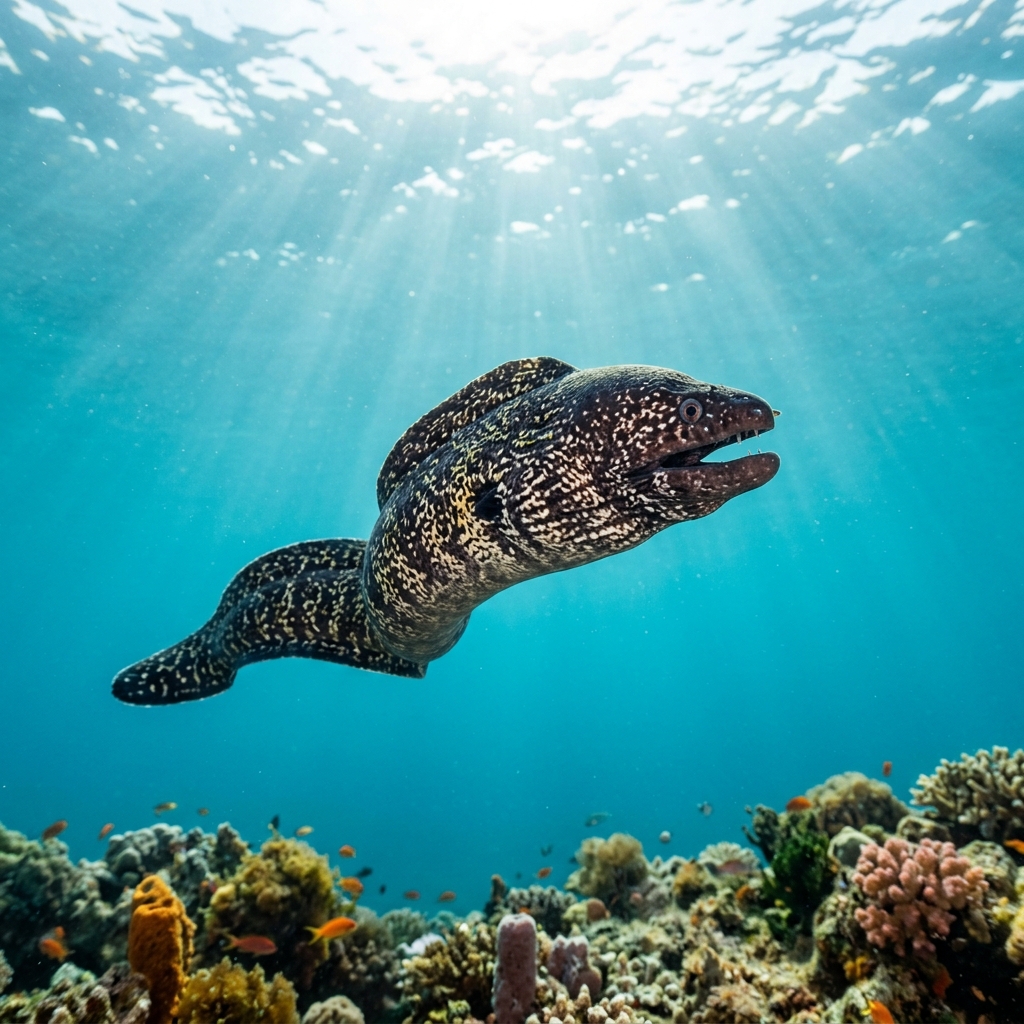
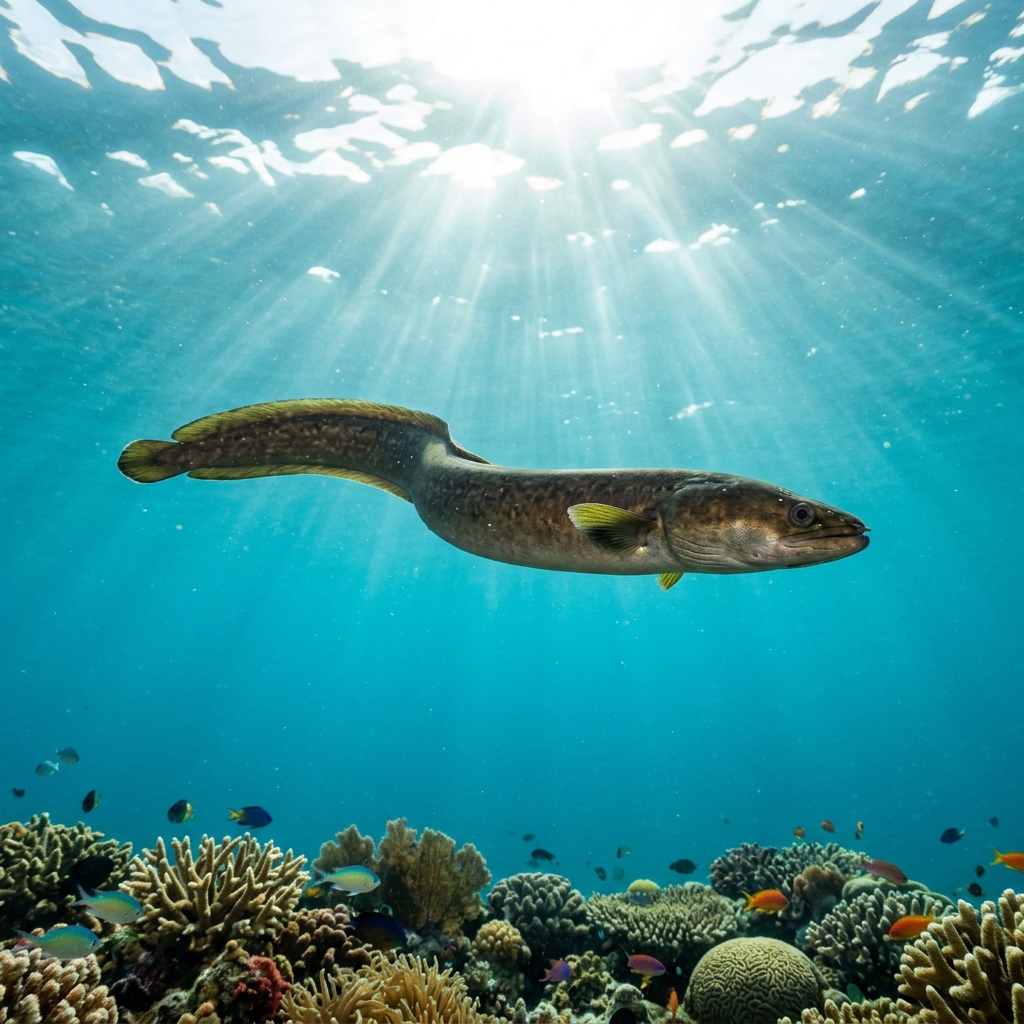
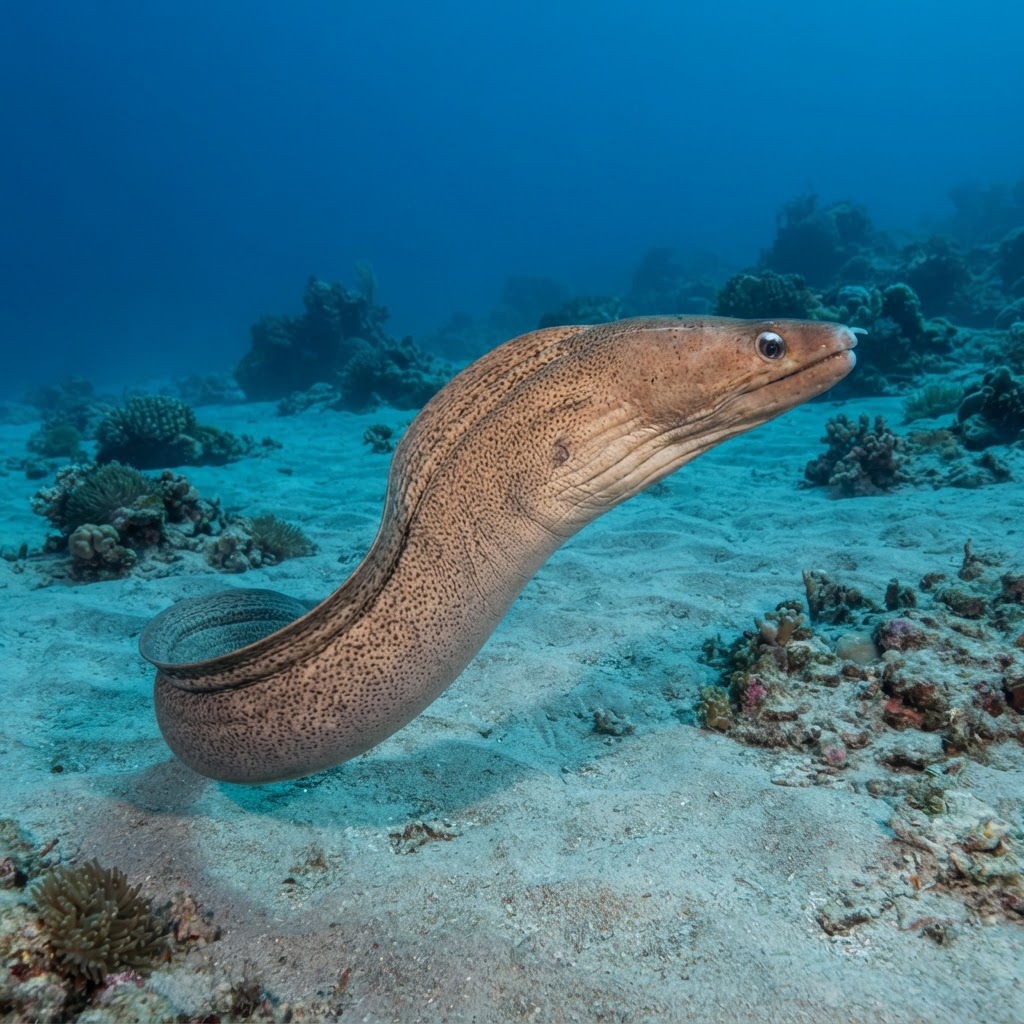
Compact for a moray at around 57cm, with a heavy-set body in mottled grey-brown that gives it a smudged, cloudy look rather than sharp bands or spots. The head is blunt and the eyes sit close to the snout, typical of demersal (bottom-dwelling) morays that hunt by scent as much as sight. Look for it wedged into rock crevices with just the head and part of the body visible, jaw slowly working open and closed as it breathes.
Divers typically find it tucked into a crevice or under a ledge during the day, body mostly hidden with just the head poking out. It's not a fish that comes out to greet you, and most sightings are of a still, watchful animal rather than one actively hunting in the open. Night dives on the same reefs can turn up more active individuals moving between shelter spots.
Like other morays, it relies on a strong sense of smell to find prey in low light, which is part of why it's usually seen holding still in a crevice rather than cruising open reef.
No clear seasonal pattern shows up in the sightings, and with a temperature niche of 15.1 to 21.1C it stays active across New Zealand's cooler-to-mild reef conditions most of the year. Treat it as a year-round species rather than one tied to a particular month.
This one is a North Island specialty, logged consistently at reef sites across New Zealand's North Island region and nowhere else in the current data. If you're diving temperate rocky reefs there, it's a realistic target rather than a rare find, with several sites reporting sightings as common or very common.
Mapping where Cloudy Moray is logged…
It's most reliably found on rocky reef sites across the North Island of New Zealand, where it's currently the only confirmed range in diver logs.
There's no strong seasonal signal in the data, and its temperature range of 15.1 to 21.1C spans much of the year on North Island reefs, so it's a year-round sighting rather than a seasonal one.
Yes, it can bite if disturbed or cornered, like most morays. Keep hands out of crevices and admire it from a distance rather than trying to touch it.
Look for a stocky, roughly 57cm eel with mottled grey-brown skin that lacks sharp bands or bold spots, usually seen with just its head showing from a rock crevice.
They typically reach around 57cm, making them one of the smaller and stockier morays divers encounter on temperate reefs.
They're currently listed as Not Evaluated, meaning there isn't enough formal assessment data to assign a conservation status either way.
Site and sighting data is aggregated from diver logs, iNaturalist and GBIF. For taxonomy and conservation status:
Garden Eel
2,448 sites