Gobiodon citrinus
Bright lemon-yellow and barely bigger than a thumb, this coral-dwelling goby turns up around Eilat's reefs year-round in the 24.7-29C range.
Safety warning
Its only real defence is a mildly toxic mucus coating that can irritate skin or eyes if handled, so the sensible approach is simply not to touch it. Left alone in its coral head it poses no threat to divers and will not chase or approach you.
Handle with care
Toxic skin secretionGeneral first-aid guidance, not a substitute for professional medical care. In an emergency, call your local emergency number.
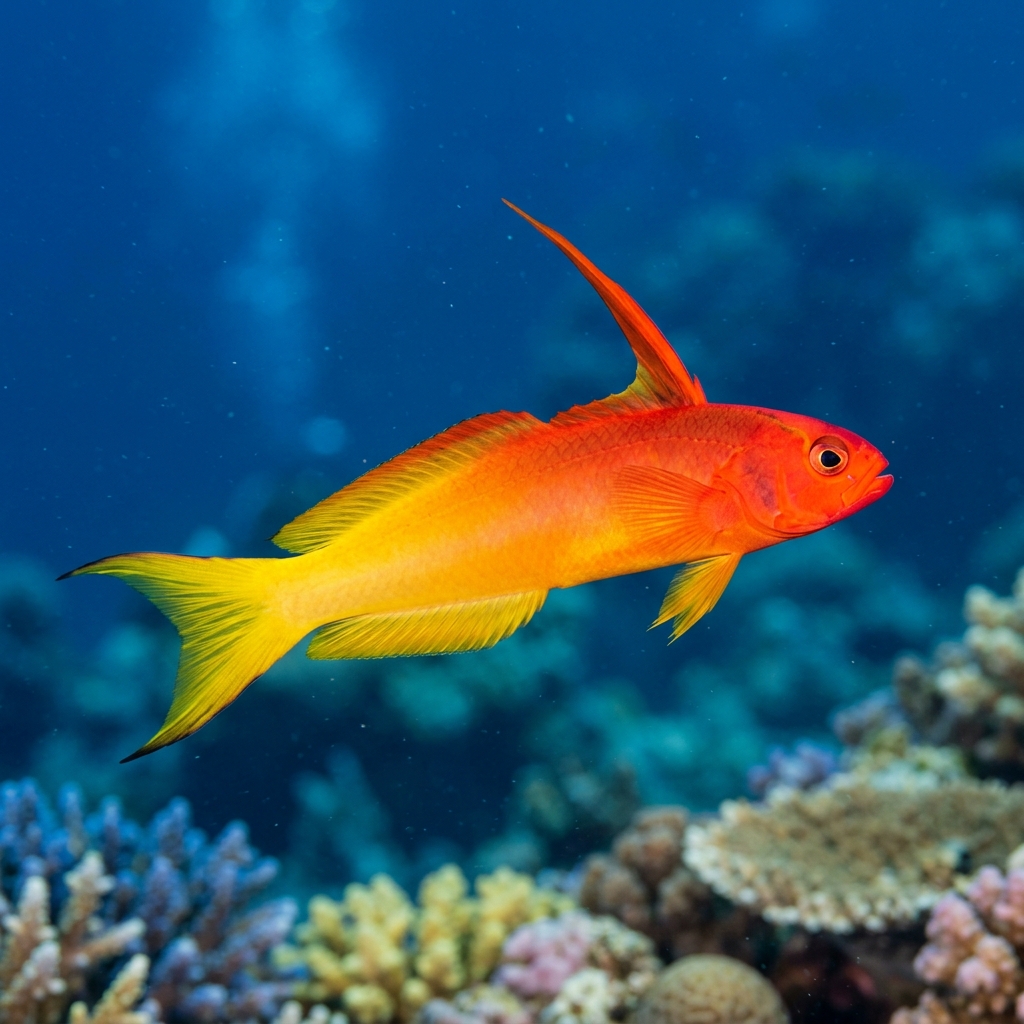
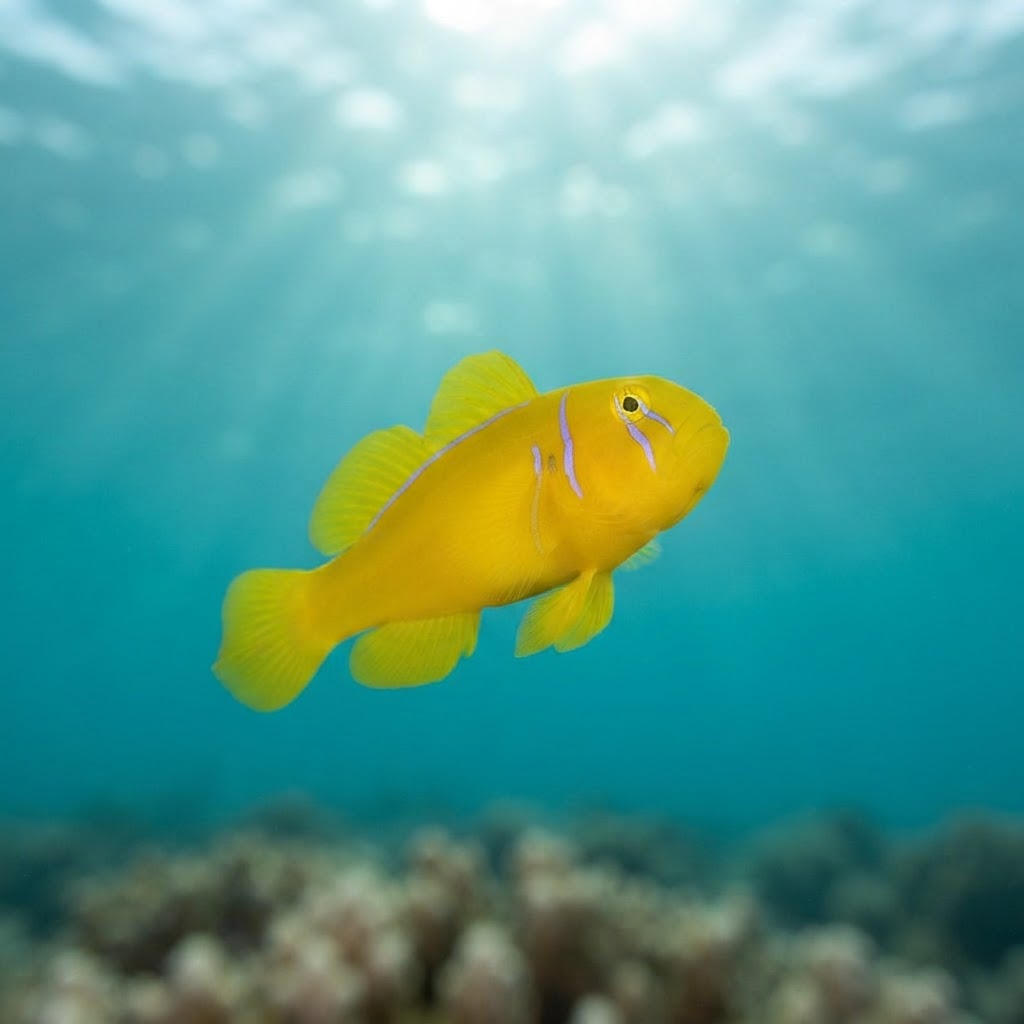
A small, chunky-headed goby that rarely tops 5 cm, coloured a solid lemon to mustard yellow all over. Look for fine pale blue or white lines radiating across the face and behind the eye, which is the main giveaway at close range. It sits low and still on the branches of coral rather than swimming out in the open, with a blunt head and slightly humped back typical of coral gobies.
Spends almost all its time wedged among the branches of a single coral head, usually stony coral like Acropora, where it holds territory rather than roaming the reef. Divers who slow down and hover near a coral colony are more likely to spot one peering out than someone finning past at speed. It will duck deeper into the branches if you get too close, then reappear once you back off and wait.
Citron gobies live in a tight, almost symbiotic relationship with their host coral, sheltering permanently in its branches and in turn helping deter some coral predators, a trade-off that means losing the coral head usually means losing the fish too.
No clear seasonal pattern shows up in the sighting data, and its comfortable water-temperature range of 24.7 to 29C spans what Red Sea and Pacific reefs offer most of the year, so any month is fair game. Treat it as a year-round resident rather than something tied to a particular season.
Most reliably logged around Eilat in Israel, which accounts for the majority of dive-site records for this species, with additional sightings from the Red Sea Riviera in Egypt and Nouméa in New Caledonia. Divers rate it uncommon at most of the sites where it turns up and rare at a couple of others, so it takes a slow, coral-by-coral look rather than a passing glance.
Mapping where Citron Goby is logged…
Eilat in Israel has the strongest record of sightings, with further records from the Red Sea Riviera in Egypt and Nouméa in New Caledonia. At most of these sites divers call it uncommon rather than a sure thing, so expect to search coral heads for it.
There is no strong season in the data, and it tolerates a wide 24.7 to 29C range, so it is present on reefs year-round. Any time you are diving Eilat or the Red Sea you have a reasonable shot at finding one.
Not aggressive and no threat if left alone, but its skin secretes a mild toxin that can irritate if you handle it. Simply avoid touching coral heads and the fish living in them.
Look for a small, solid lemon-yellow fish under 5 cm perched motionless on branching coral, with fine pale blue lines across its face. It rarely leaves its coral head, which helps separate it from more mobile reef gobies.
They stay small, typically around 5 cm as adults, making them easy to overlook against a busy coral colony.
It lives its whole adult life inside one coral colony, sheltering permanently among the branches in a relationship that benefits both the fish and, to some degree, the coral itself.
Site and sighting data is aggregated from diver logs, iNaturalist and GBIF. For taxonomy and conservation status:
Slender Goby
806 sites