Cheilio inermis
Look for a torpedo-shaped wrasse cruising sandy reef edges in the Philippines' Visayas or Egypt's South Sinai year-round in warm water.
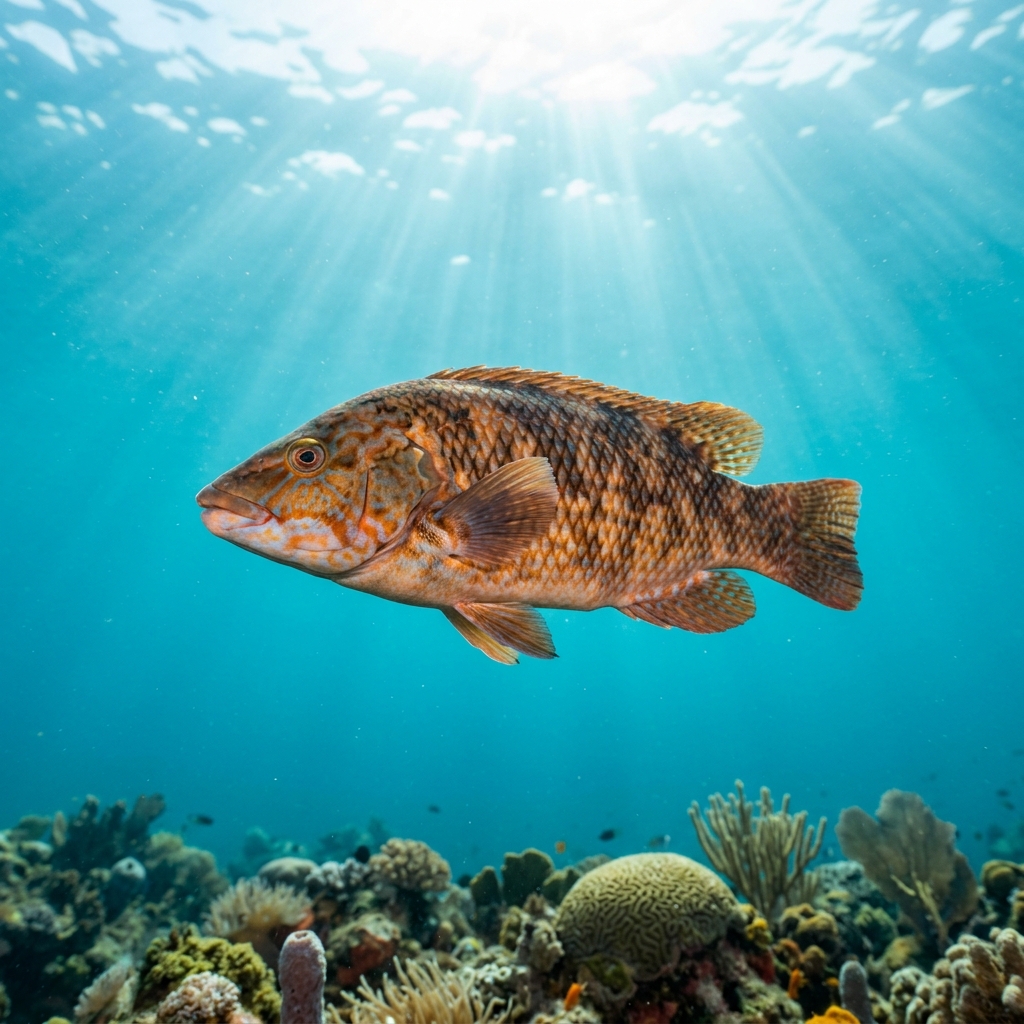
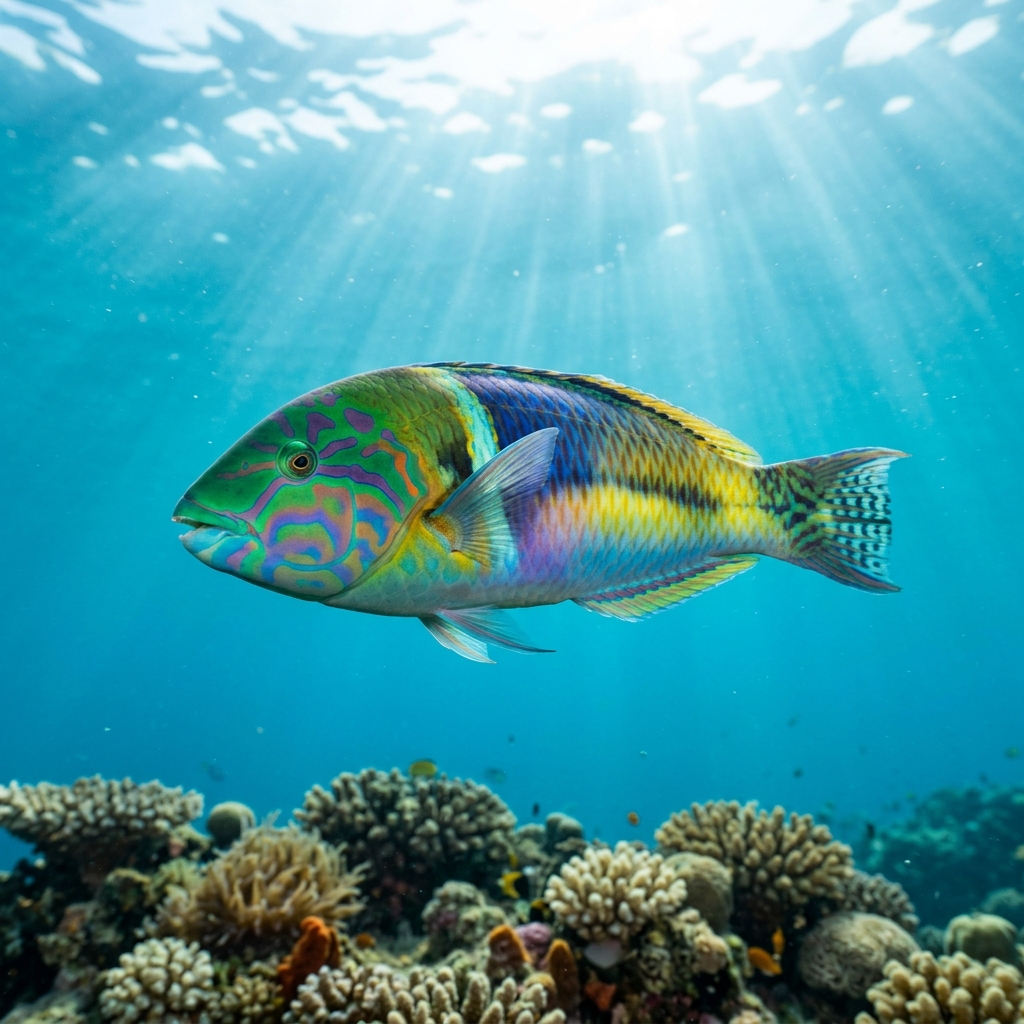
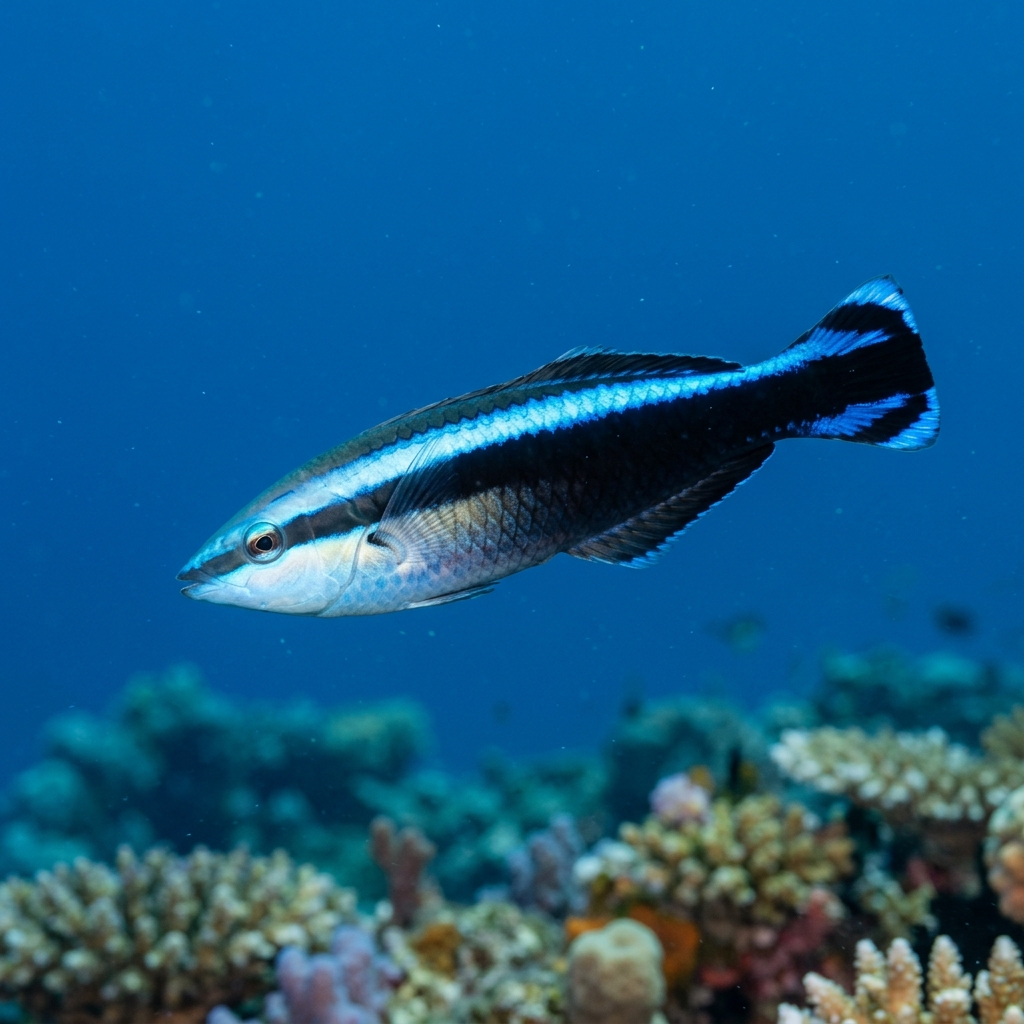
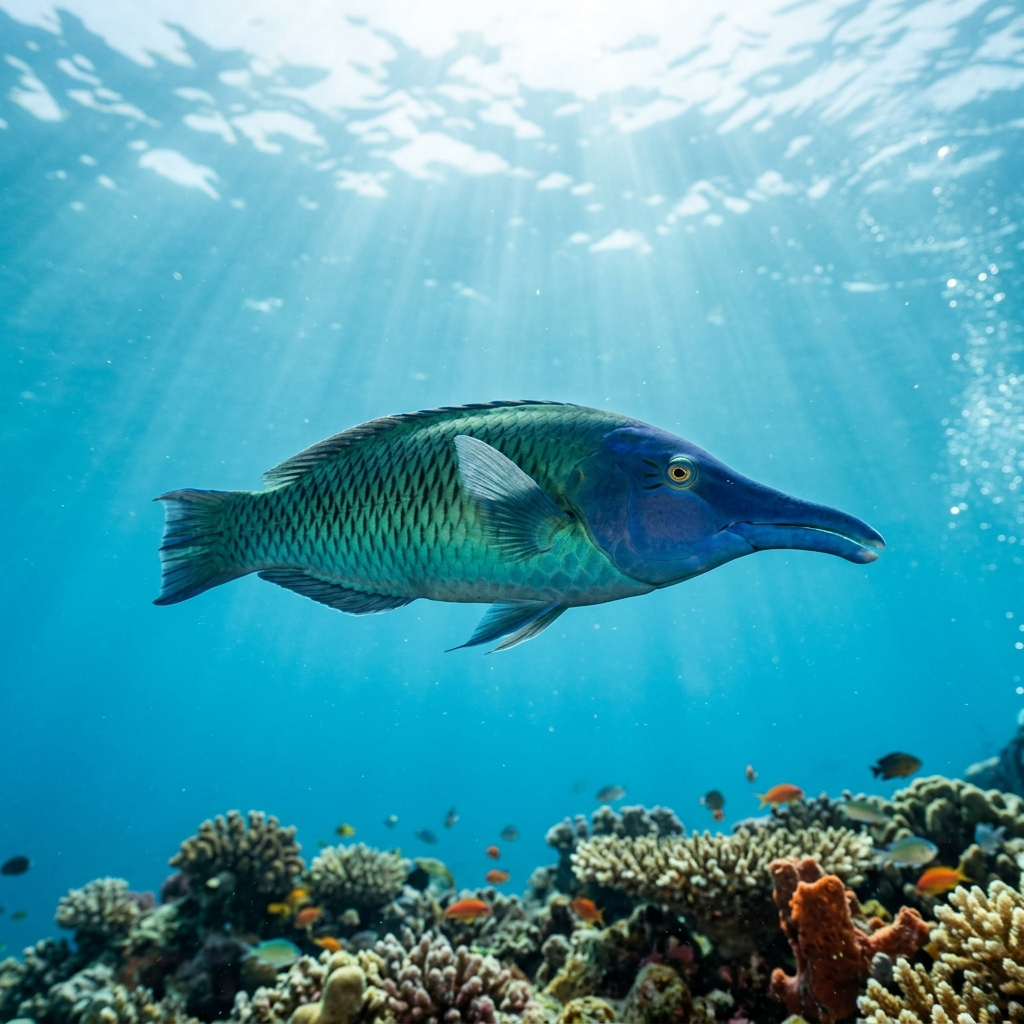
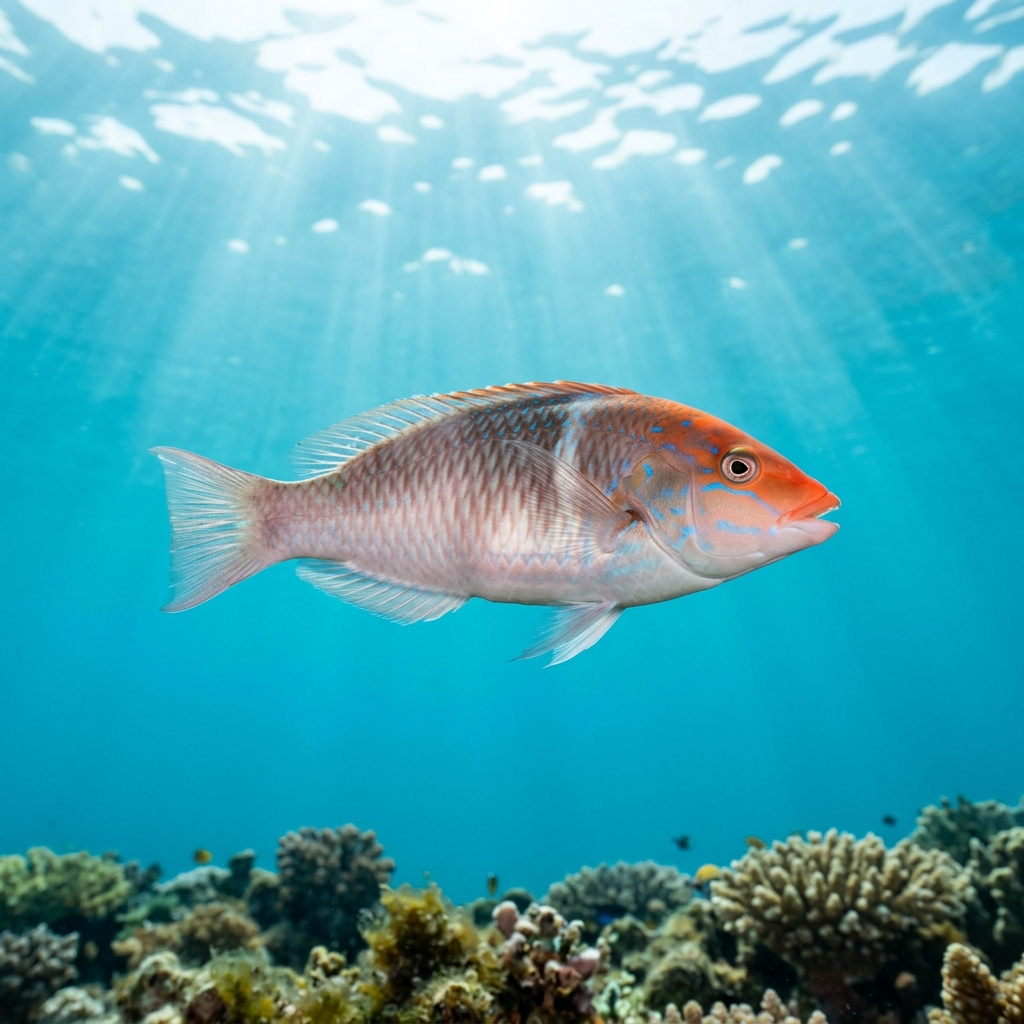
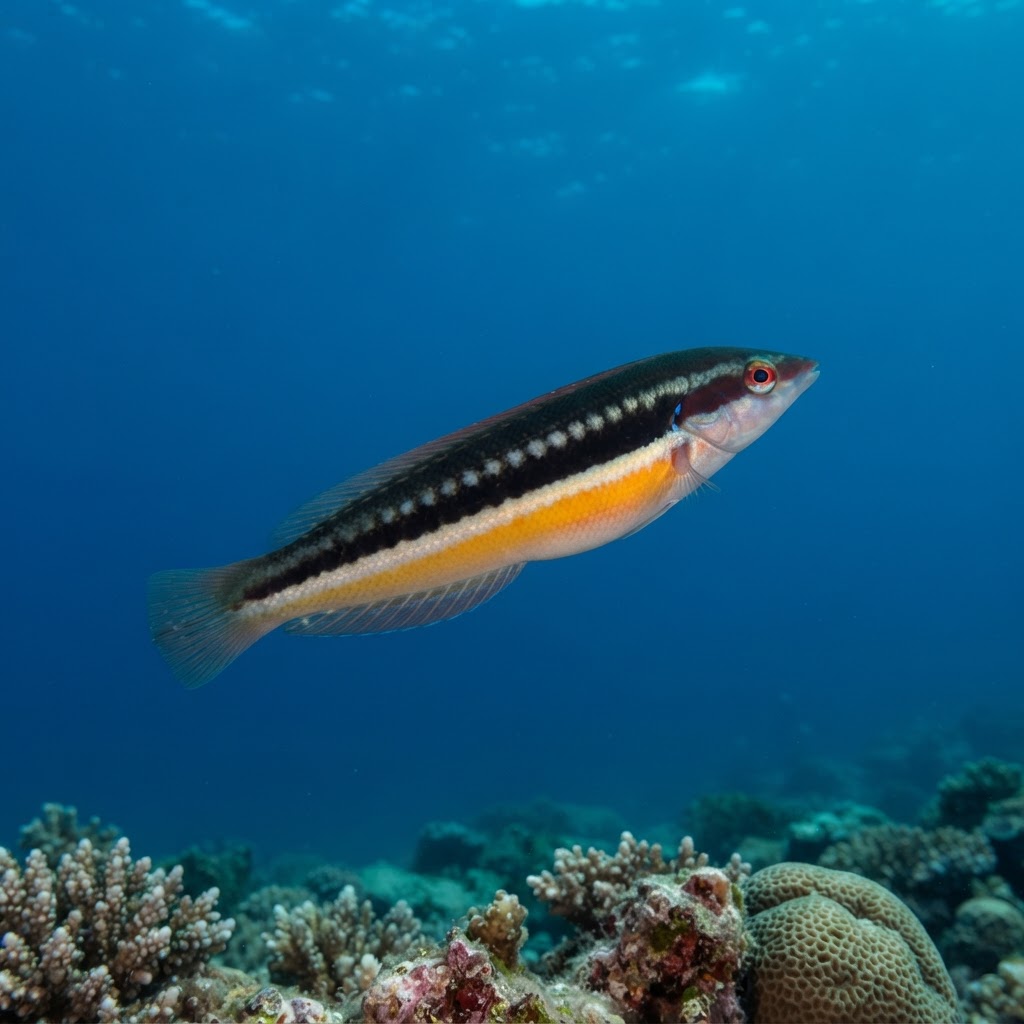
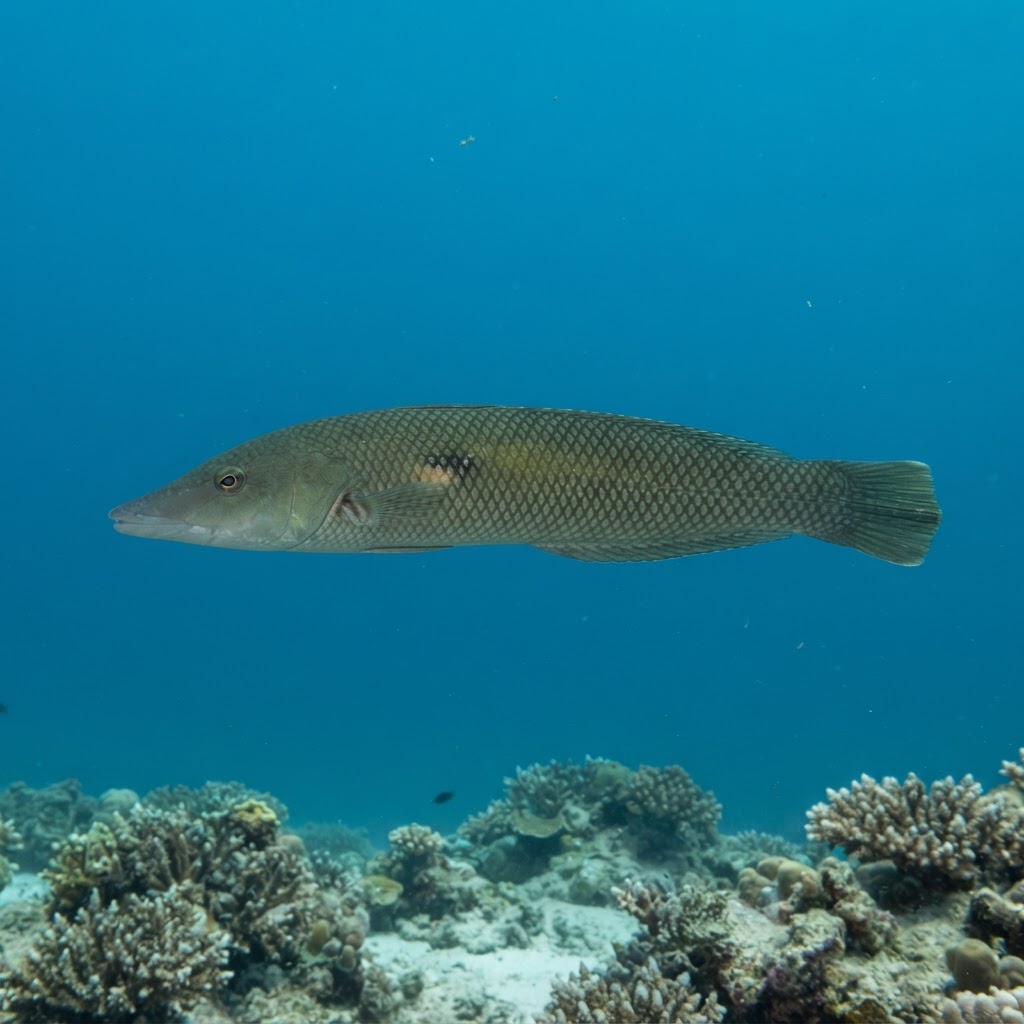
A long, cylindrical body that really does look like a cigar sets this wrasse apart from almost every other reef fish nearby. Adults run olive-brown to reddish with a pale stripe along the lower body and a pointed snout built for probing sand. Males tend toward a darker, more uniform brownish-green while females and juveniles show a more washed-out yellowish or greenish tone with a faint dark stripe. At 35cm it is bigger and noticeably more slender than the typical reef wrasse silhouette.
Usually seen cruising alone just above sand patches or rubble at the reef edge, nose down as it hunts by sight and smell for buried prey. It is not a fish that schools or shelters in coral; expect a solitary, unhurried presence that keeps a comfortable distance from divers rather than fleeing outright. Most sightings are logged as uncommon rather than common, so it rewards divers who scan open sand and seagrass margins rather than the reef face itself.
It hunts by flipping over rubble and digging into sand for molluscs, worms, and small crustaceans, using that elongated jaw more like a probe than the typical wrasse nibble.
No clear seasonal pattern shows up in the data, and its comfort range of roughly 24 to 29C matches tropical reef temperatures year-round, so any month works on most of these reefs.
Most reliably logged in the Philippines, especially around the Visayas, and in Egypt's Red Sea sites in South Sinai and Marsa Alam and the Deep South. Strong populations also turn up in Indonesia's Nusa Tenggara, the Seychelles' Inner Islands, and Japan's Okinawa and Ryukyu Islands, with further sightings in Mauritius, Fiji, and the Cook Islands.
Mapping where Cigar Wrasse is logged…
The Philippines, particularly the Visayas, and Egypt's Red Sea sites in South Sinai and Marsa Alam are the most consistent places to log one. Indonesia's Nusa Tenggara, the Seychelles' Inner Islands, and Japan's Okinawa region are also solid options.
There is no strong seasonal signal in sighting data, and its 24 to 29C comfort range matches tropical reefs all year, so it can turn up on any dive regardless of month.
Look for a long, cylinder-shaped body with a pointed snout, cruising low over sand or rubble at reef edges rather than around coral. Colour runs olive-brown to reddish with a paler lower stripe, and males show a darker, more uniform tone than females.
They reach around 35cm, noticeably longer and more slender than most reef-dwelling wrasses you would see nearby.
Rather than picking at coral like typical wrasses, it flips rubble and probes sand for hidden molluscs and crustaceans, making it look more like it is foraging on the seabed than reef-grazing.
No, they pose no threat to divers and simply keep their distance while foraging over sand and rubble.
Site and sighting data is aggregated from diver logs, iNaturalist and GBIF. For taxonomy and conservation status:
Bird Wrasses
3,632 sites