Apletodon pellegrini
A 4cm fish that clings to reef in the Western Cape's chilly 15-25C water, usually spotted uncommonly and year-round.
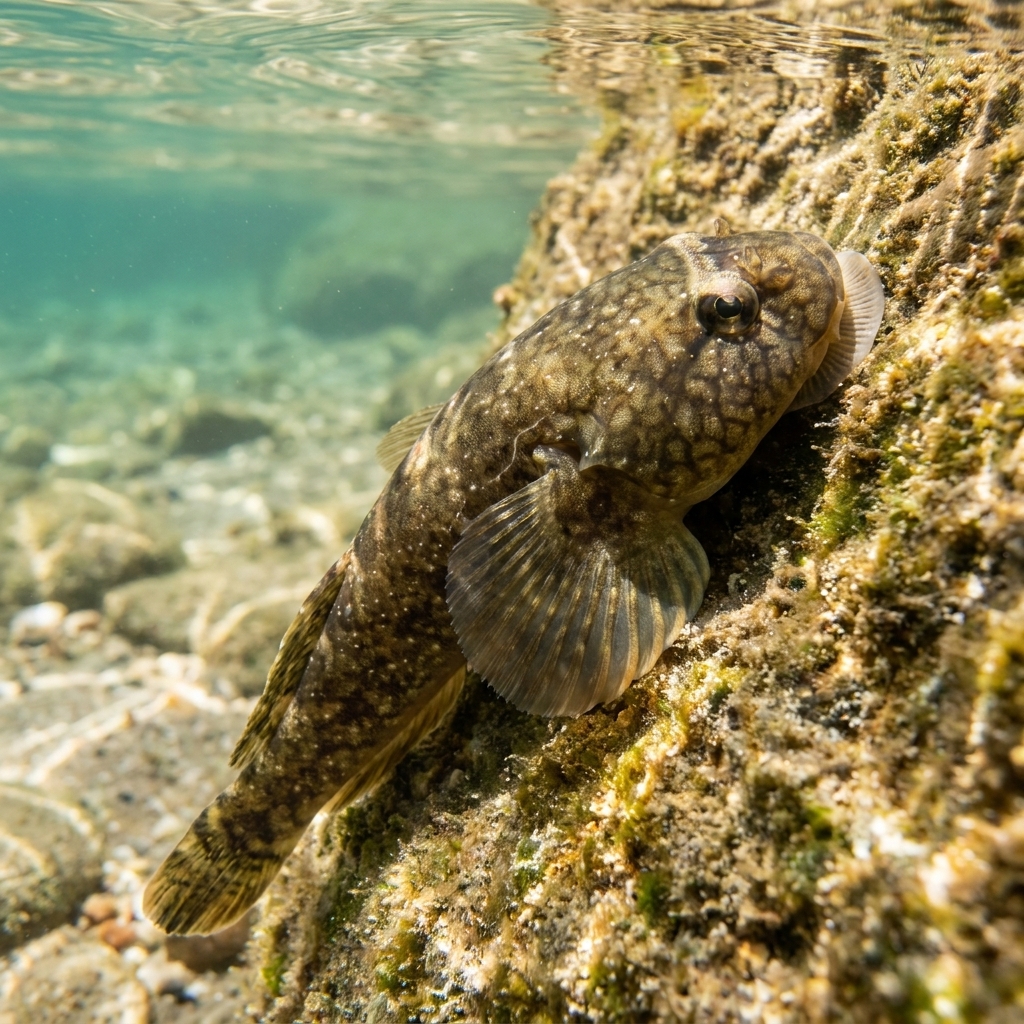
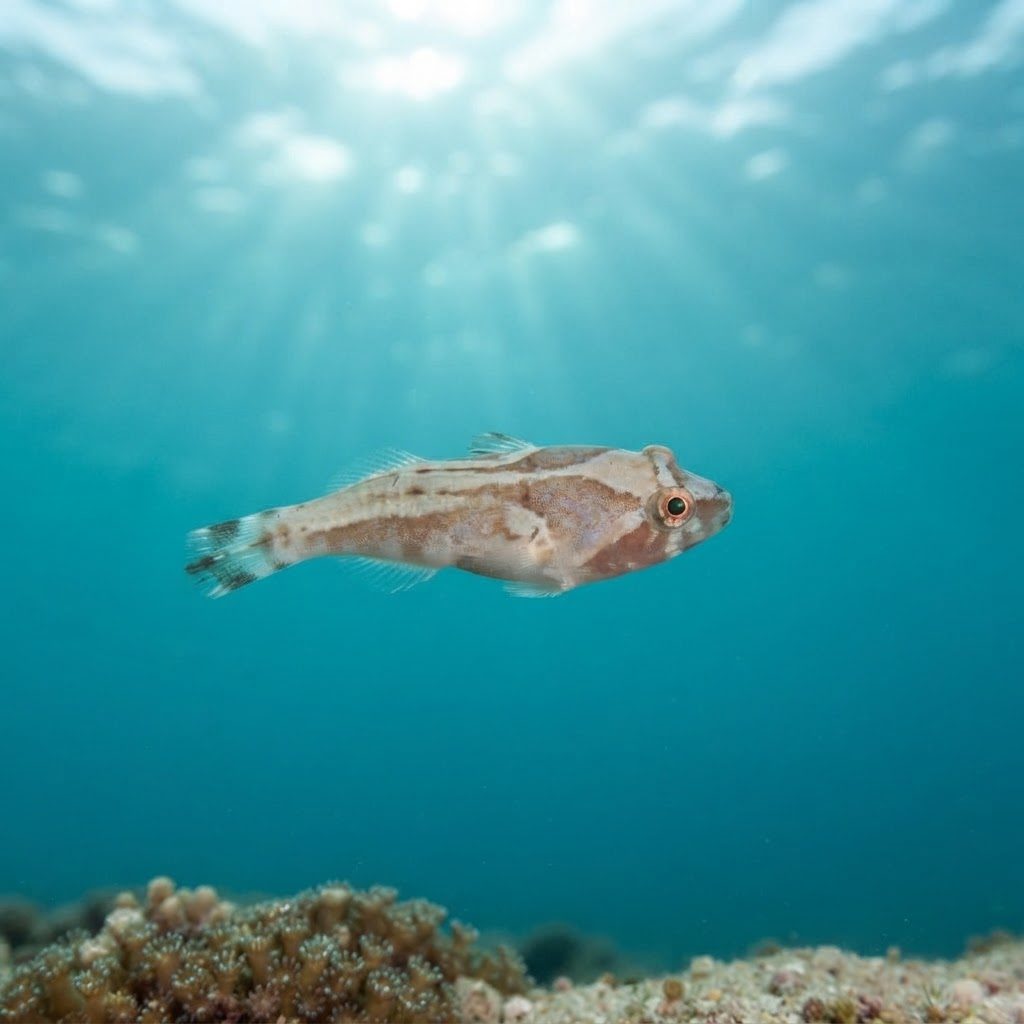
A tiny, stubby-bodied fish barely 4cm long, with a rounded head and a thick, tapering body that looks almost tadpole-like. Colouring runs mottled brown to grey, blending closely with the rock or algae it sits on. It has no obvious stripes or bright marks; the giveaway is its posture, flattened and pressed motionless against a hard surface rather than swimming freely. A modified sucker disc on its underside, formed from fused pelvic fins, holds it fast against the rock even in surge.
Look for it sitting still on rock or reef structure rather than out swimming in open water, gripping the substrate with its sucker disc while divers pass. It's small and camouflaged enough that most divers swim straight past without noticing, which is why it's logged as uncommon even at sites where it's present. Slow, close-focus looking along rocky crevices and under ledges is how divers actually find it.
Clingfish like this one rely entirely on that pelvic sucker disc rather than speed or camouflage patterns to survive surge and current, letting them hold position on wave-battered rock that would sweep a free-swimming fish away.
There's no clear seasonal pattern in the sightings, and its comfort range of roughly 15.6 to 25.2C spans the Western Cape's water temperature swings across the year, so it's reasonable to look for it on any dive there.
Every logged sighting so far comes from South Africa, concentrated in the Western Cape around Cape Town's reef and kelp forest dive sites. It hasn't turned up elsewhere in diver records, so the Western Cape is currently the only reliable place to look.
Mapping where Chubby Clingfish is logged…
Sightings are concentrated in South Africa's Western Cape, around Cape Town's rocky reef dive sites. It hasn't been logged as a reliable find anywhere else yet.
There's no strong seasonal pattern in the data, and it tolerates a wide temperature range in the Western Cape, so it can turn up on dives at any time of year.
Look for a stubby brown or grey fish under 4cm, pressed flat and motionless against rock rather than swimming. Its camouflage and small size mean you usually need to search ledges and crevices closely to spot one.
They stay tiny, topping out around 4cm long, which is part of why they're easy to miss on a dive.
Their pelvic fins are fused into a sucker disc on the belly, letting them grip rock firmly in surge and currents instead of relying on swimming speed to hold position.
Site and sighting data is aggregated from diver logs, iNaturalist and GBIF. For taxonomy and conservation status:
Soldierfish
3,612 sites