Thalassoma trilobatum
Bold red-green wrasse common on Hawaii's reefs, from Oahu to the Big Island, in water around 25 to 29 C year-round.
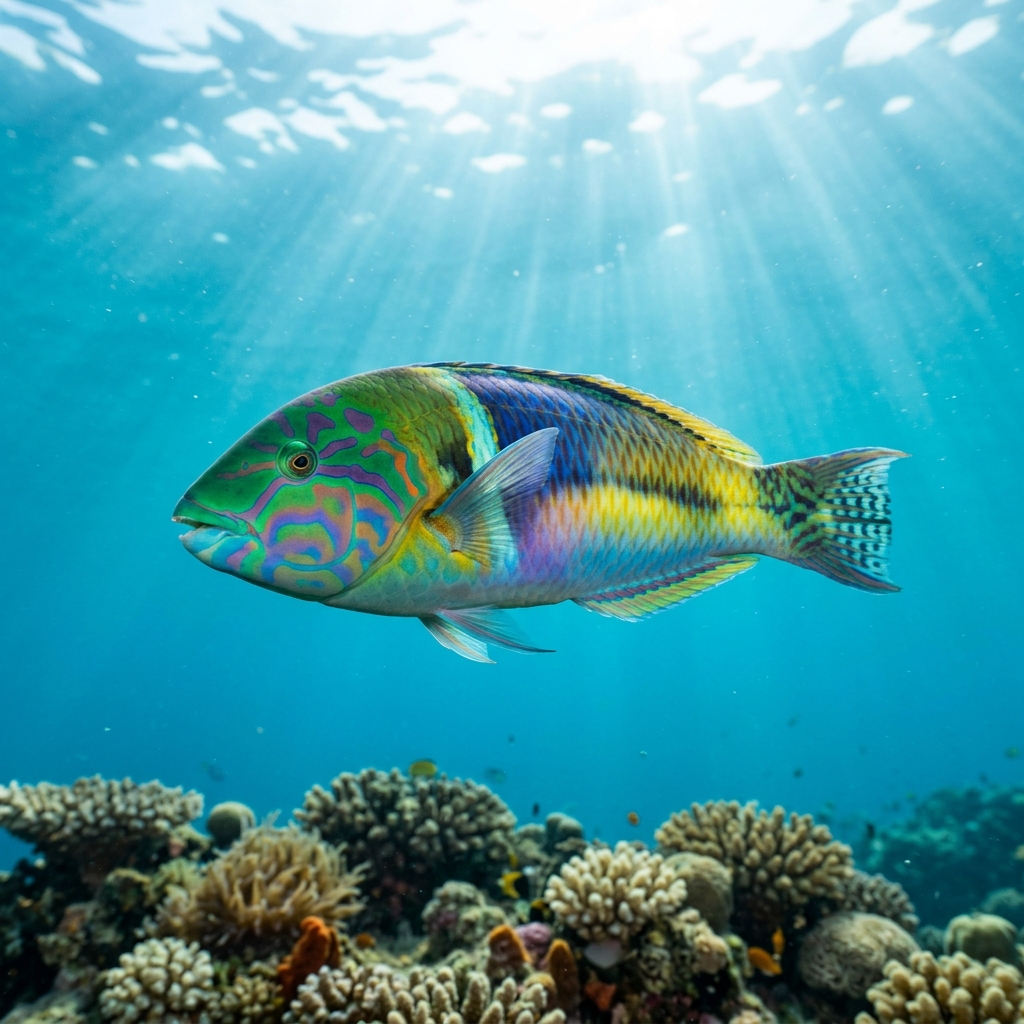
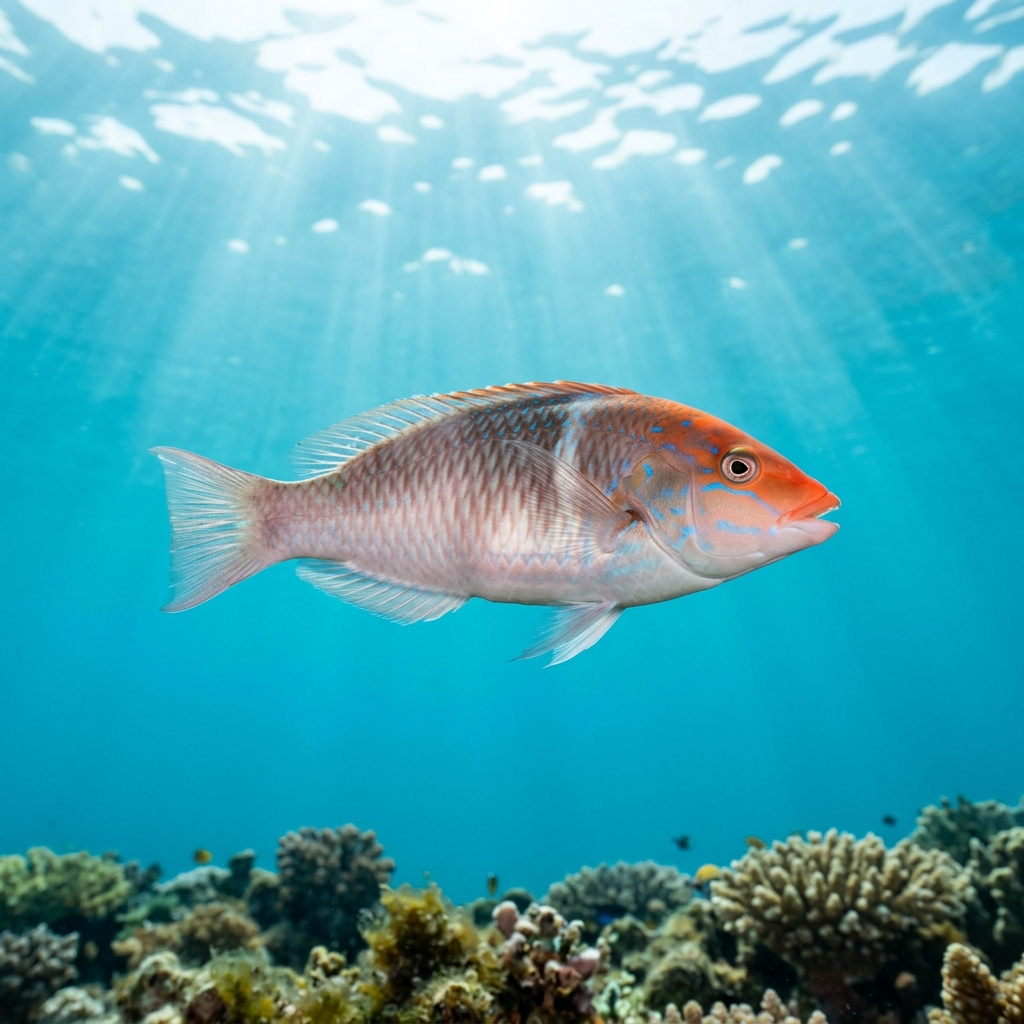
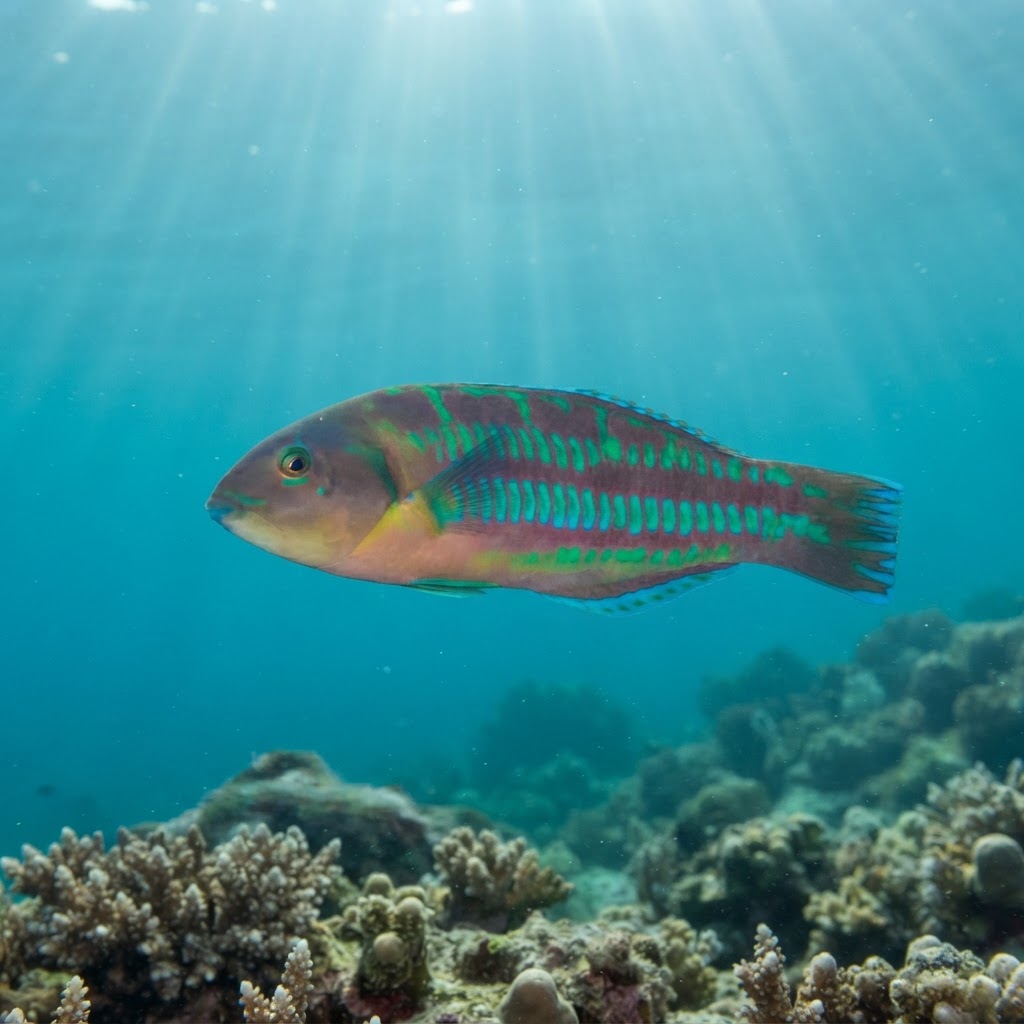
A stocky, 21 cm wrasse with a deep reddish-orange body overlaid with bold green squiggly lines, especially thick around the head and gill area. The tail and rear fins carry the same green tracery on an orange-red base, giving it a festive look that earns the common name. It swims with the typical wrasse pattern of quick pectoral-fin strokes rather than a full body undulation, and stays low over the reef.
Look for it picking over rubble and rocky reef in the shallows, usually under 10 metres, where it hunts small invertebrates and crustaceans tucked into crevices. It is generally an uncommon sighting rather than something schooling in numbers, often seen alone or loosely spaced from others of its kind, darting off if approached too directly but not particularly shy once divers hold still. Most sightings come from shallow, sunlit reef and rocky-reef edges rather than deep or open water.
Like many wrasses, it is a protogynous hermaphrodite, meaning individuals can start life as females and later change into males, which is part of why colour and pattern can vary between individuals of the same species.
Divers log it year-round rather than in a particular season, which fits its comfort range of roughly 25 to 29 C on shallow tropical and subtropical reefs. There is no strong seasonal pattern in the data, so any time you are diving Hawaii's shallow reefs is a fair time to look for one.
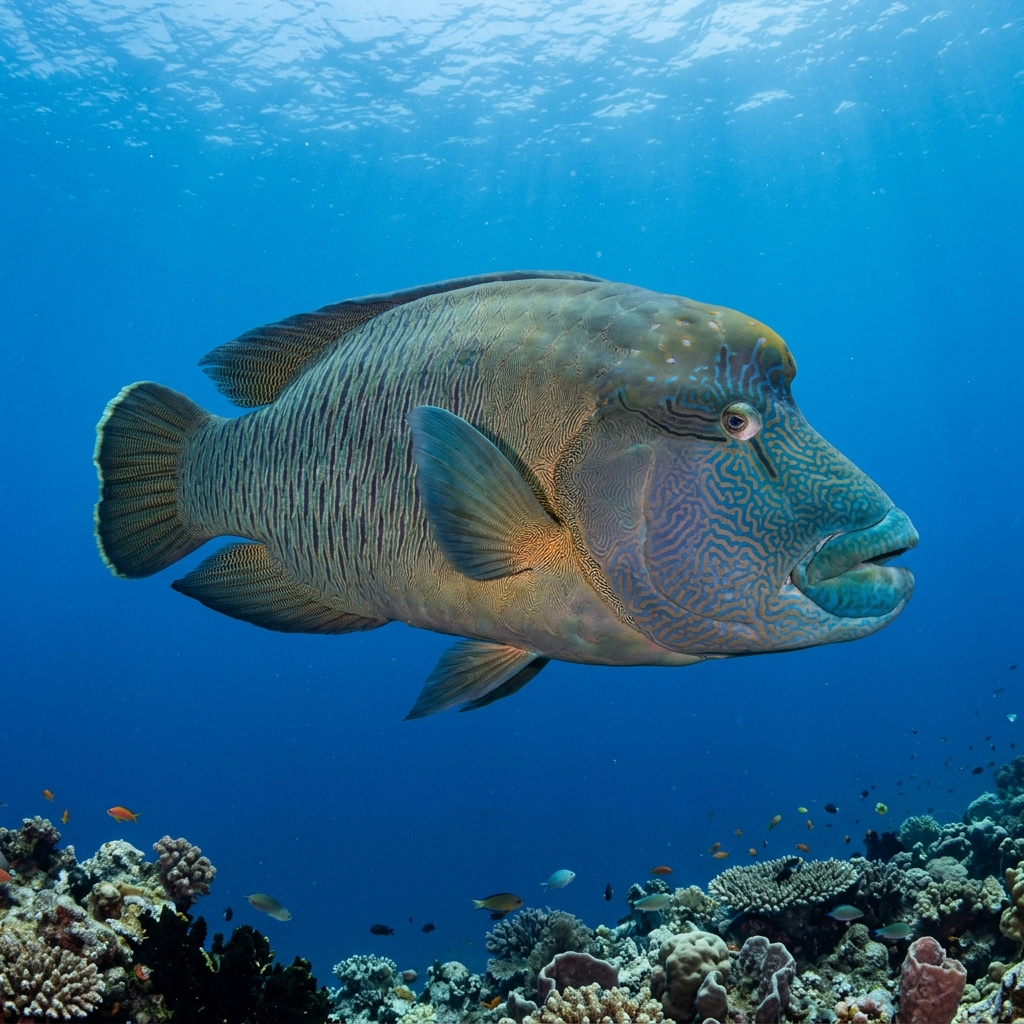
Reef neighbours a diver could mistake it for. Use the identification notes above to tell them apart.
This is most reliably logged in Hawaii, where it turns up across Oahu, Maui, and the Big Island in far greater numbers than anywhere else in the data. Outside the US it also shows up with some consistency in Mauritius (Flic-en-Flac, Grand Baie), Reunion (Saint-Leu), and Taiwan (Xiaoliuqiu, Green Island), with smaller but real populations in French Polynesia's Society Islands, Queensland in Australia, and the Seychelles.
Mapping where Christmas Wrasse is logged…
Hawaii is by far the strongest location, with sightings spread across Oahu, Maui, and the Big Island. It also appears with fair consistency in Mauritius, Reunion, and Taiwan, and in smaller numbers in French Polynesia, Queensland, and the Seychelles.
There is no strong seasonal pattern in the data, so it is considered a year-round sighting. It favours shallow water around 25 to 29 C, conditions that hold steady on tropical reefs through most of the year.
Look for a stocky wrasse around 21 cm long with a reddish-orange body covered in bold green squiggly lines, thickest around the head. It swims low over shallow rocky or coral reef using quick pectoral-fin strokes rather than a full-body swimming motion.
They typically reach around 21 cm in length, making them a medium-sized reef wrasse rather than one of the larger species in the family.
Yes. Like many wrasses it is a protogynous hermaphrodite, so some individuals begin life as females and later transition into males as they mature.
Site and sighting data is aggregated from diver logs, iNaturalist and GBIF. For taxonomy and conservation status:
Cleaver Wrasse
2,700 sites