Cephalopholis boenak
Mottled brown and spotted, this pint-sized grouper turns up on reefs from Koh Tao to Sabah in warm 25-29C water, all year round.
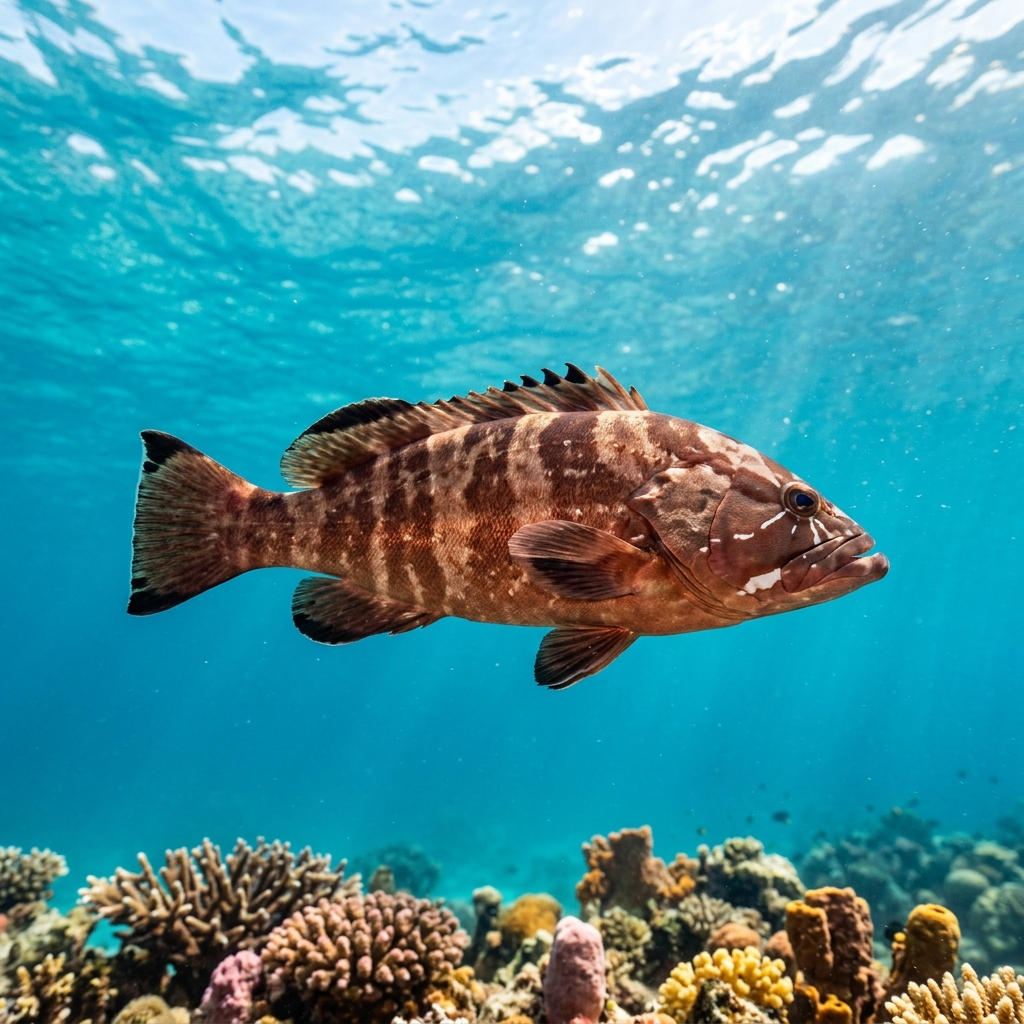
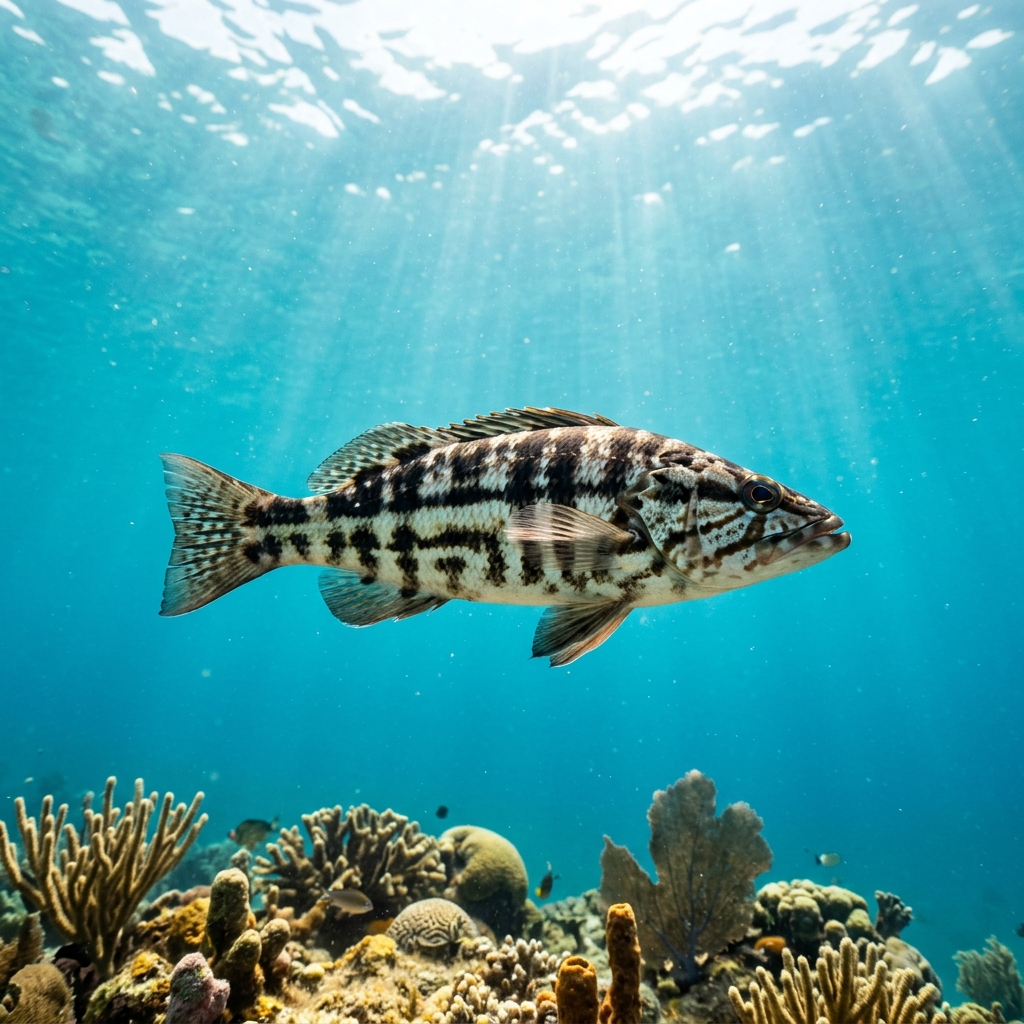
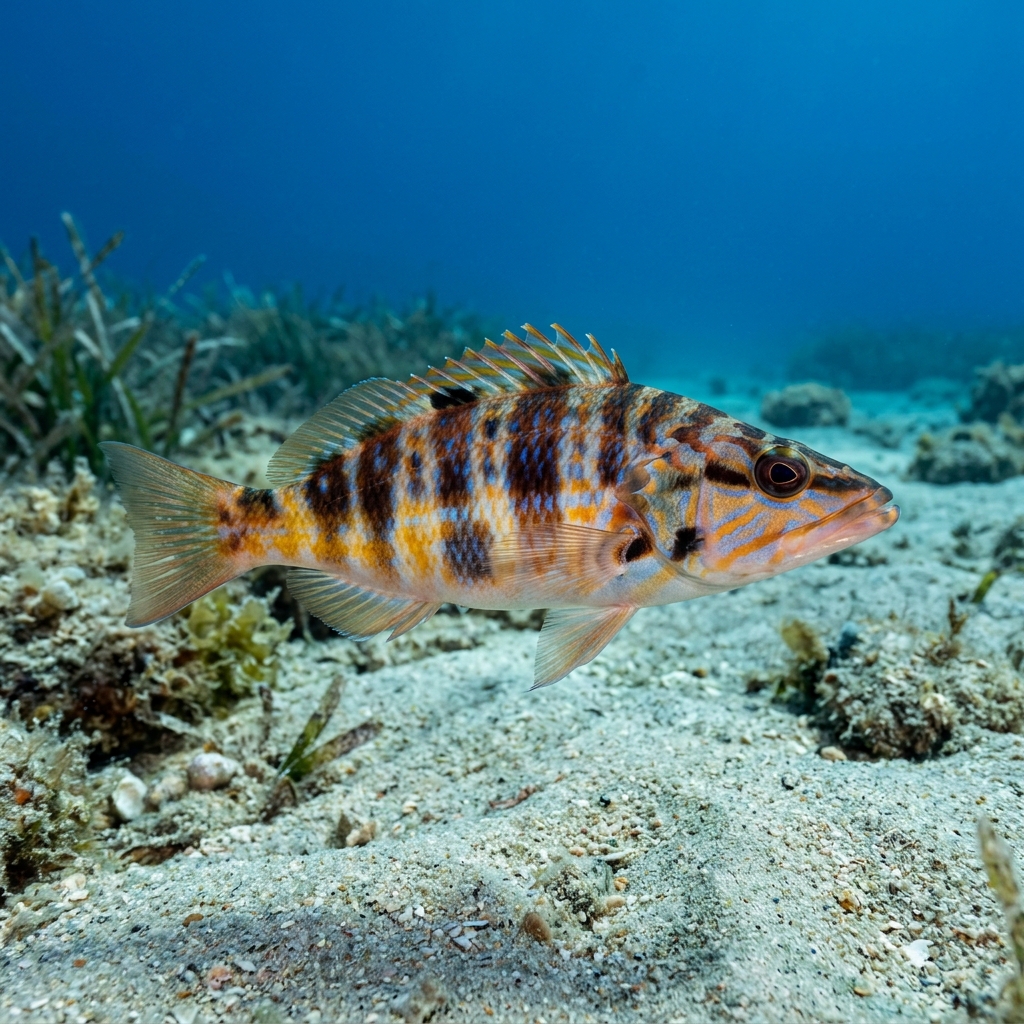
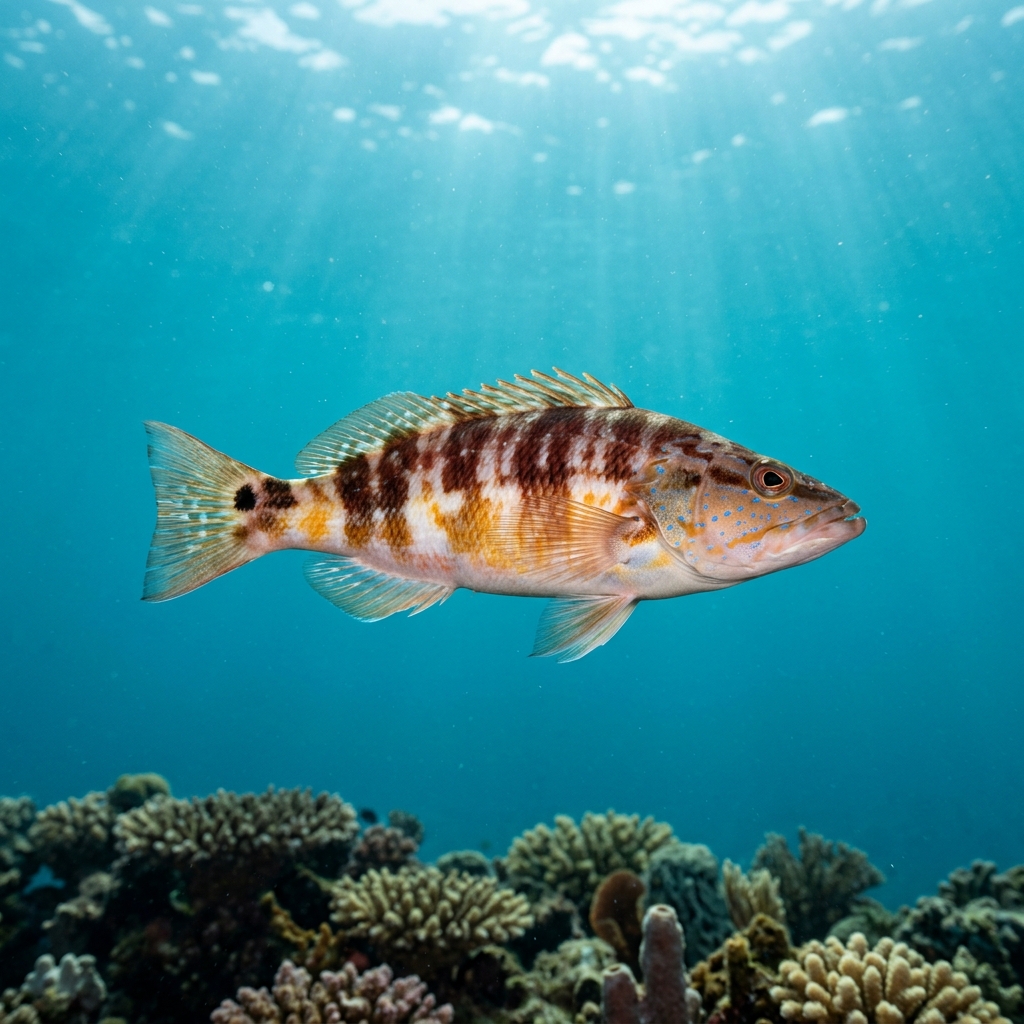
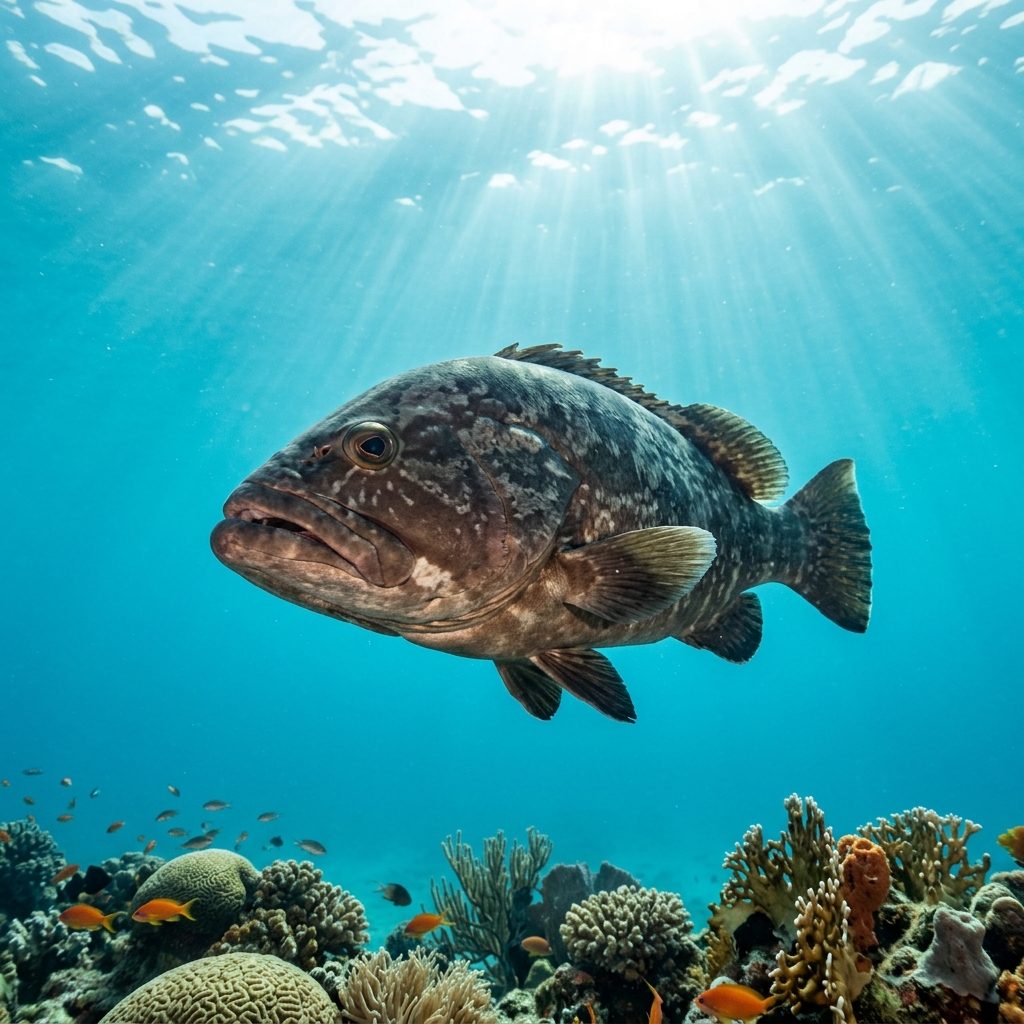
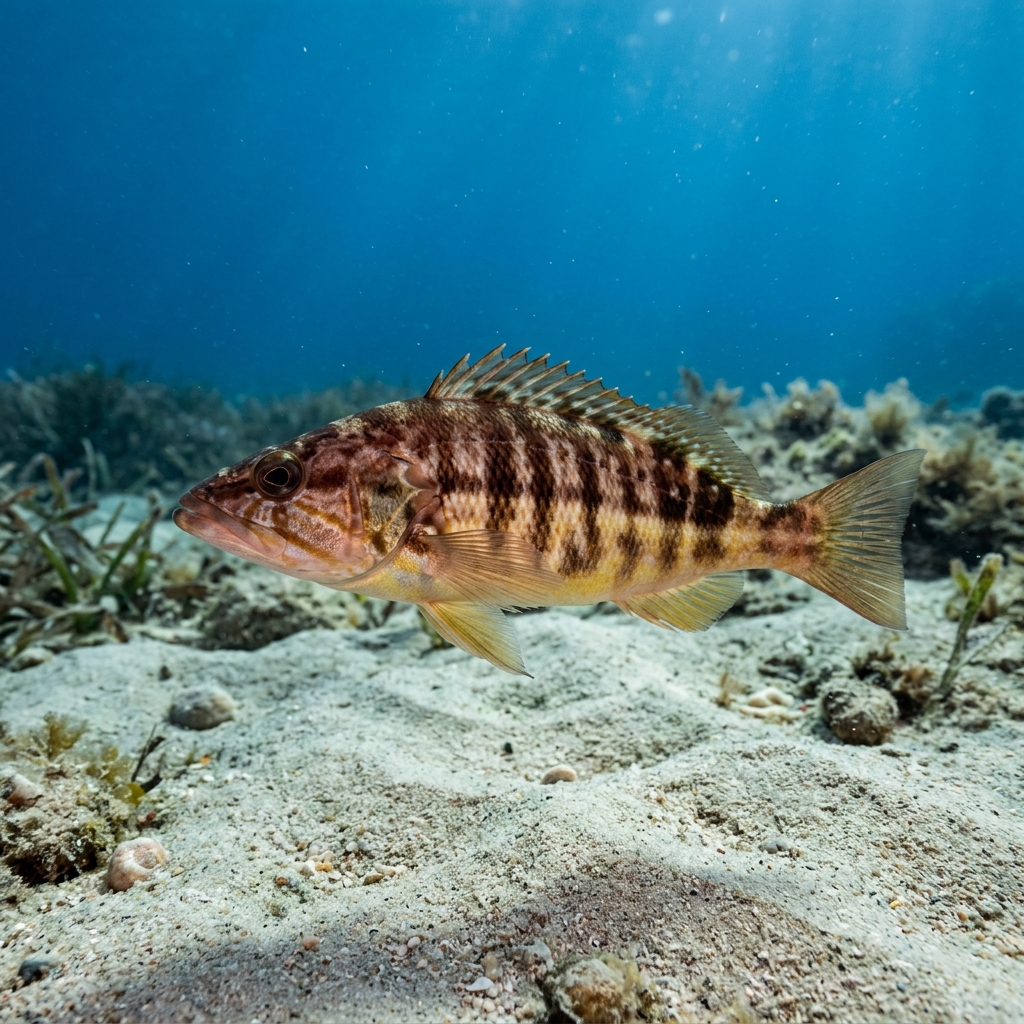
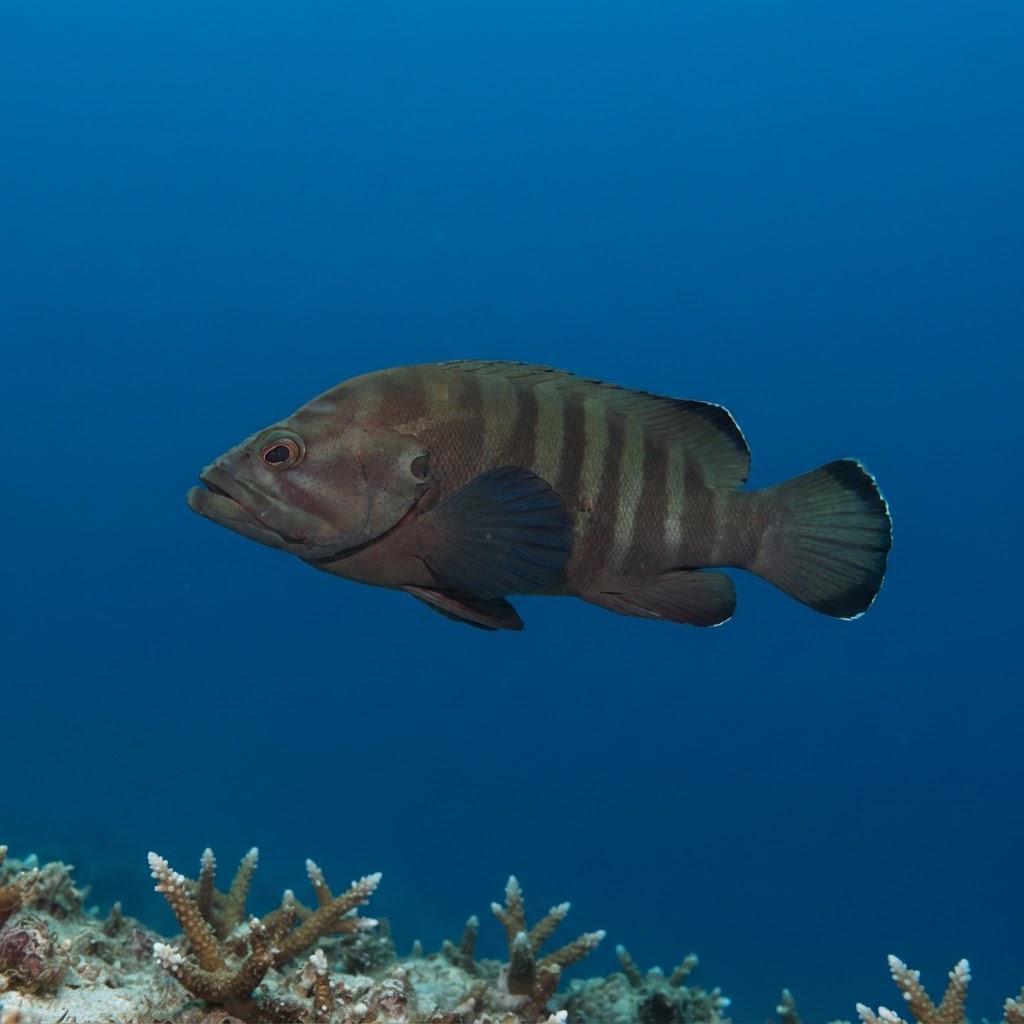
A small, stocky grouper reaching only about 21 cm, easy to overlook against reef rubble and coral rock. Body colour ranges from chocolate brown to reddish-brown, covered in small pale spots that give it a dusted, freckled look. Look for darker bars or blotches near the tail and the typical grouper build: thick body, large mouth, rounded fins held close to the body as it perches on the substrate.
Usually spotted sitting still on a coral ledge, in rubble, or tucked against a reef wall rather than swimming in open water. It is an ambush predator, so divers tend to find it holding a spot and watching for small fish or invertebrates to come within striking range. Most encounters are logged as uncommon rather than common, so it rewards divers who slow down and check crevices instead of just scanning the water column.
Like other hinds in the Cephalopholis genus, it is a protogynous hermaphrodite, meaning individuals start life as females and some later change sex to male as they grow, a trait that shapes how these small groupers structure their reef territories.
No clear seasonal pattern shows up in the sightings, and its comfort range of roughly 25 to 29C matches tropical reefs year-round, so any month is fair game at its core sites.
Reef neighbours a diver could mistake it for. Use the identification notes above to tell them apart.
Most reliably logged in Malaysia, with strong numbers on Peninsular Malaysia's East Coast and around Sabah, plus a steady presence at Koh Tao and Koh Chang in Thailand. Also turns up around Koror and Malakal in Palau, on reefs in Java and West Papua in Indonesia, and off Longdong in Taiwan.
Mapping where Chocolate Hind is logged…
It shows up most often in Malaysia, especially Peninsular Malaysia's East Coast and Sabah, and is also a regular find at Koh Tao and Koh Chang in Thailand, plus reefs in Palau, Indonesia, and Taiwan.
There is no strong seasonal pattern in sightings, so it is considered a year-round find. Its preferred water temperature of about 25 to 29C stays fairly constant on the tropical reefs where it lives.
Look for a small, thickset grouper around 21 cm long, coloured chocolate to reddish brown with fine pale spots scattered over the body. It usually sits still on coral rock or rubble rather than swimming in open water.
They stay small for a grouper, typically reaching about 21 cm in length, which makes them easy to mistake for a juvenile of a larger species if you do not check the markings closely.
No. It poses no threat to divers and simply holds its position on the reef or retreats into cover if approached too closely.
Like many groupers in its genus, it starts life as a female and some individuals later change sex to male as they mature, a reproductive strategy known as protogynous hermaphroditism.
Site and sighting data is aggregated from diver logs, iNaturalist and GBIF. For taxonomy and conservation status:
Blacktip Grouper
2,726 sites