Pseudodax moluccanus
Uncommon reef wrasse best spotted around Marsa Alam, Egypt in warm 25.5-29C water, year-round on the reef flats and slopes.
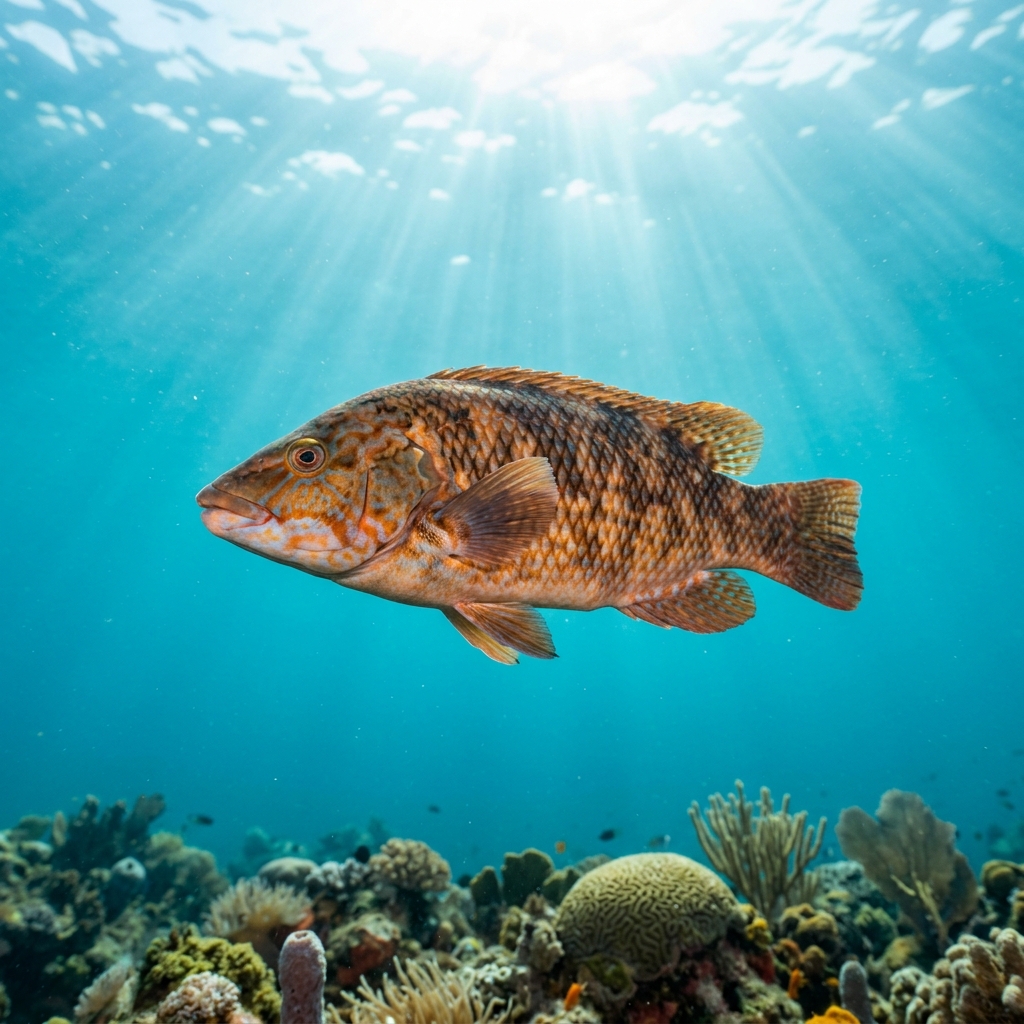
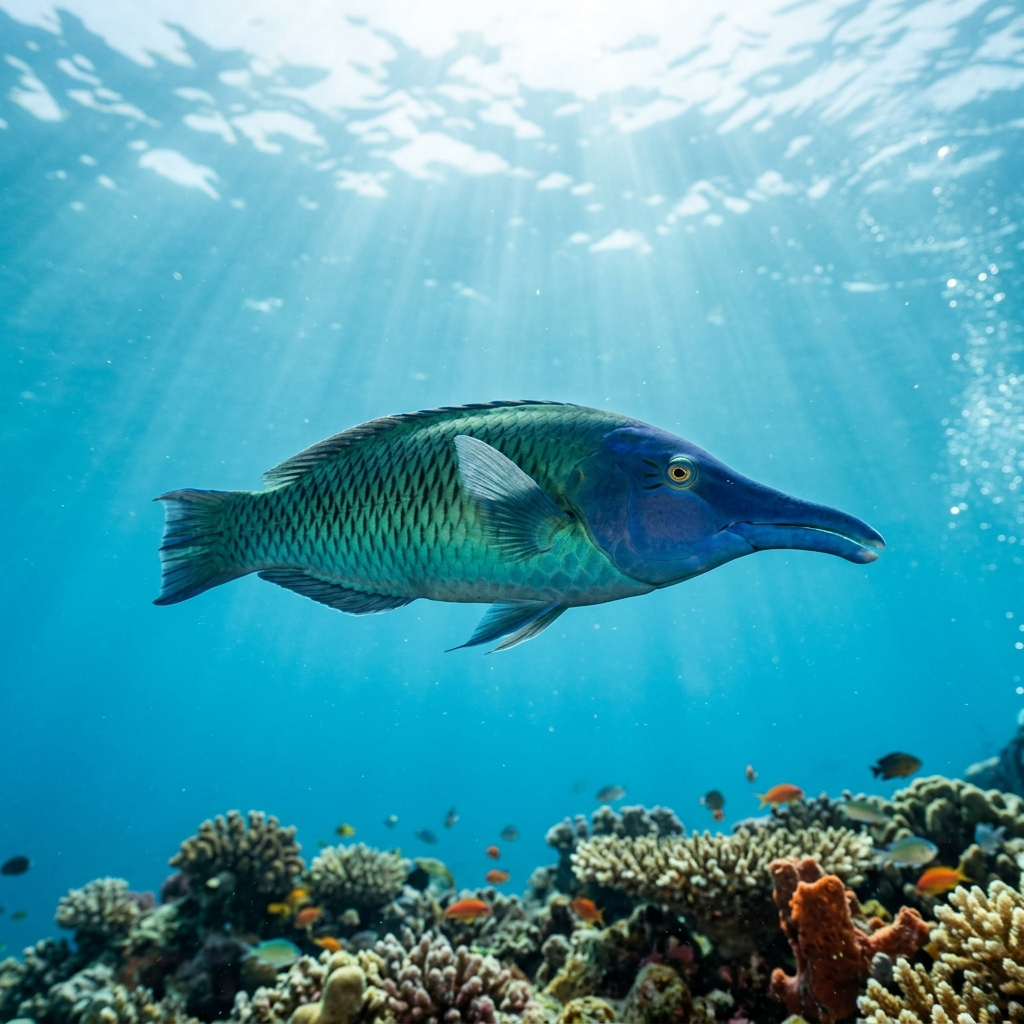
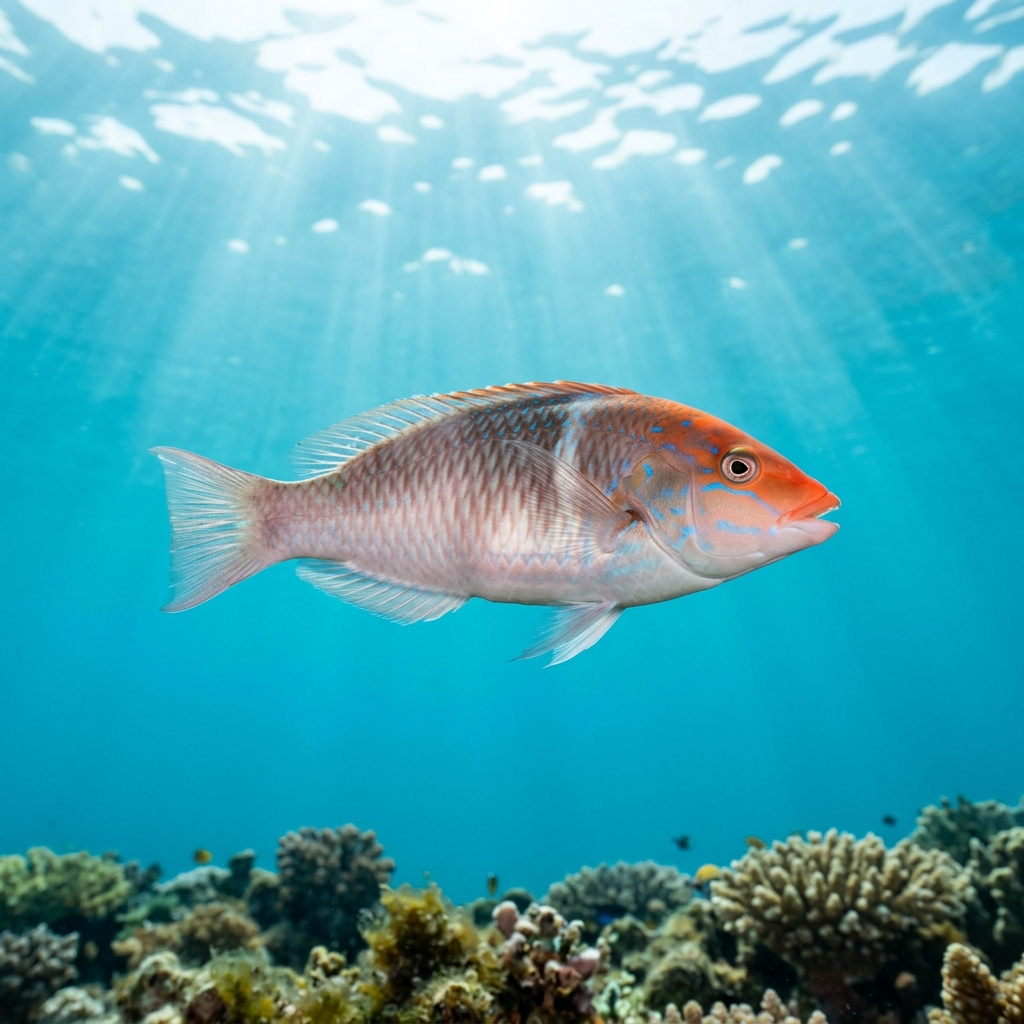
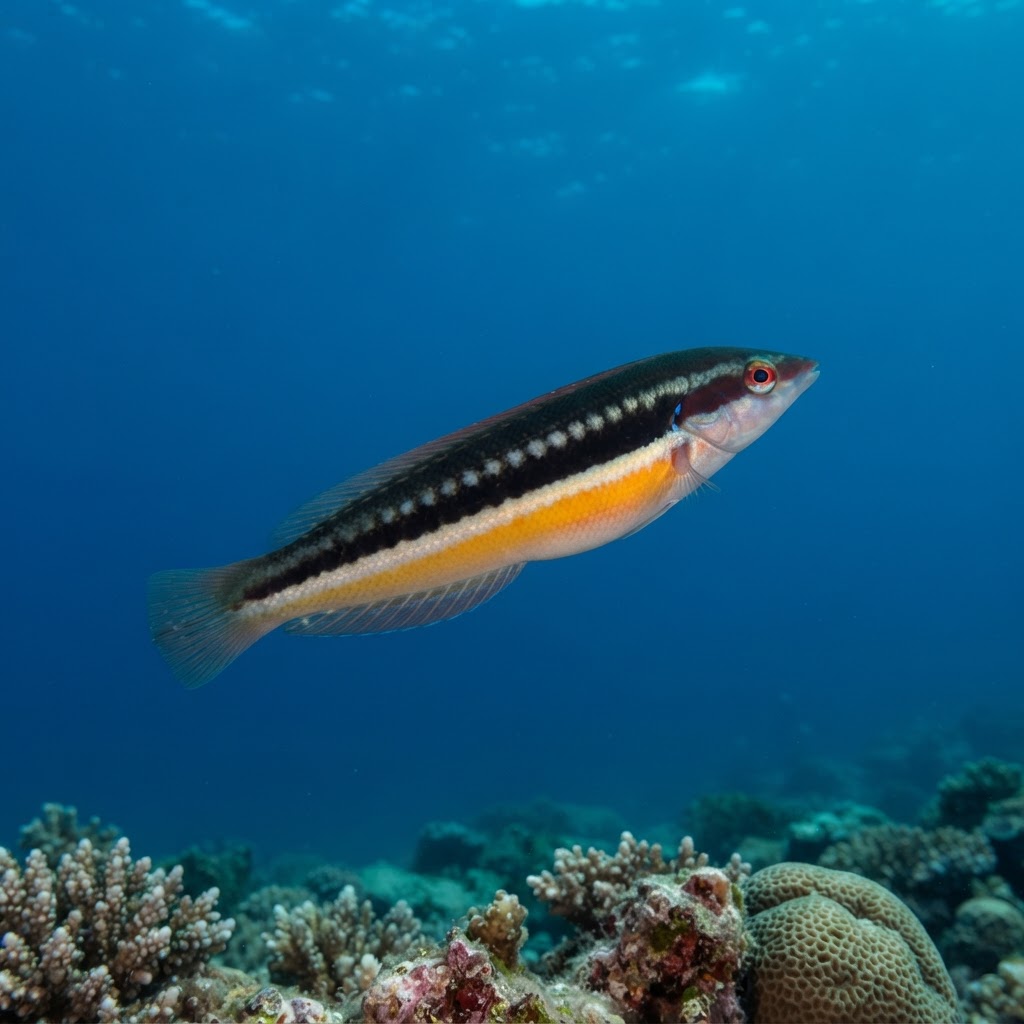
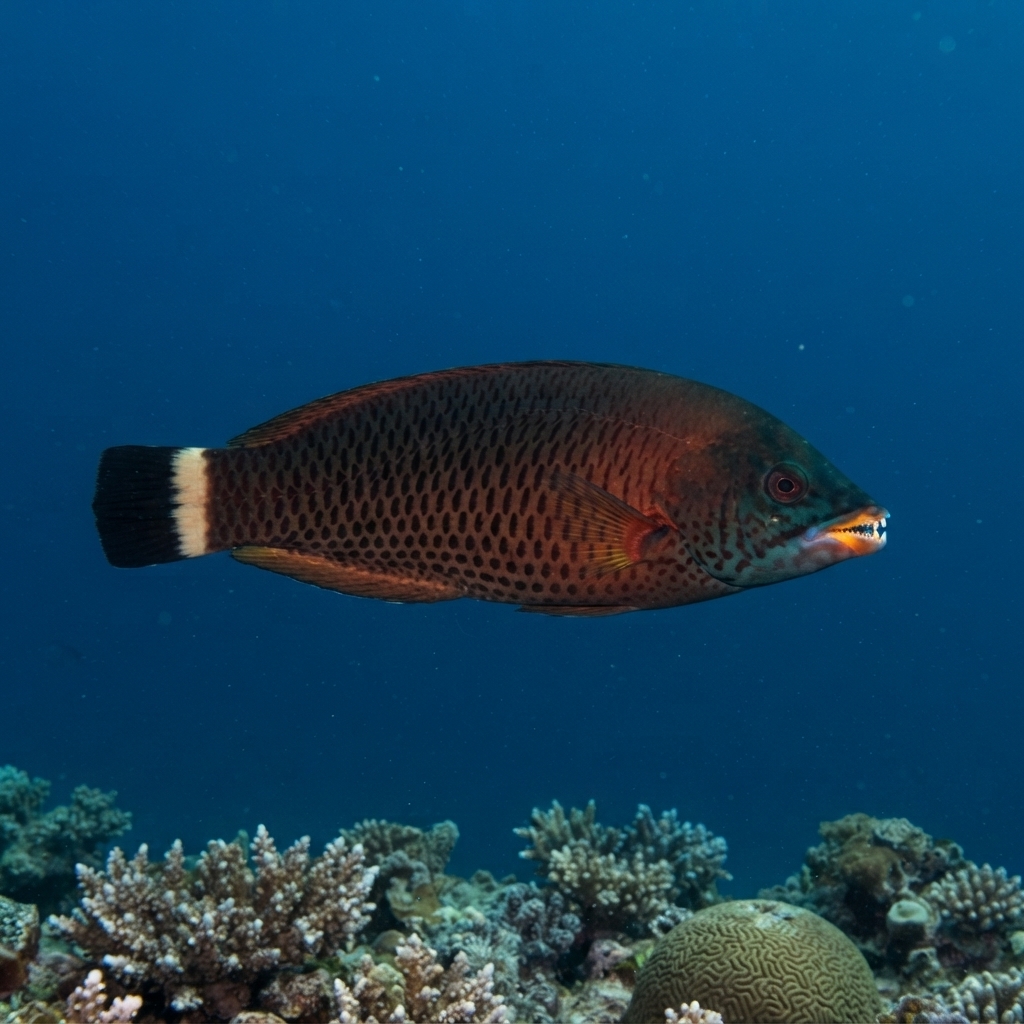
Look for a slim, elongated wrasse around 21 cm with a greyish to brownish body and a pale, elongated snout that gives it its name. The head tapers to a narrow, chisel-like mouth used for picking at the reef, which is the easiest feature to key on at a glance. It swims with the quick, darting motion typical of smaller wrasses, staying low over the reef rather than mid-water.
Divers mostly find it picking around low reef structure and rubble patches, working the surface for small invertebrates rather than schooling in open water. It tends to keep some distance and carries on foraging rather than approaching divers, so a slow, steady swim past the reef edge gives you the best chance of a clear look. Most sightings are logged as uncommon, so it is a nice bonus rather than a guaranteed tick on a Red Sea or Southeast Asian dive.
That chisel-shaped snout is a real feeding tool, adapted for picking encrusting invertebrates and algae off hard reef surfaces that blunter-mouthed wrasses cannot get at.
No clear seasonal pattern shows up in the data, and with a comfortable range of 25.5 to 29 C it seems to sit happily on tropical reefs all year. Plan around good reef conditions generally rather than chasing a particular month.
This one is most reliably logged in Egypt, especially around Marsa Alam and the Deep South and the wider Red Sea Riviera, where the bulk of sightings come from. Outside Egypt it also turns up in Khao Lak in Thailand, Bali in Indonesia, and Green Island in Taiwan, with a handful of records from Palau's Rock Islands.
Mapping where Chiseltooth Wrasse is logged…
Egypt is by far the strongest area for it, particularly Marsa Alam and the Deep South and the Red Sea Riviera further north. It also shows up in Thailand's Khao Lak, Bali in Indonesia, Green Island in Taiwan, and occasionally Palau's Rock Islands.
There is no strong seasonal signal in the sightings, and it tolerates a warm range of 25.5 to 29 C, so it is seen on reefs throughout the year. Any well-timed reef dive in its range gives a reasonable shot at spotting it.
Look for a slender, greyish-brown wrasse around 21 cm long with a distinctive pale, elongated snout shaped like a chisel. It moves in quick darts low over the reef while foraging, rather than cruising in open water.
They reach around 21 cm, making them a small to mid-sized reef wrasse rather than one of the larger, more conspicuous species in the family.
No, they pose no danger to divers and simply go about foraging on the reef while you pass by.
Its chisel-shaped snout is a specialised feeding tool, letting it pick encrusting invertebrates and algae off hard reef surfaces that most other wrasses cannot reach.
Site and sighting data is aggregated from diver logs, iNaturalist and GBIF. For taxonomy and conservation status:
Bird Wrasse
3,632 sites