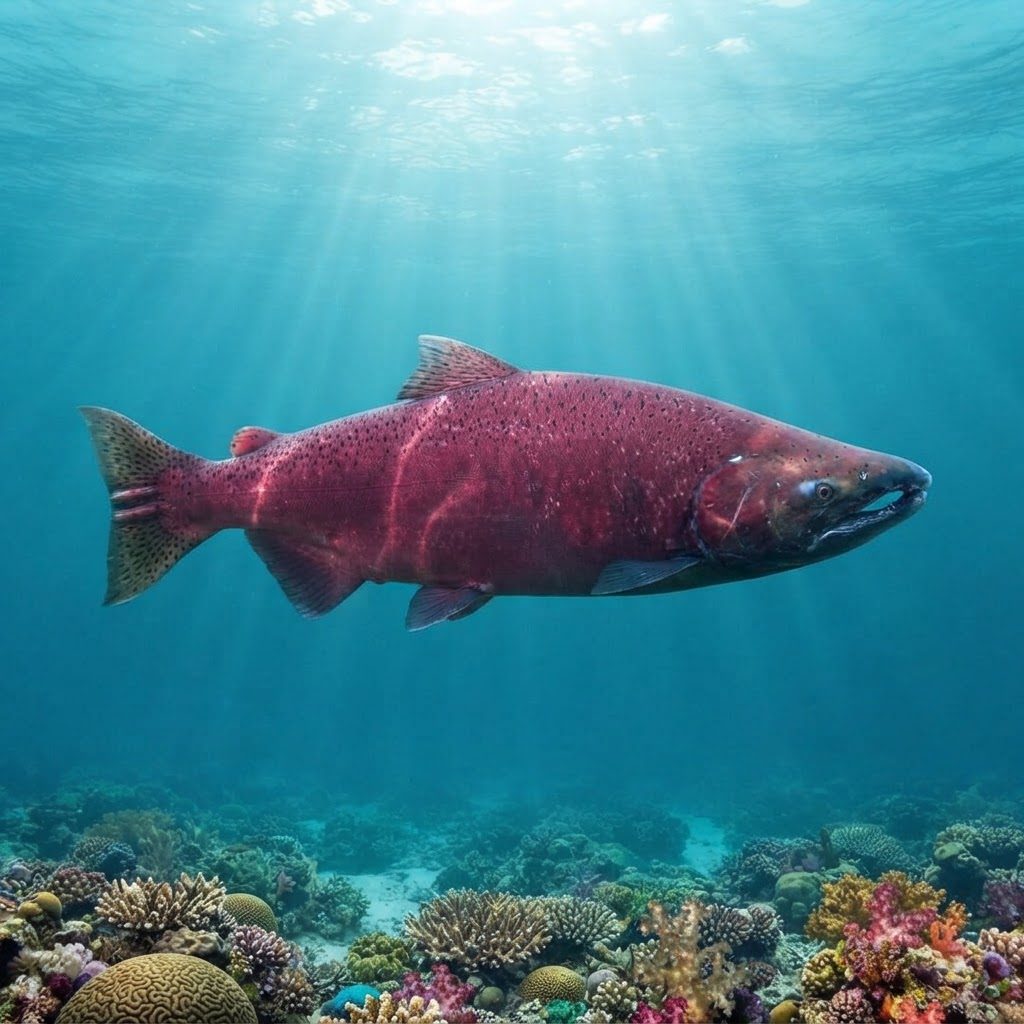
Oncorhynchus tshawytscha
Cold-water encounters in Alaska and Ontario: dive with Chinook Salmon in 0.7 to 8C water, best logged as an uncommon year-round sighting.
Look for a long, torpedo-shaped body around a metre in length, with a silvery flank fading to a dark, blue-green back peppered with small black spots that extend onto both lobes of the tail. The mouth line is black at the gum, a useful close-up check if you get a good look. In freshwater and spawning stages the body can darken and take on a reddish or blotchy tone, quite different from the chrome look of fish fresh from the sea.
Divers typically see them holding in current or cruising steadily through open, cold water rather than interacting with the reef or divers directly. They tend to keep their distance, moving with purpose rather than lingering, which fits a fish more focused on migration or feeding than on curiosity.
Chinook Salmon are anadromous, meaning they're born in freshwater rivers, spend years growing at sea, then return to their home river to spawn once and die, a one-way life cycle that shapes when and where you'll ever find one underwater.
Sightings so far don't show a clear seasonal pattern, and with a temperature niche of just 0.7 to 8C, these are cold-water encounters year-round rather than a warm-season event.
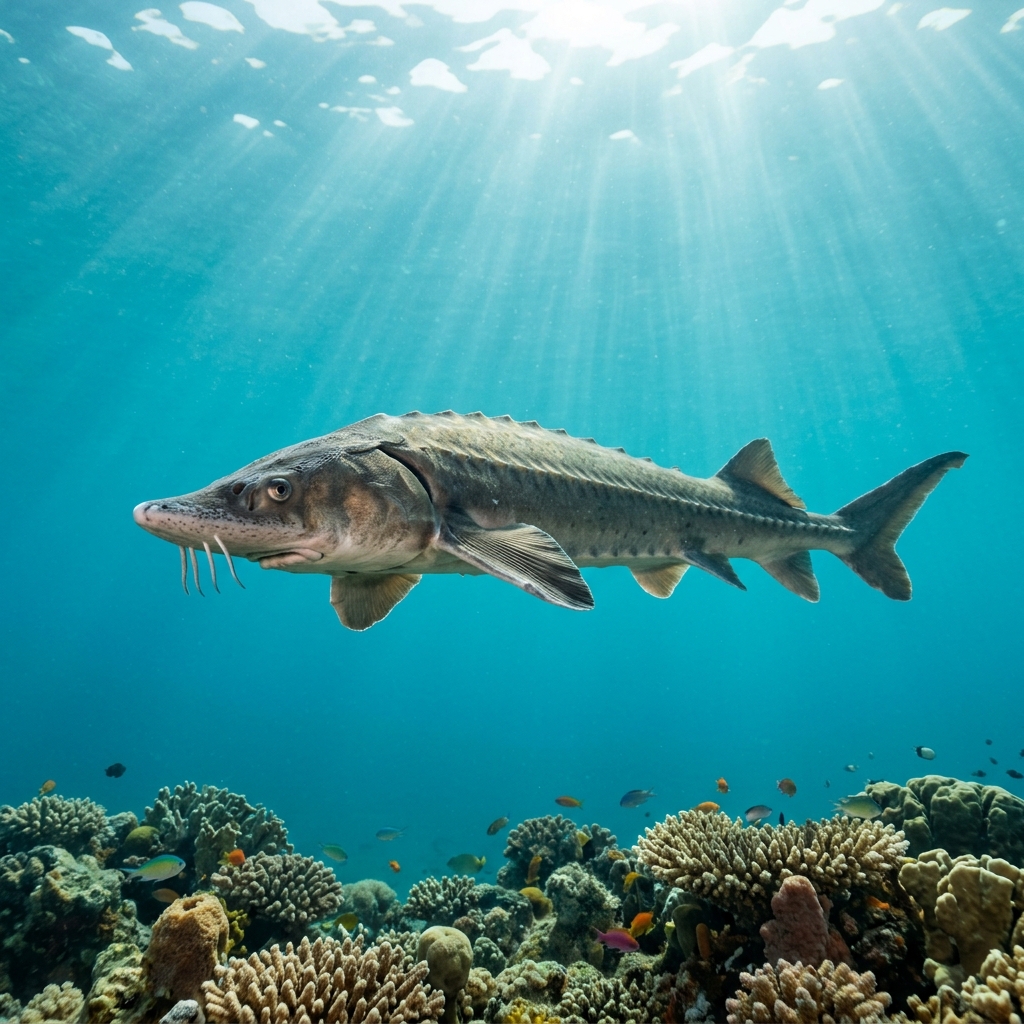
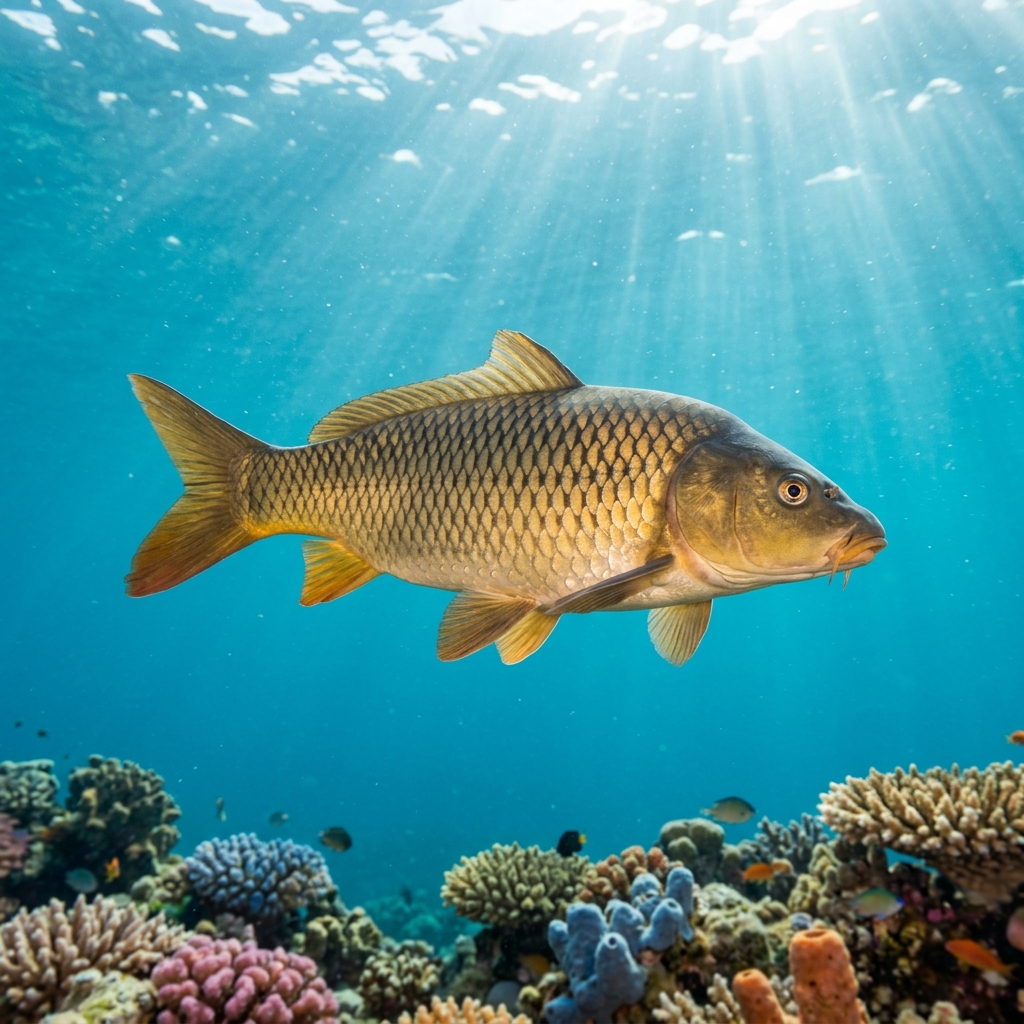
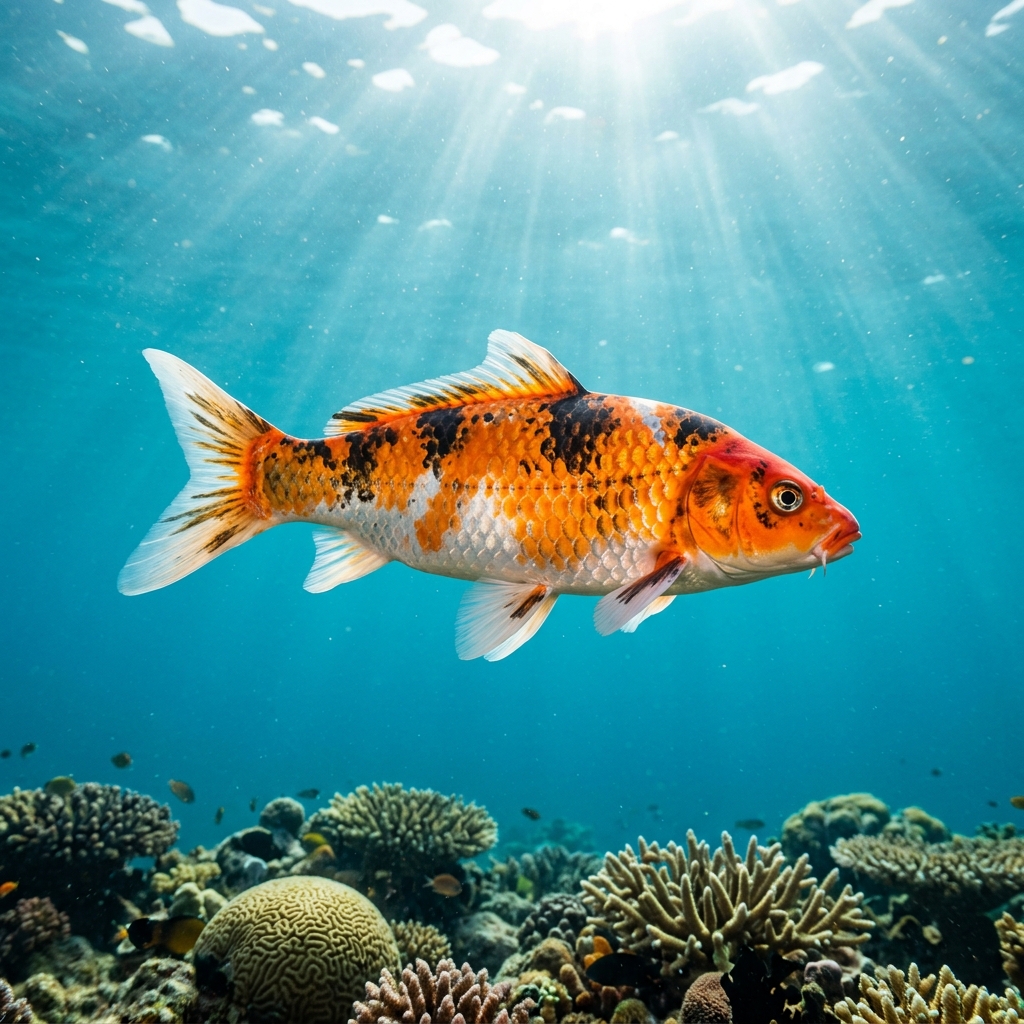
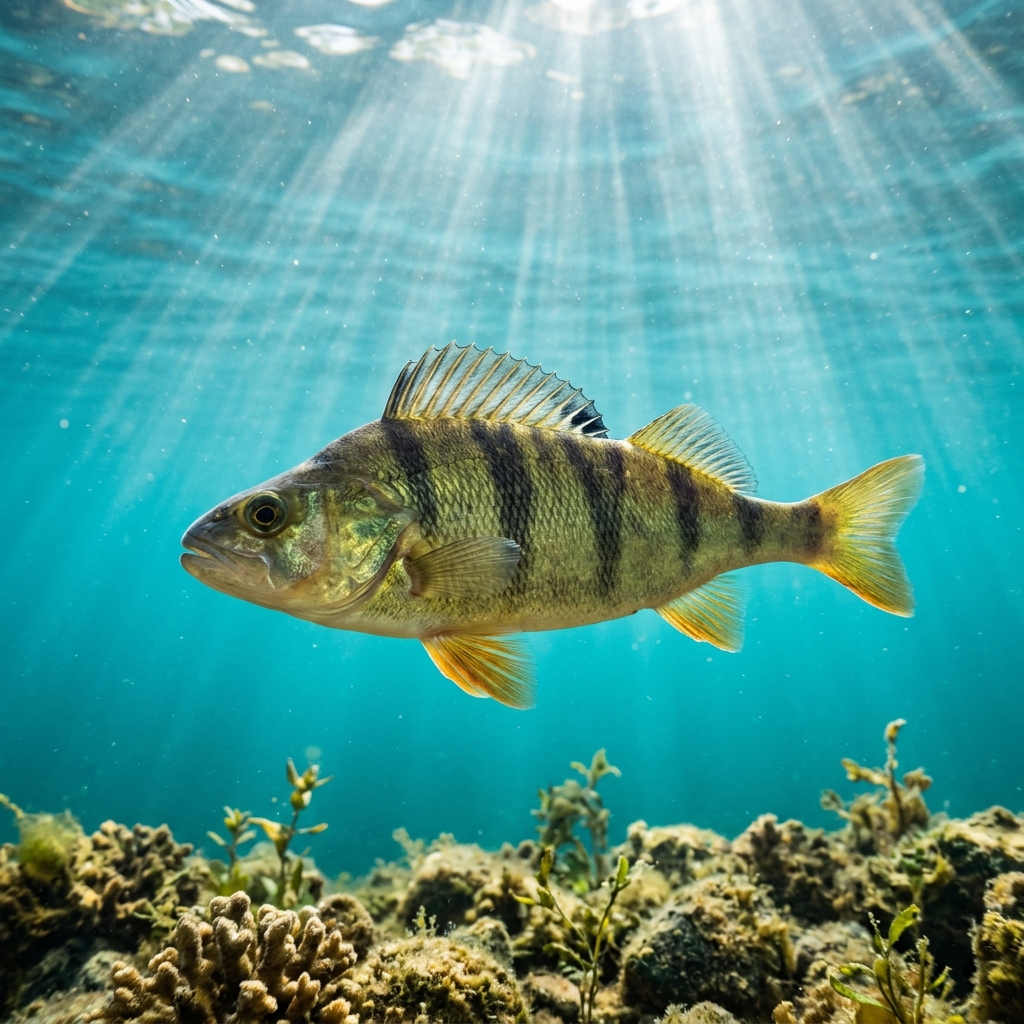
Reef neighbours a diver could mistake it for. Use the identification notes above to tell them apart.
Logged sightings come from cold-water sites in Alaska, United States and Ontario, Canada, with divers reporting them as an uncommon find at both. These are the two confirmed spots in the data, so expect a specialist, cold-water encounter rather than a widespread reef sighting.
Mapping where Chinook Salmon is logged…
Confirmed sightings come from Alaska in the United States and Ontario in Canada, both cold-water locations where divers log the species as uncommon rather than a reliable encounter.
There isn't enough data to point to a clear season, and given their tolerance for water as cold as 0.7C, sightings can happen across the year rather than in one narrow window.
Look for a silvery, torpedo-shaped body about a metre long with a dark, spotted back and spots on both lobes of the tail fin. A black gum line inside the mouth is a reliable close-range check if visibility allows.
They typically reach around 105cm in length, making them one of the larger Pacific salmon species a diver might encounter in cold rivers or coastal water.
They're anadromous: born in freshwater, they migrate to sea to grow, then return once to their home river to spawn and die, a single-shot life cycle rather than repeated breeding seasons.
No, they pose no danger to divers and are typically seen holding in current or moving through open water without interacting with people nearby.
Site and sighting data is aggregated from diver logs, iNaturalist and GBIF. For taxonomy and conservation status:
Sun Perch
2,182 sites