Ctenochaetus hawaiiensis
Dark chevron-scaled surgeonfish grazing reefs in Hawaii and the Tuamotu Islands at 25-29 C, year-round and easy to spot up close.
Chunky, oval-bodied surgeonfish around 17 cm, dark brown to black overall with a dense network of fine orange-to-yellow chevron-shaped lines etched across the body and head. The tail and fins carry the same chevron patterning, which is the single best giveaway against plainer-bodied tangs. A small scalpel-like spine sits at the base of the tail, tucked flat unless the fish feels threatened.
Usually seen picking over dead coral, rock and sand for the fine algal film and detritus that makes up its diet, often working a patch of reef alone or loosely alongside other surgeonfish. It tends to hold its ground rather than bolt when divers approach, making it one of the easier reef grazers to get a good long look at. Most sightings are on the reef flat and slope in shallow to moderate depths rather than out in open water.
Along with its close relatives, it plays a real reef-maintenance role: constant grazing on algae and detritus keeps coral surfaces clear enough for new coral growth to take hold.
No clear seasonal pattern shows up in the data, and with a comfortable range of roughly 25 to 29 C year-round on these Pacific reefs, it is a fish you can plan to see in any month.
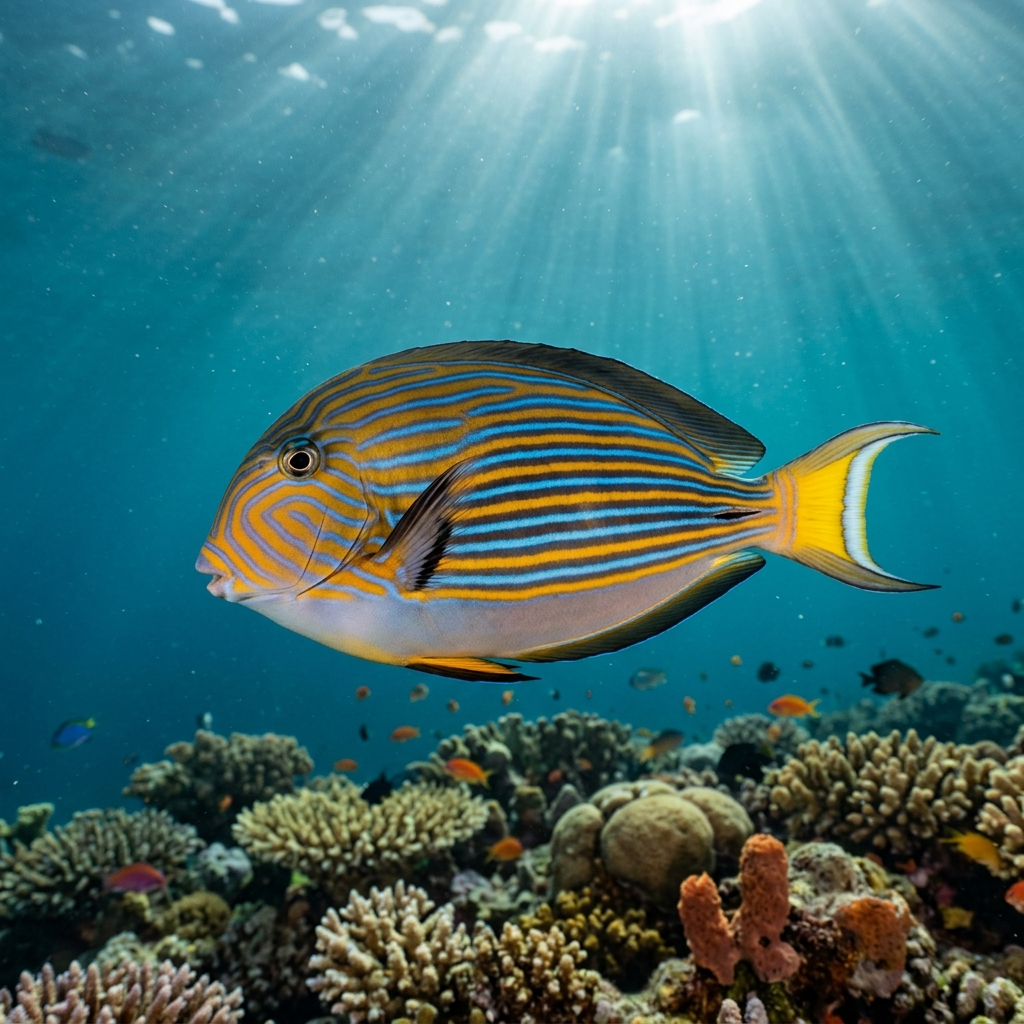
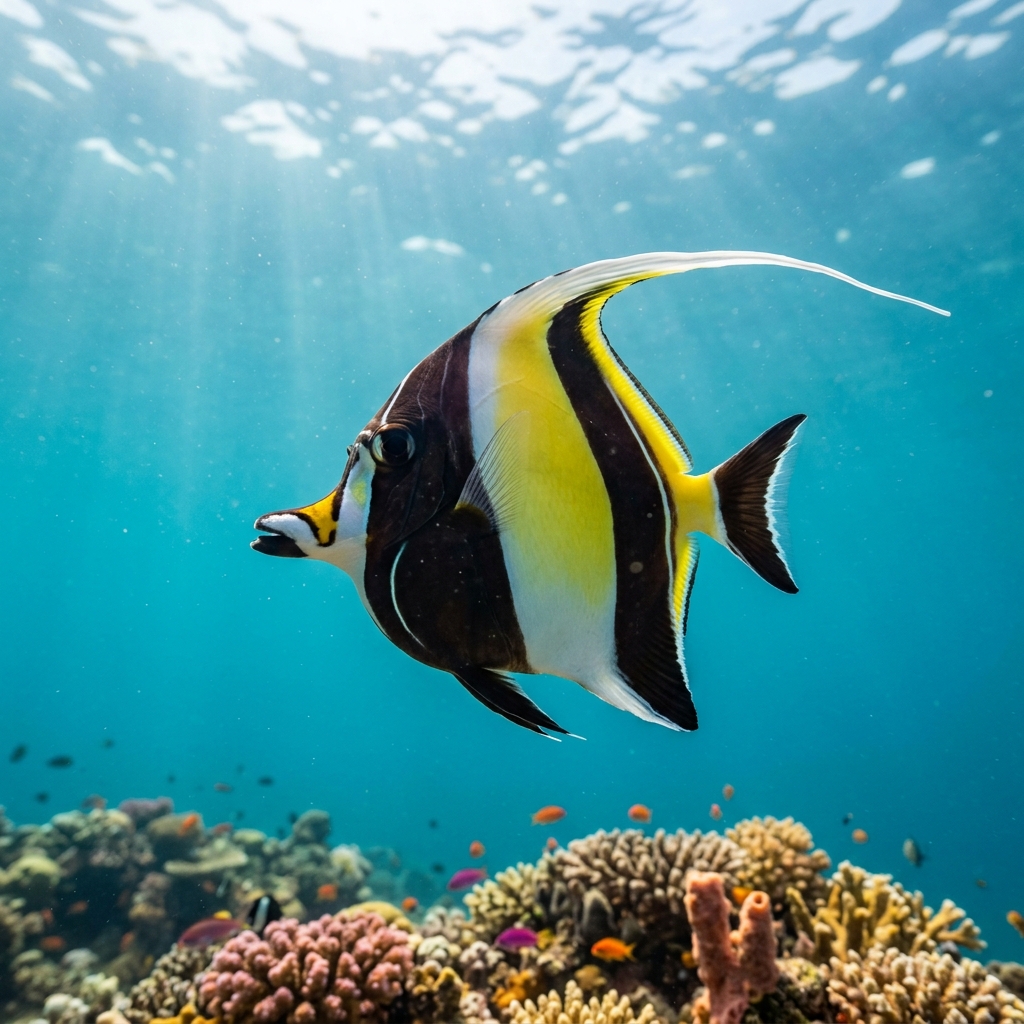
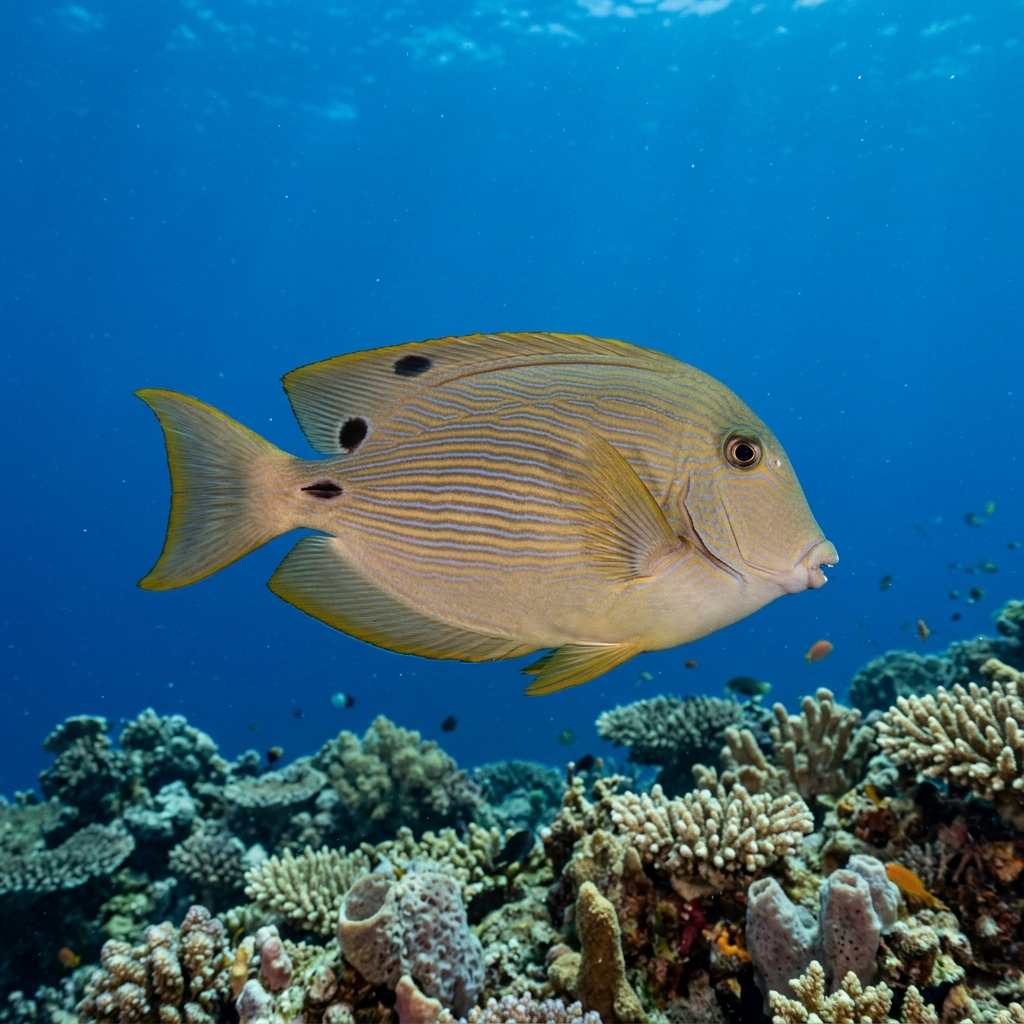
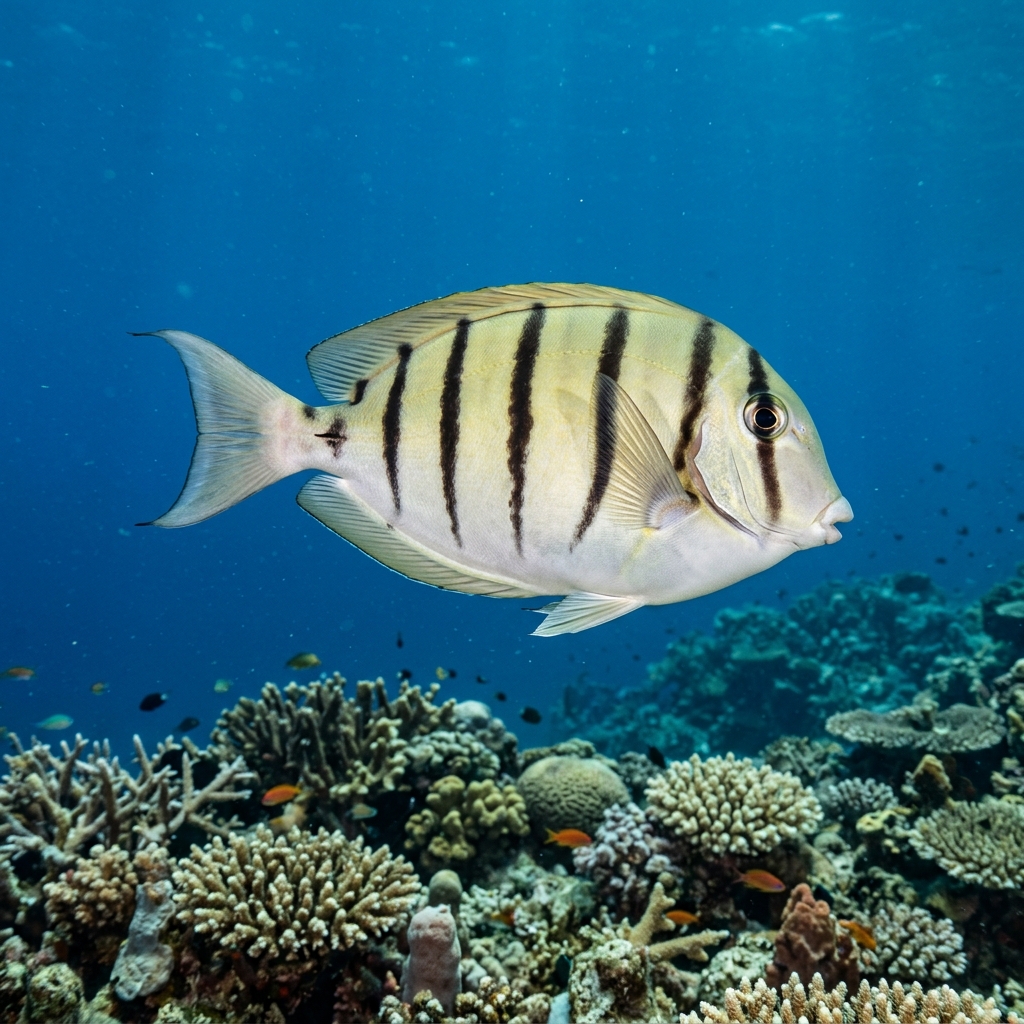
Reef neighbours a diver could mistake it for. Use the identification notes above to tell them apart.
Most reliably logged in Hawaii and across French Polynesia, particularly the Tuamotu Islands and Society Islands, with smaller but consistent populations in Majuro Atoll in the Marshall Islands and around Upolu in Samoa. It turns up as an occasional find at Wake Island and in Wallis and Futuna too, so central and south Pacific reefs generally are your best bet.
Mapping where Chevron Surgeonfish is logged…
Hawaii and French Polynesia are the strongholds, especially the Tuamotu and Society Islands, with further sightings in the Marshall Islands and Samoa. It is considered uncommon at most sites where divers log it, so treat any sighting as a good find rather than a given.
There is no strong seasonal signal in the sighting data, and the water temperature range it favours, roughly 25 to 29 C, holds year-round on its home reefs, so any month works for a dive trip.
Look for a dark brown to black surgeonfish about 17 cm long covered in fine orange chevron-shaped markings that run across the body, head and fins. The overall effect at a distance is a dark fish with a subtle glow of orange lines rather than bold stripes.
They typically reach around 17 cm in length, a solid handful-sized reef fish rather than a large tang.
It spends most of its time grazing dead coral and rock surfaces for algae and detritus, which helps keep those surfaces clear for coral to grow back over. That constant low-level grazing is a key reason surgeonfish are considered important for reef health.
Site and sighting data is aggregated from diver logs, iNaturalist and GBIF. For taxonomy and conservation status:
Striped Surgeonfish
3,289 sites