Pelagella castanea
A very common find on Zeeland's dive sites, this small nudibranch turns up year-round in water as cool as 11 to 17 C.
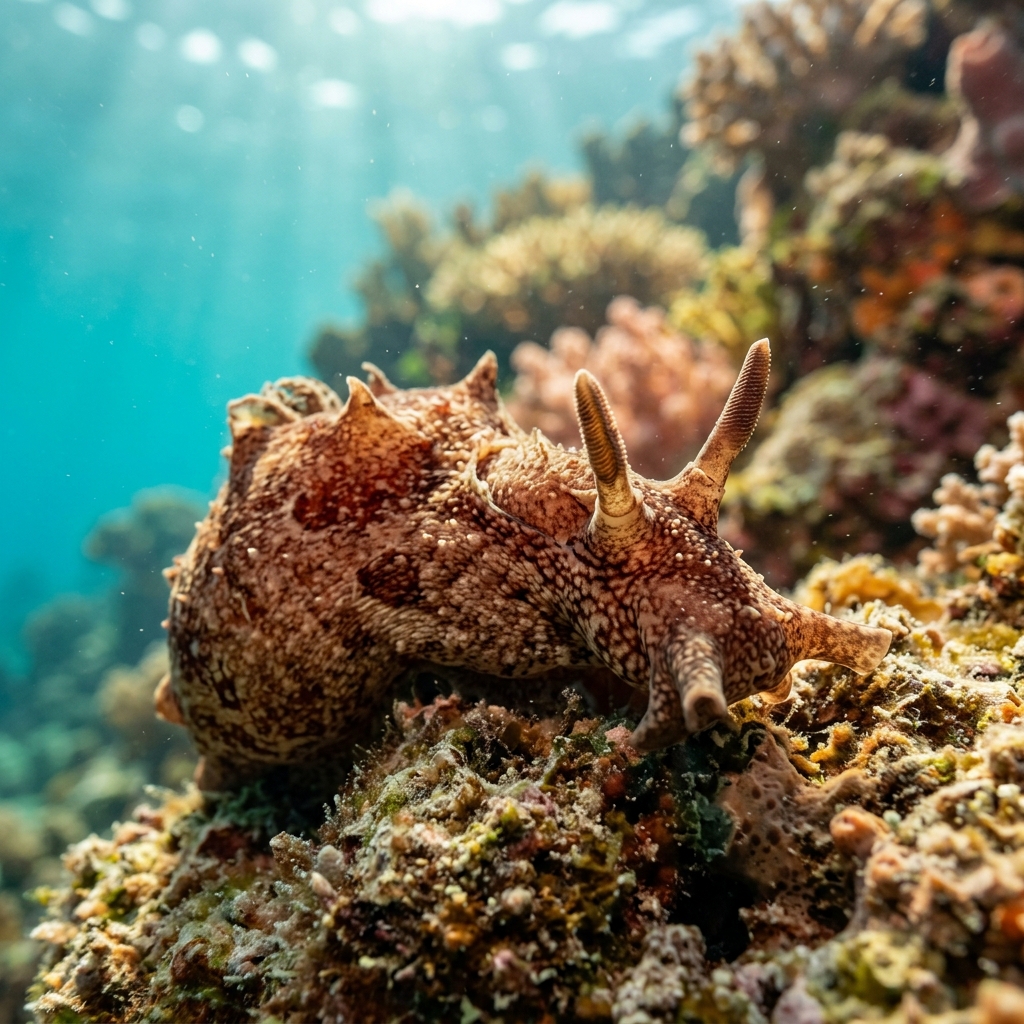
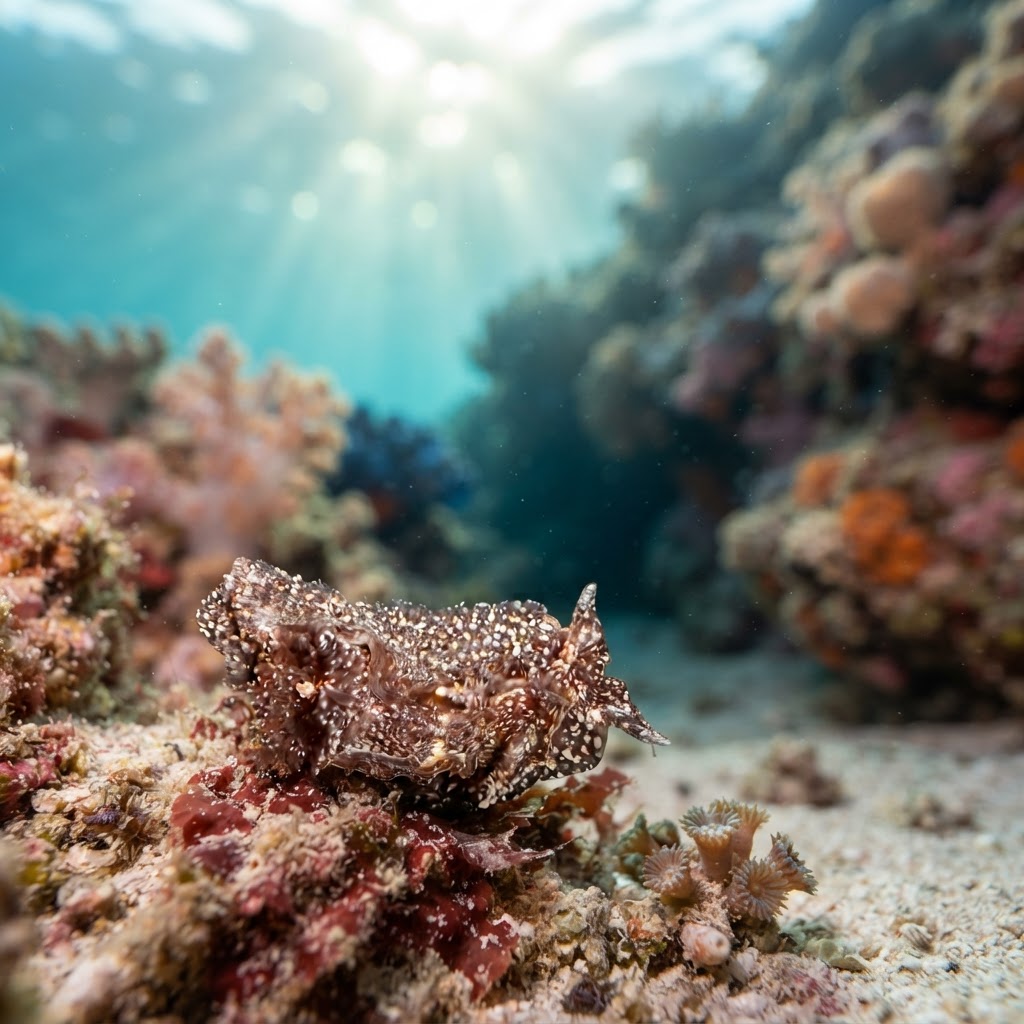
Small, soft-bodied sea slug (nudibranch) with a rounded, warty mantle in shades of chestnut brown to reddish tan, usually blending closely with the silt or rock it sits on. Look for the pair of feathery gills near the rear of the body and short rhinophores (sensory tentacles) on the head, both classic goniodorid features. Size is not well documented for this species, but like most goniodorids it sits well under a few centimetres, so divers tend to spot it by scanning slowly rather than at a glance.
Divers find it sitting still or moving slowly over rock, silt, and encrusting growth, doing exactly what most dorid nudibranchs do: grazing quietly and ignoring anything nearby that isn't food. It shows no defensive reaction to divers and is easy to pass over unless you are running a slow, close-focus search along the bottom or on wreck and reef structure. Most reports come from the same mixed rock/silt habitats that dominate Zeeland's dive sites, suggesting it favours that kind of low-current, encrusted seabed.
Like other goniodorid nudibranchs, it almost certainly feeds on encrusting invertebrates such as bryozoans or ascidians, using its lack of a shell and often-matching colouration as camouflage rather than active defence.
Sightings are logged across the year with no clear seasonal spike, which fits its cool-water niche of roughly 11 to 17 C, waters that stay within that range for long stretches in places like Zeeland and Bohuslän. Plan around your local dive season rather than a specific month for this one.
Reef neighbours a diver could mistake it for. Use the identification notes above to tell them apart.
This is very much a cold-water North Sea and North Atlantic species, and it is most reliably found in Zeeland, Netherlands, which accounts for the bulk of logged sightings. Beyond the Netherlands it turns up with real consistency in Norway's Østlandet region, along the coasts of Northern Ireland and Wales in the UK, in South Africa's Western Cape, and in Sweden's Bohuslän archipelago, with occasional finds in Brittany, France.
Mapping where Chestnut Pump Dorid is logged…
Zeeland in the Netherlands is by far the most reliable spot, with strong records also in Norway's Østlandet, Northern Ireland, Wales, South Africa's Western Cape, and Sweden's Bohuslän coast.
There's no strong seasonal pattern in the sightings, so it can be found year-round in the cool waters it favours, typically between about 11 and 17 C.
Look for a small, warty-mantled nudibranch in chestnut to reddish-brown tones, with feathery gills at the rear and short head tentacles (rhinophores). It usually blends into rocky or silty backgrounds, so a slow scan is key to spotting one.
Exact size data isn't well documented for this species, but as a goniodorid nudibranch it's small, likely only a centimetre or two long, and easy to miss without a close look.
No. It's a small, soft-bodied nudibranch with no sting or venom of concern to divers, and it makes no attempt to react to or defend against anyone nearby.
It almost certainly grazes on encrusting invertebrates like bryozoans or sea squirts, in keeping with the diet of related goniodorid nudibranchs, feeding slowly over rock and silt surfaces.
Site and sighting data is aggregated from diver logs, iNaturalist and GBIF. For taxonomy and conservation status:
Light-spotted Aegires
3,168 sites