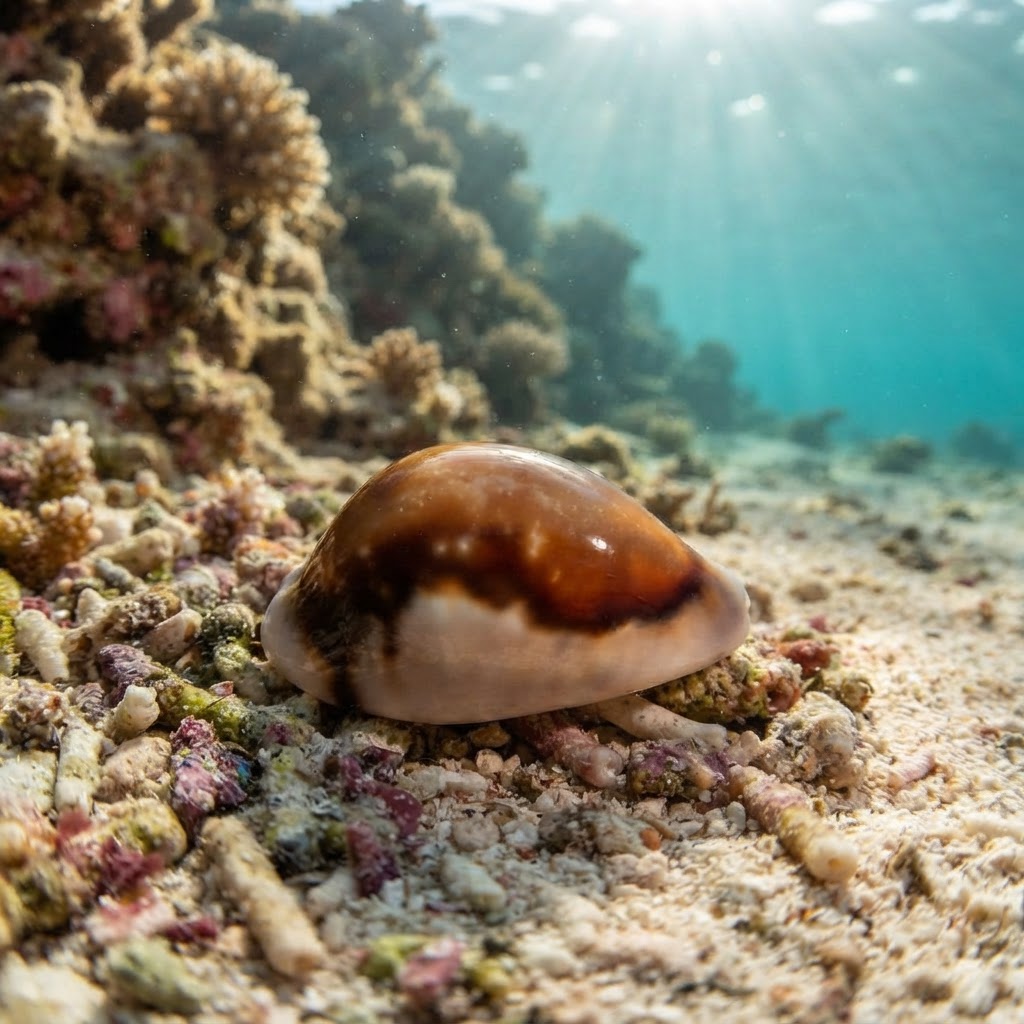
Neobernaya spadicea
Glossy chestnut-brown shell with a chocolate mantle, most often logged along California's rocky reefs in cool 12-19C water.
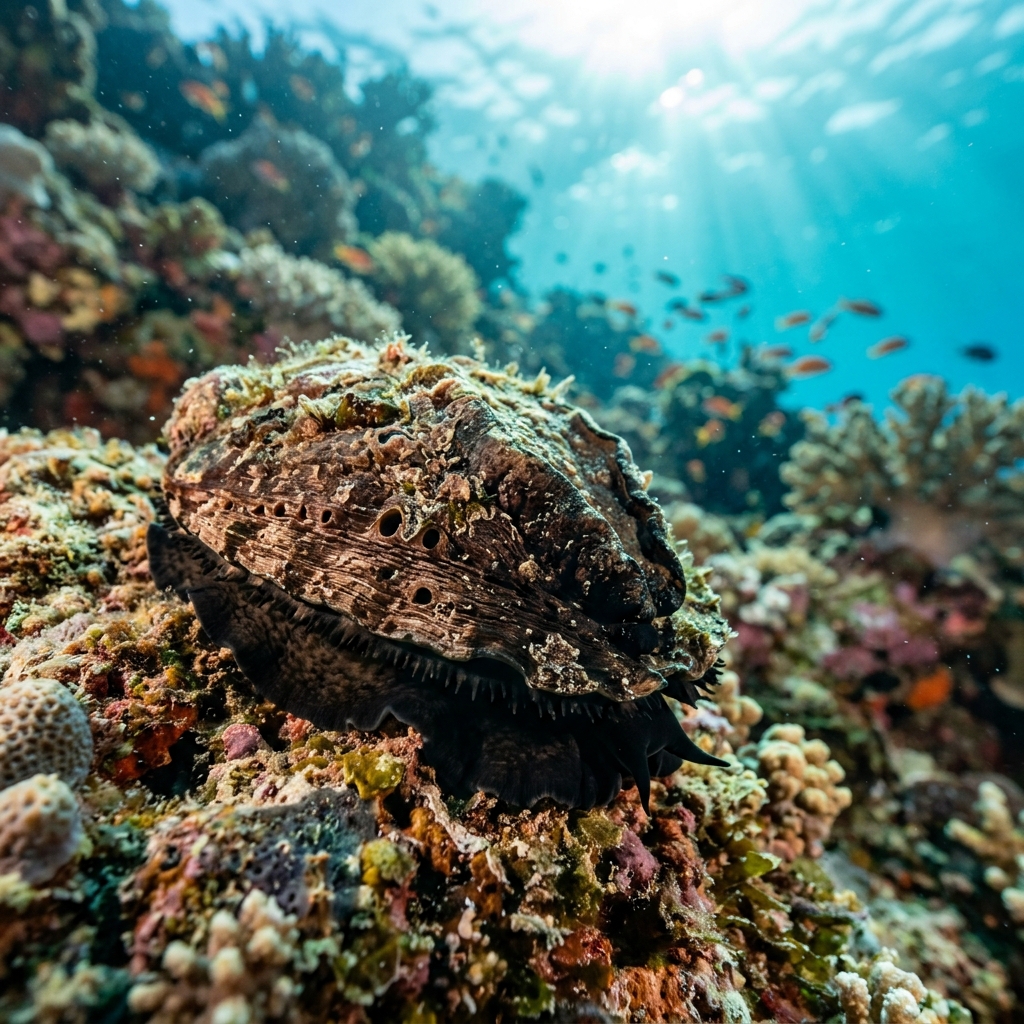
Look for a smooth, glossy shell in warm chestnut to chocolate-brown, oval and domed like a polished pebble, usually a few centimetres long. When active, the mottled dark mantle (the soft tissue that can wrap up over the shell) often covers most of the shell, leaving just a pale band visible along the underside where the narrow toothed opening sits. It moves slowly over rock and doesn't retreat quickly, so a torch beam is usually enough to get a good look at both shell and mantle.
Divers usually find it tucked into rock crevices or moving slowly across reef surfaces, often with its dark mantle partly or fully covering the shell. It's unbothered by divers and won't flee when approached, making it an easy subject for a close macro shot once you spot it. Most sightings come from rocky reef habitat rather than sand or kelp canopy.
The dark, papillate mantle that this cowrie drapes over its shell is thought to help camouflage the glossy surface, which would otherwise stand out against dull rock.
Sightings show no clear seasonal pattern, so treat it as a year-round find on California's cool-water reefs, where it's recorded in water between about 12.3 and 18.9C.
This is a California species through and through, most commonly logged on rocky reef dives along the California coast in the United States, with a smaller presence just south across the border in Baja California, Mexico. Sites report it most often as an uncommon find rather than a guaranteed one, so it rewards divers who take the time to check crevices and undercuts on rock reefs.
Mapping where Chestnut Cowrie is logged…
California is the stronghold, with rocky reef sites along the coast reporting it most consistently. A smaller number of sites in Baja California, Mexico, also log it.
There's no strong seasonal signal, so it can turn up year-round on California's rocky reefs, where water temperatures typically sit between 12 and 19C.
Look for a glossy, domed brown shell often partly hidden under a dark, mottled mantle. It moves slowly over rock and rarely retreats, so you can usually get a close, unhurried look.
Exact size data isn't confirmed for this species, but like most cowries it's a small, easily overlooked animal best spotted by scanning rock crevices closely.
No. They're harmless, slow-moving snails that pose no risk to divers and can be observed safely at close range.
Its shell is often almost completely hidden by a dark, textured mantle that the animal extends up and over the shell surface, likely as camouflage against the rock it lives on.
Site and sighting data is aggregated from diver logs, iNaturalist and GBIF. For taxonomy and conservation status:
Triton Shell
2,297 sites