Chelmon rostratus
Spot the Copperband Butterflyfish in Sipadan, Tioman, or Phuket. Learn its bold banded markings, when to look, and how common sightings really are.
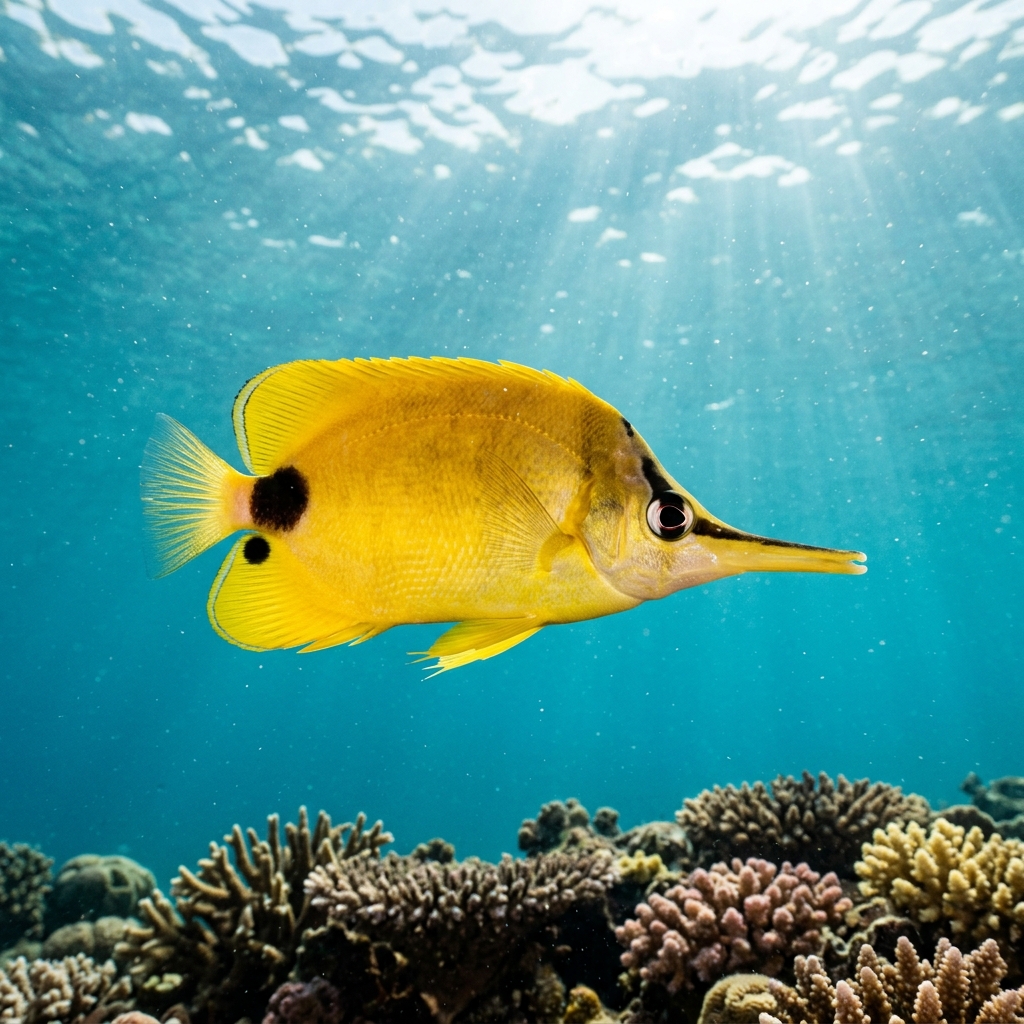
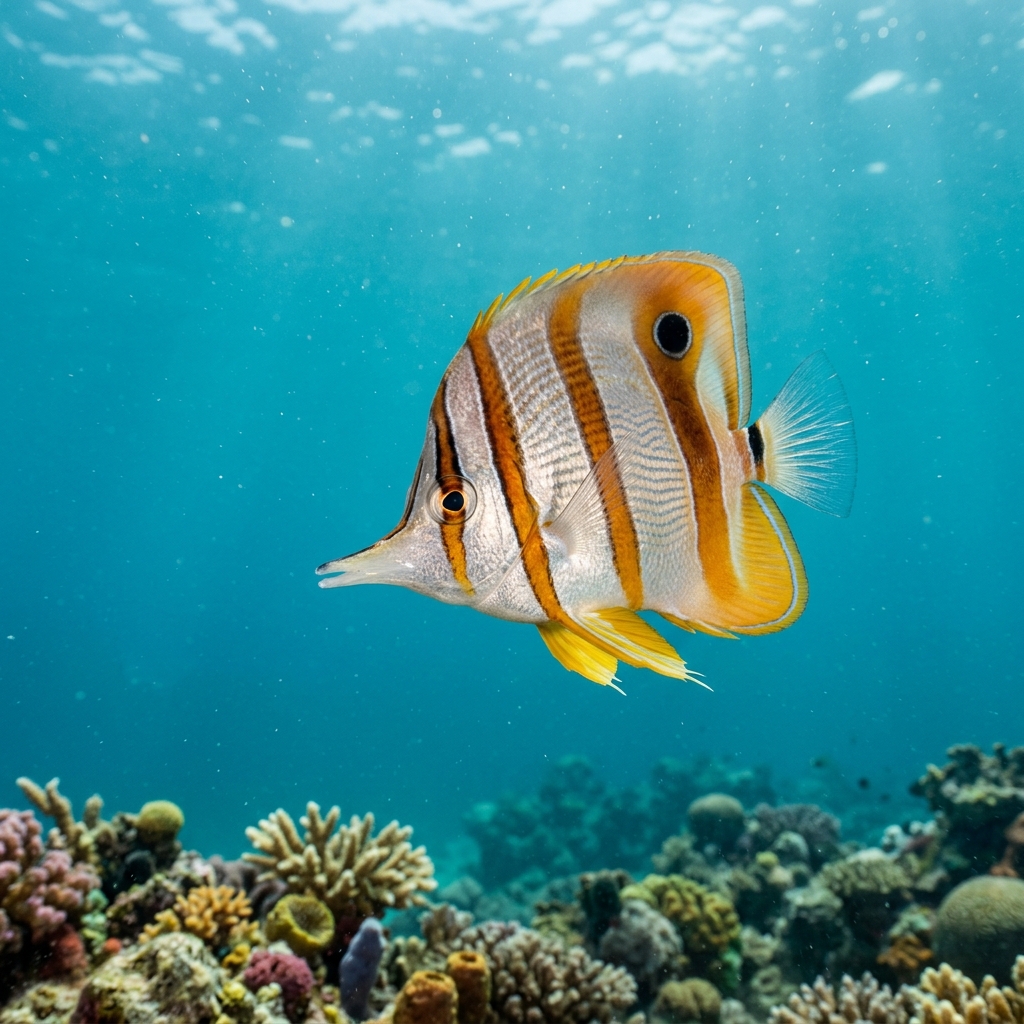
Few reef fish are as instantly recognisable as this one: a deep, disc-shaped white body crossed by four bold orange-copper vertical bands, paired with an extraordinarily long, pointed snout used to probe crevices. A black eyespot (false eye) sits near the rear of the dorsal fin, which distracts predators away from the real eye. Look for the snout first, no other common butterflyfish in the Indo-Pacific carries one so elongated and pencil-thin.
You will most often find copperbands picking deliberately around coral rubble, anemones, and tight reef crevices, using that needle-like snout to extract small worms, tube worms, and tiny invertebrates. They typically move in pairs or small groups and maintain a cautious distance from divers, approach slowly and stay low to avoid spooking them. Sightings tend to be in shallower reef zones where coral growth is varied and there is plenty of architecture for them to probe.
The copperband is one of the few butterflyfish known to nip at Aiptasia glass anemones (pest anemones), a trait that has made it popular in reef aquaria for biological control, though it rarely feeds on Aiptasia exclusively in the wild.
Northern Hemisphere sightings concentrate from January through September, so planning a trip to Malaysia, the Philippines, or Thailand in the first half of the year gives the best odds. In tropical Australian waters the species is present year-round, consistent with its preferred water temperatures of roughly 24 to 30 °C.
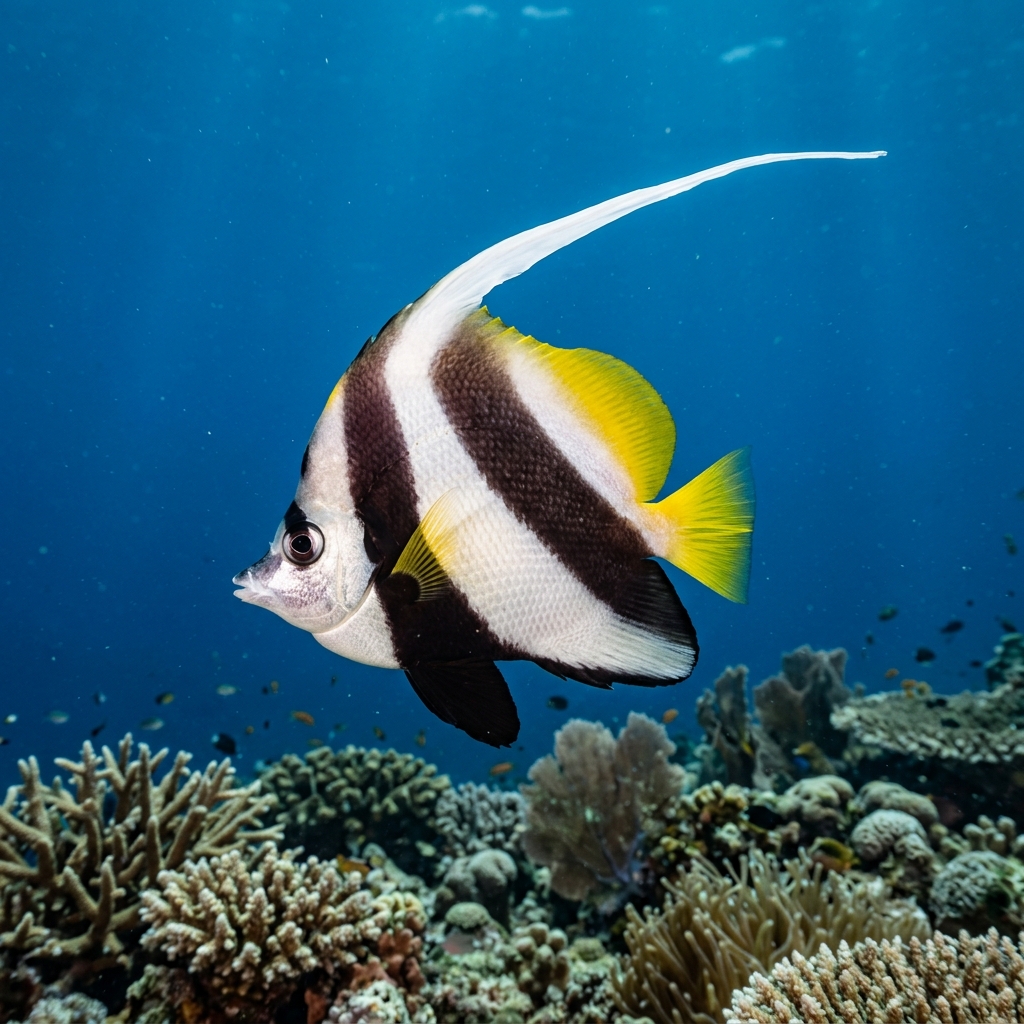
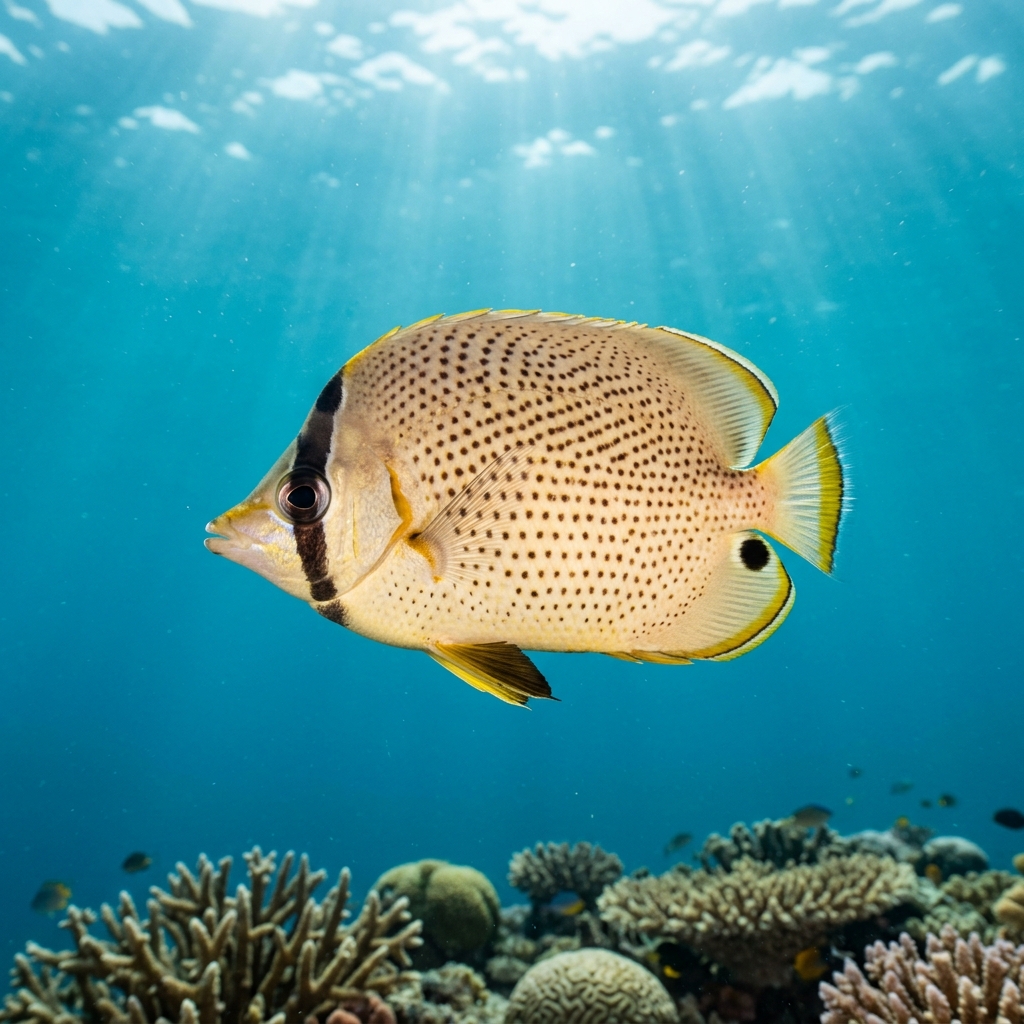
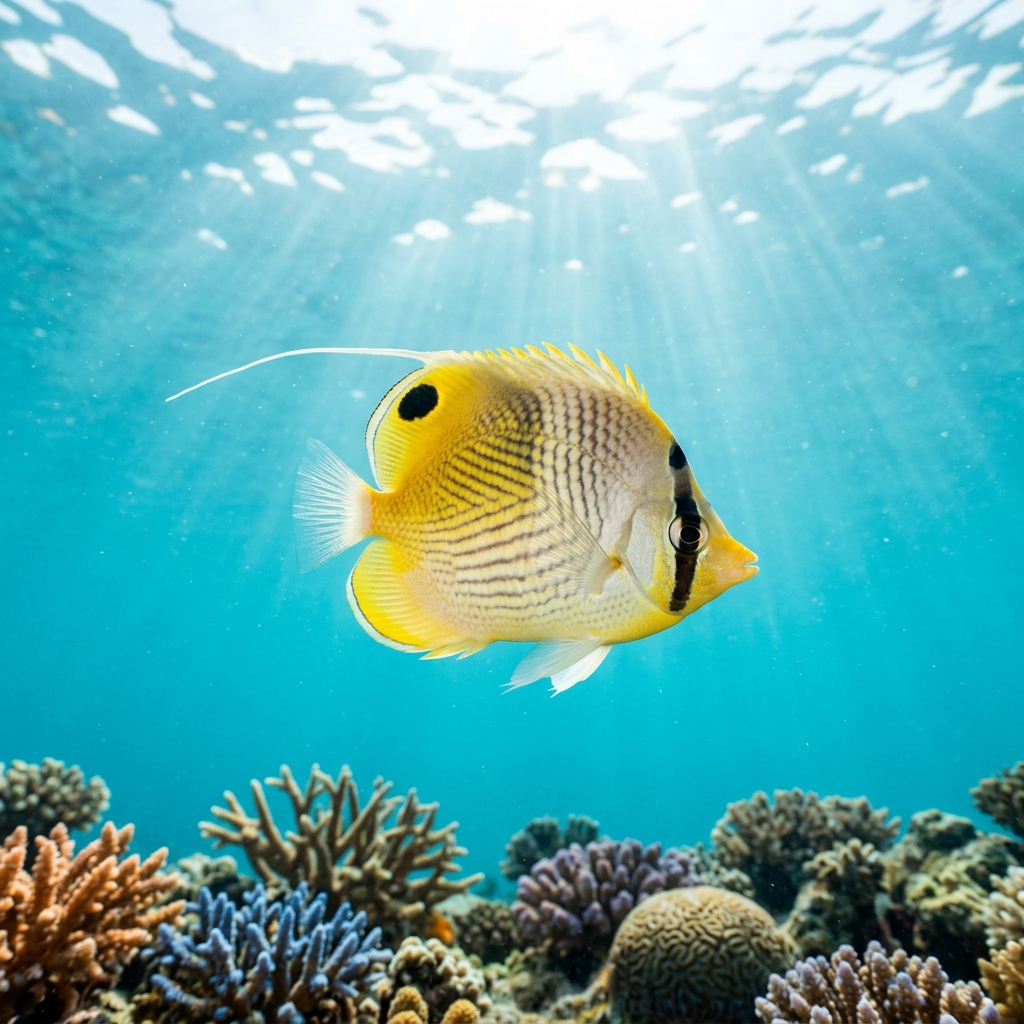
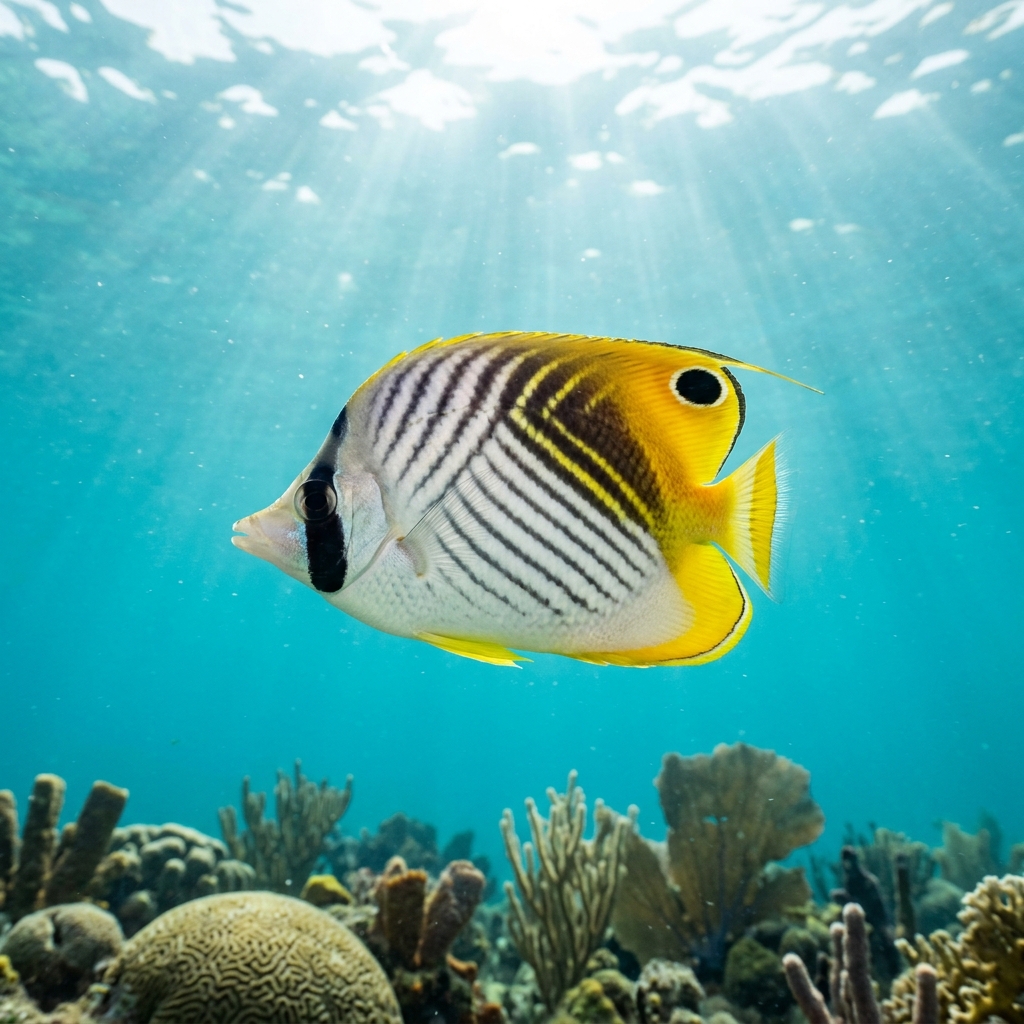
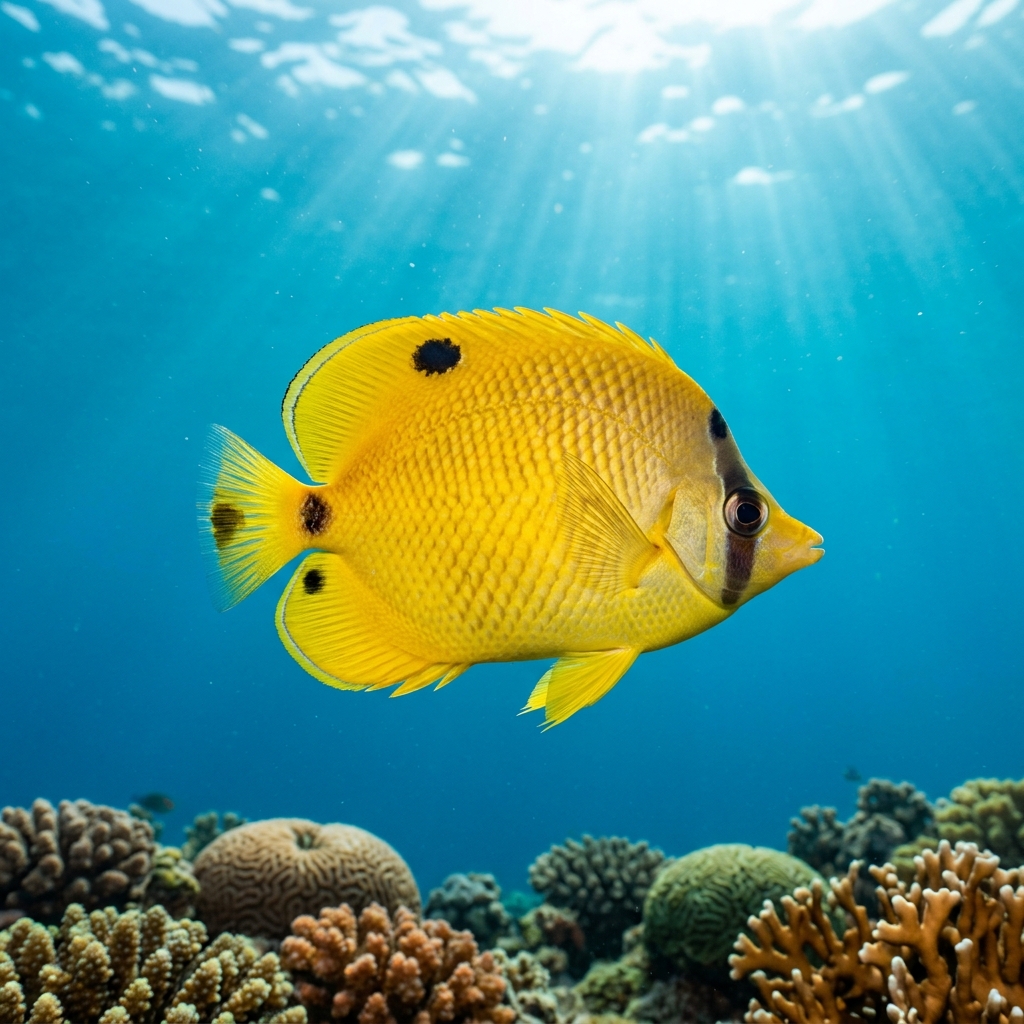
Reef neighbours a diver could mistake it for. Use the identification notes above to tell them apart.
Copperbands are most consistently logged across Malaysia, the Philippines, Thailand, and Australia, making Southeast Asia the heart of its range. The strongest concentrations appear at Pulau Tioman and East Sabah (Sipadan) in Malaysia, Palawan and Apo Reef in the Philippines, and Phuket and the Phi Phi islands in Thailand. Queensland in Australia rounds out the top regions with reliable records throughout the Great Barrier Reef.
Mapping where Copperband Butterflyfish is logged…
The best diving for copperbands is in Southeast Asia and Australia. Pulau Tioman and Sipadan in Malaysia, Palawan and Apo Reef in the Philippines, and Phuket in Thailand are all strong spots. Queensland's Great Barrier Reef is the top site in the Southern Hemisphere.
In the Northern Hemisphere, covering Malaysia, the Philippines, and Thailand, sightings are most frequent from January through September. In tropical Australian waters they are present throughout the year, as the species is comfortable in water temperatures between roughly 24 and 30 °C.
Look for a white disc-shaped body with four vivid orange-copper vertical bands and, most distinctively, a very long pointed snout. A black eyespot near the rear dorsal fin is a useful second marker. No other common reef butterflyfish in the Indo-Pacific has such an elongated, forceps-like snout.
Copperbands typically reach around 20 cm in length in the wild. In the water they appear relatively slender because of their deep but laterally compressed body shape, they look taller than they are long.
They feed on small invertebrates hiding inside coral crevices, tube worms, small crustaceans, and similar soft-bodied prey, which they extract using that specialised elongated snout. They are also one of the few fish that will target Aiptasia pest anemones, though this is opportunistic rather than a dietary staple in the wild.
Site and sighting data is aggregated from diver logs, iNaturalist and GBIF. For taxonomy and conservation status: