Chelidonura alisonae
An uncommon headshield slug found across Hawaii's reefs, active in warm 22-28C water year-round for divers who look closely on night dives.
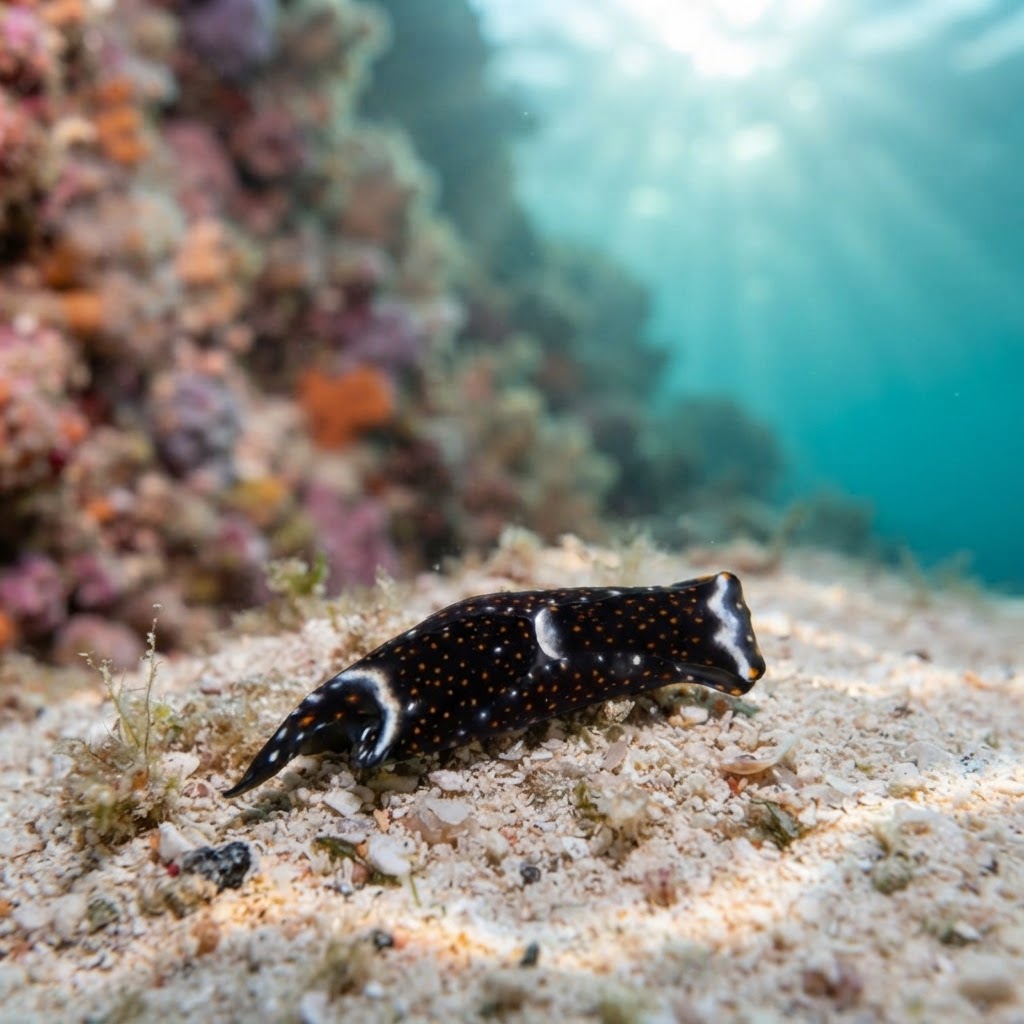
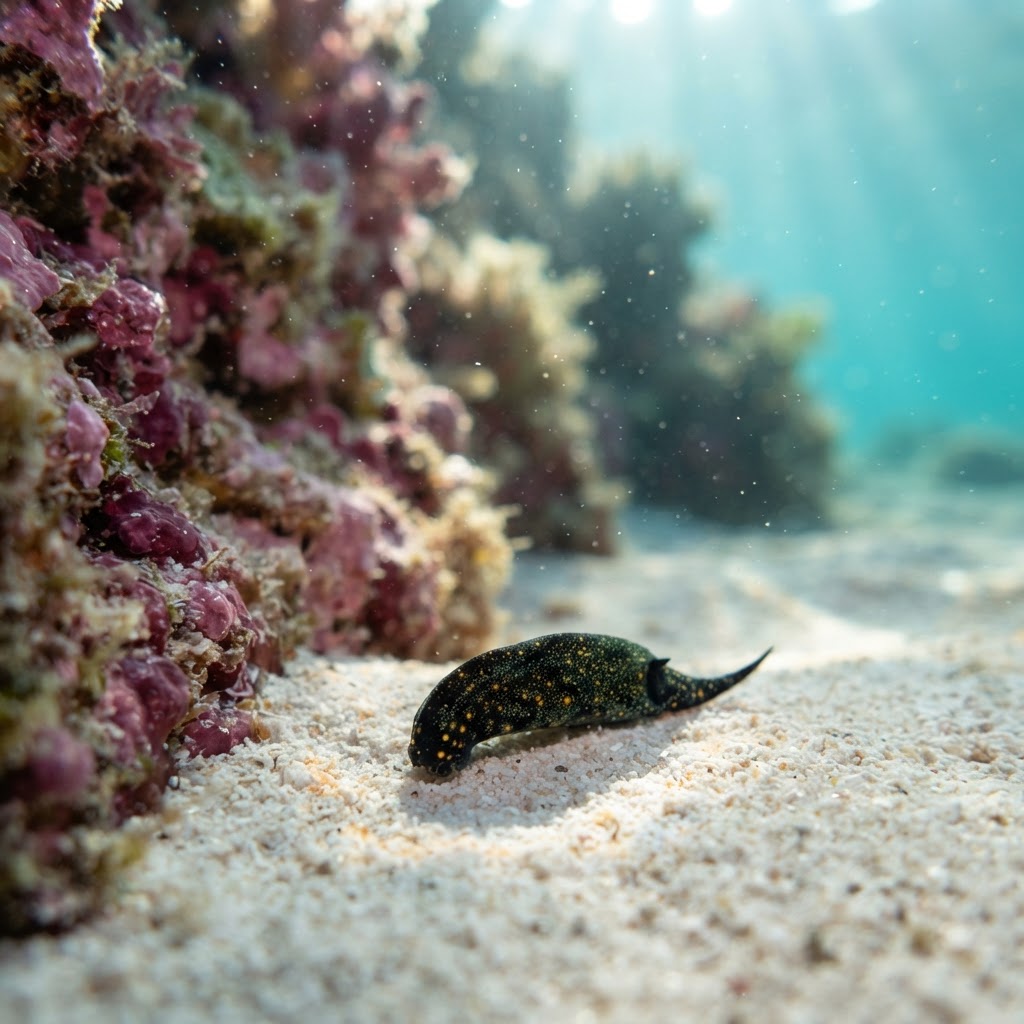
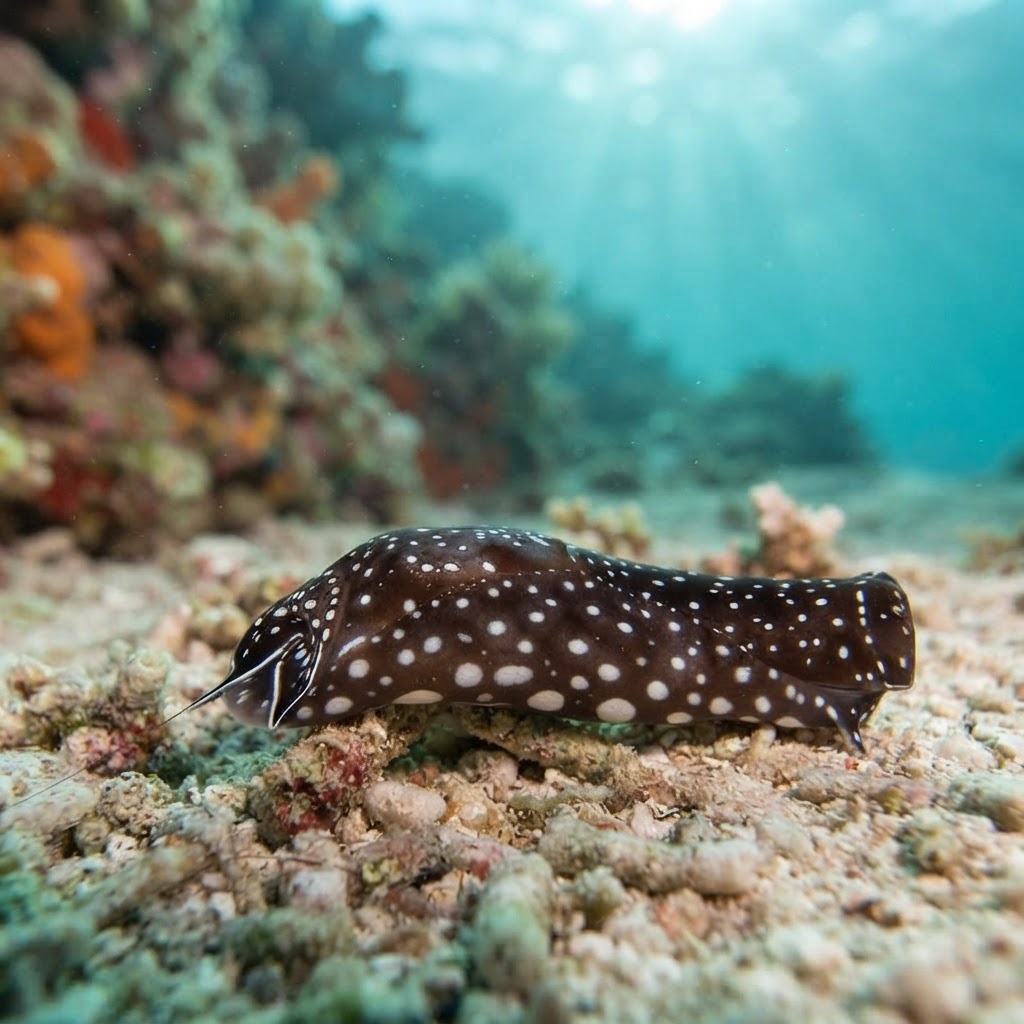
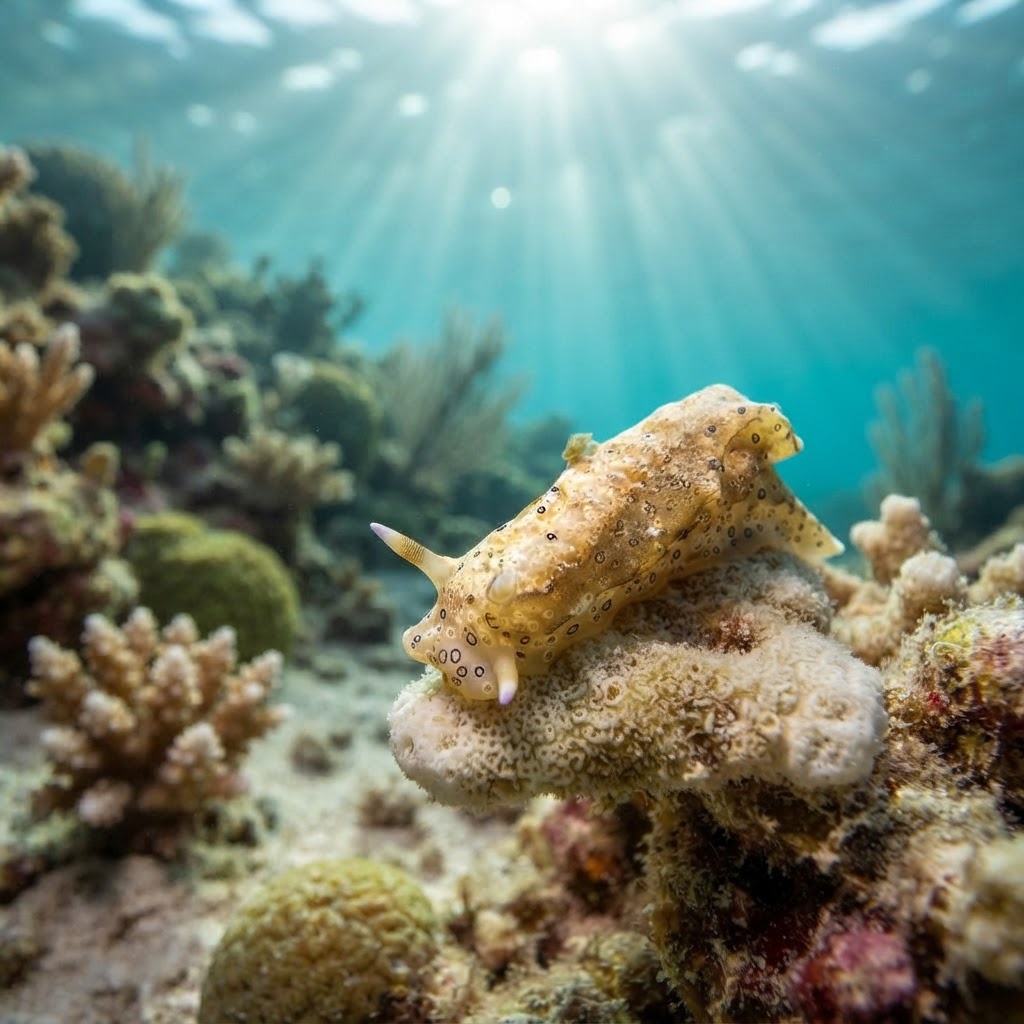
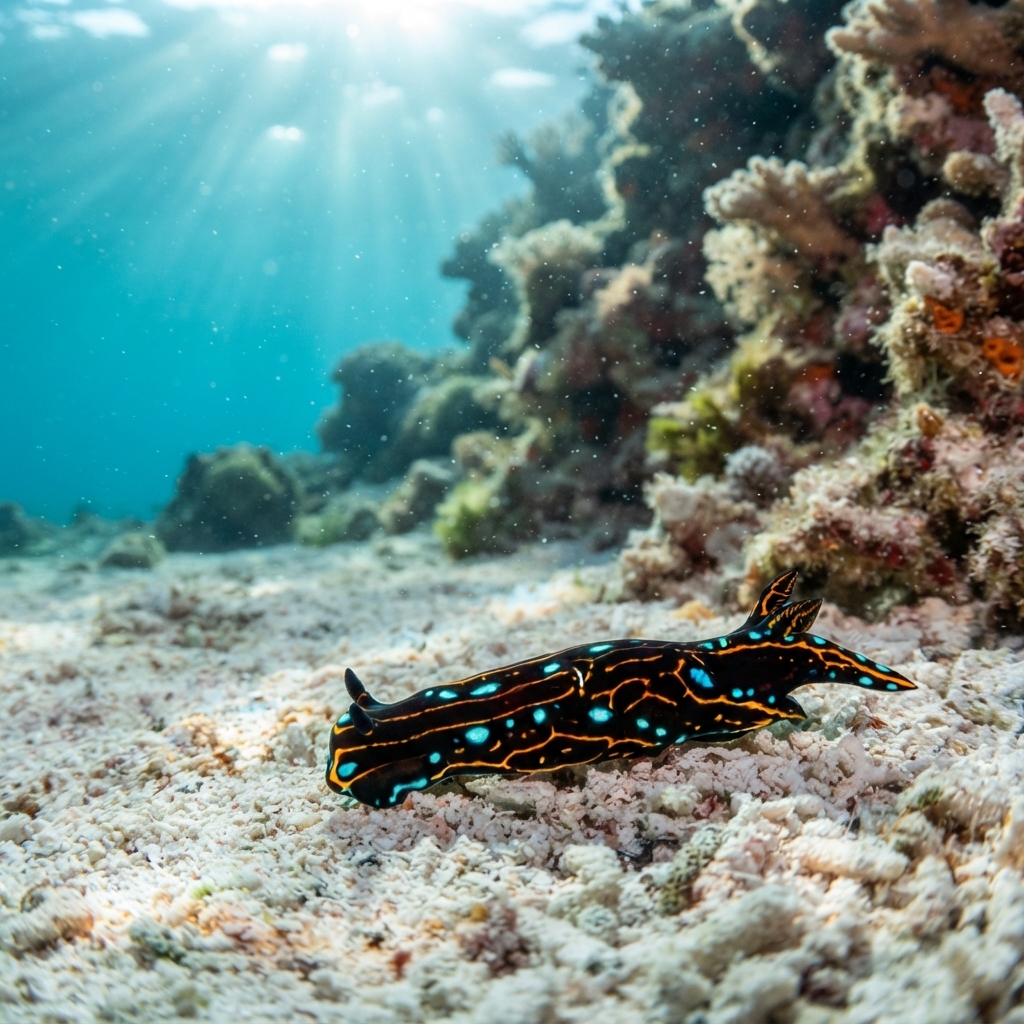
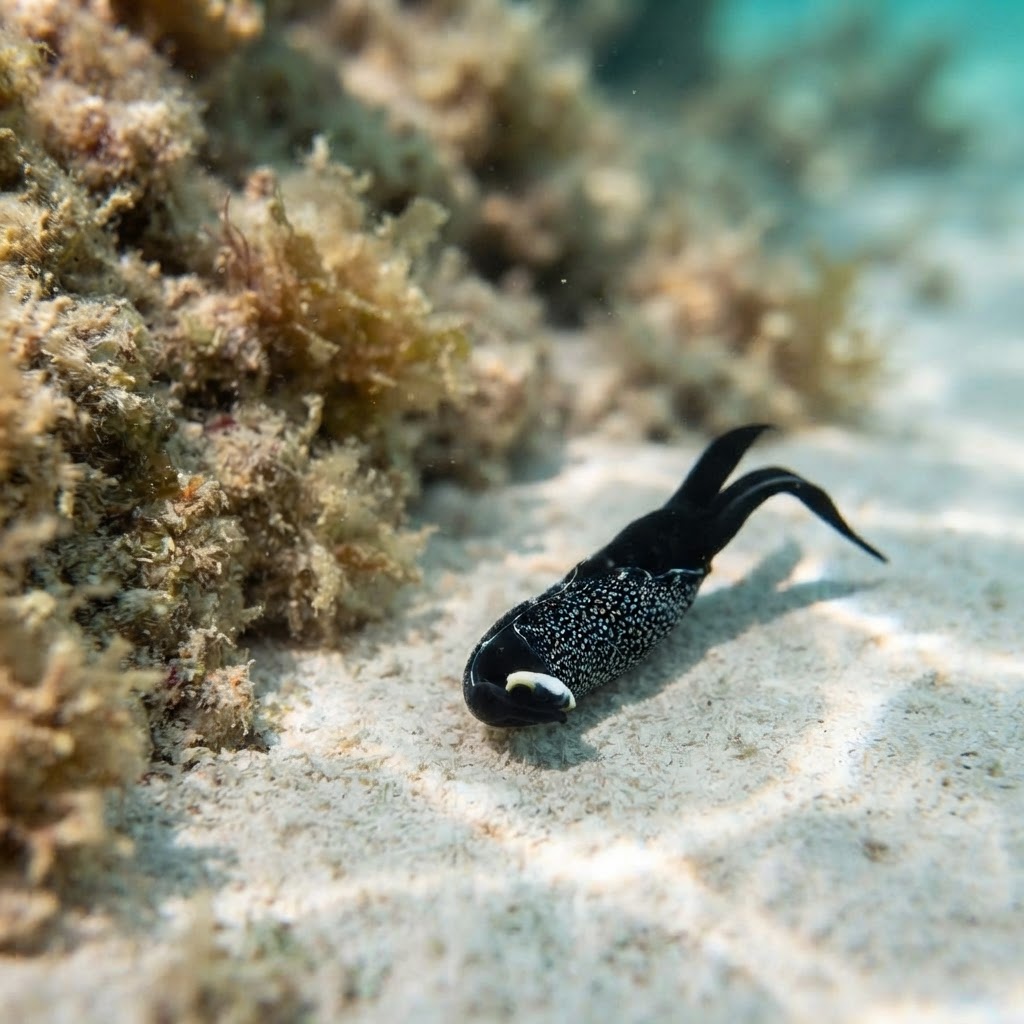
A small, slug-shaped body with an elongated, tapered rear end and a broad, flattened head shield used to plough through sand and rubble. Body colour runs dark, typically blackish or deep brown, often with fine pale speckling or thin light lines along the margins that are easiest to pick out with a torch. There are no showy fins or bright warning colours here, so divers usually spot it by its low, gliding silhouette rather than colour.
Divers typically find it low on the reef, ploughing across sand and rubble patches with its head shield leading the way as it hunts. It moves slowly and shows little reaction to divers, making it an easy subject once you spot it against the substrate. Most sightings come from close, deliberate scanning rather than mid-water encounters, since it blends into darker sand and debris.
Like other aglajids, it's a predator that hunts other small slugs and worms buried in the sediment, using its broad head shield to detect and dig out prey rather than grazing algae like many reef slugs.
No clear seasonal pattern shows up in the data, and with a comfortable range of 22.4 to 28.4C, Hawaii's waters stay within its niche all year, so it's a year-round sighting rather than a seasonal one.
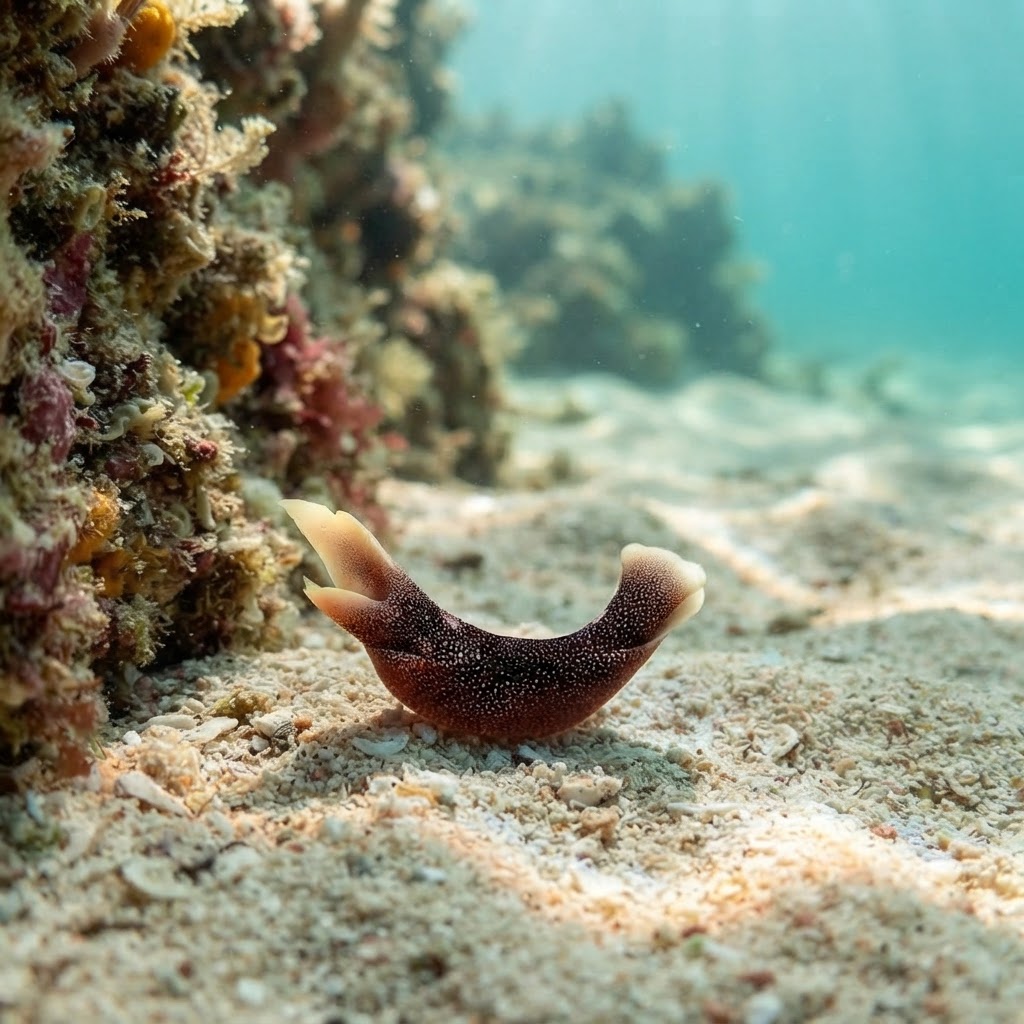
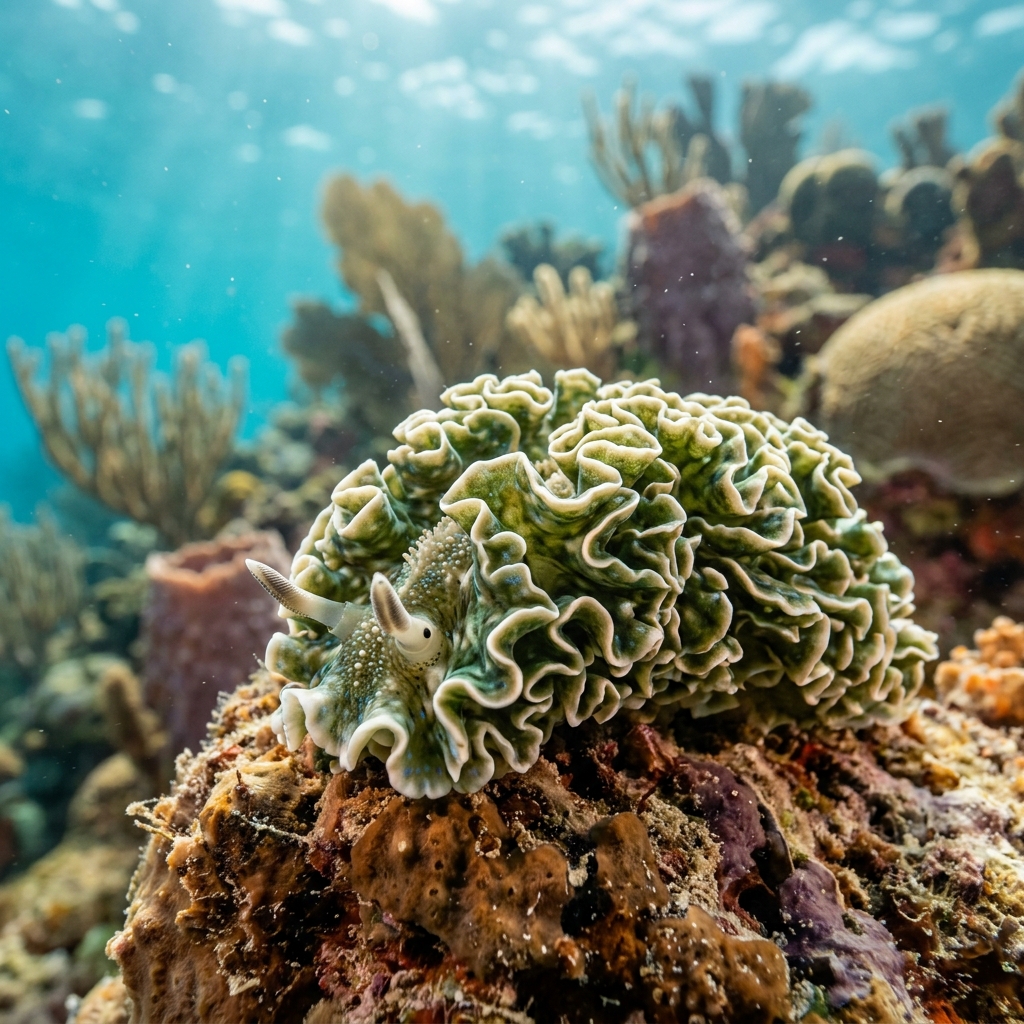
Reef neighbours a diver could mistake it for. Use the identification notes above to tell them apart.
Logged exclusively at sites across Hawaii, United States, making it a Hawaii speciality rather than a species you can plan around elsewhere. Divers most reliably find it working sandy patches and rubble zones on Hawaiian reef dives, where it shows up as an uncommon but steady find at most of the sites reporting it.
Mapping where Chelidonura alisonae is logged…
It's recorded almost exclusively in Hawaii, United States, where it turns up on sandy and rubble patches at a range of dive sites. It hasn't been logged as a reliable sighting outside Hawaiian waters.
There's no strong seasonal pattern in the sightings, and Hawaii's reef temperatures stay within its comfortable 22.4 to 28.4C range year-round, so it can turn up on any dive.
Look for a small, dark, elongated slug with a flattened head shield gliding low over sand or rubble. Fine pale speckling or thin light lines along the body edges help separate it from similarly shaped headshield slugs.
No, it poses no threat to divers and has no sting or bite of concern. It's safe to observe closely, though as with any small invertebrate it's best not to touch it.
As a predatory sea slug, it hunts other small slugs and buried invertebrates in sand and rubble, detecting prey with its head shield before digging it out. This hunting behaviour is typical of the aglajid family it belongs to.
Site and sighting data is aggregated from diver logs, iNaturalist and GBIF. For taxonomy and conservation status:
Mariaglaja inornata
Elysia Timida
573 sites