Pomacentrus brachialis
A small grey-blue damsel logged across the Visayas and Luzon, at ease in warm 25-29C reef water year-round.
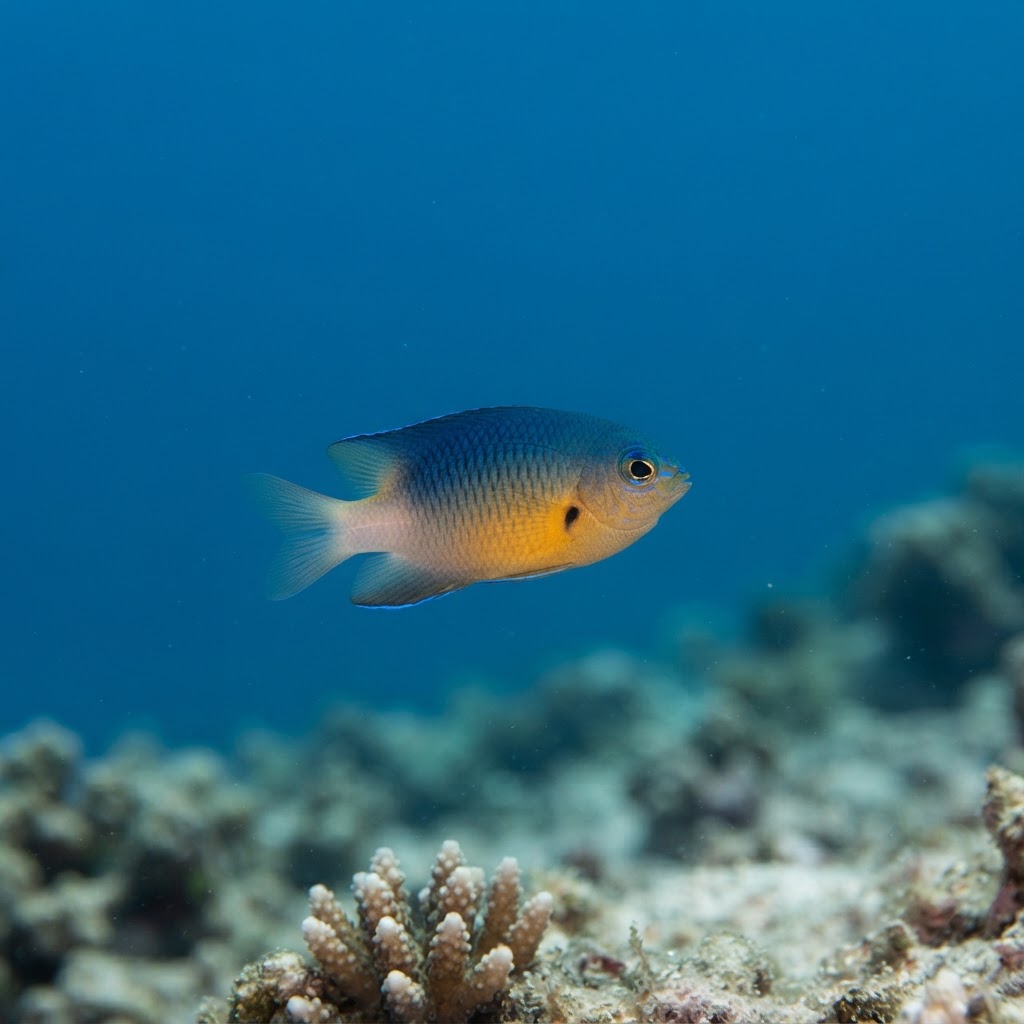
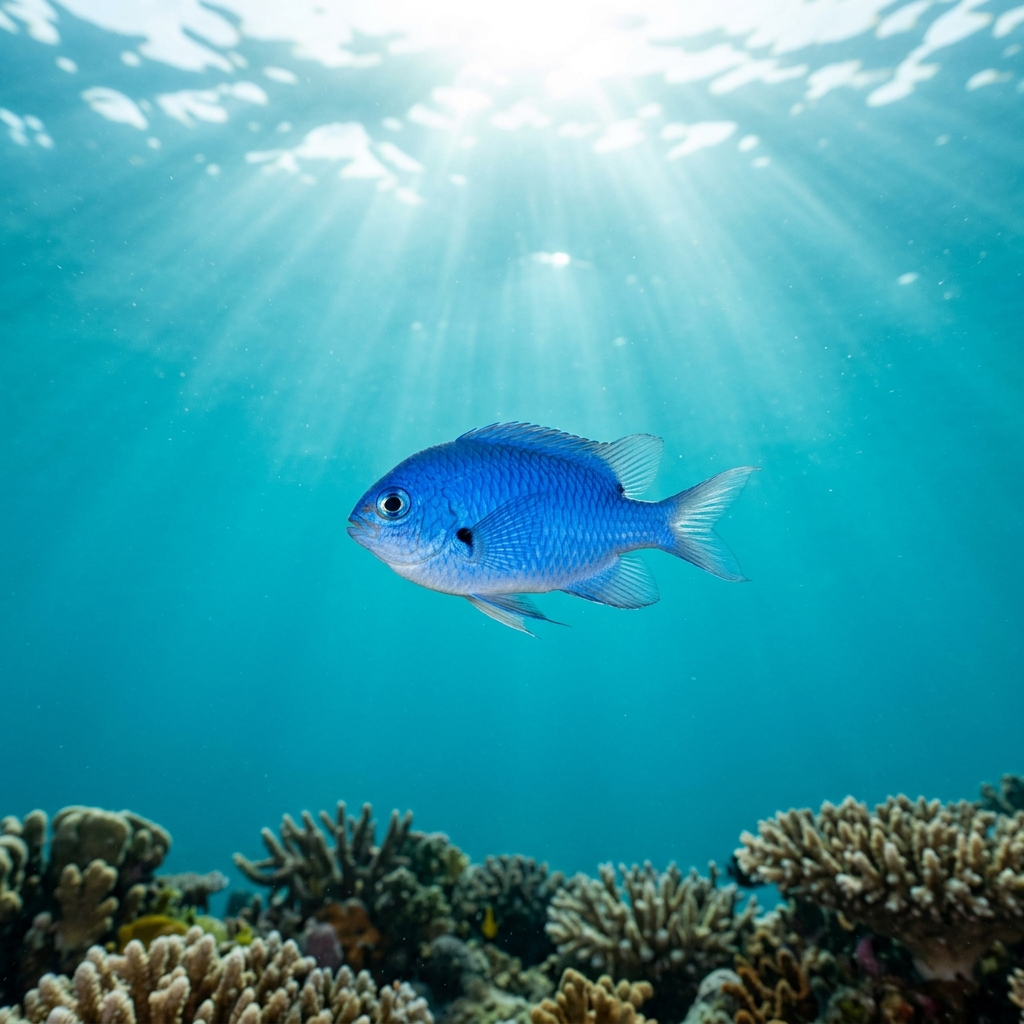
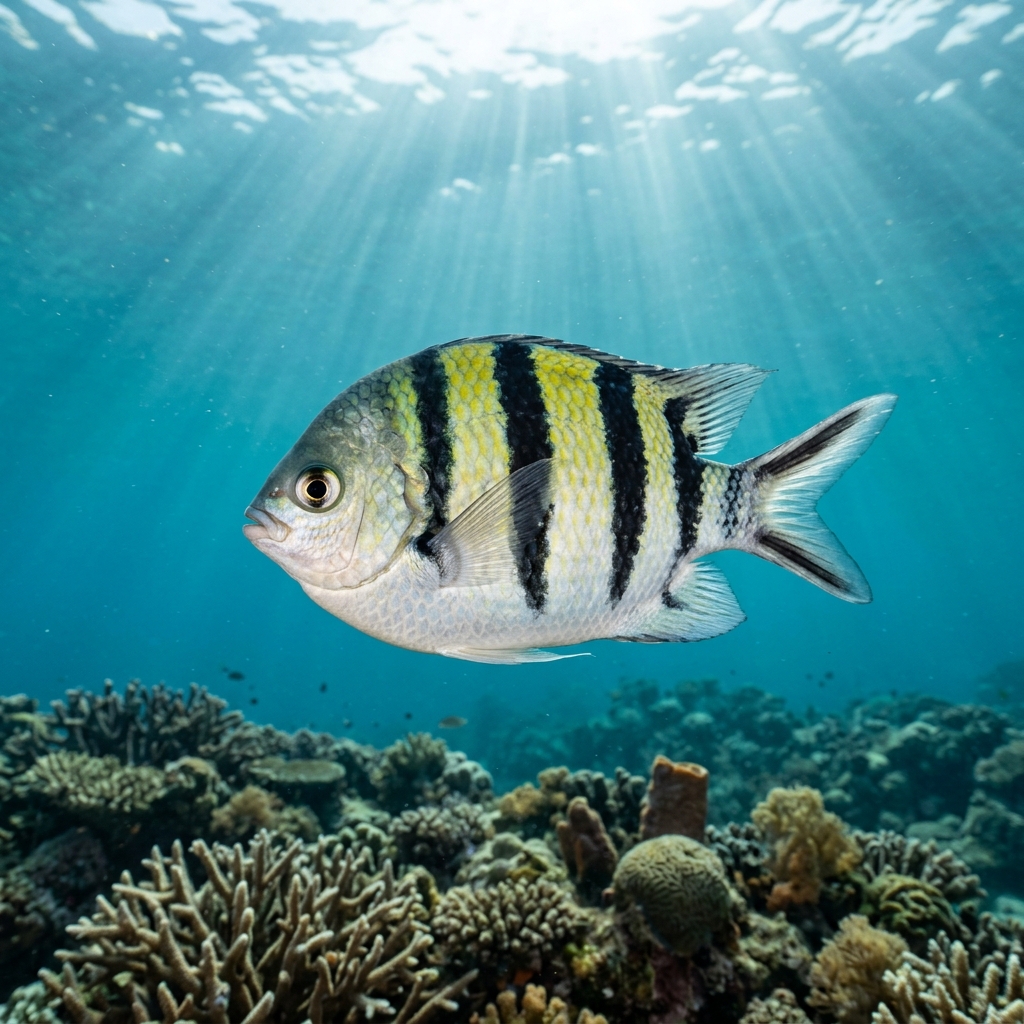
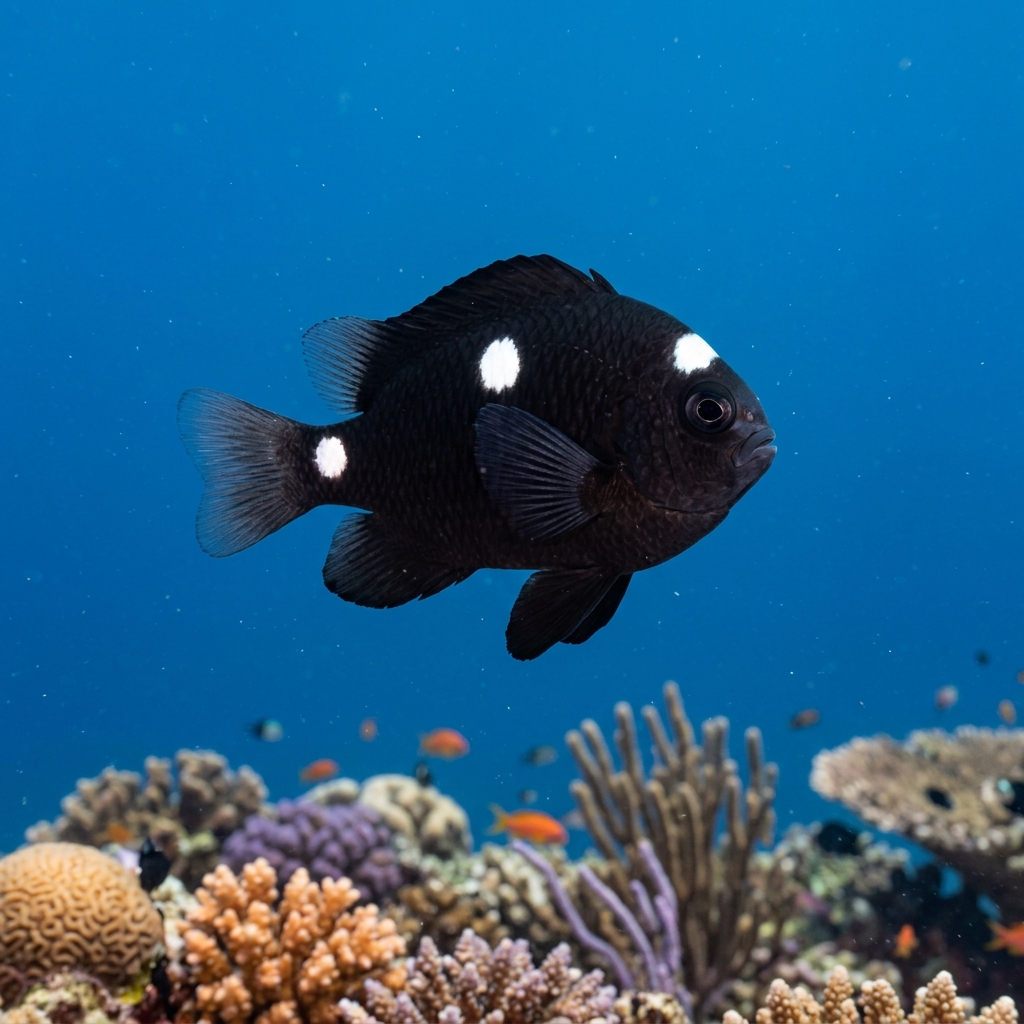
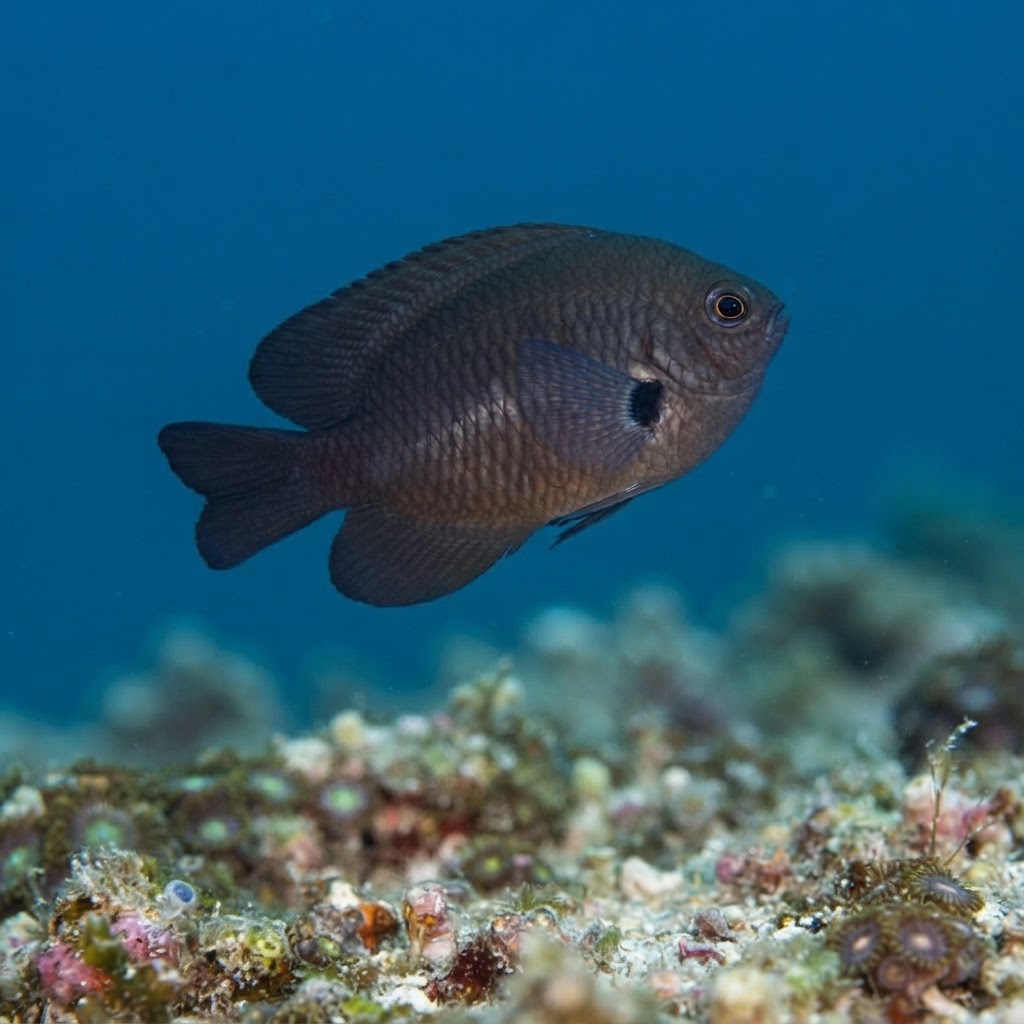
A compact, torpedo-shaped damsel only about 5cm long, coloured in dark charcoal-grey to sooty brown with faint pale blue flecks along the upper body catching the light. The tail and rear fin edges often show a subtle pale trim, but there's no bold stripe or eyespot to key on, it reads as a plain, dusky little fish darting over rubble and coral heads. Its size and constant hovering near a patch of reef, rather than any flashy marking, is usually the giveaway.
Expect to find it hovering low over rubble, coral rubble patches, or the base of a reef structure, picking at algae and small invertebrates rather than schooling in open water. It's an unremarkable, unbothered little fish that holds its ground near shelter and barely reacts to a diver's approach, more likely to duck into a crevice than flee across the reef. Divers tend to log it as one of many small reef fish rather than a target sighting, which fits its uncommon-but-steady presence at the sites where it turns up.
As an omnivore it grazes both algae and tiny invertebrates off the reef surface, making it one of the small, easy-to-overlook fish that keeps rubble and coral surfaces clean.
Sightings don't show a clear season, and with a comfortable range of roughly 24.7 to 29C this damsel is present on tropical reefs all year. Plan around good diving conditions in the Visayas rather than chasing a particular month.
Reef neighbours a diver could mistake it for. Use the identification notes above to tell them apart.
Almost all logged sightings come from the Philippines, with the Visayas the strongest region by far, followed by Luzon; a smaller number of records come from Sulawesi in Indonesia. If you're reef diving around the Visayas in particular, keep an eye on rubble patches and coral bommies in that 6 to 40m range.
Mapping where Charcoal Damsel is logged…
Most reliably logged in the Philippines, especially the Visayas and, to a lesser extent, Luzon, with occasional sightings in Sulawesi, Indonesia. It's an uncommon find even at sites where it occurs, so treat it as a bonus spot rather than a guaranteed one.
There's no strong seasonal pattern in the sightings, and its comfort range of roughly 25 to 29C means it's on the reef year-round in the Philippines and Indonesia.
Look for a small, 5cm dusky grey-brown damselfish with faint pale blue flecks, hovering near rubble or coral heads. It lacks bold stripes or an eyespot, so its plain colouring and small hovering habit near shelter are the main clues.
They stay small, typically around 5cm long, which is standard for damselfish on tropical reefs.
No, they're harmless to divers and simply hover near their patch of reef, more likely to retreat into cover than react aggressively.
Site and sighting data is aggregated from diver logs, iNaturalist and GBIF. For taxonomy and conservation status:
Dascyllus
3,697 sites