Maguimithrax spinosissimus
Spot this bulky reef crab in the Bay Islands, Cayman and Yucatán, often tucked under coral heads in warm 25-31C water year-round.
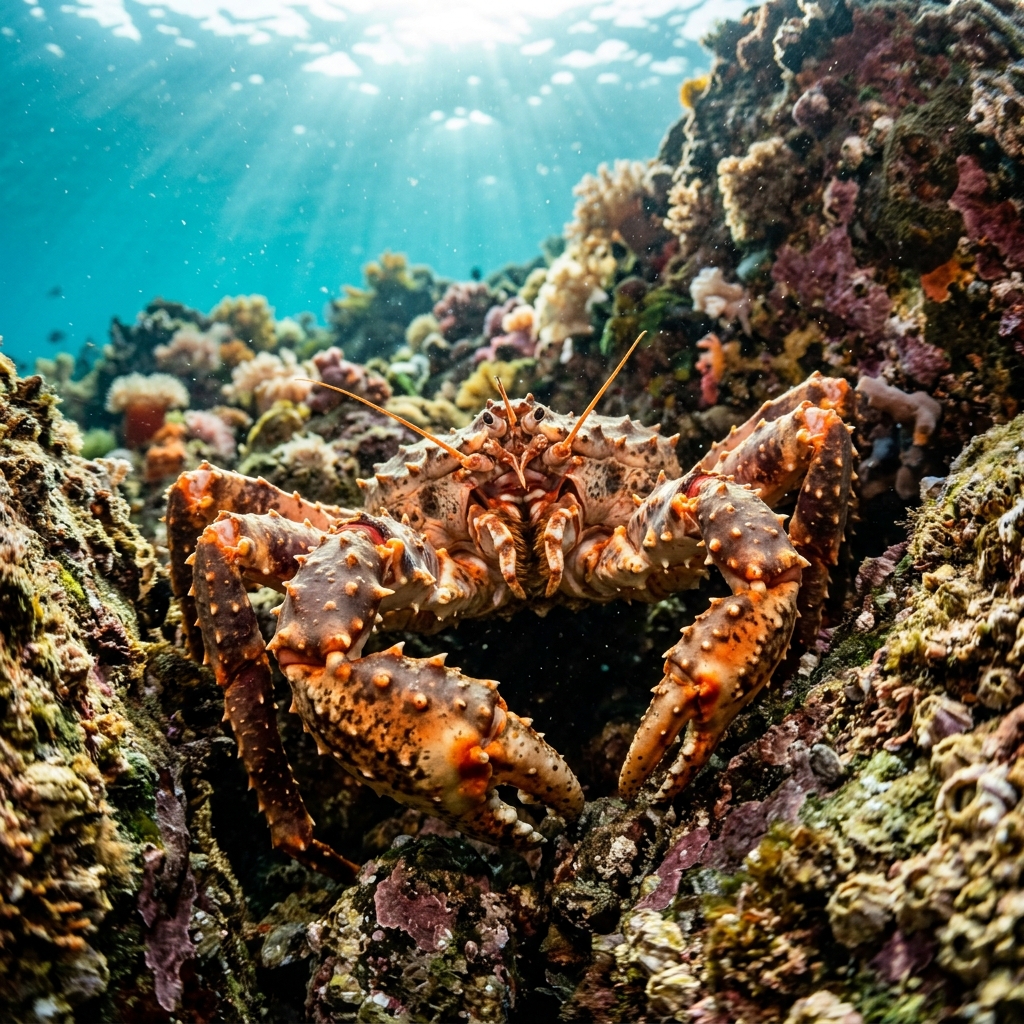
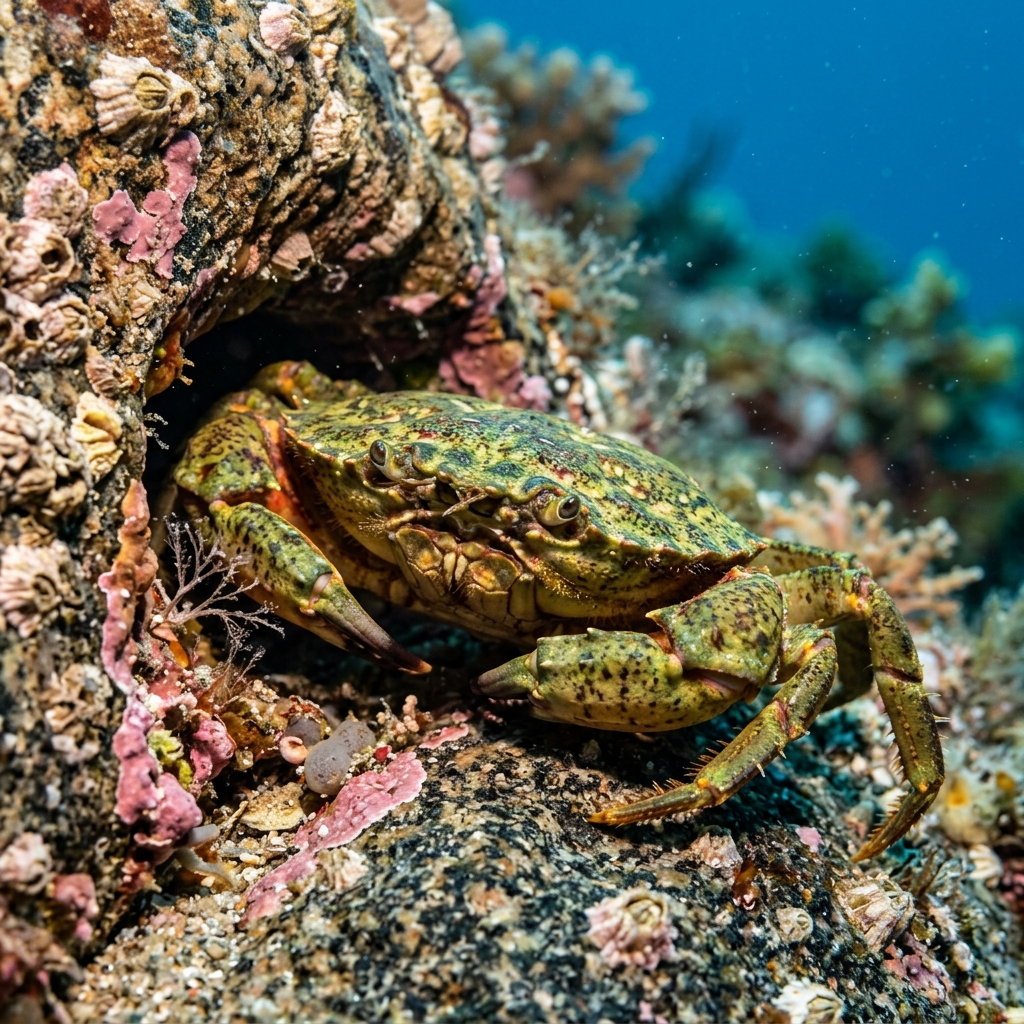
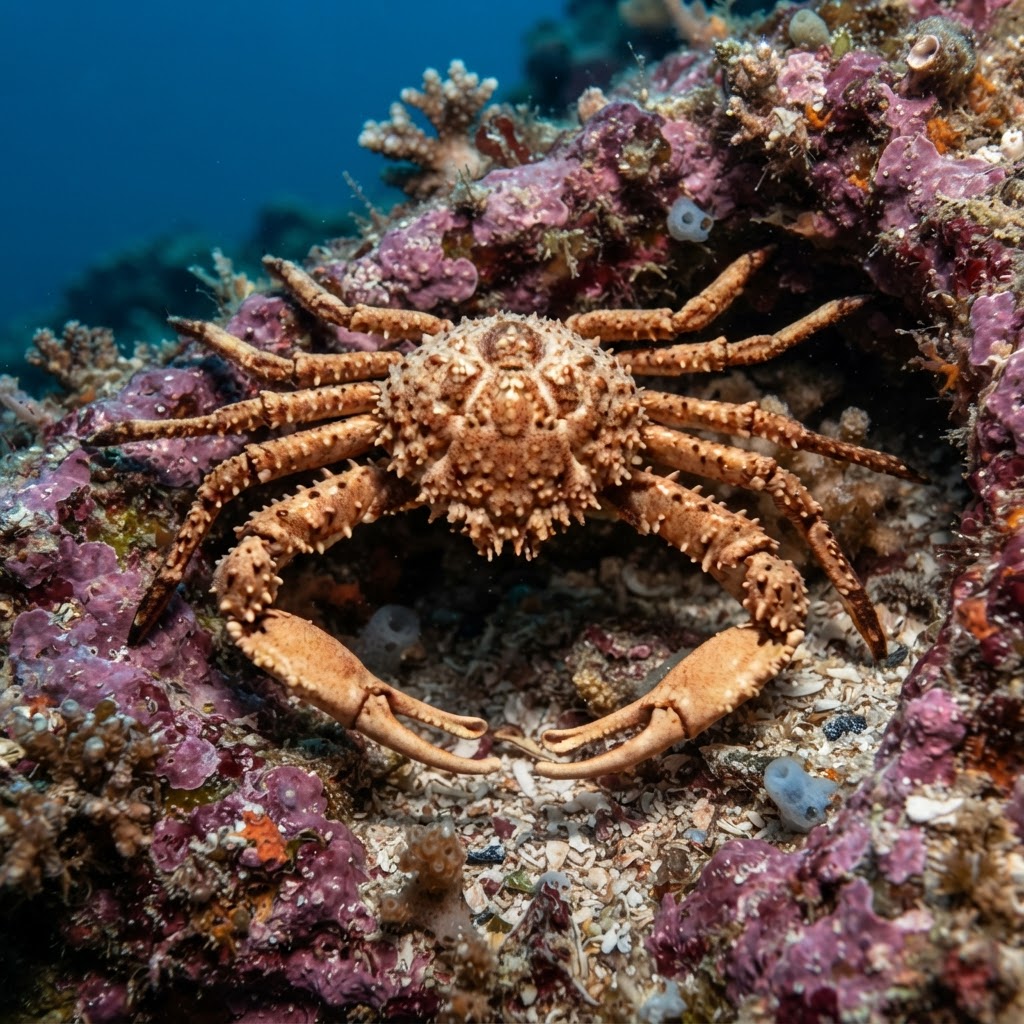
A heavy-bodied crab with a rounded, spiny carapace usually mottled brown, rust or greenish to match the reef around it, often crusted with algae or sponge growth that breaks up its outline. Legs are thick and hairy-looking, ending in dark-tipped pincers that look oversized for the body. Divers usually spot only the shell and claws poking out from a coral ledge or crevice, since it wedges itself into tight spaces rather than sitting out in the open.
Look for it wedged into coral crevices or under ledges during the day, legs and claws visible but body tucked well back out of open water. It is not shy so much as sedentary, staying put rather than fleeing when a diver's torch or bubbles pass over it, which makes it a slow, easy subject once you find one. Most sightings come from close-focus reef exploration rather than open-water swimming, so divers scanning nooks and overhangs on a slow drift or macro dive have the best odds.
Like other spider crabs it decorates its shell with bits of algae and sponge picked up from the reef, giving each individual a slightly different disguise depending on its neighbourhood.
No clear seasonal pattern shows up in the sightings, and with a comfortable range of 25.1 to 31.1C on Caribbean reefs, it is present and findable all year round.
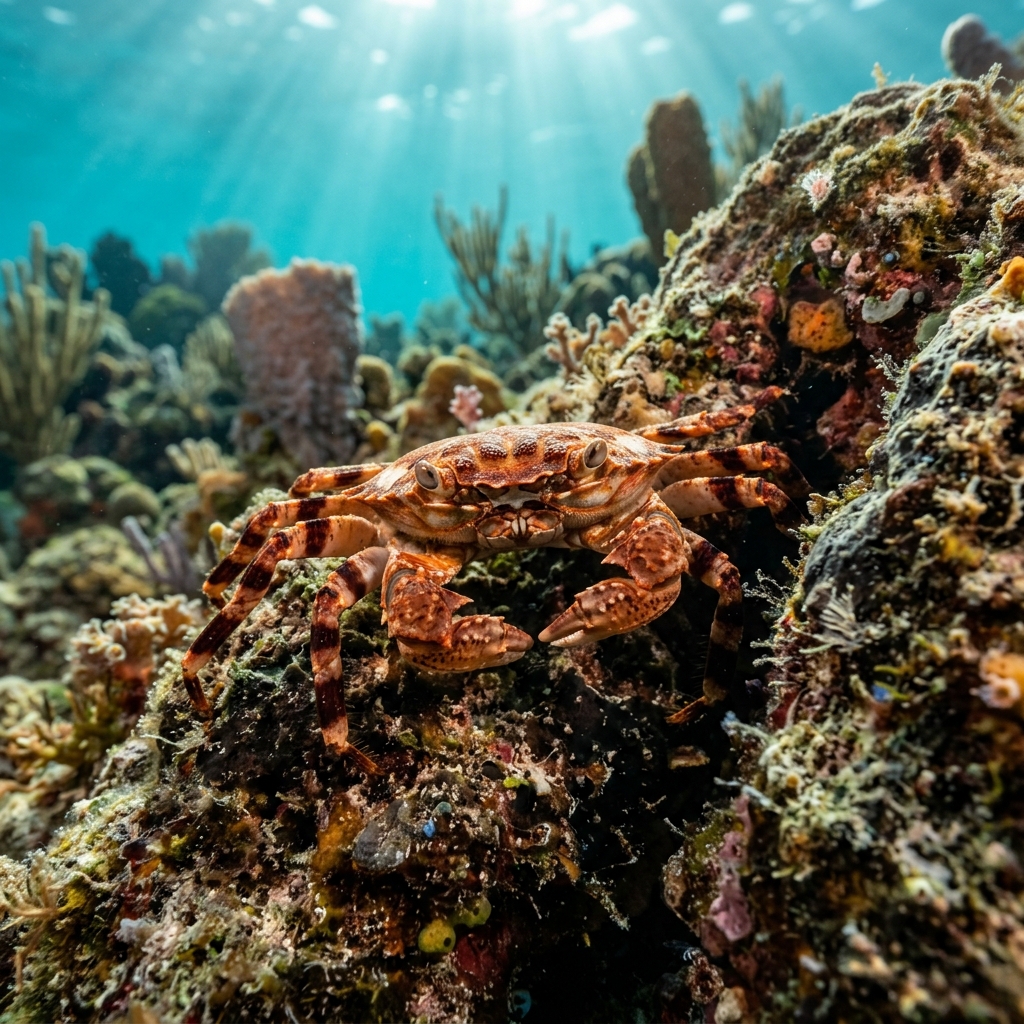
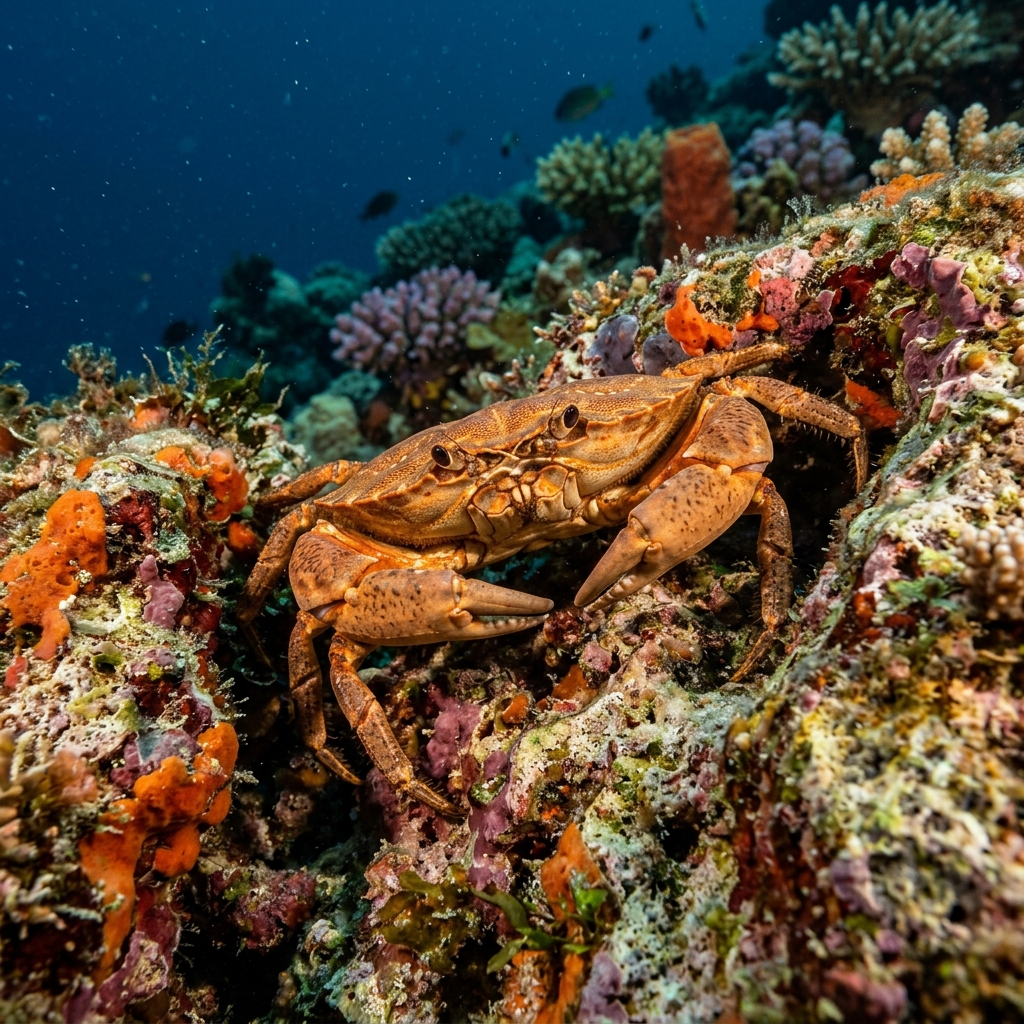
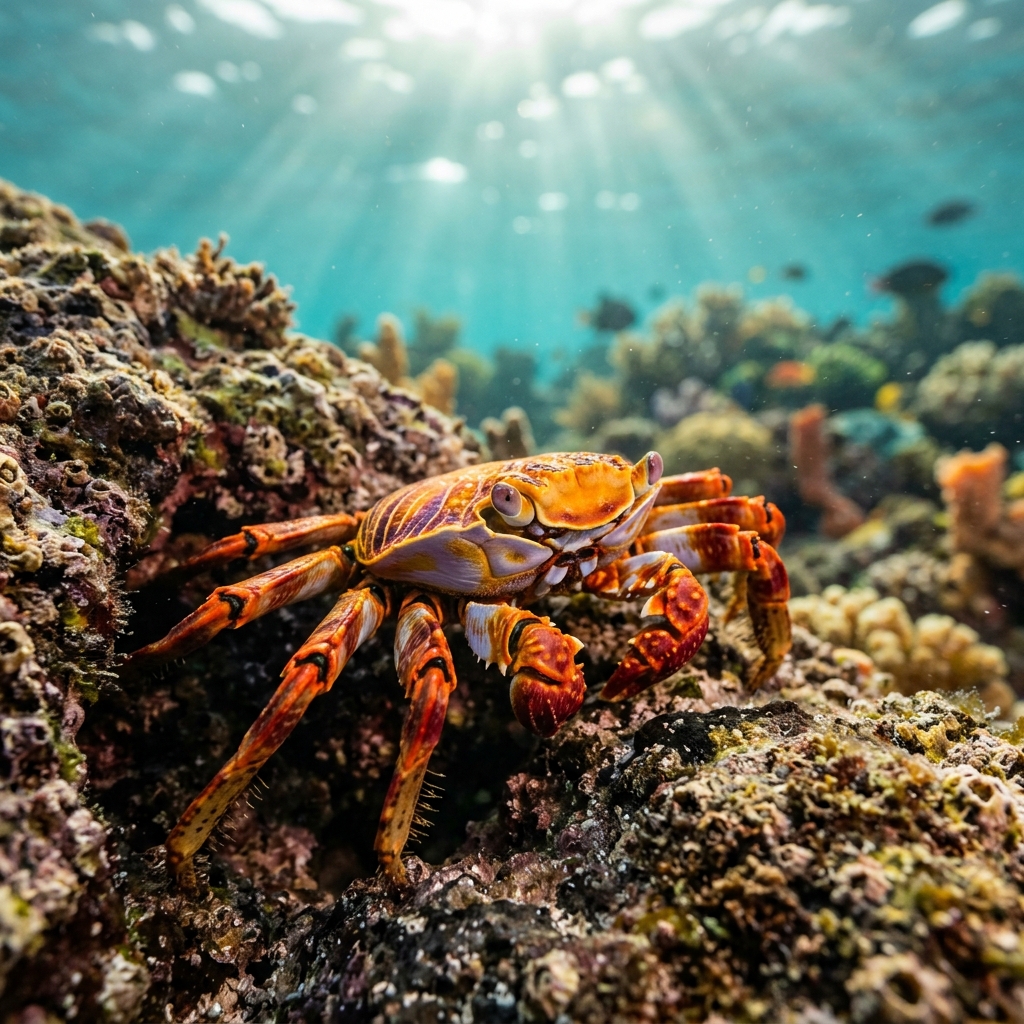
Reef neighbours a diver could mistake it for. Use the identification notes above to tell them apart.
Most reliably logged in the Bay Islands of Honduras and the Yucatán Peninsula in Mexico, with strong numbers also in Grand Cayman and Carriacou in Grenada. Smaller but consistent counts come from Sosúa in the Dominican Republic, Sint Eustatius, and Portsmouth in Dominica, making the wider Caribbean the place to look.
Mapping where Channel Clinging Crab is logged…
It turns up across the wider Caribbean, most commonly in the Bay Islands of Honduras, the Yucatán Peninsula in Mexico, Grand Cayman, and Carriacou in Grenada. Smaller but steady numbers are also logged in the Dominican Republic, Sint Eustatius, and Dominica.
There is no strong season in the sightings data, and it sits comfortably in warm water between about 25 and 31C, so it is a year-round find on Caribbean reefs rather than a seasonal one.
Look for a bulky, spiny-shelled crab wedged into a coral ledge, its shell often camouflaged with algae or sponge growth in brown, rust or greenish tones. The thick, dark-tipped claws poking out from a crevice are usually the giveaway rather than the whole body.
No, it poses no threat to divers. It stays tucked into reef crevices and will not approach or chase, so the only real interaction is spotting its claws poking out from a ledge.
It is usually logged as an uncommon find at the sites where divers spot it, occasionally common and occasionally rare, so it rewards a slow look into crevices rather than being an easy guaranteed sighting.
Site and sighting data is aggregated from diver logs, iNaturalist and GBIF. For taxonomy and conservation status:
European Green Crab
2,469 sites