Scarus chameleon
Uncommon but reliable on reefs in Queensland and the Visayas, this small parrotfish favours warm water between 24.7 and 29.3 C year-round.
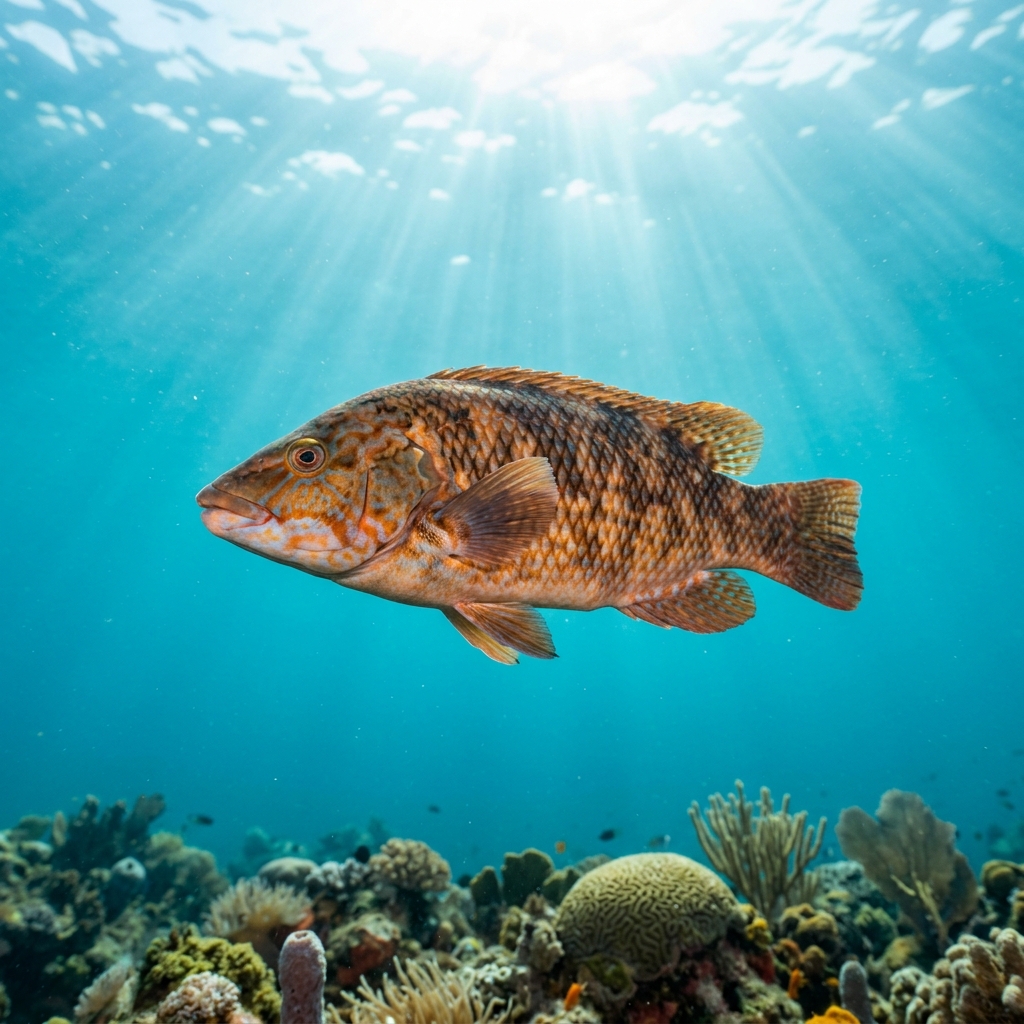
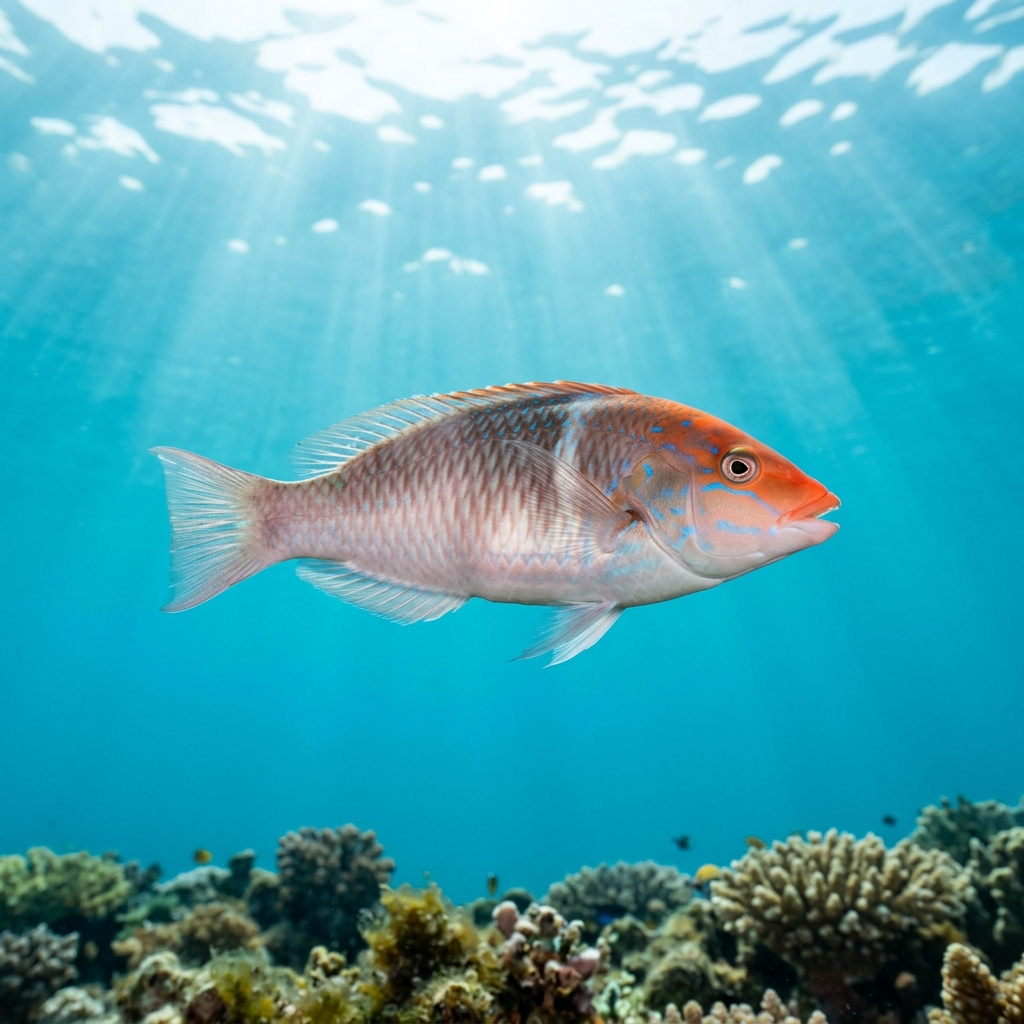
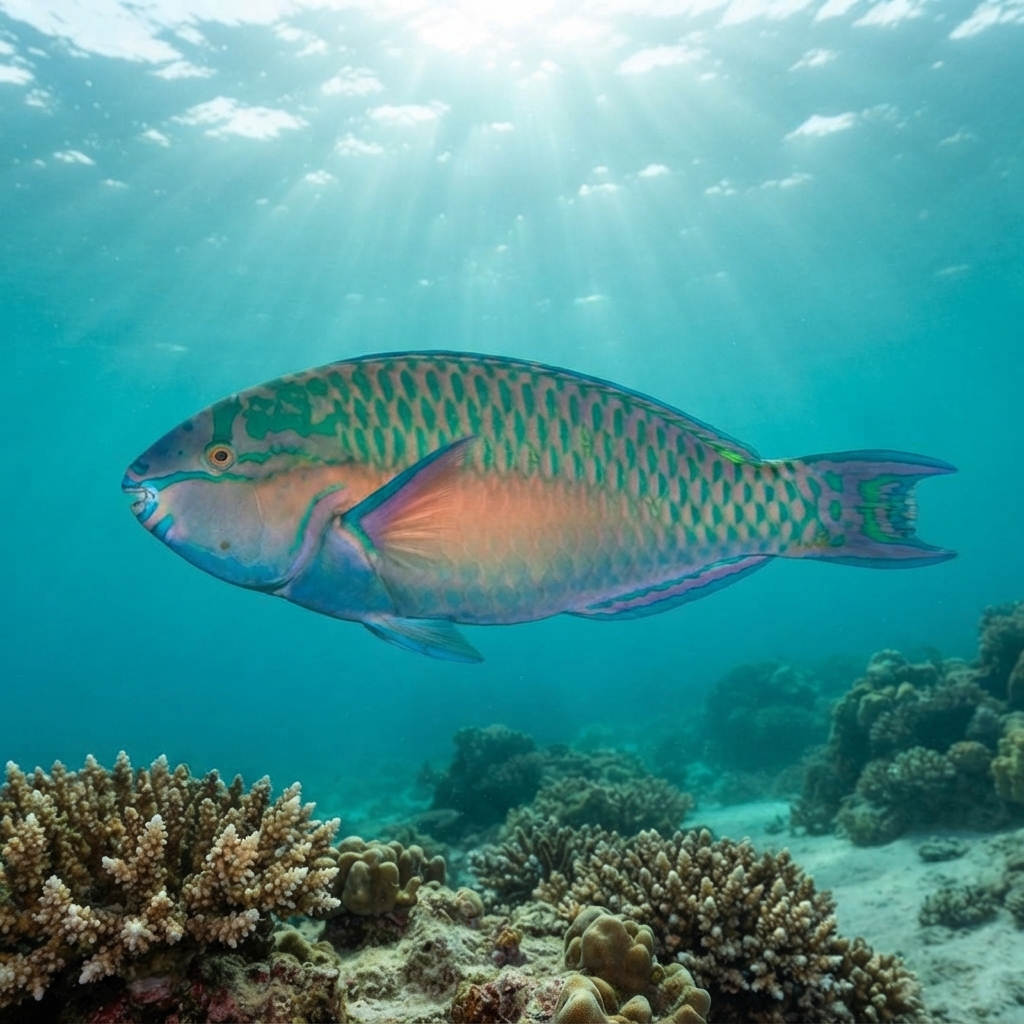
A small, compact parrotfish reaching around 22 cm, with a mottled patchwork of green, brown and pale scales that shifts tone across the body rather than showing one bold colour block. Look for the typical parrotfish beak-like fused teeth and a blunt head profile as it noses along the reef surface. At this size and pattern it reads as a background reef fish rather than a standout, so divers often need a second look to separate it from other small scarids nearby.
Divers typically find it grazing low over reef structure, picking at algae-covered rock and coral rubble rather than schooling in open water. It tends to keep a low profile among coral heads and doesn't show strong interest in divers, continuing to feed as you pass. Logged as uncommon at every site where it appears, so sightings are more a matter of patient reef-scanning than a guaranteed spot.
Like other parrotfish, it grazes algae off reef surfaces with fused beak-like teeth, a feeding habit that helps keep coral surfaces clear for new coral growth.
No clear seasonal pattern shows in the sightings, and the observed temperature range of 24.7 to 29.3 C spans typical tropical reef conditions all year, so it's a year-round encounter rather than a seasonal one.
Most consistently logged on reefs in Queensland, Australia, with a further cluster of sightings across the Visayas in the Philippines. Western Australia and Fiji's Lomaiviti region also turn up occasional records, but Queensland and the Visayas are the strongholds for this species.
Mapping where Chameleon Parrotfish is logged…
Queensland, Australia is the strongest area for sightings, with the Visayas in the Philippines also producing regular records. Smaller numbers have been logged in Western Australia and Fiji's Lomaiviti region.
There's no detected season in the sighting data, and it sits comfortably in water from about 24.7 to 29.3 C, so it can turn up on tropical reefs at any time of year.
Look for a small parrotfish around 22 cm with a mottled green-brown pattern and the blunt, beak-like mouth typical of the family. It's usually seen alone, grazing low over reef rock rather than schooling.
They typically reach around 22 cm, making them one of the smaller parrotfish species divers encounter on Indo-Pacific reefs.
It's logged as uncommon even at the sites where divers do find it, so it's more of a rewarding spot than a guaranteed sighting on any given dive.
Site and sighting data is aggregated from diver logs, iNaturalist and GBIF. For taxonomy and conservation status:
Bird Wrasse
3,632 sites