Nembrotha chamberlaini
A small, dark nudibranch reliably logged across Luzon and Visayas reefs at 25-31C, year-round and often on night dives.
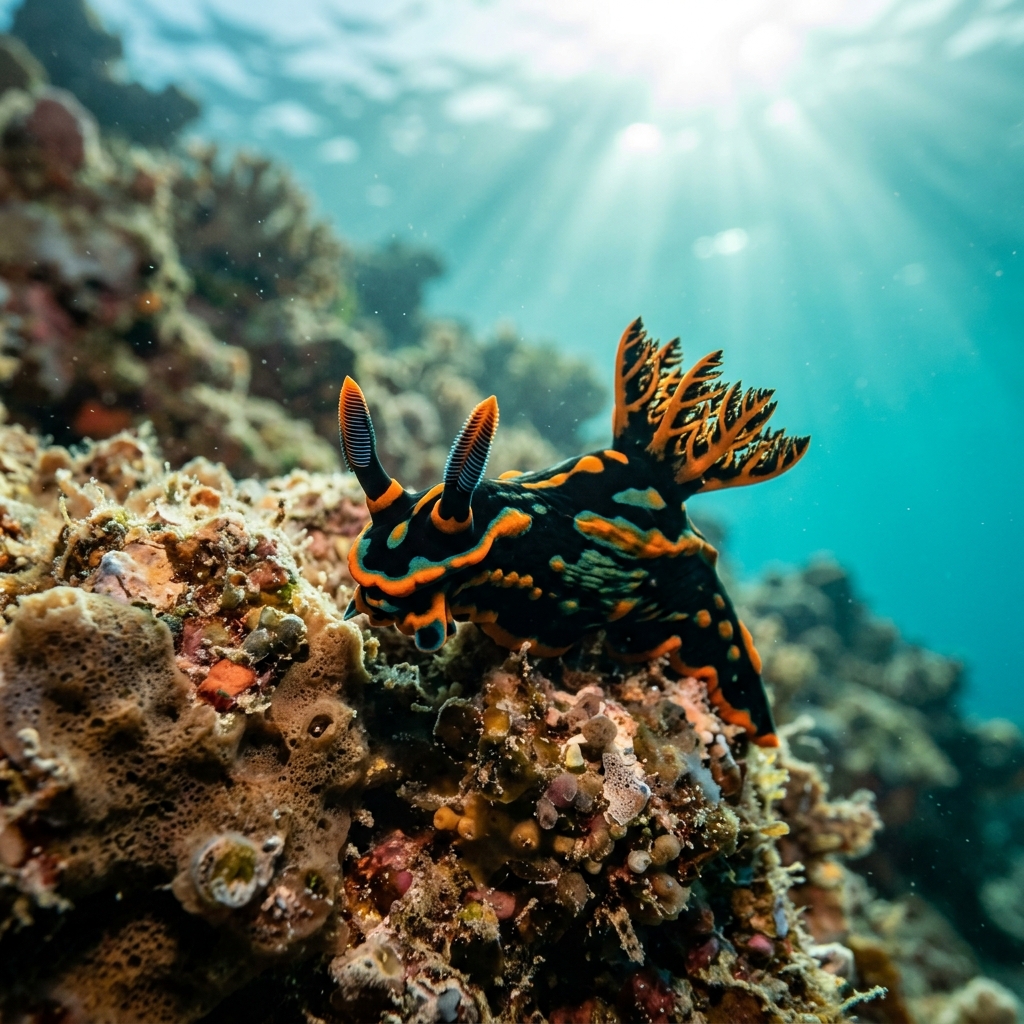
Small nudibranch, around 4 cm, with a dark grey to black body carrying pale speckling along the sides. Look for the rhinophores (the paired sensory horns on the head) and gill plume tipped in orange or yellow, which stand out sharply against the dark body. Body shape is elongated and slug-like, held low against the substrate rather than raised.
Found moving slowly over rubble and reef substrate as it hunts, unbothered by divers hovering close with a torch or macro lens. Most sightings come from muck and reef sites rather than open water, and like most nudibranchs it is easiest to spot on a slow, deliberate scan of the bottom rather than mid-water. It shows no flight response, so a careful diver can get a long, steady look without disturbing it.
Like other Nembrotha species, it feeds on sea squirts (tunicates), and the toxins it absorbs from that diet are thought to make it distasteful to predators, which is likely why it moves so unhurriedly across open reef.
No clear seasonal pattern shows up in the data, and with a comfortable range of 25.4 to 31.4C it is present on these reefs year-round. Divers report it across all months at similar rates, so timing your trip around the season is not necessary.
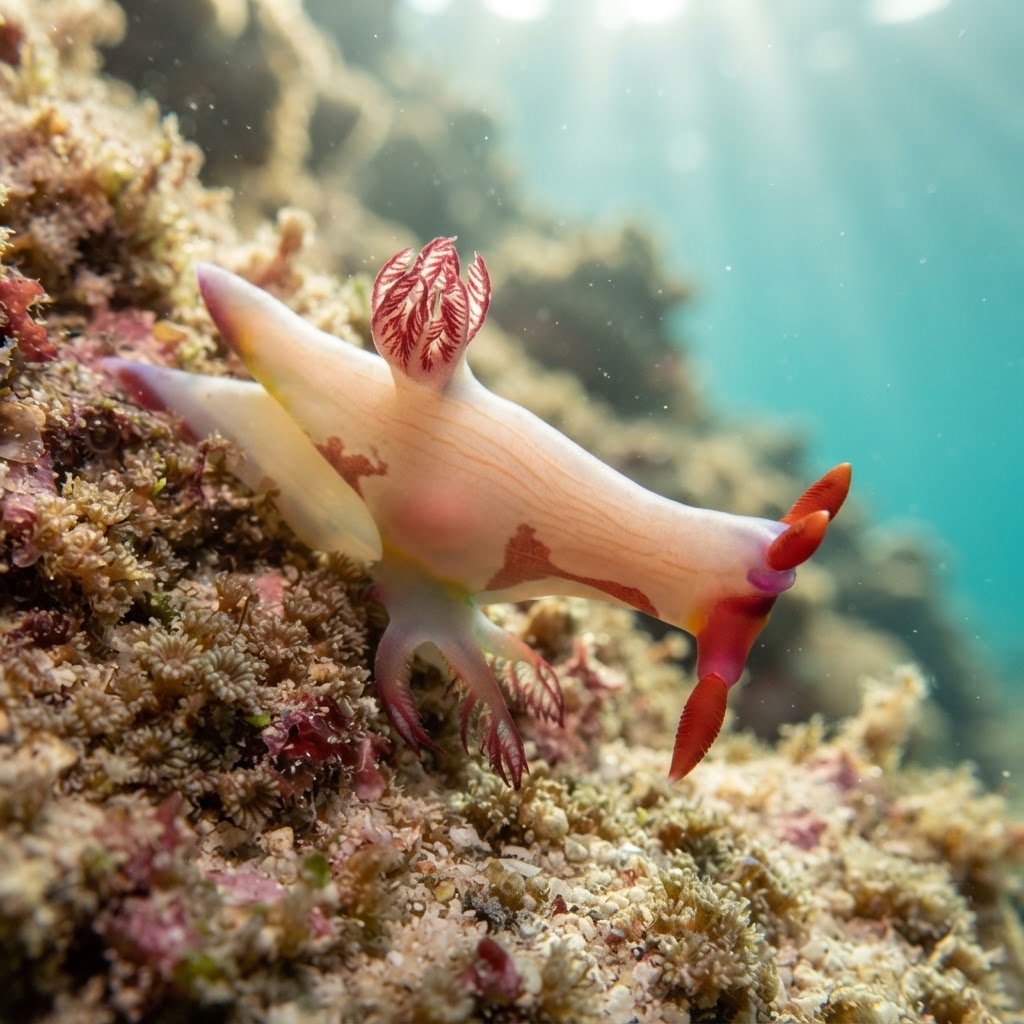
Reef neighbours a diver could mistake it for. Use the identification notes above to tell them apart.
Most reliably logged in the Philippines, especially Luzon and the Visayas, with strong additional records from Mindanao. Indonesia turns up sightings too, particularly Bali, and it has also been logged in Sabah, Malaysia and once in Dili, Timor-Leste.
Mapping where Chamberlain's Nembrotha is logged…
The Philippines is the strongest bet, with frequent sightings across Luzon, the Visayas, and Mindanao. It also turns up in Bali and other parts of Indonesia, in Sabah, Malaysia, and occasionally near Dili, Timor-Leste.
There is no strong seasonal pattern in sightings, and it tolerates a wide temperature range of 25.4 to 31.4C, so it is seen on these reefs throughout the year.
Look for a small, dark grey to black body around 4 cm long with pale speckling along the sides, and rhinophores and a gill plume tipped in orange or yellow. It moves slowly across rubble and reef substrate rather than swimming.
It stays small, typically around 4 cm long, which is fairly typical for nudibranchs in the Nembrotha genus.
It feeds on sea squirts (tunicates), a diet shared by other Nembrotha species, and likely absorbs toxins from its prey that make it unappealing to predators.
No, it poses no risk to divers. It has no sting or bite of concern and simply continues moving across the substrate when approached.
Site and sighting data is aggregated from diver logs, iNaturalist and GBIF. For taxonomy and conservation status:
Light-spotted Aegires
3,168 sites